Best Budget Cycling Computers of 2026
For cyclists who want to track their rides without spending too much, a budget cycling computer is a smart choice. These handy devices show your speed, distance, and time — and some even offer GPS or heart rate tracking at a low cost. You don’t need expensive gear to get useful data. With so many affordable options available, finding the right one is easier than ever. This guide will help you pick the best budget bike computer that fits your needs and your wallet.
1. CYCPLUS Bike Computer 2.9-Inch

- Screen Size: 2.9-inch FSTN glare-free backlit display
- Connectivity: Bluetooth and ANT+ sensor synchronization
- Included Sensors: Switchable speed and cadence sensor kit
- Handlebar Compatibility: Designed exclusively for 31.8 mm handlebars
The CYCPLUS 2.9-Inch bike computer provides a reliable and highly viewable platform for tracking your cycling metrics. Featuring a Swiss-imported navigating chip, it quickly locks onto GPS signals to accurately map out your journeys. The scratch-resistant tempered glass screen utilizes FSTN technology, making it incredibly clear under direct sunlight while automatically illuminating at night based on your local timezone.
Data enthusiasts will appreciate the seamless ANT+ integration, allowing simultaneous connections to your heart rate monitor, power meter, and the included cadence/speed sensor. By linking the device to the companion mobile application, your ride data effortlessly synchronizes with your Strava account. The robust 29g handlebar mount installs securely in under a minute, ensuring the head unit stays steady on rough pavement.
Pros:
- Automatic backlight changes based on sunset/sunrise times
- Includes a versatile, dual-mode speed and cadence sensor
- Sturdy, lightweight handlebar mount remains stable on bumpy roads
Cons:
- Will not operate normally if timezone isn’t set during first use
- Mounting bracket only fits specific 31.8 mm handlebars
See the CYCPLUS Bike Computer 2.9-Inch
2. Garmin Edge 540

- Battery Life: Up to 26 hours (42 hours in saver mode)
- GPS Technology: Advanced multi-band GNSS positioning
- Climb Feature: ClimbPro ascent planner for grade and remaining ascent
- Device Control: Dedicated physical button interface
The Garmin Edge 540 is a premier GPS cycling computer engineered for riders seeking targeted performance coaching and superior navigation. Utilizing advanced multi-band GNSS technology, it maintains exceptional tracking accuracy even beneath dense tree canopies or around challenging mountain terrain. The device excels at long-distance endurance, providing up to 42 hours of battery life when configured in power saver mode.
Training smarter is simplified with personalized on-screen workout suggestions that adapt directly to your current training load and recovery times. Real-time stamina insights help you manage your energy levels, while the ClimbPro feature breaks down ascents on any ride without requiring a pre-loaded course. Its improved maps highlight popular local routes, helping you navigate unfamiliar roads or trail systems like a local.
Pros:
- Incredible battery life for multi-day trips and long endurance rides
- ClimbPro works on the fly without needing pre-loaded routes
- Multi-band GNSS offers pinpoint tracking accuracy in dense environments
Cons:
- Requires separate compatible sensors to unlock advanced coaching features
- Button-only interface may feel less intuitive than touchscreens for mapping
3. CYCPLUS Bike Computer 2-Inch

- Battery Capacity: 1200 mAh providing over 55 hours of runtime
- Waterproof Rating: IPX6 certified water-resistant design
- Screen Build: 2-inch glare-free FSTN tempered glass
- Power Management: Automatic 10-minute inactivity sleep mode
The CYCPLUS 2-Inch bike computer offers a compact and incredibly long-lasting solution for everyday cyclists who value simplicity and durability. Its standout feature is an impressive 1200 mAh battery that yields over 55 hours of continuous operation on a single charge. The fully wireless design eliminates complex handlebar cable clutter, while the IPX6 waterproof construction ensures reliable tracking through heavy downpours.
Equipped with a highly sensitive dynamic GPS system, the unit accurately logs vital metrics including real-time distance, altitude, and riding time. The scratch-resistant FSTN display remains highly visible in bright sunlight and features a clear automatic backlight for night riding. It also features a smart memory function that saves your ongoing data whenever the device automatically enters power-saving sleep mode.
Pros:
- Extremely long 55-hour battery life reduces charging frequency
- IPX6 waterproof rating handles harsh rainy weather conditions easily
- Retains current ride data automatically during inactivity sleep cycles
Cons:
- Manually powering off the device completely wipes current ride data
- Smaller screen size displays fewer concurrent metrics than larger units
See the CYCPLUS Bike Computer 2-Inch
4. iGPSPORT BSC200S

- Display Screen: 2.4-inch semi-transparent and semi-reflective color display
- Battery Capacity: 600mAh battery with Type-C fast charging
- Data Tracking: Over 100 customizable data fields
- Storage Capacity: Up to 400 hours of ride history storage
The iGPSPORT BSC200S stands out with its feature-rich navigation platform and highly legible 2.4-inch semi-reflective color display. Perfect for exploring new routes, it allows users to import paths seamlessly from Strava, Komoot, or the official iGPSPORT app. The computer provides helpful turn reminders, off-course warnings, and a convenient “one-touch navigation” system to send saved locations directly to your handlebars.
This wireless computer tracks over 100 deep data points, from standard speed and distance to advanced FTP tracking, across fully customizable page layouts. It integrates seamlessly into your wider cycling setup, connecting with smart front lights and rearview radar systems for enhanced situational awareness. A reliable 25-hour battery life paired with a fast-charging Type-C port ensures you are always prepared to ride.
Pros:
- Excellent route compatibility with popular platforms like Strava and Komoot
- Integrates natively with front lights and radar safety systems
- Semi-reflective color screen stays exceptionally clear under direct sunlight
Cons:
- Requires using the smartphone app to configure route navigation modules
- The 600mAh battery capacity is smaller than some competitor options
5. CATEYE Padrone

- Sensor Type: 70cm analog wireless front wheel speed sensor
- Interface: ClickTec push-body function toggling
- Mounting: Tool-free hand-adjustable FlexTight Bracket
- Odometer Memory: Manual entry option for battery changes
The CATEYE Padrone delivers a stripped-back, pure cycling experience by deliberately omitting complex GPS, navigation menus, or heart rate pairings. Instead, it concentrates entirely on delivering core riding statistics like current speed, total distance, and elapsed time with total confidence. The pre-paired wireless speed sensor works seamlessly right out of the box with a 70cm transmission range optimized for front wheels.
Operation is completely effortless thanks to the ClickTec design, which lets you click the bottom of the computer body to cycle through stats without fumbling for small buttons. An automatic start/stop function ensures your averages remain accurate when pausing at traffic lights or rest stops. Additionally, the manual odometer override lets you save your lifetime mileage whenever it is time to swap batteries.
Pros:
- Incredibly simple setup with no app pairing or GPS menus required
- ClickTec design allows easy metric toggling even while wearing gloves
- Tool-free bracket makes installation and positioning quick and seamless
Cons:
- Strictly limited to front-wheel use on traditional outdoor bicycles
- Lacks advanced features like route mapping, cadence, or power tracking
6. COOSPO Bike Computer

- Chassis Build: Compact 2.4-inch glass-filled ABS and TPU housing
- Positioning Modes: Dual GPS and BEIDOU global satellite tracking
- Sensor Support: Exclusive ANT+ peripheral connectivity
- App Integration: Bluetooth synchronization via CoospoRide mobile app
The COOSPO BC107 is engineered to deliver an exceptionally cost-effective, high-performance solution for riders seeking essential electronic tracking without breaking the bank. Housed in a robust yet incredibly lightweight ABS and TPU chassis, its 2.4-inch display maximizes visible space without adding unnecessary handlebar bulk. It features precise dual GPS and BEIDOU positioning modes that lock on quickly and auto-calibrate your local time.
While budget-focused, the BC107 offers excellent sensor integration by pairing seamlessly with ANT+ heart rate monitors, speed sensors, and power meters. Bluetooth is dedicated entirely to syncing with the CoospoRide smartphone app, allowing you to quickly analyze activity logs, update firmware, and export your .fit files directly to Strava for seamless tracking of your athletic progress.
Pros:
- Highly affordable price point for a fully functional GPS computer
- Rugged, impact-resistant chassis design handles rough daily riding
- Dual satellite systems provide fast and reliable positional calibration
Cons:
- Does not support connecting sensors over a Bluetooth protocol
- Cannot upload data files to a PC directly via USB connection
7. iGPSPORT BSC300T

- Control Layout: 2.4-inch touchscreen supplemented by 6 physical buttons
- Satellite Tracking: 5-satellite positioning system (GPS, Beidou, GLONASS, Galileo, QZSS)
- Navigation Data: Global offline map downloading with off-course alerts
- Data Protocols: ANT+ and Bluetooth 5.0 dual-protocol connectivity
The iGPSPORT BSC300T is a versatile navigation power house designed to cater to road cyclists, mountain bikers, and modern E-bike riders alike. Operating the computer is a breeze thanks to a hybrid interface combining a responsive 2.4-inch touchscreen with six tactile side buttons. It leverages five global satellite systems simultaneously to ensure lightning-fast location acquisitions and highly precise data streams.
Explorers can take advantage of free global offline map downloads, detailed turn prompts, and an off-course warning system that steers you back if you wander off track. With dual ANT+ and Bluetooth 5.0 protocols, it connects smoothly with everything from power meters to smart indoor trainers. Group riders will appreciate the real-time tracking feature, which monitors teammate locations on-screen.
Pros:
- Hybrid touchscreen and button interface provides versatile operation options
- Comprehensive 5-satellite tracking ensures excellent accuracy worldwide
- Supports specialized E-bike data fields and indoor trainer control
Cons:
- The 2.4-inch screen may feel cluttered during busy navigation routes
- Requires connecting to the mobile app for full data sharing capabilities
8. COOSPO CS600

- Display Screen: 2.4-inch high-resolution color touchscreen with auto-backlight
- Battery Performance: 36-hour endurance with Type-C charging
- Waterproof Rating: Fully sealed IPX7 weatherproof protection
- Metrics Catalog: Over 150 unique in-depth data insights
- Ecosystem Support: Pairs with electronic shifters, radar, and smart lights
The COOSPO CS600 packs professional-grade tracking into a sleek, weather-resistant package highlighted by an ultra-responsive 2.4-inch color touchscreen. The auto-backlight adjusts dynamically to changing ambient light, providing crisp metric visibility whether you are riding at dawn or noon. Backed by dual GPS and GLONASS tracking, it logs speed and routing data with absolute confidence.
With an exceptional 36-hour battery life, this head unit is perfectly tailored for demanding multi-day bikepacking adventures. It tracks over 150 metrics and syncs automatically with Strava and TrainingPeaks via the COOSPORIDE app, allowing you to load custom training targets directly. Its extensive ecosystem connectivity lets you monitor electronic shifters, indoor smart trainers, and rearview radar safety systems.
Pros:
- Massive 36-hour battery life stands out for long endurance trips
- Expansive ecosystem connects smoothly with electronic shifters and radar
- Fully custom dashboard layouts let you prioritize your favorite metrics
Cons:
- Does not include any external sensors or out-front extension mounts
- Relies on basic breadcrumb mapping rather than full address searching
9. Magene C606 V2
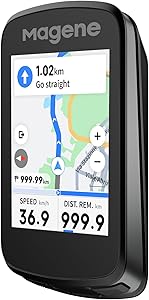
- Display Screen: 2.8-inch color TFT touchscreen with tempered glass
- Data Transmission: High-speed Wi-Fi and Bluetooth wireless sync
- Climb Metrics: Multi-Scenario ClimbPro route planning and detection
- Camera Control: Built-in wireless action camera operation module
The Magene C606 V2 is a powerhouse of connectivity and performance metrics, featuring a vibrant 2.8-inch TFT touchscreen protected by tempered glass. It stands out by offering both fast Wi-Fi and Bluetooth syncing, transferring data up to 28 times faster than conventional connections. Cyclists looking to improve their technique will love the advanced Cycling Dynamics, tracking detailed power phases and standing times.
Navigation is handled effortlessly with offline route planning up to 1,000 km, online rerouting strategies, and Strava Live Segments to fuel your competitive drive. The unit excels in versatility, featuring multi-scenario ClimbPro gradient tracking, indoor smart trainer control, and a unique camera control interface that lets you check battery status and operate DJI or Insta360 cameras hands-free.
Pros:
- Wi-Fi integration transfers data and updates maps exceptionally fast
- Incredibly advanced cycling dynamics optimize every individual pedal stroke
- Native action camera control is perfect for content-creating cyclists
Cons:
- Extensive feature set may present a steep learning curve for beginners
- Advanced cycling dynamics require pairing with specific power meter models
10. GEOID CC700 Pro

- Display Screen: 2.8-inch color touchscreen supplemented by 3 buttons
- Storage Capacity: 4GB onboard storage for offline global maps
- Satellite Speed: 5-satellite positioning with 5-second AGNSS sync
- Training Modes: Customizable smart trainer indoor training mode
The GEOID CC700 Pro combines expansive mapping capabilities with blazing-fast connectivity inside a sleek 2.8-inch color touchscreen frame. Featuring 4GB of internal storage, it allows you to download rich offline maps that display street names, turn prompts, and dual-perspective views clearly. If you wander off your course, the automatic re-route calculation quickly plans a new path forward via your smartphone app link.
Positioning is instantaneous, utilizing five distinct satellite grids and Wi-Fi-accelerated AGNSS data to achieve a secure location lock in just five seconds. When poor weather keeps you off the tarmac, the device transitions into a powerful indoor training tool, letting you program custom power targets, resistance levels, and simulated gradients directly on your smart indoor trainer.
Pros:
- Generous 4GB storage accommodates multiple detailed offline regional maps
- 5-second satellite acquisition speed minimizes waiting before a ride
- Instant app-connected rerouting keeps you moving forward without U-turns
Cons:
- Automatic path recalculation requires a constant background smartphone link
- The downloaded AGNSS positional assistance data expires every 14 days
How to Choose Budget Cycling Computers
Cycling has evolved far beyond being just a way to get from point A to point B. For many riders, it is a fitness routine, a competitive sport, or a way to explore the outdoors while tracking performance. One of the most effective tools to monitor and enhance your cycling experience is a cycling computer. These small but powerful devices provide essential data such as speed, distance, time, cadence, heart rate, GPS navigation, and even power output in higher-end models.
But here’s the good news: you don’t need to break the bank to own a reliable cycling computer. With so many affordable options available, choosing a cheaper cycling computer can be overwhelming. To make the process easier, let’s walk through the essential factors you should consider before making your choice.
1. Understand Your Needs
The very first step in choosing a budget-friendly cycling computer is to determine why you need it.
- Casual Riders: If you’re someone who enjoys weekend rides or commutes to work, you may only need a basic model that shows speed, distance, and ride time.
- Fitness-Oriented Cyclists: If tracking calories, heart rate, or cadence matters to you, look for models that can connect to external sensors.
- Adventure & Touring Cyclists: If navigation and GPS features are important, a budget GPS cycling computer with mapping is a must.
Once you know your purpose, it becomes much easier to filter out unnecessary features and focus on what’s important for your riding style.
2. Choose Between GPS and Non-GPS
Budget cycling computers fall into two main categories:
- Non-GPS (Basic): These are typically the most affordable. They use sensors on the wheel and magnets to track speed and distance. Perfect for beginners or those who want simple stats without fancy extras.
- GPS-Based: These are slightly pricier but worth it if you want accurate tracking, route navigation, and data syncing with fitness apps. Many budget GPS models are available now, offering great value.
If you want to track rides, upload them to apps like Strava, or follow new routes, GPS-enabled cycling computers are the better choice.
3. Data Metrics That Matter
Before choosing a cycling computer, think about the data you care about most. Inexpensive options vary in the features they offer:
- Basic Metrics: Speed, distance, and ride time are standard in almost every cycling computer.
- Advanced Metrics: Heart rate, cadence, elevation gain, and calorie burn are available in some affordable models.
- Power Data: Power meters are usually supported only in mid-range or higher-end models, so don’t expect this in entry-level devices.
If you’re just starting out, you probably don’t need every advanced feature. Choosing a cycling computer with the right balance of metrics will save you money.
4. Screen and Display Quality
Since you’ll be checking your computer while riding, display clarity is important. Here’s what to consider:
- Screen Size: Larger screens show more data at once, but they may look bulkier.
- Backlight: Essential if you ride early mornings, evenings, or in shaded areas.
- Customizable Display: Some budget models let you choose which metrics to see, which is useful for personalizing your experience.
Even within a budget, aim for a computer with a clear, easy-to-read display that won’t distract you while riding.
5. Connectivity and Compatibility
Modern cycling computers often come with wireless connectivity, even in the budget range. Look for:
- Bluetooth: Syncs with your smartphone for app integration, ride uploads, and notifications.
- ANT+: Connects to external sensors like heart rate monitors, cadence sensors, or speed sensors.
- App Integration: Some models sync directly with Strava, TrainingPeaks, or other fitness platforms.
If you already own heart rate straps or cadence sensors, make sure the cycling computer you choose is compatible with them.
6. Battery Life
Battery life is a crucial factor, especially for long-distance cyclists.
- Non-GPS Models: These can last for months on a single coin-cell battery.
- GPS Models: Typically offer 12–20 hours of ride time on a charge, which is sufficient for most riders.
For commuting or weekend rides, shorter battery life isn’t a big deal. But if you plan on long bikepacking trips, opt for a device with extended battery capacity.
7. Mounting Options
Cycling computers come with different mounting systems. Most budget models include a handlebar or stem mount with elastic bands or plastic brackets. Some may also offer an out-front mount, which positions the computer ahead of your handlebars for easier visibility.
While mounts may not seem like a big factor, a stable and secure mount can make a huge difference in ease of use.
8. Navigation Features
Not all budget cycling computers include navigation, but if you love exploring new routes, it’s worth looking into.
- Breadcrumb Navigation: Shows a line of your path and lets you retrace your ride.
- Turn-by-Turn Directions: Found in more advanced (yet still affordable) GPS models.
- Route Uploading: Lets you upload GPX or other files to follow pre-planned routes.
If navigation isn’t essential for you, you can save money by sticking to basic tracking models.
9. Durability and Weather Resistance
Cycling is often unpredictable—you may encounter rain, dust, or rough terrain. Choose a cycling computer with at least IPX5 or higher waterproof rating to ensure it can withstand different weather conditions. Sturdy buttons and shock-resistant casings are also valuable if you ride off-road.
10. Budget vs. Value
When shopping for a budget cycling computer, remember that the cheapest option isn’t always the best. Instead, focus on value for money:
- Does it provide the key features you need?
- Is it reliable and easy to use?
- Does it have good reviews from other cyclists?
Spending a little extra for a more durable and feature-rich model can save you money in the long run compared to buying a very cheap one that needs frequent replacement.
11. Popular Budget-Friendly Brands to Consider
Several brands are known for offering reliable yet affordable cycling computers:
- CatEye: Famous for durable, basic non-GPS cycling computers.
- Garmin Edge (Entry Models): Offers GPS with advanced features in compact devices.
- Wahoo ELEMNT (BOLT or MINI): Known for user-friendly design and strong app integration.
- XOSS: Provides ultra-budget GPS computers with essential tracking.
- Sigma: Offers a balance between affordability and reliability.
Researching these brands and reading customer feedback will help you make an informed decision.
12. Extra Features to Consider
While not essential, some budget models include features that can enhance your experience:
- Smartphone Notifications: Calls, texts, or app alerts while riding.
- Auto-Pause: Stops recording when you stop, useful in traffic.
- Interval Training Modes: Great for structured workouts.
- Firmware Updates: Ensures your device stays current with performance improvements.
If these extras fit within your budget, they’re worth considering.
Conclusion
Choosing the best affordable cycling computer doesn’t mean settling for less—it means finding the right balance between features, usability, and cost. Start by identifying your needs: do you want simple ride stats, advanced fitness tracking, or GPS navigation? Then, evaluate factors like connectivity, battery life, durability, and display quality.
Whether you’re a beginner cyclist looking for basic speed and distance data, a fitness enthusiast tracking heart rate and cadence, or an adventurer seeking affordable GPS navigation, there’s a budget cycling computer out there that suits your needs. By focusing on value rather than price alone, you’ll end up with a device that enhances your rides without straining your wallet.