Best Budget Cycling Overshoes of 2025
Cycling in wet or cold weather can be tough without the right gear. Overshoes help keep your feet dry and warm. They cover your regular shoes and protect them from rain, wind, and dirt. Good overshoes don’t have to be expensive. There are many budget-friendly options that still work well. In this article, we look at the best budget cycling overshoes. We’ve picked pairs that offer great value and strong protection. They are perfect for daily rides, commutes, or weekend trips. Whether you’re new to cycling or on a tight budget, there’s something here for you. Stay comfortable without spending too much. Let’s check out the top affordable options.
1. Fizik Waterproof Winter Road Cycling Overshoe
- Material: Polyurethane-laminated lycra
- Closure: Rear waterproof zipper
- Temperature rating: 25°F–45°F (-4°C–7°C)
- Sole: Reinforced for cleat compatibility
The Fizik Waterproof Winter Road Cycling Overshoe is a premium solution for cold-weather riders who want to protect their feet without sacrificing aerodynamics. The overshoe is designed with a sleek, aerodynamic fit that hugs the shoe tightly while preventing wind penetration. Its polyurethane-laminated lycra keeps water and wind out, ensuring that your feet remain warm and dry during winter training sessions or long-distance rides.
In addition to weather protection, the reinforced sole design makes it compatible with most cleats, ensuring that performance isn’t compromised. The waterproof rear zipper makes it easy to put on and remove, while still maintaining a secure fit throughout your ride. These overshoes strike a great balance between warmth, durability, and performance, making them a reliable companion for winter road cycling.
Pros
- Excellent waterproofing and windproofing
- Sleek aerodynamic design
- Durable reinforced sole
- Easy-to-use waterproof zipper
Cons
- Premium price point
- Slightly tight fit for bulkier shoes
2. ROCKBROS Cycling Shoe Covers
- Material: SBR + Nylon fabric
- Closure: Side waterproof zipper + hook-and-loop strap
- Windproof and water-resistant coating
- Temperature range: 28°F–50°F (-2°C–10°C)
ROCKBROS Cycling Shoe Covers are built for riders looking for affordable and versatile overshoes suitable for both road and mountain biking. Made from SBR and nylon fabric, these covers offer impressive insulation while maintaining breathability. The design keeps cold wind from penetrating and resists light to moderate rain, making them suitable for chilly and damp conditions.
The covers come with a durable side zipper and a Velcro strap for a snug and secure fit, ensuring that they won’t slip during rides. Their compatibility with both road and mountain bike shoes adds to their practicality, making them a versatile option for winter cycling enthusiasts. Overall, they provide solid performance at a mid-range price point, making them a favorite among budget-conscious riders.
Pros
- Versatile for MTB and road cycling
- Affordable without compromising quality
- Strong windproofing and water resistance
- Easy to wear with zipper and Velcro strap
Cons
- Not fully waterproof in heavy rain
- Bulkier than high-end options
3. CXWXC Neoprene Waterproof Overshoes
- Material: 3mm Neoprene with fleece lining
- Closure: Rear zipper + Velcro fastener
- Reflective elements for visibility
- Reinforced toe and heel protection
The CXWXC Cycling Shoe Covers are a great choice for riders facing extreme winter conditions. Made from 3mm thick neoprene with a warm fleece lining, these overshoes provide excellent insulation and are highly effective at keeping out cold winds and water. Their reinforced toe and heel areas enhance durability, making them ideal for frequent riders who need longevity in their gear.
The rear zipper combined with a Velcro fastener makes them easy to slip on while keeping a snug fit. They also feature reflective elements, enhancing safety during low-light winter rides. With their thermal warmth and durable design, these overshoes strike the right balance between comfort and protection for winter cycling on both road and mountain trails.
Pros
- Excellent insulation and thermal warmth
- Strong water and wind resistance
- Durable reinforced toe and heel
- Added visibility with reflective elements
Cons
- Can feel bulky during long rides
- Zipper durability could be improved
4. GripGrab Ride Waterproof Overshoes
- Material: Lightweight PU-coated fabric
- Closure: Rear YKK zipper with zipper puller
- Sole opening: Reinforced with Kevlar for durability
- Weight: Lightweight (thin design for portability)
The GripGrab Ride Waterproof Overshoes are designed for cyclists who value lightweight rain protection. Unlike bulky thermal overshoes, these are thin and easy to pack, making them ideal for unpredictable weather conditions. The PU-coated fabric provides solid waterproofing and wind protection while still allowing flexibility in movement.
The reinforced Kevlar sole ensures durability where it’s needed most, preventing wear and tear around the cleat area. With a rear YKK zipper for easy use, these covers are user-friendly while maintaining a snug and aerodynamic fit. They’re perfect for riders who cycle in areas where rain showers are frequent but extreme cold isn’t the main concern.
Pros
- Lightweight and easy to carry
- Good waterproofing for rain rides
- Kevlar-reinforced sole for durability
- Affordable price point
Cons
- Not suitable for extreme cold
- Limited insulation compared to neoprene covers
5. veloToze Tall Silicone Shoe Cover
- Material: Waterproof silicone rubber
- Closure: Snap fasteners for secure fit
- Height: Tall boot-style design for full coverage
- Waterproof and windproof performance
The veloToze Tall Silicone Shoe Cover is one of the most innovative overshoes available, designed specifically for full protection in wet and cold conditions. Made from waterproof silicone rubber, it provides a tight seal against rain, road spray, and wind. The tall boot-style coverage ensures that water doesn’t seep in from the top, making it especially effective in heavy rain.
The inclusion of snap fasteners makes it easier to wear and ensures that the cover stays in place even during intense rides. These overshoes are lightweight yet durable, making them a reusable and eco-friendly choice compared to disposable alternatives. They’re ideal for cyclists who ride in rainy climates and need reliable waterproofing above all else.
Pros
- 100% waterproof and windproof
- Tall design provides extra coverage
- Snap fasteners prevent slipping
- Durable and reusable material
Cons
- Can be difficult to put on initially
- Limited insulation for very cold weather
6. DexShell Cycling Shoe Covers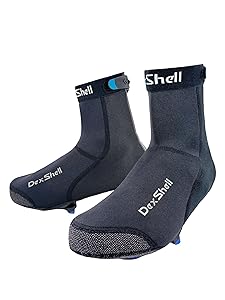
- Material: Polyurethane-coated fabric
- Closure: Rear zipper + adjustable strap
- Water-resistant and windproof performance
- Reflective trim for safety
DexShell Cycling Shoe Covers are designed for winter road cycling with a focus on reliable showerproof protection. Their polyurethane-coated fabric shields against rain and wind, while the lightweight construction prevents overheating during rides. The reflective trim enhances visibility, which is a valuable feature for winter rides in low-light conditions.
The rear zipper and adjustable strap system provide a secure fit, ensuring that the overshoes stay in place regardless of road conditions. While they may not offer the thick insulation of neoprene-based options, they strike a nice balance between weather resistance, breathability, and comfort. They are best suited for riders in moderately cold and wet environments.
Pros
- Lightweight and comfortable design
- Effective against rain and wind
- Reflective elements for visibility
- Adjustable fit with strap system
Cons
- Limited thermal insulation
- Not as durable as neoprene options
7. Tall Shoe Covers – Road 2.0
- Material: Stretchable Lycra with PU coating
- Height: Tall design for extended coverage
- Closure: Rear zipper with reinforced seams
- Compatible with most road cycling shoes
The Tall Shoe Covers Road 2.0 are designed to provide both style and performance for road cyclists. Their tall design ensures full coverage against wind and rain, while the stretchable Lycra with PU coating offers a snug aerodynamic fit. The waterproof fabric keeps feet dry during light to moderate rain, making them practical for year-round riding.
The reinforced seams and rear zipper enhance durability while allowing easy wearability. The overshoes fit most standard road cycling shoes, and their streamlined design complements competitive road cycling gear. They offer a balance between affordability and effective protection, making them a solid choice for cyclists looking for reliable mid-range overshoes.
Pros
- Tall design offers excellent coverage
- Aerodynamic and snug fit
- Reinforced seams for durability
- Suitable for most road cycling shoes
Cons
- Limited insulation for very cold weather
- Zipper may feel stiff initially
How to Choose the Best Budget Cycling Overshoes
Cycling is one of those activities where comfort and performance go hand in hand. Every detail—from your helmet to your pedals—can influence your ride. One often-overlooked piece of gear is cycling overshoes, also known as shoe covers. If you ride regularly in cold, wet, or windy conditions, overshoes can be a game changer. They protect your feet from windchill, rain, and road spray, helping you stay warm and comfortable while also extending the life of your cycling shoes.
But what if you’re a cyclist on a budget? The good news is, you don’t need to spend a fortune to get reliable overshoes. By focusing on certain features and matching them to your riding conditions, you can find the best budget cycling overshoes that deliver both value and performance. This guide will walk you through everything you need to consider before making your purchase.
Why Do You Need Cycling Overshoes?
Before diving into buying tips, let’s quickly look at why overshoes are worth the investment—even on a budget.
- Weather Protection – Overshoes shield your feet from rain, wind, and cold, especially during winter rides.
- Improved Warmth – They act as an extra insulating layer over your cycling shoes.
- Shoe Longevity – Overshoes protect against mud, dirt, and debris, preventing damage to your cycling shoes.
- Aerodynamics – Some overshoes are designed to be sleek and smooth, reducing drag and helping in racing conditions.
- Visibility – Overshoes often come with reflective elements, improving safety during low-light rides.
For budget-conscious riders, the goal is to balance affordability with these key benefits.
Factors to Consider When Choosing Budget Cycling Overshoes
When shopping for overshoes, especially on a budget, it’s easy to be swayed by flashy designs or marketing claims. Instead, focus on these core factors to ensure you’re getting the best value:
1. Material
The material of your overshoes determines their effectiveness.
- Neoprene: Excellent for cold and wet conditions, neoprene provides insulation and water resistance. It’s thicker, so not always the most breathable, but ideal for winter.
- PU Coated Fabric: Lightweight and affordable, PU (polyurethane) coatings provide water resistance without much bulk.
- Fleece-lined: A great choice for insulation if your main concern is warmth rather than rain protection.
- Light Lycra/Polyester: Cheaper, thinner overshoes that offer mild wind protection and aerodynamic benefits—better for dry and cool conditions.
For budget buyers, neoprene and PU-coated fabrics are usually the best balance of price and performance.
2. Weather Conditions
Ask yourself: When and where will I use these overshoes most?
- Winter (Cold & Wet) – Look for thick neoprene or fleece-lined overshoes with sealed seams.
- Rainy Rides – Prioritize waterproof materials and snug fits to prevent water from seeping in.
- Mild/Autumn Weather – Lightweight Lycra overshoes will keep off the chill and road spray without overheating.
There’s no “one-size-fits-all.” Buying an overshoe tailored to your climate ensures you’re not overspending on unnecessary features.
3. Fit and Sizing
Budget overshoes sometimes compromise on sizing precision. However, a proper fit is crucial. If the overshoes are too tight, they may tear quickly; too loose, and they’ll flap around or allow water to seep in.
- Always check size charts carefully.
- Consider your shoe type (road cycling shoes vs. mountain bike shoes—road shoes are usually narrower).
- Look for adjustable closures like Velcro or zippers to fine-tune the fit.
4. Sole Design
Cycling overshoes need to accommodate your pedals and cleats. Look for:
- Reinforced Cutouts – Budget overshoes with reinforced soles last longer since they won’t tear at the cleat area.
- Compatibility – Some overshoes are specifically for road cycling (smooth soles) while others are designed for MTB or commuting (tougher, walking-friendly soles).
- Durability – Extra panels or Kevlar reinforcements at the toe and heel improve lifespan, especially if you walk in them often.
5. Ease of Use
Overshoes should be easy to put on and take off. Budget models often use:
- Rear Zippers – Convenient, but check for durability and water resistance.
- Velcro Straps – Simple and affordable, though not always fully waterproof.
- Elastic Openings – Lightweight but may not seal tightly in heavy rain.
If you ride daily, quick on-off functionality is worth prioritizing.
6. Breathability vs. Insulation
If you’re cycling in cold but dry conditions, warmth is more important than ventilation. On the other hand, if you ride hard and sweat a lot, overly insulated overshoes can leave your feet damp.
- Winter-specific: Prioritize insulation.
- Transitional seasons: Go for lighter, breathable covers.
7. Visibility and Safety Features
Budget overshoes often come in black, but reflective strips or bright accents are a big plus. If you ride at dawn, dusk, or in urban traffic, reflective elements increase safety without extra cost.
8. Price vs. Durability
Overshoes in the budget category usually range between $20 to $50. At this price, you’ll need to balance affordability with lifespan.
- Cheaper models may last just one season of heavy winter riding.
- Spending slightly more for reinforced materials could save money in the long run.
If you cycle daily, durability should outweigh initial savings. If you ride occasionally, a simpler pair may suffice.
Mistakes to Avoid When Buying Budget Overshoes
Even with budget-friendly options, many cyclists make mistakes that reduce value. Here are a few to avoid:
- Buying too thick for your needs – Thick neoprene overshoes are great for winter, but overkill (and sweaty) for spring/autumn.
- Ignoring compatibility – Some overshoes don’t fit wide MTB shoes or certain cleat systems. Always double-check.
- Choosing non-reinforced soles – Cheap overshoes without reinforcement rip quickly at the toe or heel.
- Underestimating water ingress – Waterproof doesn’t mean water proof; rain often seeps through the ankle or zipper. Consider pairing with waterproof socks if riding in heavy rain.
- Sizing down – Overshoes should fit snugly, but too small will tear quickly.
Tips for Getting the Best Value
- Read Reviews: Other cyclists often highlight weaknesses like poor zippers or weak stitching.
- Buy Seasonal: Overshoes often go on sale at the end of winter.
- Check Brand Reputations: Even budget-friendly brands like BBB, Endura, and RockBros offer reliable overshoes.
- Layer Smartly: Pair budget overshoes with merino socks for extra warmth at minimal cost.
Final Thoughts
Cycling overshoes may seem like a small accessory, but they can dramatically improve your riding comfort, especially in challenging weather. For riders on a budget, the key is prioritization: focus on materials, fit, and durability that match your conditions rather than chasing premium features.
- If you ride in cold, wet winters, go for neoprene or waterproof options with reinforced soles.
- If you cycle mostly in autumn or spring, lightweight Lycra overshoes can give you wind protection and added aerodynamics at a fraction of the cost.
- Always balance price with durability—sometimes paying slightly more upfront saves you from replacing a cheaper pair too soon.
By considering your weather conditions, riding style, and shoe type, you can find the best budget cycling overshoes that protect your feet, extend your gear’s lifespan, and keep you riding comfortably without straining your wallet.