Best Studded Fat Bike Tires of 2026
Winter trails are magical, but icy ground can quickly ruin the ride. That’s where studded fat bike tires help. They bite into frozen paths, giving you grip and confidence when conditions turn slippery. With them, every snowy trail feels more welcoming instead of dangerous. Riders can enjoy long rides without worrying about sudden slides. Picking the right set makes winter riding fun, not stressful. In this article, we’ll uncover the best studded fat bike tires. You’ll see which options keep your rides steady and safe.
1. Terrene Fat Bike Tire

- Size: 26×4.0
- Stud Count: 180 Triple Traction Crown
- Casing: Standard, 60 TPI Aramid Bead
- Weight: Approx. 1700g
The Terrene Cake Eater Standard is built for riders who want reliable winter performance without the sluggish feel common in heavy fat bike tires. Its lightweight construction and fast-rolling design make it surprisingly efficient on packed snow and mixed winter trails. The lower-profile center tread reduces rolling resistance, allowing smoother acceleration and better momentum on flatter terrain. At the same time, the tall side lugs inspire confidence when cornering on loose snow or icy ruts.
What truly sets this tire apart is its stud-ready design combined with excellent tubeless performance. With 180 stud pockets per tire, it offers serious grip on glare ice when fully studded, making it ideal for winter commuters, trail riders, and E-Bike users rated to E-25 standards. The wide rim compatibility adds versatility, allowing riders to fine-tune float and traction based on their setup. Overall, it strikes a strong balance between durability, control, and weight for all-season fat biking.
Pros:
- Lightweight for a studded fat tire
- Excellent ice traction potential
Cons:
- Studs may be an added cost
- Premium pricing
2. Vee Tire Snowball Fat Bike Tire

- Size: 20×4.0
- Stud Count: 120 Studs
- Compound: Vee Snowball Endurance
- E-Bike Rating: Ebike50, ECE-R75
The Vee Tire Snowball Fat Bike Tire is designed for riders who regularly face snow, ice, and unpredictable winter terrain. Its large, square knobs are well spaced to shed snow efficiently while maintaining strong bite on loose surfaces like grass and dirt. This aggressive tread pattern provides excellent stability, especially when riding at lower pressures for added float.
Durability is a major highlight thanks to the OverRide puncture protection layer, which significantly improves resistance against sharp ice and trail debris. The inclusion of 120 strategically placed studs enhances grip on icy paths, making winter rides safer and more predictable. E-bike riders will appreciate its Ebike50 certification, ensuring dependable performance even at higher assisted speeds. Combined with a stealthy black-on-black design, the Snowball balances rugged performance with clean aesthetics for serious winter fat bike use.
Pros:
- Strong ice and snow traction
- Excellent puncture protection
Cons:
- Heavier than non-studded options
- Limited to smaller wheel size
See the Vee Tire Snowball Fat Bike Tire
3. Terrene Johnny 5 Fat Bike Tire

- Size: 26×5.0
- Tire Type: Light Studded Fat Bike
- Material: Rubber
- Bike Type: Fat Bike
The Terrene Johnny 5 is built for maximum float and traction in deep snow and soft winter conditions. With its massive 5-inch width, this tire excels at maintaining stability where narrower fat tires struggle. The light studded design adds extra security on icy patches without overwhelming rolling resistance, making it suitable for long winter rides.
Its tread pattern is optimized for forward drive and braking control, especially on untracked snow and frozen trails. Riders looking for confidence in extreme winter terrain will appreciate how predictable the tire feels under load. While it is clearly aimed at snow riding, it also performs well on soft sand and loose surfaces. The Johnny 5 is an excellent option for riders who prioritize flotation and control over speed.
Pros:
- Outstanding flotation in deep snow
- Stable and confidence-inspiring
Cons:
- Slower on hardpack
- Requires wide rim clearance
See the Terrene Johnny 5 Fat Bike Tire
4. SCHWALBE Ice Spiker Pro

- Wheel Size: 26 Inches
- Width: 2.1 Inches
- Tire Type: Clincher
- Pressure Rating: 85 PSI
The Schwalbe Ice Spiker Pro is a legendary winter tire designed for riders who demand maximum grip on ice. Packed with metal studs, it delivers incredible traction on frozen roads, icy trails, and compacted snow. The narrower profile compared to fat tires allows for faster rolling and precise handling, making it a popular choice for winter commuting and aggressive trail riding.
Schwalbe’s rubber compound remains flexible in low temperatures, ensuring consistent grip even in extreme cold. The stud layout provides strong braking control and predictable cornering, reducing slip on hard ice. While it performs best on winter surfaces, it remains durable enough for mixed conditions. Riders who face frequent icy terrain will find the Ice Spiker Pro a dependable and confidence-boosting solution.
Pros:
- Exceptional ice grip
- Precise handling
Cons:
- Loud on pavement
- Not suited for deep snow
See the SCHWALBE Ice Spiker Pro
5. SCHWALBE AL Mighty Spiked
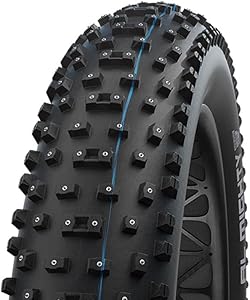
- Size: 26×4.80
- Compound: Addix SpeedGrip
- Construction: SuperGround, TubelessEasy
- Type: Foldable Clincher
The Schwalbe AL Mighty Spiked is engineered for aggressive winter fat biking, offering impressive traction and durability. Its wide 4.8-inch profile provides excellent flotation on snow while the spiked tread ensures reliable grip on icy surfaces. The Addix SpeedGrip compound balances rolling efficiency with dependable cold-weather traction.
Built with Schwalbe’s SuperGround construction, this tire delivers added protection without excessive weight, making it suitable for demanding winter trails. The TubelessEasy design allows for lower pressures, improving comfort and control in soft conditions. Riders looking for a premium fat bike tire that performs confidently across snow, ice, and mixed terrain will find the AL Mighty Spiked a strong and reliable choice.
Pros:
- Excellent flotation and grip
- Tubeless-ready design
Cons:
- Requires wide rims
- High-end price point
See the SCHWALBE AL Mighty Spiked
How to Choose Studded Fat Bike Tires
Fat biking in winter has become one of the most exciting and adventurous ways to enjoy the outdoors. Whether you are riding across frozen lakes, snowy trails, or icy backroads, the right set of studded fat bike tires can completely transform your experience. Unlike standard fat tires, studded versions offer a strong grip on slippery surfaces, keeping you safe and stable in unpredictable conditions. But with so many options available, it can feel overwhelming to figure out which studded fat bike tire is best for you. This guide breaks everything down in detail to help you make the right choice.
Why Studded Fat Bike Tires Matter
Snow and ice are notoriously unpredictable. Even wide fat tires that float on snow can lose traction when the ground is icy. That’s where studded tires shine. The small metal studs bite into ice, giving you control where rubber alone would slip. They provide:
- Better traction on ice and hard-packed snow
- Increased stability when cornering
- Improved braking performance
- Confidence in unpredictable winter conditions
While studded tires do add weight and rolling resistance, their safety benefits far outweigh those drawbacks if you plan on riding through icy environments.
Key Factors to Consider
When choosing the best studded fat bike tires, you need to balance terrain demands, riding style, and budget. Let’s go through the most important considerations.
1. Stud Count
The number of studs in a tire directly affects its grip. Tires can range from 100 to over 300 studs per wheel.
- Fewer studs (100–150): Lighter, faster rolling, and suitable for mixed conditions where only occasional ice patches are expected.
- Moderate studs (150–250): Balanced option for riders who see consistent snow and icy trails.
- High stud count (250+): Maximum grip on pure ice, but heavier and slower rolling.
If you’re riding mainly on glare ice or frozen lakes, go for higher stud counts. If your trails are more snow-covered with the occasional icy patch, a mid-range option works well.
2. Stud Material and Shape
Not all studs are the same.
- Carbide studs: Extremely durable and long-lasting. They maintain sharpness even after seasons of use.
- Steel studs: Cheaper but wear down faster, especially on roads with exposed asphalt.
Stud shape also matters. Pointed studs bite deeper into ice, while flat-topped studs offer a balance of grip and rolling efficiency. For aggressive winter riding, carbide studs with a sharp design are ideal.
3. Tire Width
Fat bike tires typically range from 3.8 to 5 inches in width. Wider tires provide more floatation on soft snow, while narrower options are lighter and faster on firm ground.
- 3.8–4.2 inches: Faster, efficient, good for groomed trails.
- 4.5–5 inches: Maximum stability and float on deep snow, but heavier.
Match your width to the typical conditions you ride in. Deep snow riders benefit from wider tires, while urban commuters and groomed trail riders may prefer narrower options.
4. Tread Design
Studs alone won’t save you without the right tread. The tread pattern determines how the tire interacts with snow and ice.
- Low-profile tread: Rolls faster on packed snow and icy roads, great for commuting.
- Aggressive knobs: Provide grip in mixed terrain with snow, slush, and dirt.
- Mixed tread: Balances efficiency with grip, ideal for riders tackling varied conditions.
For frozen lakes, smooth tread with studs is excellent. For backcountry snow trails, aggressive knobs with stud placement give the best versatility.
5. Tubeless vs. Tube Tires
Many studded fat bike tires are tubeless-ready.
- Tubeless: Lets you run lower pressures for improved traction and comfort. It also reduces the risk of pinch flats.
- Tube setups: Simpler to install and maintain but limit pressure adjustments.
If you’re an adventurous rider tackling rough trails, tubeless is worth the setup. For casual winter commuting, tubes are often sufficient.
6. Weight and Rolling Resistance
Studded tires are heavier than standard fat tires because of the metal inserts. More studs equal more weight. While this may slow you down on climbs and pavement, it’s a necessary trade-off for winter safety. Consider your priorities—speed versus traction.
7. Durability and Price
Studded fat bike tires are an investment. High-end models with carbide studs may cost more, but they last for multiple winters without losing performance. Cheaper options with steel studs may need replacing sooner.
If you ride frequently in icy conditions, it’s worth paying more for durability. If you ride occasionally, budget-friendly options can do the job.
Tips for Getting the Most Out of Your Studded Fat Bike Tires
- Break them in: Ride 30–50 miles on pavement before tackling snow and ice. This helps the studs seat firmly.
- Check tire pressure often: Lower pressures (5–10 psi) improve traction in snow, while higher pressures (10–15 psi) work on firmer surfaces.
- Rotate tires seasonally: If your front tire loses studs faster, swap it with the rear to extend lifespan.
- Avoid unnecessary pavement miles: Riding too much on bare asphalt can wear down studs quickly.
Who Needs Studded Fat Bike Tires?
Not every fat biker needs studs. Ask yourself these questions:
- Do you ride on icy lakes, rivers, or frozen trails?
- Do you commute in winter where black ice is common?
- Do you want maximum safety over speed in cold conditions?
If yes, then studded tires are worth it. If your trails are mostly deep snow with little ice, wide knobby tires without studs might be enough.
Balancing Performance and Budget
Studded fat bike tires vary widely in cost. High-end models with hundreds of carbide studs can cost $200+ per tire, while budget options might be closer to $100.
To balance performance and budget:
- Invest in at least one studded tire for the front wheel, since that’s most critical for steering and stability.
- If budget allows, run studded tires front and rear for maximum safety.
Final Thoughts
Choosing the best studded fat bike tires comes down to understanding your riding conditions, your priorities, and your budget. If you ride on glare ice, invest in high stud counts and carbide tips. If you mostly tackle snowy trails with occasional icy patches, a mid-range studded tire with balanced tread will serve you well. For casual winter commuting, lighter studded tires with fewer studs can keep you safe without slowing you down too much.
At the end of the day, the best tire is the one that keeps you riding confidently no matter what winter throws your way. With the right studded fat bike tires, you’ll not only stay safe but also open up a whole new season of riding adventures.