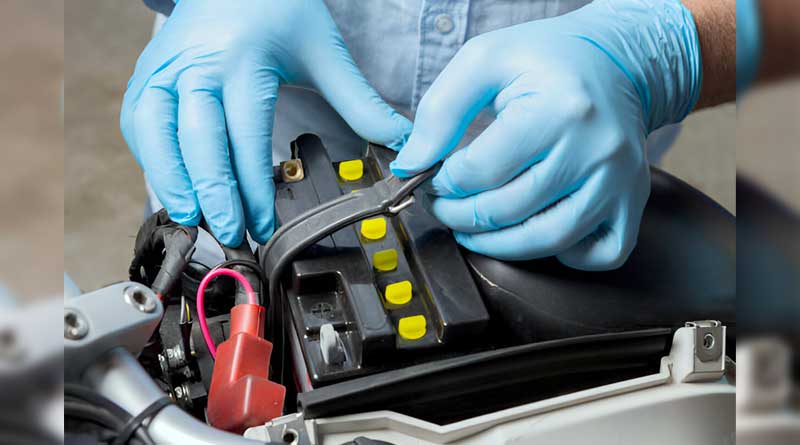
Best Cold-Weather Motorcycle Batteries of 2026
A regular battery often fails in freezing mornings, leaving you stuck. That’s why a cold weather motorcycle battery is a must-have. These are built to deliver steady power even in harsh conditions. They keep your bike alive, your rides worry-free, and your adventures moving forward. In this article, we explore the best cold weather motorcycle batteries. Each option is tested to keep you riding strong through winter.
1. Weize YTX7A-BS High Performance
- Voltage: 12V
- Capacity: 6Ah
- Cold Cranking Amps (CCA): 105
- Dimensions: 5.91 x 3.43 x 3.70 inches
The Weize YTX7A-BS is a compact, maintenance-free sealed AGM battery that offers solid performance for small motorcycles, scooters, and mopeds. Designed to withstand cold weather conditions, it delivers reliable power starts even when temperatures drop, making it a dependable choice for winter riding. The AGM (Absorbed Glass Mat) technology ensures spill-proof safety and longer battery life compared to traditional flooded batteries.
This battery fits seamlessly into a range of vehicles, especially gas scooters in the 50CC to 125CC category. While its power rating is not designed for larger displacement bikes, it excels in providing quick startups and consistent performance for smaller engines. With a good balance of affordability and reliability, it is ideal for daily riders who want hassle-free maintenance.
Pros:
- Maintenance-free and sealed design
- Compact size suitable for smaller motorcycles and scooters
- Reliable cold-weather starts
- Good value for money
Cons:
- Not suitable for larger bikes with higher power needs
- Moderate CCA compared to higher-end models
2. Chrome S Pro iGel
- Battery Type: YTX14-BS iGel electrolyte rechargeable battery
- Display: Built-in LED voltage display
- Dimensions: 5.91 × 3.39 × 5.71 inches (L×W×H)
- Warranty: 24 months with 60-day refund (U.S. orders only)
The Chrome S Pro iGel is a solid upgrade over standard AGM batteries, offering better vibration resistance and longer standby life. The gel-infused electrolyte improves durability, while the integrated LED display makes voltage monitoring quick and convenient. It feels well-built and designed for riders who want reliability without constant checks.
In real-world use, the battery delivers dependable starting power across motorcycles, ATVs, and UTVs. Compatibility with a wide range of Yamaha, Honda, Kawasaki, Suzuki, and Polaris models makes it versatile. Backed by U.S.-based support and a generous warranty, it’s a dependable choice for daily riding and seasonal storage.
Pros
- Excellent vibration resistance
- LED voltage display is practical
- Wide vehicle compatibility
Cons
- Warranty limited to U.S. orders only
3. Mighty Max YTZ14S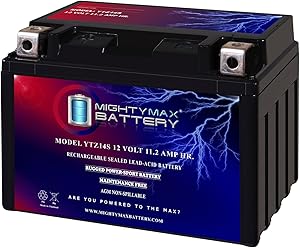
- Voltage: 12V
- Capacity: 11.2Ah
- Cold Cranking Amps (CCA): 230
- Dimensions: 5.91 x 3.43 x 4.33 inches
The Mighty Max YTZ14S is built to deliver strong and consistent power for motorcycles and ATVs, especially in challenging cold weather. With 230 CCA, it provides quick and reliable starts even when temperatures dip, giving riders confidence in winter conditions. Its SLA AGM design makes it completely maintenance-free, leak-proof, and resistant to vibrations, which enhances durability.
This battery is highly versatile and performs well in both everyday riding and occasional use. Its higher amp-hour capacity ensures extended performance, especially for motorcycles with more demanding electrical accessories. While it may come at a slightly higher cost than basic AGM models, its strong cold-weather capability and robust construction make it worth the investment.
Pros:
- High CCA for dependable cold starts
- Long-lasting performance with higher Ah capacity
- Vibration-resistant design for durability
- Maintenance-free and leak-proof
Cons:
- Slightly heavier than lithium options
- Higher price point compared to entry-level batteries
4. TPE Lithium LiFePO4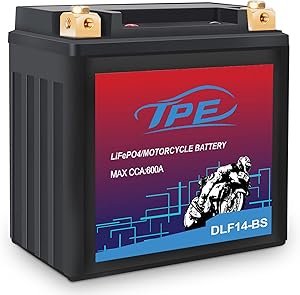
- Voltage: 12.8V
- Capacity: 6Ah
- Cold Cranking Amps (CCA): 600
- Life Cycles: 2500–8000 cycles
The TPE Lithium Motorcycle Battery is a high-performance LiFePO4 unit that outshines traditional AGM batteries with its lightweight design and extraordinary cold-weather performance. Delivering 600 CCA, it ensures instant startups even in freezing temperatures, which is crucial for winter riders. Its advanced BMS (Battery Management System) prevents overcharging, overheating, and short-circuits, maximizing safety and longevity.
Thanks to its long cycle life, this battery can outlast multiple lead-acid batteries, making it a cost-effective solution in the long run. Riders looking for a lightweight upgrade will appreciate its compact form factor, which reduces overall bike weight. However, its higher upfront price may deter budget-conscious buyers, but for those seeking cutting-edge performance, it’s a worthy investment.
Pros:
- Extremely high CCA for cold starts
- Lightweight compared to AGM batteries
- Long lifespan with thousands of cycles
- Built-in BMS for protection
Cons:
- Expensive compared to AGM models
- May require compatible lithium chargers
5. KEMIMOTO Lithium YTX20L-BS/YTX24HL-BS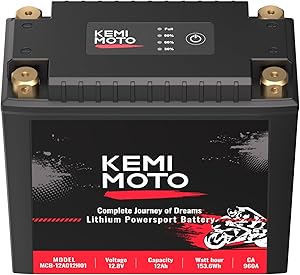
- Voltage: 12V
- Capacity: 12Ah
- Cold Cranking Amps (CCA): 720
- Includes: 2 EVA spacers for universal fit
The KEMIMOTO Lithium Battery stands out as one of the most powerful options, with an impressive 720 CCA rating, making it ideal for cold weather and high-performance motorcycles. It is pre-charged and ready to install, offering plug-and-play convenience. The LiFePO4 technology provides exceptional power while remaining lightweight, making it an excellent upgrade from heavier AGM batteries.
This battery comes with EVA spacers, ensuring a secure fit across different motorcycle and ATV models. Its durability and long cycle life make it suitable for frequent riders and those who rely on their bikes in varying conditions. While its premium price may not appeal to all, its unmatched starting power and reliability in cold climates make it an elite choice.
Pros:
- Extremely powerful 720 CCA for cold weather starts
- Lightweight lithium design
- Long cycle life and durability
- Universal-fit EVA spacers included
Cons:
- Premium pricing
- Requires lithium-specific charger for best maintenance
6. BOSCH BLP5S Lithium
- Voltage: 12V
- Capacity: 5Ah
- Cold Cranking Amps (CCA): 120
- Compatible with: Motorcycles, ATVs, snowmobiles, jet skis
The BOSCH BLP5S is a compact lithium power sport battery that provides reliable performance across a wide range of vehicles. Though it has a modest 120 CCA, it is optimized for smaller motorcycles, ATVs, and scooters, making it sufficient for moderate cold-weather use. Its lightweight build reduces vehicle weight and enhances efficiency.
As a lithium battery, it offers longer cycle life compared to AGM alternatives, along with quick charging capability. It is also highly versatile, working well in motorcycles, jet skis, and snowmobiles. However, riders with larger bikes or high-compression engines may find the CCA insufficient for extreme cold starts. It’s best suited for light-to-medium duty use where reliability and compactness matter most.
Pros:
- Lightweight and compact lithium design
- Long cycle life
- Works across multiple vehicle types
- Faster charging than AGM batteries
Cons:
- Lower CCA compared to high-end lithium models
- Not ideal for larger motorcycles in extreme cold
7. Casil YTX12-BS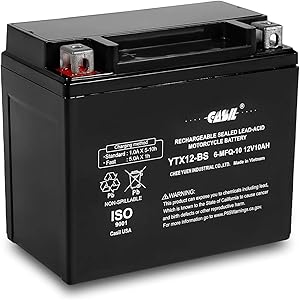
- Voltage: 12V
- Capacity: 10Ah
- Cold Cranking Amps (CCA): 180
- Dimensions: 6.0 x 3.4 x 5.1 inches
The Casil YTX12-BS is a reliable AGM replacement battery designed for motorcycles and ATVs. With 180 CCA, it delivers consistent cold-weather starting power suitable for medium-sized bikes and ATVs. Its sealed, maintenance-free design ensures no spills or leaks, making it a hassle-free option for riders who prioritize convenience.
This battery is particularly good as a budget-friendly replacement, offering stable performance without breaking the bank. While it doesn’t match the high output of lithium batteries, it performs reliably in typical riding conditions. Riders looking for an affordable, dependable AGM unit will find this a solid choice, though long-term storage may require periodic recharging.
Pros:
- Affordable price point
- Reliable 180 CCA for cold starts
- Maintenance-free and spill-proof design
- Good fit for motorcycles and ATVs
Cons:
- Heavier than lithium options
- May require charging after long storage
How to Choose Cold Weather Motorcycle Batteries
When the temperature drops, motorcycle riders face more than just icy roads and frosty winds — cold weather takes a serious toll on a motorcycle’s battery. Many riders have experienced the frustration of pressing the ignition button on a chilly morning only to hear a weak crank or, worse, complete silence. That’s because batteries lose efficiency in cold temperatures, making it essential to choose the right one if you ride year-round or live in regions with harsh winters.
In this guide, we’ll dive into how cold weather affects motorcycle batteries, the key factors to consider when choosing one, and practical tips to ensure reliable starts even in the coldest conditions.
Why Cold Weather is Tough on Motorcycle Batteries
Before learning how to choose the right battery, it’s important to understand the challenge cold weather presents:
-
Reduced Chemical Reaction Speed – Motorcycle batteries, particularly lead-acid types, rely on chemical reactions to generate power. Cold weather slows these reactions, reducing the battery’s ability to produce enough current.
-
Higher Engine Oil Viscosity – In low temperatures, engine oil becomes thicker, making the engine harder to turn over. This demands more power from the battery, which is already weakened by the cold.
-
Increased Power Drain – Accessories like heated grips, heated seats, and winter gear often draw extra current from the battery.
-
Self-Discharge Issues – Batteries naturally discharge over time. Cold storage without a trickle charger accelerates this problem, leaving you with a dead battery when you need it most.
The bottom line? Not all batteries are built to withstand extreme weather. Choosing one designed for cold climates can save you from winter breakdowns.
Types of Motorcycle Batteries for Cold Weather
Several battery technologies are available, and some perform better in cold temperatures than others:
1. Lead-Acid Batteries (Flooded Type)
-
Traditional and affordable.
-
Require maintenance such as checking water levels.
-
Perform poorly in cold weather compared to modern options.
2. AGM (Absorbent Glass Mat) Batteries
-
Sealed and maintenance-free.
-
Better resistance to vibrations and cold weather.
-
Provide higher Cold Cranking Amps (CCA) compared to flooded lead-acid batteries.
-
A popular choice for winter riders.
3. Gel Batteries
-
Use a gel electrolyte instead of liquid.
-
More resistant to deep discharges.
-
Handle extreme temperatures better than flooded lead-acid, but not as powerful as AGM.
4. Lithium-Ion Batteries
-
Lightweight and long-lasting.
-
Excellent in warm climates but struggle in sub-zero temperatures unless pre-warmed.
-
Some modern lithium batteries come with built-in warming features, making them winter-friendly.
For most riders dealing with consistent cold, AGM batteries are the most reliable option, while lithium-ion may suit those who ride occasionally and want advanced features.
Key Factors to Consider When Choosing a Cold Weather Motorcycle Battery
1. Cold Cranking Amps (CCA)
-
Definition: The number of amps a battery can deliver at 0°F (-18°C) for 30 seconds while maintaining at least 7.2 volts.
-
Why it matters: Higher CCA means better starting performance in cold weather.
-
Tip: Always choose a battery with CCA equal to or slightly higher than your motorcycle’s requirement.
2. Battery Capacity (Ah – Amp Hours)
-
Determines how long the battery can supply current before being drained.
-
A higher Ah rating ensures your battery can power lights, heated grips, and accessories longer in cold weather.
3. Size and Fitment
-
Batteries come in different case sizes. Always check your motorcycle’s owner manual for group size to ensure a proper fit.
4. Maintenance Needs
-
AGM and lithium-ion are maintenance-free.
-
Flooded lead-acid requires regular electrolyte checks, which can be inconvenient in winter.
5. Durability & Vibration Resistance
-
Cold-weather roads are often rough, with ice and potholes. Choose a battery that can handle vibrations without performance drops. AGM batteries excel here.
6. Charging Requirements
-
Some batteries require specific chargers. For example, lithium-ion batteries often need lithium-compatible chargers, while AGM works well with standard smart chargers.
7. Brand Reliability & Warranty
-
Investing in a reputable brand ensures higher build quality and longer warranties, which can save money in the long run.
Tips for Maximizing Battery Life in Cold Weather
Choosing the right battery is just half the battle — proper care ensures it performs when needed most. Here are practical tips:
-
Use a Smart Charger or Battery Tender
-
Keeps your battery topped up during long winter storage.
-
Prevents deep discharges that shorten battery life.
-
-
Store in a Warm Place
-
If you’re not riding daily, remove the battery and store it in a warmer environment.
-
-
Limit Accessory Use at Start-Up
-
Avoid turning on heated grips, lights, or other accessories until after the engine is running.
-
-
Regular Maintenance
-
For lead-acid types, check electrolyte levels.
-
Clean terminals and ensure cables are tight.
-
-
Warm the Battery Before Use
-
For lithium-ion batteries, a few short ignition attempts can warm the cells and boost performance.
-
Recommended Cold Weather Motorcycle Batteries
While the “best” battery depends on your bike and riding style, here are some well-regarded options for winter performance:
-
Yuasa YTX14-BS (AGM) – Known for reliability and strong CCA ratings.
-
Odyssey PC680 (AGM) – Exceptional cold weather cranking power and long lifespan.
-
Shorai LFX (Lithium-Ion with Warming Features) – Lightweight with modern technology for cold starts.
-
MotoBatt MBTX12U (AGM) – Affordable, durable, and widely compatible.
Common Mistakes to Avoid
-
Choosing Based on Price Alone – A cheaper battery may save money upfront but could fail when you need it most.
-
Ignoring CCA Ratings – A high Ah rating won’t matter if your battery can’t crank in the cold.
-
Using the Wrong Charger – Mismatched chargers can damage or shorten your battery’s life.
-
Letting the Battery Sit Idle – Even the best battery will fail if left unused and uncharged in freezing temperatures.
Final Thoughts
Cold weather is a true test of a motorcycle battery’s strength. Riders who depend on their bikes in winter conditions need to invest in a battery with the right balance of high Cold Cranking Amps, sufficient capacity, and low maintenance requirements. For most, an AGM battery strikes the ideal balance between affordability, durability, and cold-weather performance. Lithium-ion batteries may also work well if you prefer lightweight, modern technology and are willing to manage their quirks in freezing temperatures.
Ultimately, the best cold weather motorcycle battery is the one that suits your bike’s requirements, your riding habits, and your climate conditions. Pair it with good maintenance practices, and you’ll enjoy reliable starts even when the mercury plunges.