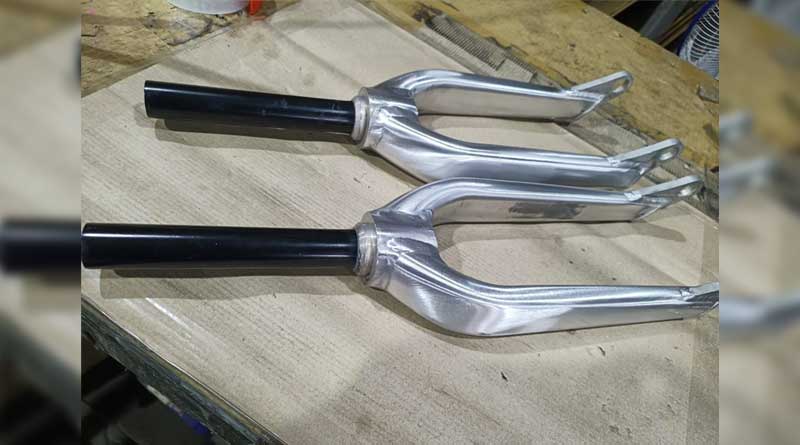
Best BMX Forks of 2025
BMX forks play a big role in how your bike feels and performs. They connect the front wheel to the frame and handle heavy impacts. A strong and reliable fork gives you control, balance, and confidence when riding. Whether you enjoy street tricks, park riding, or dirt jumps, the right fork makes a big difference. Choosing one depends on weight, strength, material, and design. With many options available, it can feel confusing to pick the best. This guide will help you understand what to look for and compare top choices. Let’s explore the best BMX forks for every riding style.
1. Odyssey R-32 Black Fork 3/8″ 32mm Offset
-
Material: 41-Thermal® chromoly construction
-
Offset: 32mm for balanced handling
-
Dropouts: 3/8” precision-machined
-
Steerer Tube: Integrated bearing race, 162mm length
The Odyssey R-32 Black Fork is known as one of the most durable BMX forks on the market, designed with professional-level performance in mind. Its 41-Thermal® chromoly construction undergoes Odyssey’s patented heat-treating process, which dramatically increases strength and longevity. The 32mm offset offers a perfect balance between stable front-end control and quick steering response, making it versatile for both street and park riding.
Riders appreciate that this fork holds up under extreme tricks, heavy landings, and prolonged use without losing shape or compromising performance. It feels responsive yet stable, which makes it suitable for technical riders as well as those who prefer aggressive maneuvers. The clean black finish and integrated bearing race add a sleek touch while ensuring compatibility with modern headsets.
Pros
-
Exceptionally strong heat-treated chromoly build
-
Perfect balance between stability and responsiveness
-
Long-lasting even under extreme use
-
Clean, professional design
Cons
-
Higher price compared to entry-level forks
-
Slightly heavier than aluminum options
2. Alta Threadless Bicycle 20″ BMX Chrome Steel Fork, 1-1/8″
-
Material: High-tensile steel construction
-
Size: 20” fork for BMX bikes
-
Steerer Tube: 1-1/8” threadless
-
Finish: Chrome-plated for durability
The Alta Threadless 20” BMX Fork is a practical choice for riders who want affordability without sacrificing reliable performance. Its chrome-plated steel construction provides durability while resisting rust and wear, making it a good fit for everyday use. The 1-1/8” threadless steerer tube ensures compatibility with most modern BMX setups, which makes installation straightforward.
This fork may not have the advanced heat-treatment or lightweight properties of premium chromoly options, but it holds its own for recreational riders and beginners. Its chrome finish gives it a classic, polished look that stands out on any BMX frame. Overall, it’s a cost-effective solution for riders who need a replacement fork or want to upgrade from basic OEM components.
Pros
-
Affordable option for budget-conscious riders
-
Durable steel build for everyday BMX use
-
Attractive chrome finish
-
Easy compatibility with modern threadless setups
Cons
-
Heavier than chromoly or aluminum alternatives
-
Not ideal for high-impact tricks
3. Sunlite Threaded MX Fork
-
Material: High-tensile steel
-
Steerer Tube: 1” threaded design
-
Wheel Size: 20” compatible
-
Finish: Polished chrome
The Sunlite Threaded MX Fork is a straightforward and reliable choice for BMX riders looking for a replacement threaded fork. Built with high-tensile steel, it offers durability at an affordable price point, making it a good option for casual riders or those restoring older bikes. Its chrome finish adds visual appeal and helps resist corrosion.
While not intended for extreme BMX stunts, the Sunlite MX Fork provides stable and dependable performance for cruising, commuting, or light BMX riding. The threaded design may limit compatibility with newer threadless setups, but for bikes that require a 1” threaded fork, this model provides a simple and effective solution.
Pros
-
Affordable and reliable option
-
Strong steel construction
-
Ideal for older bikes requiring threaded forks
-
Polished chrome finish enhances durability
Cons
-
Limited compatibility with modern threadless systems
-
Not designed for heavy stunts or aggressive BMX riding
4. Fenix Chrome BMX Steel Forks, 1″ Threaded, Various Sizes (20″)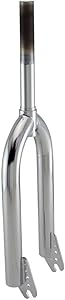
-
Material: High-strength steel construction
-
Steerer Tube: 1” threaded
-
Wheel Size: 20”
-
Finish: Chrome-plated for a classic look
The Fenix Chrome BMX Steel Fork offers an affordable and reliable option for those riding older BMX models that use a threaded steerer. Its robust steel construction ensures it can handle everyday use, while the chrome-plated finish adds both style and corrosion resistance. Designed to fit 20” wheels, it serves as a practical upgrade or replacement fork.
This fork is best suited for casual riders or those restoring vintage BMX bikes, as it pairs functionality with a classic chrome look. While it lacks the lightweight advantage and advanced features of high-end chromoly forks, it offers solid performance for moderate riding and everyday BMX needs.
Pros
-
Affordable replacement fork
-
Strong steel build for reliable use
-
Chrome finish adds durability and style
-
Great fit for vintage or older BMX bikes
Cons
-
Limited compatibility with modern threadless bikes
-
Heavier than high-end chromoly options
5. Fenix 24″ Beach Cruiser BMX Fork, 1″ Threaded, Chrome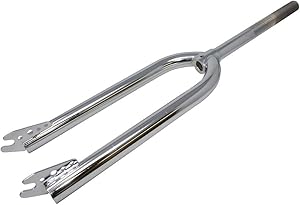
-
Material: Steel construction
-
Wheel Size: 24” beach cruiser/BMX
-
Steerer Tube: 1” threaded
-
Finish: Chrome-plated
The Fenix 24” Beach Cruiser BMX Fork is designed specifically for larger BMX bikes and beach cruisers, offering strength and classic chrome aesthetics. Its durable steel build ensures it withstands regular use, while the chrome plating adds both a stylish finish and protection against rust.
This fork is ideal for riders restoring or upgrading 24” cruiser-style BMX bikes. While it isn’t built for aggressive BMX stunts, it provides smooth, dependable performance for cruising, commuting, or recreational rides. Its threaded steerer tube limits it to specific bike types, but within that category, it is a reliable choice.
Pros
-
Great fit for 24” cruiser-style BMX bikes
-
Durable steel construction
-
Chrome finish adds style and protection
-
Budget-friendly replacement option
Cons
-
Limited compatibility with modern BMX builds
-
Heavier than lightweight chromoly alternatives
6. Eastern Bikes Throttle Series 100% Lightweight Chromoly Construction BMX Fork
-
Material: 100% chromoly steel construction
-
Offset: 28mm for technical riding
-
Dropouts: Heat-treated for strength
-
Steerer Tube: Integrated bearing race
The Eastern Bikes Throttle Series Fork is engineered for serious BMX riders who demand both strength and lightweight performance. Made from 100% chromoly steel, it is both durable and responsive, capable of withstanding the demands of advanced tricks and jumps. The 28mm offset makes it ideal for technical riding, offering precise handling and quick front-end response.
This fork stands out for its balance of strength and weight. It is tough enough to withstand impacts while remaining agile for riders who prioritize technical tricks. The integrated bearing race ensures smooth compatibility with modern BMX headsets, making it a reliable choice for performance-focused riders.
Pros
-
Strong and lightweight 100% chromoly construction
-
Ideal for technical street and park riding
-
Heat-treated dropouts for added durability
-
Smooth integration with modern setups
Cons
-
Higher cost than entry-level forks
-
Best suited for advanced riders rather than casual use
7. Fenix 20″ BMX Steel Fork Chrome, 1-1/8″ Threadedless
-
Material: Steel construction
-
Wheel Size: 20” BMX bikes
-
Steerer Tube: 1-1/8” threadless
-
Finish: Chrome-plated
The Fenix 20” BMX Steel Fork is a dependable replacement option for modern BMX bikes that use a threadless setup. With its chrome-plated steel build, it delivers durability and a sleek finish that resists wear and corrosion. The 1-1/8” steerer tube ensures compatibility with most contemporary BMX frames and headsets.
This fork provides a balance between affordability and reliability, making it a great option for casual riders and hobbyists. While it does not have the advanced heat-treatment or lightweight design of high-end chromoly forks, it serves as a practical solution for everyday BMX use. Its polished chrome appearance also makes it stand out visually on any bike build.
Pros
-
Strong steel construction for reliability
-
Chrome finish resists corrosion
-
Affordable and practical replacement fork
-
Compatible with most modern BMX setups
Cons
-
Heavier than performance-focused chromoly forks
-
Not designed for high-impact BMX stunts
How to Choose BMX Forks
When it comes to upgrading or replacing parts on a BMX bike, one of the most important components to consider is the fork. BMX forks play a critical role in how your bike feels, handles, and withstands impacts from tricks, jumps, and everyday riding. Choosing the right fork can greatly improve your performance, comfort, and bike durability. However, with so many options on the market, it can be overwhelming to know what’s best for your riding style. This guide will break down everything you need to know about BMX forks, from materials and geometry to steer tube sizes and axle types, so you can make the right choice.
1. Why Forks Matter in BMX
The fork is the component that connects your front wheel to the frame. It absorbs impact from landings, influences your steering, and provides stability during tricks. A poorly chosen fork may not only limit performance but also lead to breakage or discomfort. Since BMX riding involves heavy stresses—whether you’re street riding, hitting dirt jumps, or riding park ramps—the fork you choose must match your style.
2. Types of BMX Riding and Fork Requirements
Before choosing a fork, think about the type of BMX riding you do most:
-
Street Riding: Street riders hit rails, ledges, and stairs. They need strong forks with thicker tubing and durable dropouts to withstand repeated impacts. Weight matters less here than strength.
-
Park Riding: Park riders use ramps, bowls, and transitions. Lightweight forks with responsive handling are ideal for spins, flairs, and air tricks.
-
Dirt Jumping: Dirt jumpers need forks that balance strength and shock absorption. Durability is crucial, but some riders prefer slightly more rake (offset) for stable landings.
-
Flatland Riding: Flatland riders focus on balance and control. They often choose lightweight forks with steep offsets for precise handling.
Your primary riding style will heavily influence the best fork for you.
3. Material: Chromoly vs. Hi-Tensile Steel
The material of your fork determines its strength, weight, and longevity.
-
Chromoly (4130 steel)
-
Strong, durable, and lighter than hi-tensile steel.
-
Ideal for aggressive riding and advanced riders.
-
More expensive but worth the investment.
-
-
Hi-Tensile Steel
-
Heavier and weaker compared to chromoly.
-
Typically found on entry-level forks.
-
Good for beginners or light use, but not recommended for heavy tricks.
-
For serious BMX riders, 4130 chromoly forks are the gold standard. They provide the best balance of strength and weight.
4. Steerer Tube and Fork Compatibility
The steerer tube is the part of the fork that goes through the bike’s head tube. Matching it with the correct headset and stem is critical.
-
1 1/8” Steerer Tubes: The modern standard for most BMX bikes. Strong and widely compatible.
-
1” Steerer Tubes: Found on older or kids’ BMX bikes. Less common today.
Also, consider whether the steerer tube is threaded or threadless. Most modern BMX forks are threadless, which are stronger and used with threadless headsets.
5. Fork Offset (Rake)
The offset—also known as rake—refers to the distance between the fork’s steering axis and the axle. Offset affects how responsive your front end feels:
-
Steep/Short Offset (20mm–26mm): Creates sharper, quicker steering. Great for technical tricks, nose manuals, and flatland.
-
Medium Offset (28mm–32mm): A balance between responsiveness and stability. Common for street and park riders.
-
Long Offset (33mm–36mm): Offers stability at high speeds and during dirt jumps. Better for riders who prioritize control over twitchy handling.
Choosing the right offset depends on whether you want faster handling (short offset) or more stability (long offset).
6. Dropouts and Axle Size
The dropouts are the fork ends where your front wheel axle sits. They need to be compatible with your axle type.
-
10mm (3/8”) Axles: Standard on many BMX bikes, especially for park and flatland riders.
-
14mm Axles: Stronger, often used for street riding where pegs and grinds put more stress on the dropouts.
If you ride with pegs, make sure your fork is designed to handle the extra pressure. Many forks now feature thicker or heat-treated dropouts for durability.
7. Tapered vs. Straight Legs
The legs of the fork can be straight or tapered, affecting both aesthetics and performance.
-
Straight Legs: Offer a stiff, responsive feel. Preferred by flatland riders for technical precision.
-
Tapered Legs: Provide strength where it’s needed most (near the dropouts) while saving weight higher up. Popular among street and park riders.
Your preference depends on both riding style and the look you want for your bike.
8. Weight Considerations
Weight is always a factor in BMX, especially if you’re doing tricks that require lifting the bike.
-
Lighter Forks (under 2 lbs.): Easier for spins, whips, and manuals. Great for park and flatland.
-
Heavier Forks (2.5–3 lbs.): Stronger and better for street riding where durability matters more than weight.
The best choice balances strength and weight based on your riding discipline.
9. Heat Treatment and Butting
High-quality forks often feature heat-treated tubing and butted construction:
-
Heat Treatment strengthens the steel, making the fork more resistant to cracks and bending.
-
Butted Tubing means the tubing is thicker in high-stress areas (like dropouts and steerer tube) and thinner elsewhere to save weight.
These features are worth paying for if you ride hard and want your fork to last.
10. Peg Compatibility
If you ride street and plan to use grind pegs, check that the fork dropouts are compatible. Some forks include cutouts or design features to better fit pegs and hubs.
11. Budget and Price Range
BMX forks range in price depending on material and features:
-
Entry-Level Forks ($50–$100): Usually hi-tensile steel, heavier, and less durable. Suitable for beginners.
-
Mid-Range Forks ($100–$200): Often chromoly, heat-treated, and lighter. Best for intermediate riders.
-
High-End Forks ($200–$300+): Full 4130 chromoly, advanced butting, and weight-saving designs. Built for serious riders who demand performance.
Think of a fork as an investment. Spending more upfront often saves money in the long run, since high-quality forks last longer and perform better.
12. Aesthetics and Brand Choice
While performance matters most, the look of your fork can also be important for your bike build. Forks come in various finishes like matte black, chrome, or custom colors. Popular brands include Odyssey, S&M, Sunday, Fit, Cult, Shadow Conspiracy, and WeThePeople, all known for reliable forks.
Conclusion
Choosing the right BMX fork comes down to your riding style, material preference, geometry needs, and budget. Street riders will want strong chromoly forks with thicker dropouts, while park and flatland riders may prefer lightweight, responsive forks with short offsets. Dirt jumpers often go for stable, mid-weight forks with longer rake. Always make sure your fork matches your headset, steerer tube size, and axle type.
A fork isn’t just a part—it’s a foundation of your BMX bike’s handling and durability. Investing in the right one ensures smoother rides, better tricks, and fewer broken parts. Whether you’re grinding rails in the street, flying off dirt jumps, or perfecting flatland tricks, the right fork can make all the difference in your BMX experience.