Best GoPro for Dirt Biking of 2025
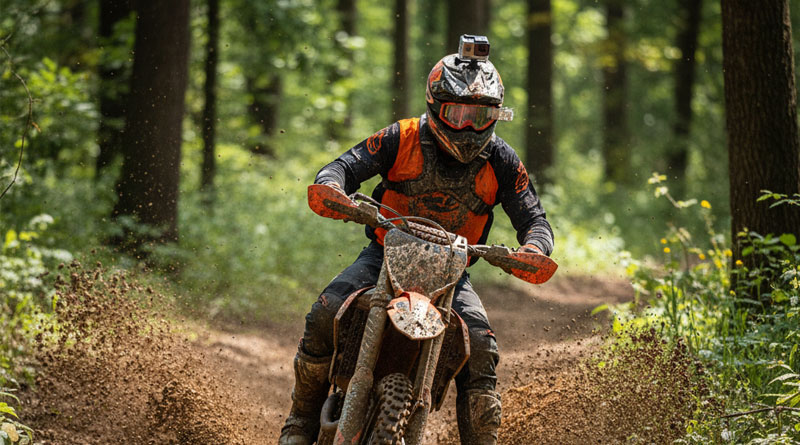
Riding a dirt bike is all about excitement, speed, and tackling tough trails, and a GoPro helps you capture every wild moment. Whether you’re jumping over muddy tracks or exploring rough terrain, the right GoPro can handle the dirt, bumps, and vibrations with ease. These cameras are built to record your rides in sharp detail and smooth motion. In this guide, we’ll help you find the best GoPro for dirt biking so you can relive your adventures and share them with stunning, action-packed footage.
1. HERO13

- Video Capture Resolution: 5.3K
- Photo Sensor Technology: CMOS
- Screen Size: 2.27 Inches
- Special Feature: Waterproof
The HERO13 is built for riders who want the sharpest, most stable POV footage without fuss. Its compatibility with HB-Series lenses makes switching looks fast — the camera detects when a lens or filter is attached and auto-adjusts, so you spend less time fiddling and more time riding. 5.3K video gives room to crop and stabilize in post while still keeping plenty of detail, and the 2.27-inch screen makes framing simple even with gloves on. HyperSmooth 6.0 keeps rough trail footage watchable, turning jittery clips into smooth, usable shots for editing or sharing.
For dirt biking the standout is the ultra-slow burst mode that lets you pull dramatic slow-motion clips, and the webcam/live-stream features are a nice bonus for riders who vlog. Battery life and mounting options are typical for modern GoPros, so bring a spare battery for long rides. Overall, HERO13 is a premium, rugged action camera that prioritizes image quality and stabilization, making it excellent for riders who want broadcast-level footage from their helmet or handlebars.
Pros:
- Excellent stabilization and image quality
- Auto-detect lenses for fast setup
- Very slow-motion capability
Cons:
- Premium price compared to older models
- Battery life can be short at highest resolutions
2. HERO12

- Video Capture Resolution: 4K, 5.7K
- Battery: 1720mAh Enduro (up to 70 min at 5.3K60)
- Screen Size: 2.3 Inches
- Connectivity: Bluetooth
The HERO12 feels like a refined, rider-focused workhorse. Rugged and waterproof to 33 ft, it survives mud, rain, and washdowns without a case. The Enduro battery and efficiency improvements mean longer recording at high resolutions, which is great for full-day rides when you don’t want to change batteries frequently. The camera’s large sensor and HDR deliver punchy, well-exposed footage on bright desert runs or shaded singletrack, and the expanded field of view captures more of the scene for immersive POV clips.
HyperSmooth 6.0 stabilization and 360° Horizon Lock keep footage level and watchable through rough chop and full-rotation crashes, so you get usable clips more often. Built-in Bluetooth audio connectivity adds flexibility for external mics or earbuds when you need better audio or remote control. If you want a balanced mix of runtime, modern stabilization, and top-tier image quality without stepping up to the absolute newest model, the HERO12 is a sensible, durable choice for dirt bikers.
Pros:
- Longer runtime with Enduro battery
- Excellent stabilization and HDR footage
- Rugged and waterproof out of the box
Cons:
- Slightly bulkier than older compact models
- High-res footage needs ample storage
3. HERO11

- Video Capture Resolution: 5.7K
- Photo Resolution: 27MP
- Screen Size: 2.27 Inches
- Included: Enduro Battery + Mounts
HERO11 introduced a bigger image sensor that gives an expansive field of view, ideal for dirt bikers who want to capture sky and scenery as well as the trail. The 27MP stills are a big advantage when you want high-quality shots from action clips, and 5.7K video offers extra headroom for cropping and stabilization without losing detail. The water-repelling lens cover reduces flare and keeps shots cleaner through muddy conditions and rainy rides.
HyperSmooth stabilization keeps improvements rolling, and the ability to record in high frame rates makes capturing dramatic slow-motion wheelies and jumps straightforward. The included Enduro battery and mounting hardware mean you can start riding and filming immediately. HERO11 is a great match for riders who prioritize large, flexible footage files for heavy editing and cropping while still needing reliable in-camera stabilization on the roughest trails.
Pros:
- Huge sensor and field of view
- High-res stills from video
- Strong stabilization for action footage
Cons:
- Large files demand fast cards and storage
- Higher-end features increase learning curve
4. HERO10
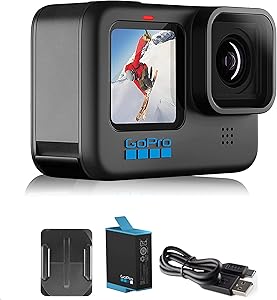
- Video Capture Resolution: 5.3K
- Photo Resolution: 23MP
- Processor: GP2 (faster performance)
- Screen Size: 1.88 Inches
The HERO10 brought a major speed boost with the GP2 processor, which improves responsiveness and gives smoother high-frame-rate recording. For dirt biking this means snappier menus with gloves, quicker transfers, and reliable 5.3K60 capture that balances resolution and fluid motion. The 23MP stills are good for grabbing usable photos between runs, and HyperSmooth 4.0 does a solid job at keeping handheld, helmet, and bar-mounted footage steady across rough terrain.
Water-shedding hydrophobic coatings and solid low-light improvements make the HERO10 a dependable camera for unpredictable trail conditions. It’s a practical pick for riders who want very good image quality and stabilization without the larger files or premium price of the latest models. Overall, HERO10 is a fast, reliable action camera that hits the sweet spot between performance and value for serious dirt bikers.
Pros:
- Fast processor and responsive UI
- Great stabilization for the price
- Strong overall image quality
Cons:
- Smaller screen than newer models
- Battery life under heavy use can be limited
5. HERO9

- Video Capture Resolution: 5K
- Photo Resolution: 20MP
- Screen Size: 2.27 Inches (rear) + front display
- Battery: 1720mAh (30% longer life)
HERO9 was a step-change for usability with its front-facing display and larger rear touchscreen — a real advantage when framing helmet or chest-mounted shots. The 5K video resolution gives clear, detailed footage for editing or zooming, and the 20MP stills with SuperPhoto help produce strong single-frame results without much post-processing. HyperSmooth 3.0 offers reliable stabilization for trail runs and jump sessions, and the beefier battery noticeably extends shooting time on long outings.
For riders just stepping up from older action cams, HERO9 balances modern features with straightforward controls. It’s not the newest tech, but its combination of solid image quality, user-friendly screens, and improved battery life keeps it relevant. If you prioritize easy framing, longer runtime, and dependable footage without chasing the absolute highest resolutions, HERO9 remains a sensible and capable option for dirt biking adventures.
Pros:
- Front and rear displays for easy framing
- Improved battery life
- Good stabilization and image quality
Cons:
- Older stabilization tech vs newer models
- Less headroom for cropping than 5.3K+ cameras
How to Choose a GoPro for Dirt Biking
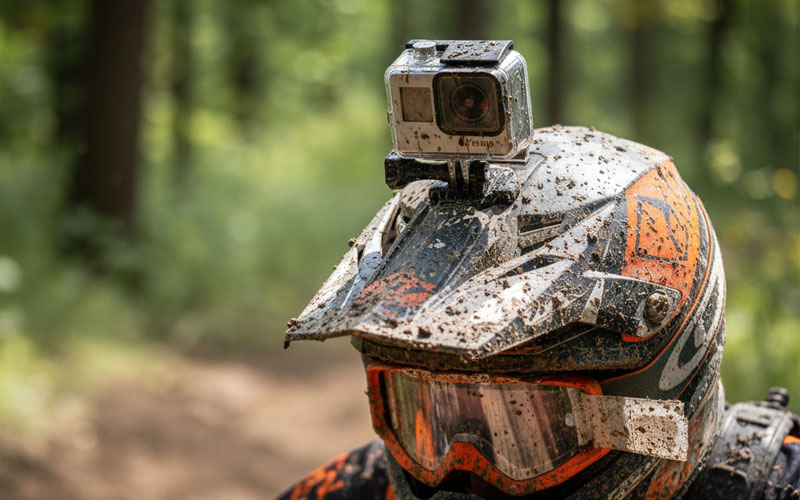
Dirt biking is a high-energy sport that combines speed, rough terrain, and unpredictable action. Choosing the right GoPro to capture those moments means balancing image quality, stabilization, battery life, and how rugged the camera needs to be. This guide walks you through the important features, real-world considerations, and practical tips so you pick a camera that survives the trail and makes your footage look great.
Why a GoPro for dirt biking?
Action cameras like GoPros are designed for movement, shock, and weather. They’re compact, mountable, and built to handle dust, mud, and impacts — exactly what dirt bikers deal with. Unlike larger cameras, a GoPro can be securely mounted to helmets, chest harnesses, handlebars, or the bike itself without creating dangerous weight or bulk. The core benefit is that you can capture immersive, first-person footage that conveys speed and terrain in ways handheld cameras can’t.
Key features to prioritize
Video resolution and frame rates
Higher resolution (4K and up) gives you crisp footage and more flexibility in post-production for cropping or stabilizing. Higher frame rates (120fps, 240fps) let you create smooth slow-motion for jumps and technical sections. For dirt biking, aim for at least 2.7K at 60fps or 4K at 30–60fps if you want to balance file size and quality. Use higher frame rates selectively for highlights like jumps and drops.
Image stabilization
Stabilization is arguably the most important feature for dirt biking. Trails are bumpy, and without strong electronic stabilization, footage can be shaky and unpleasant to watch. GoPros with advanced stabilization (HyperSmooth or similar tech) dramatically improve results and reduce the need for gimbals. If you plan to mount on the bike or chest, prioritize models with the best stabilization available.
Durability and weather resistance
Dirt, water, and impacts are constant hazards. Choose a model rated for rough use — ideally waterproof out of the box or easily housed in a protective case. A robust lens cover and secure mount system are essential. If you often ride in wet or muddy conditions, make sure any ports and doors seal well against grime and moisture.
Battery life and removable batteries
Recording in high resolution and at high frame rates eats battery fast. Look for cameras with decent battery life and the option to carry spare batteries or use hot-swappable battery packs. If your chosen model has removable batteries, pack two extras for a full day out. Consider also external power options if you plan very long rides or multi-angle shoots.
Mounting options and accessories
How you plan to mount the camera will influence the model you choose. Helmet and chest mounts deliver immersive POVs; handlebar mounts capture the bike’s movement; a spin or pole mount can show wide-angle follow shots. Make sure the GoPro model supports standard mounts and has reliable mounting adapters. A solid set of compatible accessories (quick-release mounts, extension arms, vibration-damping adapters) is worth the investment.
Practical considerations
Weight and size
Smaller, lighter cameras are less intrusive but sometimes sacrifice battery or port options. On a helmet, weight distribution matters for comfort and safety. If you prefer chest mounts, size matters less, but durability remains important. Try to find a model that balances compactness with performance.
Audio quality
Wind noise is a major issue at speed. GoPros generally handle audio reasonably well but expect wind interference. Using an external mic (where supported) or applying wind-damping accessories can help. Audio is often secondary to video for many riders, but if you want voiceover commentary or clear engine sounds, check mic options and mounting positions that reduce wind blast.
Field of view and lens choices
Wide-angle lenses capture the environment and create that immersive feel, but extreme wide angles can distort and exaggerate motion. Many modern GoPros let you adjust the field of view (Wide, Linear, Narrow). For dirt biking, a wide or linear wide setting usually works best — wide enough to show trail and speed without too much fisheye distortion.
Budget and value
GoPros cover a wide price range. If you’re on a budget, older models still deliver solid results at lower cost, especially if you mainly upload to social media or don’t need the highest frame rates. Mid-range models offer great stabilization and 4K capability. Premium models add features like improved low-light performance, better stabilization, and higher frame rates. Factor in the cost of mounts, spare batteries, memory cards, and any protective housing when calculating total spend.
Settings and shooting tips for dirt biking
Resolution and frame rate choices
For general riding, 4K at 30–60fps provides excellent quality. For slow-motion action, switch to 1080p at 120–240fps. Use higher frame rates for jumps and technical maneuvers, and lower frame rates for scenic trail sections to conserve battery and storage.
Protune or manual settings
If your GoPro supports advanced settings, learn to adjust ISO limits, shutter speed, and white balance to improve footage in changing light conditions. A lower ISO keeps footage cleaner in bright daylight; higher shutter speeds freeze motion during jumps. Lock white balance or set it manually to avoid color shifts during a ride.
Mounting best practices
- Use multiple mounts for different perspectives — helmet for POV, chest for hands-on control, and a short handlebar mount for the bike’s movement.
- Check all mounting hardware before each ride and use thread-locker on bolts if appropriate.
- Angle the camera slightly downward on the helmet so the horizon stays level in climbs and descents.
Post-ride workflow
Back up footage promptly and organize by ride and date. Use stabilization and color-grading tools during editing to refine footage. Trimming out low-action segments and focusing on highlights (jumps, technical lines, scenic moments) makes for a more watchable video. If you shoot in high resolution, transcode or create proxies for smoother editing on modest hardware.
Final checklist before buying
- Confirm strong electronic stabilization and good low-light performance.
- Verify battery life and availability of spare batteries or external power solutions.
- Ensure a robust mount ecosystem and accessory compatibility.
- Check the camera’s durability and water/dust resistance specs.
- Factor in total cost including mounts, memory cards, and protective gear.
Conclusion
Choosing the right GoPro for dirt biking comes down to priorities: stabilization and durability first, followed by resolution, frame rates, and battery life. Think about how you ride, where you mount the camera, and how you plan to edit and share footage. With the right model and a few good mounts and batteries, you’ll capture the speed, grit, and thrill of the trail in a way that’s exciting to watch and easy to share.