Best Mountain Bike Disc Brakes of 2025
Finding the best mountain bike disc brakes can make your rides safer and more enjoyable. Good brakes help you stop quickly. They give you control on rough trails and steep hills. Not all brakes perform the same in mud or rain. Some are stronger, lighter, or easier to maintain. Choosing the right ones can improve your biking experience. This guide will explain the top options available. It also shares tips on what to look for. By the end, you will know which brakes fit your needs best.
1. TOBWOLF Upgrade Four-Piston MTB Disc Brake Set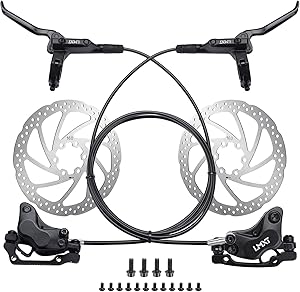
-
Brake Type: Hydraulic, four-piston calipers
-
Rotor Size: 160mm
-
Brake Pads: Ceramic
-
Cable Length: Left Front 85cm & Right Rear 145cm
The TOBWOLF Upgrade Four-Piston MTB Disc Brake Set delivers impressive stopping power for both mountain bikes and e-bikes. With its four-piston hydraulic calipers and ceramic brake pads, it provides smooth, consistent braking even on steep descents. Installation is straightforward, and the kit comes with rotors pre-mounted to match standard 160mm specifications, ensuring compatibility with most MTB setups.
Performance-wise, these brakes excel in wet and muddy conditions, thanks to the ceramic pads’ heat resistance and durability. The leverage provided by the four-piston system gives riders precise control, reducing brake fade during long rides. The included cable lengths are adequate for standard full-suspension setups, and the overall feel is responsive without being overly aggressive.
Pros:
-
Excellent stopping power and modulation
-
Ceramic pads resist heat build-up
-
Smooth hydraulic action
-
Easy installation
Cons:
-
Slightly heavier than standard two-piston brakes
-
May require bed-in time for optimal performance
2. Zmgdrm MT200 MTB Hydraulic Disc Brakes Set
-
Brake Type: Hydraulic, two-piston calipers
-
Cable Length: Left Front 800mm, Right Rear 1550mm
-
Compatibility: Mountain Bikes
-
Rotor Size: Supports 160mm
The Zmgdrm MT200 Hydraulic Disc Brakes are a solid choice for riders looking for reliable performance on trails. These two-piston hydraulic brakes provide consistent stopping power while keeping maintenance minimal. They are compatible with standard MTB frames and come with generous cable lengths, making installation flexible.
The braking feel is smooth and responsive, allowing confident control on rough terrain. Heat management is adequate for moderate trail riding, and the lever ergonomics are comfortable for long-distance rides. While they may not offer the same extreme power as four-piston systems, the MT200 balances performance and affordability, making it a practical upgrade for most mountain bikers.
Pros:
-
Smooth hydraulic performance
-
Easy to install
-
Comfortable lever ergonomics
-
Reliable stopping in wet conditions
Cons:
-
Less power than four-piston brakes
-
Not ideal for extreme downhill racing
3. Shimano OEM MT200 Hydraulic Brakes
-
Brake Type: Hydraulic, two-piston calipers
-
Cable Length: Left Front 800mm, Right Rear 1500mm
-
Rotor Compatibility: 160mm / 180mm
-
Brand Reliability: Shimano OEM
Shimano OEM MT200 Hydraulic Brakes are trusted for their consistent performance and durability. Designed with two-piston calipers, these brakes offer smooth, controlled stopping suitable for trail and cross-country riding. The hydraulic system ensures minimal maintenance and a responsive braking feel, making them ideal for riders seeking reliability.
Installation is straightforward, with pre-measured cables fitting most MTB setups. Performance is impressive in wet and dry conditions, with the Shimano lever design providing ergonomic comfort and excellent modulation. While not as powerful as four-piston alternatives, the MT200 strikes a good balance between control, weight, and affordability.
Pros:
-
Trusted Shimano reliability
-
Smooth and consistent braking
-
Comfortable lever ergonomics
-
Compatible with multiple rotor sizes
Cons:
-
Moderate stopping power compared to high-end four-piston brakes
-
Slightly higher price than generic alternatives
4. RUJOI Bike Disc Brake Kit
-
Brake Type: Mechanical, aluminum alloy calipers
-
Rotor Size: 160mm
-
Pad Adjustment: Tool-free
-
Brake Lever Material: Full aluminum alloy
RUJOI Bike Disc Brake Kit is designed for riders who prefer mechanical simplicity with solid performance. The aluminum alloy calipers and levers are durable while keeping weight low. The tool-free pad adjuster makes maintenance quick and easy, ideal for riders who need efficient on-trail tweaks.
The braking performance is decent for cross-country and light trail riding, with good modulation and predictable stopping power. While mechanical brakes don’t offer the same hydraulic smoothness, the RUJOI kit compensates with straightforward installation and adjustability. The overall build quality is solid, making it a reliable entry-level upgrade.
Pros:
-
Easy tool-free pad adjustment
-
Lightweight aluminum alloy
-
Reliable stopping power for casual MTB
-
Simple installation
Cons:
-
Mechanical system less smooth than hydraulic
-
Limited performance on steep descents
5. Fat-Cattie 1 Pair MTB Disc Brake Set
-
Brake Type: Hydraulic
-
Rotor Size: 160mm
-
Color: Red
-
Compatibility: MTB, E-Bike, Fat Bike, Road Bike
The Fat-Cattie Hydraulic Disc Brake Set is a versatile option for riders seeking reliable braking across multiple bike types. Featuring 160mm rotors and hydraulic calipers, these brakes provide strong, consistent stopping power even under demanding conditions. The bright red color adds a visual upgrade for bike aesthetics.
Performance is smooth and responsive, with good heat management for longer rides. The hydraulic design ensures minimal lever effort, improving control on technical terrain. This set is compatible with a wide variety of bikes, making it a flexible choice for riders who switch between MTB, fat bikes, or e-bikes.
Pros:
-
Smooth hydraulic performance
-
Multi-bike compatibility
-
Attractive design
-
Reliable braking in varied conditions
Cons:
-
Slightly heavier than single-bike-specific brakes
-
May need initial bleeding for peak performance
6. HAIKS Zoom HB876E Hydraulic Disc Brakes Set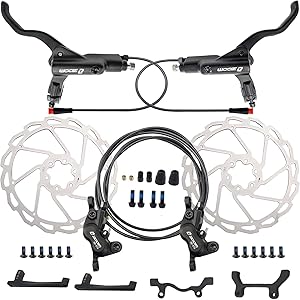
-
Brake Type: Hydraulic, four-piston
-
Rotor Size: 180mm
-
Compatibility: E-Bike, MTB, Fat Bike, Road Bike
-
Power-Off Feature: Electric bike safety integration
The HAIKS Zoom HB876E Hydraulic Disc Brakes are engineered for e-bikes and high-powered mountain bikes. Featuring four-piston calipers and 180mm rotors, they deliver impressive braking power for downhill and technical terrain. The electric power-off feature adds safety for e-bike riders, automatically cutting motor assistance when brakes are applied.
These brakes excel in high-demand scenarios, offering precise modulation and heat resistance during long descents. The build quality is robust, and the levers provide ergonomic comfort for extended rides. While primarily designed for e-bikes, they are equally capable on standard MTBs and fat bikes.
Pros:
-
Strong four-piston braking
-
High heat resistance
-
E-bike power-off safety feature
-
Compatible with multiple bike types
Cons:
-
Heavier than standard MTB brakes
-
Higher price point
7. Fat-Cattie Bike Disc Brake Kit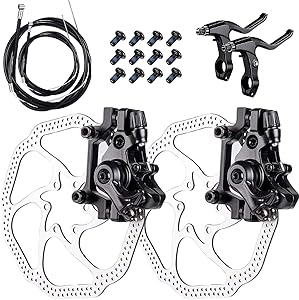
-
Brake Type: Hydraulic
-
Rotor Size: 160mm stainless steel
-
Includes: Calipers, cables, levers, screws
-
Compatibility: Front and rear MTB
The Fat-Cattie Bike Disc Brake Kit is a comprehensive solution for full MTB braking setup. With stainless steel 160mm rotors and hydraulic calipers, it delivers reliable performance and precise stopping power. The kit includes all necessary components, making it an excellent choice for a complete brake upgrade.
Performance is consistent, with smooth lever action and adequate heat management for most trail conditions. The kit’s versatility allows installation on front or rear, ensuring both wheels are equally responsive. Overall, this set is perfect for riders seeking a complete, cost-effective brake system without sacrificing quality.
Pros:
-
Complete kit with all components
-
Smooth hydraulic performance
-
Stainless steel rotors for durability
-
Easy installation
Cons:
-
May require bleeding during setup
-
Slightly heavier than high-end kits
How to Choose the Best Mountain Bike Disc Brakes
When it comes to mountain biking, stopping power and control are just as important as speed and endurance. Your bike’s disc brakes play a crucial role in ensuring safety, performance, and comfort on rugged trails. Choosing the right disc brakes can be tricky because of the variety of options, brands, and technologies available today. This guide will help you understand the essential factors to consider before buying the best mountain bike disc brakes for your riding style.
Types of Mountain Bike Disc Brakes
Mountain bike disc brakes are mainly categorized into two types: mechanical and hydraulic. Knowing the differences between these two can make your decision easier.
Mechanical Disc Brakes
Mechanical disc brakes use a cable to pull the brake caliper, which squeezes the brake pads against the rotor. They are simpler, easier to maintain, and generally more affordable. Mechanical brakes are ideal for casual riders or those on a budget.
Advantages:
-
Lower cost
-
Simple design, easier DIY maintenance
-
Compatible with most frames
Disadvantages:
-
Less braking power compared to hydraulic brakes
-
Cable stretch can reduce performance over time
Hydraulic Disc Brakes
Hydraulic disc brakes use fluid to transfer pressure from the lever to the caliper. They offer stronger braking power, better modulation, and consistent performance in wet or muddy conditions.
Advantages:
-
Stronger and smoother braking
-
Excellent control and modulation
-
Less maintenance once set up
Disadvantages:
-
Higher cost
-
More complex installation
-
Requires occasional bleeding
Rotor Size and Its Impact
The rotor is the round metal disc attached to your wheel. Its size directly affects braking performance.
Small Rotors (140mm – 160mm)
Small rotors are lighter and sufficient for cross-country trails or lighter riders. They provide adequate braking for moderate speeds and less aggressive riding.
Medium Rotors (160mm – 180mm)
Medium-sized rotors offer balanced braking power and weight. They are suitable for most all-mountain and trail riding.
Large Rotors (180mm – 203mm)
Large rotors provide maximum stopping power for downhill, enduro, or heavy riders. They handle heat better during long descents but add extra weight to the bike.
Brake Pads: Material Matters
Brake pads come in different materials, each offering unique benefits depending on your riding conditions.
Organic (Resin) Pads
Organic pads provide smoother braking and less noise. They are gentler on rotors but wear faster in wet and muddy conditions.
Metallic (Sintered) Pads
Metallic pads are more durable and perform better in wet conditions. They may produce more noise and slightly reduce modulation but are ideal for aggressive riding.
Semi-Metallic Pads
Semi-metallic pads combine characteristics of organic and metallic pads, offering a balance of performance, durability, and noise reduction.
Understanding Lever Feel and Modulation
Brake lever feel and modulation refer to how smoothly and predictably the brake responds when squeezed.
Soft Lever Feel
A soft lever feel allows you to apply less force for braking, providing comfort and reducing hand fatigue during long rides.
Firm Lever Feel
A firm lever feel gives more control for aggressive riders who require precise braking in technical terrain.
Compatibility with Your Bike
Before buying disc brakes, check compatibility with your bike frame and wheels.
Mounting Type
Disc brakes come with two mounting standards: post mount and IS (International Standard). Ensure your frame and fork support the type you choose.
Wheel Size Compatibility
Some brakes are optimized for certain wheel sizes. For example, downhill bikes may require larger rotors and specific calipers for maximum performance.
Maintenance and Durability
Regular maintenance ensures your brakes perform reliably and last longer.
Easy Maintenance
Mechanical disc brakes are easier to maintain, often requiring only occasional cable adjustments. Hydraulic brakes need occasional bleeding and fluid replacement.
Durability
Quality rotors and pads extend brake life. Choosing a well-known brand can also ensure better replacement part availability.
Budget Considerations
Disc brakes come in a wide price range. Mechanical brakes are usually budget-friendly, while hydraulic brakes and high-end rotors can be more expensive. Balance your budget with your riding needs and preferences.
Budget Tips:
-
Prioritize braking performance over aesthetics
-
Consider used or previous year models for high-end hydraulic brakes
-
Include maintenance tools or spare pads in your budget
Popular Brands and Recommendations
Several brands are known for producing reliable mountain bike disc brakes. Shimano, SRAM, and Magura are widely respected for performance and durability.
-
Shimano: Known for smooth modulation and strong stopping power, ideal for cross-country and trail riders.
-
SRAM: Offers powerful braking systems suitable for enduro and downhill biking.
-
Magura: Provides excellent hydraulic systems with consistent performance in various conditions.
Choosing the Right Brakes for Your Riding Style
Your riding style significantly impacts which brake system suits you best.
Cross-Country Riders
Lightweight mechanical or entry-level hydraulic brakes are sufficient. Focus on efficiency and weight reduction.
Trail and All-Mountain Riders
Mid-range hydraulic brakes with medium rotors provide balanced stopping power and reliability.
Downhill and Enduro Riders
High-performance hydraulic brakes with large rotors and durable metallic pads are essential for maximum braking power and heat management.
Installation and Professional Help
Installing disc brakes, especially hydraulic systems, can be tricky. If you’re unsure, it’s wise to seek professional help. Proper installation ensures safety, prevents rotor warping, and maximizes brake efficiency.
Tips for Installation:
-
Always follow manufacturer instructions
-
Use appropriate tools for torque settings
-
Check brake alignment and lever feel after installation
Conclusion: Making the Right Choice
Choosing the best mountain bike disc brakes involves balancing performance, budget, and riding style. Consider brake type, rotor size, pad material, lever feel, and bike compatibility before making a purchase. Mechanical brakes work for casual riders, while hydraulic systems are best for aggressive trail, enduro, and downhill biking. Ensure proper maintenance and installation to get the most out of your brakes. Investing in quality disc brakes enhances safety, control, and confidence on every ride, making your mountain biking experience more enjoyable and secure.