Best Baselayers for Winter Cycling of 2026
Winter cycling feels easier when you wear the right baselayers. These thin layers keep your body warm. They pull sweat away from your skin. This helps you stay dry in cold weather. Good baselayers also add comfort on long rides. You can wear them under any jacket. They work well in wind and light rain. Choosing the right fabric makes a big difference. In this guide, we share the best baselayers for winter cycling.
1. GCRFL Winter Cycling Jersey Sets
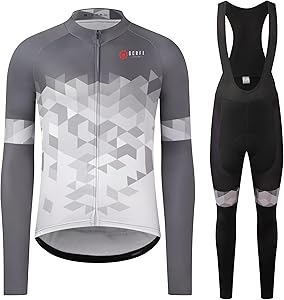
- Fabric: Windproof polyester with thermal fleece lining.
- Storage: 3+1 rear pockets including a zippered phone pocket.
- Comfort: 3D multi-level high-density foam gel saddle pad.
- Safety: Reflective strips on the jacket back and leg ends.
This all-in-one winter cycling suit from GCRFL is designed to be a comprehensive solution for cold-weather riders. The windproof polyester shell effectively blocks chilling winds, while the thermal fleece lining traps body heat to keep you warm on brisk descents and long rides. The included bib shorts feature a generous gel saddle pad rated for 5-7 hours of comfort, which is a significant benefit for endurance cyclists. Practicality is a strong suit, with multiple rear pockets securely storing your phone, nutrition, and tools, and the reflective elements enhance visibility for those early morning or late evening training sessions.
However, potential buyers must pay close attention to the sizing. The company explicitly states that the jersey and shorts are a fixed set and cannot be mixed, and the sizing runs quite snug. The recommendation to size up for a looser fit is crucial advice to follow. While the integrated design is convenient, it lacks the modularity of separate base layers and jerseys, meaning you’re committed to the entire system once you’re wearing it. It’s a fantastic set for someone looking for a simple, all-in-one winter kit.
Pros:
- Excellent windproof and thermal insulation.
- Comfortable saddle pad ideal for long rides.
- Ample and secure storage with a dedicated phone pocket.
- Good reflective details for safety.
Cons:
- Sizing is complex and runs small; careful measurement required.
- Not a modular system; top and bottom cannot be purchased separately.
2. TSLA Men’s Thermal Long Sleeve Compression Shirt

- Neck Design: Mock/Turtle neck for optimized heat insulation.
- Lining: Micro-fleece for warmth and moisture-wicking.
- Seams: Flatlock construction for chafe-free comfort.
- Care: Requires washing separately and laying flat to dry.
The TSLA Thermal Compression Shirt serves as a versatile and effective base layer for a wide range of cold-weather activities, including winter cycling. The mock neck design is a standout feature, providing crucial extra warmth around the neck and chest without being overly restrictive. The micro-fleece lining feels soft against the skin and does an admirable job of managing moisture through its two-way air circulation, pulling sweat away to keep you dry during high-output efforts. The flatlock seams are a critical detail for cyclists, as they prevent irritation and chafing in areas of high contact with the bike, such as the underarms and back.
While its versatility is a strength, it’s important to note that this is not a cycling-specific cut. It may not feature a longer tail to stay tucked in while in a riding position, and the fit might be more generalized. The care instructions are also slightly more demanding than typical base layers, requiring you to lay it flat to dry, which could be an inconvenience for some users. Despite this, it delivers exceptional core warmth and comfort, making it a reliable and affordable choice for layering under a cycling jersey.
Pros:
- Excellent mock neck design for superior core warmth.
- Effective moisture-wicking and breathable fleece lining.
- Comfortable flatlock seams prevent chafing.
- Great value and highly versatile for multiple sports.
Cons:
- Not a cycling-specific cut (e.g., may not have a longer tail).
- Care instructions (lay flat to dry) can be inconvenient.
3. romision Thermal Underwear
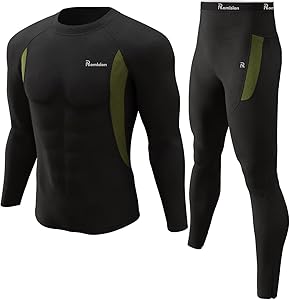
- Fabric: Lightly brushed, four-way stretch material.
- Moisture Management: Breathable and moisture-wicking.
- Design: Tagless crew neck with raglan sleeves.
- Versatility: Suitable for lounging, work, or outdoor sports.
Romision offers a thermal underwear set that prioritizes all-day comfort and freedom of movement, making it a strong contender as a winter cycling base layer. The lightly brushed interior is incredibly soft and provides immediate warmth without the bulk, allowing it to fit seamlessly under tighter-fitting cycling jerseys. The four-way stretch is its most impressive feature, moving with your body during aggressive riding positions without bunching or restricting motion. The tagless design and raglan sleeves further enhance comfort by eliminating potential pressure points and seams that could cause irritation over long hours in the saddle.
This set is marketed as an all-around solution, which is both a pro and a con. While it performs well for a variety of activities, it may not have the precise, technical fit of a dedicated cycling base layer. The breathability is good, but during very high-intensity efforts, a cyclist might prefer a fabric with even more aggressive moisture-wicking properties. Nonetheless, for the average cyclist tackling cold commutes or recreational winter rides, the Romision set provides exceptional comfort, warmth, and value, and its presentation makes it a great gift option.
Pros:
- Extremely soft and comfortable brushed fabric.
- Excellent four-way stretch for unrestricted movement.
- Thoughtful tagless and raglan sleeve design prevents chafing.
- Versatile for both casual wear and sports.
Cons:
- May not have the technical, performance-focused fit of cycling-specific base layers.
- Moisture-wicking might be outpaced by extreme, high-output efforts.
4. HEROBIKER Long Johns Thermal Underwear

- Fabric: Premium, silky soft lining with a normal thickness.
- Warmth: Lightweight but effectively warm for cold weather.
- Fit: Four-way stretch compression for a slim profile.
- Construction: Flatlock stitching for maximum comfort.
HEROBIKER’s thermal set is engineered for athletes who need warmth without sacrificing mobility. The fabric has a distinct silky-soft feel that is comfortable against the skin, and its normal thickness makes it an ideal mid-weight layer that isn’t bulky. The four-way stretch is exceptional, providing a compression-like fit that feels supportive and stays in place during dynamic movements on the bike, whether you’re climbing out of the saddle or maintaining an aero tuck. The flatlock stitching is a key feature for cyclists, ensuring there are no raised seams to cause hot spots during long rides.
The compression aspect is a highlight, but it’s worth noting that some users might find it too tight if they prefer a looser base layer. While it is warm and breathable, it is perhaps best suited for moderately cold conditions rather than extreme, sub-freezing temperatures on its own. For those conditions, it would work well as part of a layered system. Its versatility across many sports is a major plus, and it performs reliably as a sleek, non-restrictive base layer for winter cycling.
Pros:
- Silky-soft fabric feels great against the skin.
- Excellent compression fit that moves with the body.
- Flatlock seams prevent chafing and irritation.
- Versatile for a wide range of winter sports.
Cons:
- Compression fit may be too tight for some preferences.
- Best for moderate cold, not extreme temperatures by itself.
5. GripGrab Cycling Baselayer

- Technology: Two-layer insulating and breathable thermal fabric.
- Moisture Management: Premium moisture-wicking material.
- Fit: High-stretch fabric with low-profile seams for a form-fitting cut.
- Hygiene: Permanent Polygiene anti-odour treatment.
GripGrab, a brand trusted by cyclists, delivers a purpose-built winter base layer that excels in performance and practicality. The two-layer fabric construction is engineered to trap a layer of warm air against your skin while still allowing moisture vapor to escape, striking a perfect balance between insulation and breathability. The cycling-optimized fit is immediately noticeable; it’s form-fitting without being restrictive, and the low-profile seams are strategically placed to avoid any pressure points from backpack straps or a cycling jersey. The inclusion of
Polygiene odor control is a game-changer for frequent riders, significantly extending the wear between washes.
This base layer is part of a value-packed 3-pack bundle, which is ideal for cyclists who train regularly and want to minimize laundry frequency. The only minor consideration is that, as a dedicated piece of cycling kit, it’s less versatile for casual wear compared to some other options on this list. However, for the serious winter cyclist, the technical features—from the intelligent fabric and perfect fit to the odor resistance—make the GripGrab base layer a top-tier choice that justifies its position as a cycling-specific product.
Pros:
- Excellent balance of warmth and breathability with two-layer fabric.
- Perfect, low-bulk cycling-specific fit.
- Permanent anti-odour treatment is highly effective.
- Great value with the 3-pack bundle.
Cons:
- Purely cycling-focused, less suited for casual wear.
- Premium features come at a higher price point than generic brands.
6. CL convallaria Thermal Underwear

- Material: Ultra-skin-friendly lining fleece.
- Function: Moisture-wicking and breathable.
- Mobility: 4-way stretch with reinforced seams.
- Comfort: Tagless design with elasticated bands.
The CL convallaria thermal set is designed to feel like a “second skin,” providing lightweight warmth that is ideal for active use. The fleece lining is very comfortable and effectively reduces heat loss, making it suitable for long periods outdoors. Its moisture-wicking capabilities are reliable, helping to manage perspiration during a ride and keeping you from feeling cold and damp. The 4-way stretch is robust, and the reinforced seams promise durability, even with frequent movement and washing. The elasticated bands on the waist and cuffs are a practical touch, ensuring the top and bottom stay securely in place.
This set is another great all-rounder, but its generalized design means it lacks some cycling-specific tailoring. For instance, it may not have a longer back to provide extra coverage while in a riding position. The warmth level is good for general cold weather, but very serious winter cyclists might need a heavier weight for extreme conditions. That said, for its price point, it offers reliable performance, great comfort, and is packaged as an excellent gift-giving option for any man who braves the cold.
Pros:
- Soft, skin-friendly fabric provides comfortable warmth.
- Effective moisture management keeps you dry.
- Durable 4-way stretch and strong seams.
- Secure elasticated bands prevent riding up.
Cons:
- Lacks cycling-specific features like a longer tail.
- Warmth may be insufficient for extreme winter conditions alone.
7. ROCKBROS Sleeveless Cycling Undershirt

- Construction: Large-hole mesh for breathability and quick-drying.
- Material: 90% Polyester, 10% Spandex for high elasticity.
- Design: Sleeveless, ergonomic cut for a slim fit.
- Visibility: Features a colorful reflective emblem on the chest.
The ROCKBROS Sleeveless Undershirt is a specialized base layer for cyclists who prioritize maximum breathability and freedom of movement in the arms and shoulders. The large-hole mesh design is exceptionally effective at moving sweat away from the core and back, making it ideal for high-intensity efforts in cool to mild conditions. The sleeveless design is its key advantage, allowing for unrestricted shoulder movement and making it easy to layer under any jersey without adding bulk to the sleeves. The fabric is soft, highly elastic, and hugs the body to reduce wind resistance under a jersey.
It is crucial to note the recommended temperature range of 20°C to 35°C (68°F to 95°F), which positions this as a warm-weather or high-output cool-weather base layer, not a thermal one for genuine winter cold. Its primary function is moisture management, not insulation. The care instructions also advise handwashing or using a laundry bag, which some may find fussy. For cyclists who overhear easily or ride in variable conditions where core temperature management is key, this sleeveless base layer is an excellent, performance-focused choice.
Pros:
- Superior breathability and quick-drying performance.
- Sleeveless design offers ultimate arm and shoulder freedom.
- Slim, aerodynamic fit reduces bulk.
- Reflective detail adds a touch of safety.
Cons:
- Not for winter insulation; best for cool to warm weather.
- Requires careful washing (handwash or laundry bag).
How to Choose Baselayers for Winter Cycling
Choosing the right baselayers for winter cycling can make a huge difference in your comfort, warmth, and performance. A good baselayer helps regulate your body temperature, manages moisture, and keeps you dry even on long, cold rides. But with so many fabrics, fits, and features, it can be hard to know what to look for. This guide explains everything you need to choose the perfect baselayer for your winter rides.
Understanding the Purpose of a Baselayer
A baselayer is the first layer worn next to your skin. Its job is to keep moisture away from your body and maintain warmth without overheating.
Moisture Management
A baselayer pulls sweat off your skin using wicking technology. This prevents chills caused by damp clothing. In winter, sweat that stays on your skin can make you feel colder, so moisture-wicking is essential.
Thermal Regulation
A good baselayer traps warm air close to your body. It helps you stay warm but also allows some airflow to stop overheating during climbs or fast pedaling.
Comfort and Fit
A baselayer must feel good against the skin. Seams, stitching, and fabric softness matter because you may wear it for hours.
Choosing the Right Fabric
The fabric affects warmth, breathability, drying speed, and overall comfort.
Merino Wool
Merino wool is a winter favorite. It’s naturally warm, breathable, and odor-resistant. It also regulates temperature well, keeping you warm without overheating. Though it can be more expensive, its comfort and performance often justify the cost.
Synthetic Materials
Polyester, nylon, and blends are durable, quick-drying, and often more affordable. They offer excellent moisture-wicking and maintain shape well. Some synthetic baselayers include brushed interiors for extra warmth.
Merino-Synthetic Blends
Blended baselayers combine the best of both worlds. Merino offers warmth and odor control, while synthetics add durability and stretch. These blends are great for riders who want one layer for varying conditions.
Finding the Right Weight
Baselayers come in different weights. Your choice depends on temperature, wind, and your own comfort level.
Lightweight Baselayers
These are best for cool weather or riders who heat up quickly. They offer breathability without too much insulation. They also work well under thick jackets.
Midweight Baselayers
Midweight is the most common choice for winter cycling. It provides a balance of warmth and ventilation, making it suitable for most rides in cold weather.
Heavyweight Baselayers
Heavyweight layers are for extreme cold. They trap more heat but can cause overheating if you are riding hard. They are ideal for slow-paced rides or very low temperatures.
Ensuring the Right Fit
The fit of your baselayer affects performance. A poor fit can lead to discomfort and reduced effectiveness.
Close-to-Skin Fit
A baselayer must be snug to work properly. A tight fit helps moisture move away from the skin. However, it should not feel restrictive or uncomfortable, especially around shoulders and chest.
Freedom of Movement
Cycling requires mobility, so choose baselayers with stretch. Raglan sleeves, seamless shoulders, and flexible fabrics help you move freely.
Length and Coverage
Look for baselayers with longer backs to stay tucked in while riding. Sleeve length should also be long enough to cover wrists when you lean forward.
Key Features to Look For
Modern baselayers include design features that enhance comfort and performance.
Flatlock Seams
Flatlock seams prevent chafing by lying flat against the skin. They are especially important for long rides.
Odor Control
Merino wool naturally resists odor. Some synthetics include anti-odor treatments. This feature is helpful if you ride often and don’t want to wash the baselayer after every single ride.
Stretch Panels and Mesh Zones
Some baselayers include mesh under the arms or on the back for added ventilation. Stretch panels improve movement and fit.
Quick-Dry Technology
Fast-drying fabrics are useful for intense rides or when you wash your baselayer frequently. Synthetics usually dry faster than wool.
Baselayers for Different Weather Conditions
Winter conditions vary, so matching your baselayer to the weather helps you stay comfortable.
Dry, Cold Weather
In dry cold, warmth is the main need. Midweight or heavyweight Merino wool is ideal. It insulates well even when slightly damp.
Wet or Humid Cold
Moisture-wicking becomes more important in damp weather. Synthetic baselayers or merino-synthetic blends work best because they dry quickly.
Very Windy Conditions
Wind can strip heat from your body. A wind-resistant outer layer is usually required, but a warmer baselayer adds protection. Choose midweight or thermal options.
Changing Temperatures
If your rides move between cold mornings and warmer afternoons, go for a lightweight or midweight layer with high breathability.
Baselayers for Different Riding Styles
Your riding style affects how much heat you produce, so the baselayer should match that effort level.
High-Intensity Riding
If you ride fast, climb often, or train hard, you will sweat more. Lightweight synthetics or blends with high breathability work best.
Steady Long-Distance Rides
Midweight baselayers provide warmth without overheating. Wool or blends help maintain comfort for many hours.
Casual or Slow Rides
If your pace is relaxed, you may get colder. Choose a warmer baselayer such as midweight or heavyweight wool.
Caring for Your Baselayers
Proper care extends the life of your baselayer and keeps it performing well.
Washing Merino Wool
Use gentle detergent and cool water. Avoid fabric softeners. Lay flat to dry to maintain shape.
Washing Synthetic Baselayers
Synthetics are easier to care for. Regular detergent is fine. They dry quickly, often within hours.
Avoiding Damage
Keep baselayers away from Velcro and sharp objects. Store them folded instead of hanging to avoid stretching.
Final Thoughts
Selecting the right baselayer for winter cycling depends on fabric, weight, fit, and riding style. Merino offers warmth and comfort, synthetics provide durability and quick drying, and blends give balanced performance. Always choose a snug fit, consider your local weather, and match your baselayer to the intensity of your rides. With the right choice, you’ll stay warm, dry, and comfortable throughout the winter season. Let your baselayer work with you so every ride feels smooth, safe, and enjoyable.