Best MTB Enduro Tires of 2026
Choosing the right tires is key for enduro mountain biking. They affect grip, speed, and control on rough trails. Good tires help you ride faster and safer on rocks, mud, and roots. Enduro riders need tires that are strong and reliable. Some work better on climbs, while others excel downhill. Knowing which tire suits your style can make a big difference. In this article, we will explore the best MTB enduro tires. You will learn about durability, traction, and performance for every trail condition.
1. MAXXIS Minion DHR II

- Intended Use: Enduro/Downhill
- Key Feature: Widened DHF-style side knobs for support
- Compound: Dual Compound for grip/rolling resistance balance
- E-Bike Rating: E25 (suitable for assistance up to 16.1 MPH)
The Maxxis Minion DHR II is a modern classic in the enduro and downhill scene, revered for its predictable and tenacious grip. Building on the legendary Minion DHF design, it takes the proven side knob pattern and widens it, providing a more supportive and confidence-inspiring feel when leaning the bike into corners. This makes it a top choice for riders who demand consistent traction through both carving turns and hard braking.
As a rear tire, the DHR II truly shines. The paddle-shaped central knobs dig in under braking, while the tread pattern efficiently clears mud. The Dual Compound offers a practical balance, providing durable grip without excessive rolling resistance for a tire of this aggressiveness. Its E25 rating also makes it a robust option for lighter e-MTBs, and it’s backed by a 1-year warranty for peace of mind.
- Pros: Excellent cornering and braking traction; Supportive, widened side knobs
- Cons: Can be heavy in heavier casings; Not the fastest-rolling rear tire available
2. Continental Kryptotal-R Downhill Soft

- Intended Use: Downhill/Gravity
- Key Feature: DH Casing (most durable gravity construction)
- Compound: Soft compound for maximum grip
- E-Bike Rating: e50 (certified for S-Pedelecs up to 28+ MPH)
The Continental Kryptotal-R in a DH Soft configuration is a gravity-focused weapon. Built with Continental’s extensive motorcycle heritage, this tire is engineered for riders who prioritize maximum durability and traction above all else. The DH casing is their most reinforced construction, designed to be “impervious against damage,” making it ideal for brutal bike park runs and rocky, high-speed descents where pinch flats and sidewall cuts are a real concern.
The Soft compound is the star here, offering sublime grip on a variety of hard and loose surfaces. It’s a premium tire designed for pure performance on the descent. Notably, it carries an e50 rating, meaning it’s fully certified for the higher speeds and forces of powerful S-Pedelec e-MTBs. This is a significant advantage for e-bike riders seeking a tire that can handle the extra torque and weight.
- Pros: Incredibly durable DH casing; Superb Soft compound grip
- Cons: High weight; High rolling resistance; Soft compound may wear quickly for frequent use
3. MAXXIS Minion DHF
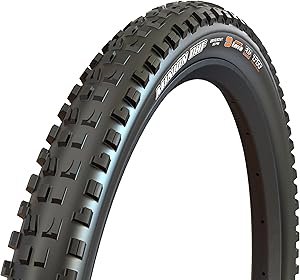
- Intended Use: Trail/Enduro/Downhill (Front-specific)
- Key Feature: Legendary, widely-imitated tread design
- Compound: Dual Compound for grip/rolling resistance balance
- E-Bike Rating: E25 (suitable for assistance up to 16.1 MPH)
The Maxxis Minion DHF is arguably the most iconic mountain bike tire ever made, and for good reason. Its tread design has set the standard for front tires, offering a near-perfect blend of rolling speed, braking traction, and unparalleled cornering grip. The staggered, ramped center knobs roll efficiently, while the large, supported side knobs provide a consistent, predictable bite when the bike is leaned over, inspiring immense confidence in loose and steep terrain.
This versatility makes it a default choice for riders from aggressive trail to full downhill. The Dual Compound provides a long-wearing and practical performance level, though enthusiasts can seek out Maxxis’s more advanced compounds. Like its DHR II sibling, it’s rated E25 for light e-MTB use and comes with a 1-year warranty. It remains the benchmark against which all other front tires are measured.
- Pros: Industry-standard front tire performance
- Cons: Some riders find more modern tires have better braking traction
4. MAXXIS Aggressor
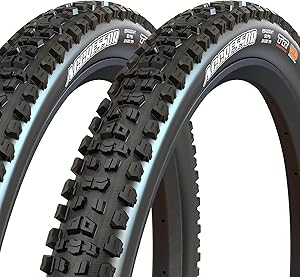
- Intended Use: Aggressive Trail/Enduro (Rear-specific)
- Key Feature: EXO sidewall protection
- Compound: Dual Compound for grip/rolling resistance balance
- E-Bike Rating: E25 (suitable for assistance up to 16.1 MPH)
The Maxxis Aggressor is a highly popular rear tire designed for riders who want aggressive traction without the severe rolling penalty of a full-on downhill tire. It excels on hard-packed, rocky, and high-speed trails where its tightly-packed, ramped center knobs provide impressive acceleration and lower rolling resistance, while the stepped shoulder knobs offer reliable cornering support.
Often recommended as the perfect rear match for a Minion DHF front, this combo creates a versatile and fast-rolling yet capable enduro setup. The inclusion of EXO casing adds critical sidewall cut protection for rough trails without the drastic weight increase of a DoubleDown or DH casing. It’s a smart choice for the performance-oriented trail or enduro rider who covers a lot of ground and needs a rear tire that can drive hard and last.
- Pros: Low rolling resistance for an aggressive tire
- Cons: Not designed for primary front use; Can clog and lose grip in thick mud
5. Continental Kryptotal-R Downhill Soft (29″)
- Intended Use: Downhill/Gravity (29-inch)
- Key Feature: DH Casing (most durable gravity construction)
- Compound: Soft compound for maximum grip
- E-Bike Rating: e50 (certified for S-Pedelecs up to 28+ MPH)
This 29-inch version of the Continental Kryptotal-R DH Soft brings the same uncompromising gravity performance to the larger wheel size. It is engineered purely for descending, featuring the brand’s toughest DH casing to withstand massive impacts and sharp rock strikes. The robust carcass construction is a key selling point for riders who frequently encounter terrain where tire integrity is the primary concern.
The Soft compound delivers exceptional traction, making it a favorite for racers and park riders seeking every possible advantage in grip. Its e50 certification is a major differentiator, offering a level of built-in durability and speed rating specifically suited for the high forces of powerful e-MTBs. This tire is about maximum control and puncture resistance for the most demanding descents, with concessions made for weight and rolling efficiency.
- Pros: Top-tier DH durability for 29″ wheels; Superior Soft compound traction
- Cons: Very high weight and rolling resistance; Soft compound wears quickly
6. Cycle Crew Minion DHR II (with 3C MaxxTerra)
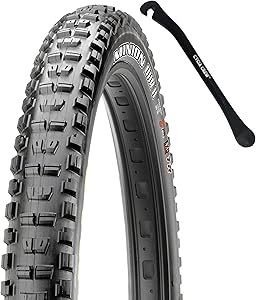
- Intended Use: Aggressive Trail/Enduro
- Key Feature: 3C MaxxTerra triple compound
- Casing/Protection: EXO Puncture Protection
- Construction: Tubeless Ready
This package offers the renowned Minion DHR II tread pattern but in a configuration that enhances its performance. The key upgrade here is the use of Maxxis’s 3C MaxxTerra compound. This triple compound uses a firm base to reduce rolling resistance and progressively softer outer layers to dramatically improve traction, especially in corners and under braking, compared to the standard Dual Compound version.
Paired with the EXO sidewall protection, this creates a versatile and high-performance enduro tire that is lighter and more manageable than a downhill casing but still offers serious grip and flat resistance. The inclusion of a tire lever in the bundle is a nice touch. This is an excellent spec for the rider who wants a premium, grippier version of the DHR II for aggressive trail and enduro riding without stepping up to a heavier downhill casing.
- Pros: Superior 3C MaxxTerra compound grip; EXO protection for trail durability
- Cons: EXO casing may not be enough for extreme downhill
7. Schwalbe Nobby Nic All MTB

- Intended Use: Cross-Country/Trail
- Key Feature: Versatile “Allgrounder” tread pattern
- Compound: Addix Speed for low rolling resistance
- Warranty: 3-year consumer warranty
The Schwalbe Nobby Nic stands apart from the other tires on this list, targeting cross-country and trail riders who value versatility and speed. Hailed as an “Allgrounder,” its tread pattern is designed to provide competent control across a wide range of conditions, from dry hardpack to light mud, without excelling excessively in one extreme. It’s a true do-it-all tire for riders who encounter varied terrain on a single ride.
The use of the Addix Speed compound is telling—it’s designed to “catapult” performance with a focus on low rolling resistance and high mileage, making this a fast and efficient tire. The standout feature is Schwalbe’s excellent 3-year consumer warranty, reflecting confidence in their product’s longevity. This is not a gravity tire, but a high-quality, fast-rolling option for performance-oriented trail and XC riding.
- Pros: Extremely versatile “Allgrounder” performance
- Cons: Not designed for aggressive enduro/downhill use
How to Choose MTB Enduro Tires
Choosing the right mountain bike (MTB) enduro tires can dramatically affect your performance, safety, and overall riding experience. With the wide range of tires available, understanding the key factors that influence your choice is crucial. From tread patterns to tire width, every element plays a role in how your bike handles various terrains. This guide will walk you through the essential considerations to make an informed decision.
Understanding MTB Enduro Tires
Enduro mountain biking involves riding challenging terrain at high speeds while descending steep trails. This discipline requires tires that balance traction, durability, and rolling efficiency. Unlike cross-country (XC) tires, which prioritize speed, enduro tires must handle technical descents, loose dirt, rocks, and mud.
Tire Types
There are two main types of MTB tires suitable for enduro riding: tubeless tires and clincher tires with inner tubes.
Tubeless Tires
Tubeless tires are increasingly popular among enduro riders because they reduce the risk of pinch flats, allow lower tire pressures for better traction, and generally provide a smoother ride. They require sealant to prevent air leaks and are slightly more complex to install.
Clincher Tires with Tubes
These are traditional tires with an inner tube. They are easier to install and replace, but they are more prone to flats and punctures. Some riders prefer them for simplicity, especially on remote trails.
Tire Width
Tire width significantly influences traction, control, and rolling resistance. Enduro tires usually range from 2.3 inches to 2.6 inches.
Narrow vs Wide Tires
Narrow Tires (2.3–2.4 inches)
Pros: Faster rolling, lighter, better for smoother trails.
Cons: Less grip in loose or muddy conditions, reduced control on technical descents.
Wide Tires (2.5–2.6 inches)
Pros: Excellent traction and stability, more confidence on rough terrain.
Cons: Slightly heavier, slower on smooth surfaces, increased rolling resistance.
Selecting the right width depends on your riding style and trail conditions. Aggressive riders or those on steep, technical terrain often prefer wider tires for extra control.
Tread Pattern
The tread pattern determines how your tire interacts with the ground. Enduro tires come in various tread designs, optimized for different conditions.
Knob Size and Shape
Small Knobs
Small knobs reduce rolling resistance, making pedaling easier. They are ideal for hard-packed trails but may struggle in mud or loose terrain.
Large Knobs
Large knobs dig into loose surfaces and provide better traction in off-camber corners. They are essential for steep, technical descents.
Knob Spacing
Tightly Spaced Knobs
Offer smoother rolling and more contact area, suitable for dry and hard-packed trails.
Widely Spaced Knobs
Allow mud and debris to clear quickly, improving grip in wet or loose conditions. Ideal for muddy trails or loose rock sections.
Tire Compound
The rubber compound affects grip, durability, and rolling efficiency. Most enduro tires offer either a single compound or dual compound option.
Single Compound
Uniform rubber throughout the tire. Offers consistent performance and durability but compromises between grip and speed.
Dual Compound
Harder rubber in the center for low rolling resistance, softer rubber on the edges for better cornering grip. Preferred by aggressive enduro riders for a balance of speed and traction.
Sidewall Protection
Sidewalls are often overlooked but crucial for enduro riding. Strong sidewalls protect against punctures, cuts, and side impacts.
Standard Sidewalls
Lightweight and sufficient for most trails but more vulnerable to sharp rocks or roots.
Reinforced Sidewalls
Offer additional protection and prevent tire burping in tubeless setups. Essential for rocky terrain or heavy riders.
Tire Pressure
Correct tire pressure enhances traction and comfort while preventing rim damage.
Low Pressure
Improves traction and shock absorption but increases the risk of pinch flats if too low.
High Pressure
Reduces rolling resistance but sacrifices grip, especially on loose or uneven terrain.
Enduro riders often experiment with pressures between 22–28 psi, adjusting for trail conditions and personal preference.
Tubeless vs Tube Setup
While we touched on tire types earlier, the setup significantly impacts performance.
Tubeless Setup
Pros: Lower risk of flats, allows lower pressure, better traction, self-sealing punctures.
Cons: Requires sealant, more complex installation, occasional maintenance.
Tube Setup
Pros: Simple to install and repair, consistent performance.
Cons: Higher risk of pinch flats, less traction at low pressure.
Enduro riders typically prefer tubeless setups for the benefits in technical terrain and longer rides.
Rotational Weight and Rolling Resistance
Enduro riders must balance tire durability with speed. Heavier tires offer better protection but reduce acceleration. Lighter tires roll faster but may wear quickly.
Optimizing Rolling Resistance
-
Match tire width to trail conditions.
-
Choose tread patterns that fit your terrain.
-
Maintain proper tire pressure.
The goal is to select tires that provide grip and control without excessively slowing you down.
Weather and Trail Conditions
Choosing tires also depends on the environment where you ride.
Dry Trails
Opt for tires with smaller, closely spaced knobs for reduced rolling resistance and better speed.
Wet or Muddy Trails
Look for wider tires with larger, widely spaced knobs to shed mud and maintain traction.
Rocky Terrain
Reinforced sidewalls and durable rubber compounds prevent cuts and punctures.
Maintenance Considerations
Enduro tires require regular inspection and maintenance to ensure performance.
Inspect for Wear
Check tread depth and sidewall condition after each ride. Worn knobs reduce traction.
Sealant Maintenance (for Tubeless)
Replace or top up sealant every 2–3 months or after punctures to prevent leaks.
Proper Cleaning
Mud and debris can affect traction. Clean tires after rides to maintain performance and longevity.
Budget vs Performance
High-end tires offer advanced rubber compounds, dual compounds, and reinforced sidewalls. However, there are mid-range options that perform adequately for most enduro riders. Consider your riding frequency, trail difficulty, and personal preference before making a purchase.
High-End Tires
Pros: Maximum traction, durability, and advanced features.
Cons: Expensive, may wear faster under heavy use.
Budget Tires
Pros: Affordable, decent performance for casual riders.
Cons: Less durable, may compromise grip on technical terrain.
Balancing cost with performance ensures you get the most value while enhancing your riding experience.
Conclusion: Making the Right Choice
Choosing the right MTB enduro tires requires careful consideration of terrain, riding style, tire width, tread pattern, compound, and maintenance requirements. By understanding the key differences and trade-offs, you can select tires that offer optimal traction, durability, and control. Remember that tire choice is personal—what works for one rider may not work for another. Test different setups, adjust pressures, and pay attention to trail conditions to find the perfect tire combination. Ultimately, the right tires will not only improve your enduro performance but also increase your confidence and enjoyment on every ride.