Best Budget Mountain Bikes of 2026
Looking for a mountain bike without spending too much? You don’t need a big budget to hit the trails. Today’s affordable bikes offer solid frames, reliable gears, and tough tires for less than you think. Whether you’re a beginner or just want a fun ride without breaking the bank, these budget picks deliver real value. Here are the best cheap mountain bikes that balance cost and performance.
1. Co-op Cycles DRT 1.1

- Frame: 6061 Aluminum
- Drivetrain: Shimano 2 x 8-speed (16 gears)
- Brakes: Tektro hydraulic disc
- Fork: SR Suntour SF23-XCM32 with 100mm travel
The Co-op Cycles DRT 1.1 is an impressive entry-level trail bike that prioritizes reliable components over flashy gimmicks. Built around a sturdy 6061 aluminum frame, it offers a versatile 2×8 Shimano drivetrain that provides plenty of range for climbing hills or cruising on flat paths. The inclusion of hydraulic disc brakes at this price point is a standout feature, offering superior stopping power and better modulation in wet conditions compared to mechanical systems.
This bike is designed with a size-specific wheel approach, ensuring that smaller riders get the agility of 27.5-inch wheels while taller riders benefit from the momentum of 29-inch wheels. The SR Suntour fork provides enough cushion to smooth out bumpy trails and gravel roads. It is an excellent choice for beginner mountain bikers looking for a durable machine backed by REI’s quality standards and a comfortable, upright geometry.
Pros: Hydraulic disc brakes for consistent stopping; reputable Shimano drivetrain components; size-specific wheel sizing for better fit.
Cons: Coil spring fork is heavy; 2×8 setup is less modern than 1x systems.
2. WEIZE Mountain Bike
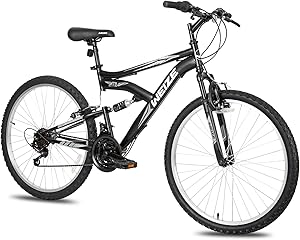
- Frame: Durable steel dual suspension
- Speeds: 18-speed twist shifters
- Brakes: Front and rear linear pull (V-brakes)
- Wheels: 26-inch all-terrain tires
The WEIZE Mountain Bike is a budget-friendly option designed for casual riders and teenagers looking for a versatile bike. Its standout feature is the dual suspension steel frame, which utilizes both a front fork and a rear coil shock. This combination is intended to dampen vibrations and smooth out rough neighborhood sidewalks or light dirt paths. The 18-speed twist shifting system allows for quick gear changes without moving your hands away from the grips.
While the steel construction adds significant weight compared to aluminum alternatives, it offers a robust feel for everyday use. The linear-pull brakes provide basic stopping power, and the 26-inch tires make the bike maneuverable for riders between 5’2″ and 6’2″. Assembly is relatively straightforward, with the manufacturer providing helpful videos to assist with the final setup. It is best suited for recreational pavement riding and very light off-road exploration.
Pros: Affordable price point; dual suspension design for comfort; quick 20-minute assembly process.
Cons: Heavy steel frame; rim brakes are less effective in wet weather; not intended for technical trails.
3. Cannondale Trail 2

- Frame: SmartForm C3 alloy with internal routing
- Drivetrain: Shimano CUES U4000 9-speed
- Brakes: Tektro M275 hydraulic disc
- Fork: SR Suntour XCM with 80-100mm travel
The Cannondale Trail 2 is a high-quality hardtail that brings professional frame technology to the enthusiast level. The SmartForm C3 alloy frame features SAVE micro-suspension technology, which helps the rear triangle absorb trail chatter for a smoother ride. It also boasts modern standards like internal cable routing and dropper-post compatibility, allowing riders to upgrade the bike as their skills progress. The Shimano CUES 9-speed drivetrain offers modern, durable shifting with a wide 11-46T range.
Equipped with Tektro hydraulic disc brakes and WTB Ranger tires, this bike offers exceptional grip and control on technical singletrack. The geometry is progressive, providing stability on descents while maintaining efficiency on climbs. Like the DRT, it uses size-specific wheels to ensure the best handling for every rider height. This is a serious mountain bike for someone looking to tackle real trails with confidence and a platform that is worthy of future component upgrades.
Pros: High-quality alloy frame; modern 1x drivetrain; hydraulic brakes and dropper-post compatibility.
Cons: Higher price point than basic models; coil fork is limited for aggressive riding.
4. Huffy Stone Mountain Mountain Bike
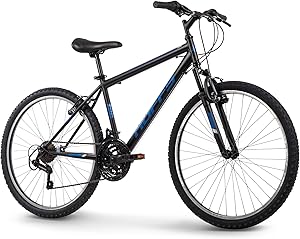
- Frame: Rugged steel hardtail
- Speeds: 21-speed Shimano twist shifting
- Brakes: Linear pull hand brakes
- Wheels: 26-inch knobby tires
The Huffy Stone Mountain is a classic entry into the world of cycling, known for its sleek matte black finish and rugged construction. Designed for both neighborhood commutes and light trail use, the 21-speed drivetrain provides a huge variety of gear options for tackling steep inclines. The twist shifters are intuitive for beginners, allowing for easy transitions between gears. Its front suspension fork helps manage the impact of curbs and uneven paths, ensuring a more stable ride.
Comfort is a major focus for Huffy, as seen in the padded saddle that supports the rider during longer excursions. The 26-inch wheels are paired with knobby tires that provide decent traction on dirt and gravel. While it is heavier due to the steel frame, its durability is a major selling point for daily use. It remains a popular choice for those seeking a stylish, adventure-ready bike that won’t break the bank and handles everyday tasks with ease.
Pros: Very affordable; reliable 21-speed Shimano shifting; comfortable padded saddle.
Cons: Steel frame is heavy; rim brakes lack power for steep descents; limited off-road capability.
See the Huffy Stone Mountain Mountain Bike
5. Schwinn High Timber Mountain Bike
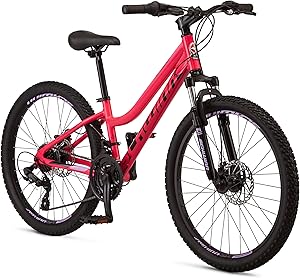
- Frame: Lightweight 12-inch aluminum
- Speeds: 7-speed twist shifters
- Wheels: 24-inch alloy wheels
- Seat: Quick-release adjustable post
The Schwinn High Timber is specifically engineered for youth or smaller adult riders, fitting those between 4’8″ and 5’6″. Unlike many budget bikes that use steel, this model features a lightweight aluminum frame that makes it much easier to handle and maneuver. The 24-inch wheels offer great stability, and the knobby tires are designed to maintain grip across various terrains and weather conditions. The 7-speed shifting system is simplified, making it easy for newer riders to manage.
This bike emphasizes ease of use, featuring an alloy crank for smooth pedaling and a quick-release seat post that allows for height adjustments in seconds without tools. It arrives 80% assembled, meaning you can get it on the road quickly with basic household tools. Whether it is for riding to school or exploring local park trails, the High Timber provides a balanced and reliable platform for growing riders who need a sturdy yet manageable bicycle.
Pros: Lightweight aluminum frame; easy quick-release seat adjustment; great for youth riders.
Cons: Only 7 speeds; smaller 24-inch wheels limit top speed; basic rim brakes.
See the Schwinn High Timber Mountain Bike
6. Mongoose Grafton Mountain Bike

- Frame: Aluminum with modern geometry
- Speeds: 21-speed with trigger shifters
- Brakes: Mechanical disc brakes
- Tires: 24 x 2.3-inch knobby mountain tires
Mongoose brings its long history of action sports to the Grafton, a bike designed for youth and smaller adults. The aluminum frame is built with modern geometry, offering a more aggressive and streamlined look compared to traditional mountain bikes. One of the best features is the inclusion of mechanical disc brakes, which provide much more reliable stopping power in mud or rain than standard rim brakes. The 21-speed drivetrain uses trigger shifters, which many riders prefer over twist styles.
The bike is equipped with extra-wide 2.3-inch tires, offering a larger contact patch for superior grip and stability on loose dirt. A front suspension fork works to absorb shocks from rough terrain, keeping the rider in control during off-road adventures. This model successfully bridges the gap between a toy bike and a real mountain bike, making it a fantastic choice for young riders who are starting to take trail riding more seriously and want a bike that looks the part.
Pros: Reliable mechanical disc brakes; wide tires for extra grip; modern aluminum frame design.
Cons: 24-inch wheels may be outgrown quickly; front suspension is basic; assembly requires tuning.
See the Mongoose Grafton Mountain Bike
7. Dynacraft Magna Echo Ridge

- Frame: Alloy steel dual suspension
- Speeds: Single speed (1-speed)
- Wheels: 26-inch
- Brakes: Front and rear linear pull
The Dynacraft Magna Echo Ridge is a unique entry in the mountain bike category, featuring a dual suspension steel frame paired with a simple single-speed drivetrain. While most mountain bikes prioritize gear range, this model focuses on simplicity and durability for casual cruising. The front shock fork and rear suspension work together to provide a cushioned ride over bumps. It is designed for riders aged 13 and up who want a straightforward bike without the complexity of shifters and derailleurs.
The bike comes in a vibrant blue color and includes convenient features like a kickstand and a quick-release seat post for easy adjustments. Because it lacks a multi-gear system, it is much easier to maintain and has fewer parts that can break or fall out of alignment. This makes it an ideal “grab-and-go” bike for riding around the neighborhood or on flat gravel paths where shifting isn’t necessary. It is a rugged, low-maintenance option for recreational users.
Pros: Extremely low maintenance; dual suspension comfort; easy to operate.
Cons: Single speed is difficult on hills; steel frame is heavy; not suitable for actual trail climbing.
See the Dynacraft Magna Echo Ridge
8. Ktaxon Mountain Bike

- Frame: High-carbon steel
- Speeds: 21-speed professional shifting
- Brakes: Mechanical dual disc brakes
- Wheels: 27.5-inch with aluminum alloy rims
The Ktaxon Mountain Bike is a robust adult-sized bicycle featuring a high-carbon steel frame designed for long-term durability. It utilizes a 27.5-inch wheel size, which is widely considered the “sweet spot” for mountain biking—offering a great balance between rolling over obstacles and nimble handling. The 21-speed transmission system provides precise gear changes, making it easier to adapt to varying terrains like gravel, dirt, and rocky roads. The addition of mechanical dual disc brakes ensures responsive stopping power.
A highlight of the Ktaxon is its dual shock absorption system, featuring a thickened front fork and a shock-absorbing seat cushion to maximize rider comfort. The aluminum alloy wheels are designed with specific spokes to reduce wind resistance, assisting in a smoother ride. While it arrives 85% assembled, the final steps are straightforward. This bike is a strong contender for adults looking for a full-featured mountain bike that offers the safety of disc brakes and the comfort of dual suspension.
Pros: Dual shock absorption; 27.5-inch wheel size; powerful dual disc brakes.
Cons: Carbon steel frame is heavy; requires fine-tuning of gears upon arrival; seat may be firm for some.
9. MarKnig Mountain Bike

- Frame: Reinforced carbon steel
- Speeds: 7-speed gear system
- Brakes: V-brake style
- Wheels: 26-inch with wear-resistant tires
The MarKnig Mountain Bike stands out with its 90% pre-installed setup, making it one of the easiest bikes to get ready for the road. Built with a reinforced carbon steel frame and upgraded waterproof paint, it is designed to withstand the elements while maintaining its aesthetic appeal. The 7-speed gear system is simple but effective for urban commuting and light trail exploration. It features a front fork suspension that helps maintain stability when navigating diverse terrains like grass or gravel.
This bike is highly adjustable, with a quick-release seat that can accommodate riders ranging from 5’2″ to 6′ tall. The non-slip tires are wear-resistant, providing extra peace of mind during daily commutes. MarKnig also provides 24/7 customer support, which is a rare and helpful feature for budget-friendly bikes. It is a solid, reliable choice for those who want a simple, stylish bike for fitness and everyday transportation without a complicated assembly process.
Pros: 90% pre-assembled for convenience; durable waterproof finish; great customer support.
Cons: Limited 7-speed range; basic V-brakes; steel frame lacks the lightness of alloy.
10. AVASTA Earth

- Frame: Lightweight aluminum alloy
- Speeds: 21-speed derailleur system
- Brakes: Mechanical disc brakes
- Fork: Switchable suspension fork
The AVASTA Earth is a versatile mountain bike that offers premium features like an aluminum alloy frame and rims, significantly reducing the overall weight for better agility. One of its most interesting technical features is the switchable suspension fork, which allows riders to adjust the level of cushion based on whether they are on smooth pavement or bumpy trails. The 21-speed drivetrain provides a wide range of gear ratios, and the mechanical disc brakes ensure reliable stopping power in various conditions.
Riders can choose between 26-inch or 27.5-inch all-terrain tires, both of which come with quick-release features for easy transport and maintenance. The bike also includes thoughtful extras like a bell and reflectors, making it safer for neighborhood riding right out of the box. With 75% pre-assembly and an available installation video, it is a user-friendly option for adults seeking a lightweight, customizable bike that can handle both city streets and dirt paths with ease.
Pros: Lightweight aluminum construction; switchable suspension fork; includes safety accessories.
Cons: Requires more assembly than some competitors; derailleurs may need professional tuning; stock seat is thin.
The Ultimate Guide to Choosing a Budget Mountain Bike
Entering the world of mountain biking is an exhilarating prospect, but the price tags on high-end carbon fiber machines can often lead to immediate sticker shock. Fortunately, the cycling industry has evolved significantly, and today’s affordable mountain bikes are more capable than ever before. Choosing the right one requires a balance between understanding your riding goals and knowing which technical compromises are acceptable. This guide will walk you through everything you need to know to find a reliable, trail-ready bike without emptying your savings account.
Defining Your Riding Style
Before looking at specifications, you must be honest about where you intend to ride. Not all mountain bikes are built for the same purpose, especially in the budget category where manufacturers must prioritize certain features over others. If you plan on sticking to paved greenways and smooth gravel paths, your needs will differ greatly from someone looking to tackle roots, rocks, and steep descents.
Recreational and Path Riding
If your primary goal is fitness, commuting, or casual family rides on light trails, a basic hardtail (a bike with front suspension only) is usually the best choice. At the lower end of the budget spectrum, bikes are often designed with “recreational geometry,” which places the rider in a more upright, comfortable position. These bikes prioritize ease of use and comfort over aggressive handling.
Entry-Level Trail Riding
For those looking to actually hit singletrack trails, you need a bike with “trail geometry.” These bikes have a longer wheelbase and a slacker head tube angle, which provides stability when going downhill. Look for bikes that emphasize durability in the frame and wheels, as they will be subjected to more vibration and impact than a bike kept on the pavement.
Hardtail vs. Full Suspension
One of the most common dilemmas for budget shoppers is whether to buy a “hardtail” or a “full suspension” bike. On a limited budget, the choice is almost always clear, but it helps to understand why.
The Case for the Hardtail
A hardtail features a suspension fork in the front but a rigid frame in the rear. In the budget category (typically under $1,000), a hardtail is almost always the superior choice. Because the manufacturer doesn’t have to spend money on a rear shock and complex pivot bearings, they can instead invest in higher-quality components like better brakes, a lighter frame, and a more reliable drivetrain. Hardtails are also lighter and more efficient for climbing.
The Pitfalls of Cheap Full Suspension
You will often see very inexpensive full-suspension bikes at “big box” retailers. While the idea of rear suspension is appealing, budget rear shocks are often just simple springs without “damping” (the ability to control the spring’s bounce). This can lead to a “pogo stick” effect that actually makes the bike harder to control on trails. Furthermore, cheap full-suspension bikes are significantly heavier and require much more maintenance.
Key Components to Scrutinize
When comparing two bikes at a similar price point, the “spec sheet” is your best friend. There are four main areas where you should focus your attention to ensure you are getting the best value for your money.
The Drivetrain and Gears
Modern mountain bikes have moved toward “1x” (one-by) drivetrains, meaning there is only one chainring in the front and a wide range of gears in the back. This simplifies shifting, reduces weight, and decreases the chance of the chain falling off. If you can find an inexpensive bike with a 1×10 or 1×12 setup, it is a significant advantage. However, many entry-level bikes still use 2x or 3x systems. While these are heavier and more complex, they provide a very wide range of gears which can be helpful for beginners on steep hills.
Braking Systems
There are three types of brakes you will encounter: Rim brakes (V-brakes), mechanical disc brakes, and hydraulic disc brakes.
- Rim Brakes: Found on the cheapest bikes; they lose power in wet or muddy conditions.
- Mechanical Disc Brakes: Use a cable to close the pads. They offer better stopping power than rim brakes and work well in all weather.
- Hydraulic Disc Brakes: The gold standard. They use fluid to provide effortless, powerful braking and better “modulation” (control). Always prioritize hydraulic discs if the budget allows.
Suspension Quality
Most cheaper bikes come with “coil-sprung” forks. These use a heavy metal spring inside the fork leg. While reliable, they aren’t very adjustable for different rider weights. Higher-end budget bikes might feature an “air fork,” which uses compressed air. Air forks are much lighter and can be precisely tuned to your weight using a shock pump, making them a highly desirable upgrade.
Wheel Size: 27.5 vs. 29 Inch
Most modern mountain bikes use either 27.5-inch or 29-inch wheels. 27.5-inch wheels are lighter and more “flickable,” making the bike easier to turn. 29-inch wheels (often called “29ers”) are larger and roll over obstacles like rocks and roots more easily. They also maintain momentum better. Taller riders usually prefer 29ers, while smaller riders may find 27.5-inch wheels more manageable.
Frame Material and Fit
Most quality budget bikes are made from Aluminum (specifically 6061 or 7005 alloy). Aluminum is the perfect middle ground—it’s much lighter than steel but far more affordable than carbon fiber. Ensure the frame has a “tapered head tube” if you plan on upgrading your fork in the future, as most high-end forks use this standard.
Regardless of how good the components are, a bike that doesn’t fit you will be miserable to ride. Check the manufacturer’s size chart carefully. If you are between sizes, generally “size down” for a more nimble feel or “size up” for more stability at speed. Look for a “quick-release” seat post clamp, which allows you to lower your seat easily for descents and raise it for efficient climbing.
The “Hidden” Costs of a Cheapest Bike
When budgeting for your new hobby, remember that the bike is only part of the equation. You should set aside a portion of your funds for essential safety gear and maintenance tools. At a minimum, you will need:
- A high-quality, well-fitting helmet.
- A floor pump with a pressure gauge.
- Chain lubricant to keep your drivetrain moving smoothly.
- Basic flat-tire repair kit (spare tube, tire levers, and a CO2 inflator or mini-pump).
Summary of What to Look For
To get the best bang for your buck, look for a “Hardtail” with an “Aluminum Frame,” “Hydraulic Disc Brakes,” and a “1x Drivetrain.” While you might not find all these features on a bike under $500, they become more common as you approach the $700–$900 range. Buying from a reputable brand ensures that the bike has been engineered for safety and that replacement parts will be available for years to come.
Mountain biking is about the experience and the connection with nature, not just the equipment. Start with the best bike you can afford, maintain it well, and most importantly, get out and ride. As your skills grow, you’ll have a better understanding of what you want in your next bike, but a well-chosen budget mountain bike can provide years of trail-side smiles.