Best Mountain Bikes for Intermediate Riders of 2026
Ready to level up your mountain biking? As an intermediate rider, you need a bike that can keep up with your growing skills without breaking the bank. You’ve moved past the basics and now crave better performance on tougher trails. This guide breaks down the best mountain bikes for riders like you, highlighting durable options that offer the perfect balance of quality and value for your next adventure.
1. Co-op Cycles DRT 1.1

- Frame: 6061 aluminum
- Drivetrain: 16-speed Shimano Altus/Tourney
- Brakes: Tektro hydraulic disc
- Fork: SR Suntour SF23-XCM32 (100mm travel)
The Co-op Cycles DRT 1.1 stands out as a reliable entry-level trail bike that prioritizes component quality over flashy gimmicks. By utilizing a versatile 2×8 Shimano drivetrain, it provides a wide gear range suitable for both steep climbs and faster flat sections. The inclusion of hydraulic disc brakes is a significant upgrade for this price point, offering superior stopping power and better modulation in wet or muddy conditions compared to mechanical alternatives.
Built with a sturdy 6061 aluminum frame, the bike feels planted and responsive on beginner to intermediate trails. The SR Suntour fork handles moderate bumps effectively, while the size-specific wheel approach ensures that smaller riders get the agility of 27.5-inch wheels while taller riders benefit from the rollover capabilities of 29-inch wheels. It is a well-rounded machine for those looking to start their mountain biking journey with equipment that will not require immediate upgrades.
Pros: Powerful hydraulic brakes, size-specific wheel diameters, and a reputable Shimano drivetrain.
Cons: Slightly heavier than premium alloy models and limited to 100mm of travel for aggressive terrain.
2. WEIZE Mountain Bike
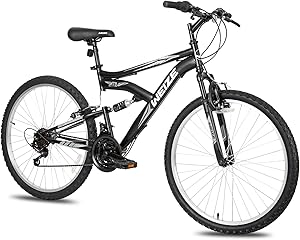
- Frame: Durable steel dual suspension
- Gears: 18-speed twist shifters
- Brakes: Front and rear linear pull
- Tires: 26-inch all-terrain
The WEIZE Mountain Bike is designed for casual riders and teens who want a versatile bike for neighborhood exploration and light trail use. Its primary feature is the dual suspension system, which utilizes a front fork and a rear coil shock to dampen vibrations from uneven pavement and dirt paths. This setup aims to provide a smoother ride for those who find rigid frames too jarring during daily commutes or park rides.
Equipped with an 18-speed drivetrain managed by twist shifters, the bike offers plenty of options for finding a comfortable pedaling rhythm. While the linear pull brakes are simpler than disc systems, they offer straightforward maintenance and enough stopping power for general recreational use. The steel construction adds some weight but ensures the frame can withstand the rigors of frequent use by younger riders looking for an affordable entry into cycling.
Pros: Affordable dual suspension, easy 20-minute assembly, and suitable for a wide height range.
Cons: Heavy steel frame and linear pull brakes are less effective in wet conditions.
3. Cannondale Trail 2

- Frame: SmartForm C3 alloy with internal routing
- Drivetrain: Shimano CUES U4000 9-speed
- Brakes: Tektro M275 hydraulic disc
- Fork: SR Suntour XCM (80-100mm travel)
The Cannondale Trail 2 is a sophisticated hardtail that brings high-end frame technology to the enthusiast level. The SmartForm C3 alloy frame features internal cable routing and SAVE micro-suspension technology, which allows for controlled vertical flex to improve comfort without sacrificing pedaling efficiency. This makes it an excellent choice for riders who want a fast, agile bike for cross-country trails and technical singletrack sessions.
Performance is further enhanced by the Shimano CUES drivetrain, which is specifically designed for durability and smooth shifting under load. The hydraulic disc brakes provide consistent performance regardless of the weather, and the dropper-post compatibility means you can easily upgrade the bike as your skills progress. It is a lightweight, high-performance option that balances modern geometry with quality components for a truly competitive trail experience.
Pros: High-quality lightweight frame, modern Shimano CUES drivetrain, and dropper-post ready.
Cons: Higher price point and the coil fork is heavier than air-sprung alternatives.
4. Huffy Stone Mountain Mountain Bike
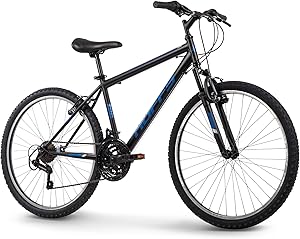
- Gears: 21-speed Shimano twist shifting
- Suspension: Front suspension fork
- Saddle: Padded comfort saddle
- Wheels: 26-inch knobby tires
The Huffy Stone Mountain combines a sleek matte black aesthetic with a functional design tailored for the budget-conscious adventurer. It features a 21-speed drivetrain that utilizes Shimano twist shifters, allowing for quick transitions when moving from flat roads to moderate inclines. The front suspension fork is the centerpiece of the ride quality, absorbing the initial impact of roots and potholes to keep the rider in control.
Comfort is a major focus for this model, evidenced by the specially designed padded saddle that accommodates longer rides without the typical soreness associated with standard mountain bike seats. The 26-inch wheels offer great maneuverability, making this bike just as capable on a tight woodland trail as it is weaving through a busy city commute. It is an ideal pick for those who want a versatile, stylish bike without a massive investment.
Pros: Very affordable, stylish matte finish, and comfortable padded seating.
Cons: Limited to lighter trails and uses basic rim brakes instead of discs.
See the Huffy Stone Mountain Mountain Bike
5. Schwinn High Timber Mountain Bike
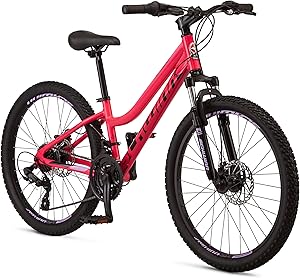
- Frame: 12-inch lightweight aluminum
- Wheels: 24-inch alloy with knobby tires
- Shifters: Twist shifters with rear derailleur
- Seat Post: Quick-release adjustable
The Schwinn High Timber is specifically engineered for youth riders or smaller adults, featuring a compact 12-inch aluminum frame that is easy to handle and mount. The use of aluminum keeps the overall weight down, which is crucial for younger cyclists who may struggle with heavy steel bikes. Its 24-inch wheels provide a stable platform for learning the basics of trail riding while still offering enough agility for neighborhood fun.
This bike is built for longevity and ease of use, featuring an alloy crank that ensures smooth gear transitions and reduces the need for frequent maintenance. The twist shifters are intuitive for beginners, allowing them to change gears without taking their hands off the grips. With the quick-release seat post, height adjustments can be made in seconds as the rider grows, making it a practical long-term investment for families.
Pros: Lightweight aluminum frame, perfect for smaller riders, and easy seat height adjustment.
Cons: Smaller wheel size limits top speed and rollover capability on obstacles.
See the Schwinn High Timber Mountain Bike
6. Mongoose Grafton Mountain Bike

- Tires: 24 x 2.3-inch knobby tires
- Brakes: Mechanical disc brakes
- Drivetrain: 21-speed with trigger shifters
- Headset: Internal headset with modern geometry
The Mongoose Grafton is a rugged youth mountain bike that brings “big bike” features to a smaller frame size. Unlike many bikes in its class, it features wide 2.3-inch tires that provide exceptional grip and stability on loose dirt or gravel. The aluminum frame is designed with modern geometry and an internal headset, giving it a clean, professional look that appeals to both youth and adult riders on the smaller side of the spectrum.
One of the standout features is the use of mechanical disc brakes, which offer much more reliable stopping power in dusty or wet conditions than traditional rim brakes. The 21-speed system utilizes trigger shifters rather than twist shifters, providing a more tactile and precise shifting experience that mirrors high-end adult mountain bikes. It is a capable, adventure-ready machine that lives up to the long-standing Mongoose reputation for durability and off-road fun.
Pros: Excellent tire traction, reliable disc brakes, and precise trigger shifters.
Cons: 24-inch wheels may be outgrown quickly by taller teenagers.
See the Mongoose Grafton Mountain Bike
7. Dynacraft Magna Echo Ridge

- Frame: Alloy steel
- Suspension: Front shock fork and rear shock
- Brakes: Front and rear linear pull
- Seat: Quick release adjustable
The Dynacraft Magna Echo Ridge is a straightforward, budget-friendly mountain bike aimed at riders aged 13 and up. It utilizes a dual suspension design to help manage the impact of bumps on the road or light trails, providing a more forgiving ride for casual users. The alloy steel frame is built for durability, ensuring it can handle the daily wear and tear of being a primary mode of transportation for students.
Simplicity is at the core of this bike’s design, featuring linear pull brakes and a quick-release seat post for easy adjustments. While it lacks the complex gearing systems of more expensive bikes, its focus on essential features makes it very easy to maintain. Included components like the kickstand make it a practical choice for riders who need a dependable bike for commuting to school or riding around the local park.
Pros: Very low price point, dual suspension comfort, and includes a kickstand.
Cons: Steel frame is heavy and linear pull brakes are basic.
See the Dynacraft Magna Echo Ridge
8. Ktaxon Mountain Bike

- Frame: High-carbon steel
- Speeds: Professional 21-speed system
- Brakes: Mechanical dual disc brakes
- Suspension: Lock-out suspension fork
- Wheels: 27.5-inch aluminum alloy
The Ktaxon Mountain Bike is a feature-rich option for adults who want a modern aesthetic and solid performance on mixed terrains. The high-carbon steel frame provides immense durability and resistance to deformation, while the 27.5-inch alloy wheels offer a perfect balance between agility and obstacle-clearing ability. A key highlight is the lock-out suspension fork, which allows riders to stiffen the front end for better efficiency on paved roads.
Equipped with 21 speeds and mechanical dual disc brakes, this bike provides the control needed for steeper hills and sudden stops. The specially designed spokes are intended to reduce wind resistance, helping the rider maintain speed with less effort. Arriving 85% assembled with a toolkit included, it is a convenient choice for those who want a capable mountain bike that is ready to hit the dirt paths shortly after delivery.
Pros: Lock-out fork for road efficiency, dual disc brakes, and durable carbon steel.
Cons: High-carbon steel adds weight compared to aluminum frames.
9. MarKnig Mountain Bike

- Frame: Reinforced carbon steel with waterproof paint
- Gears: 7-speed system
- Suspension: Front fork suspension
- Wheels: 26-inch non-slip tires
The MarKnig Mountain Bike is built for riders who value a hassle-free experience and long-term durability. It features a reinforced carbon steel frame with an upgraded waterproof paint finish, ensuring the bike looks great while resisting rust and weather damage. The 7-speed gear system is simplified to reduce maintenance needs while still providing enough range to handle various urban inclines and park paths comfortably.
Safety and stability are prioritized through the use of non-slip, wear-resistant tires and front fork suspension that absorbs road chatter. The quick-release adjustable seat allows the bike to accommodate a wide range of rider heights, from 5’2″ to 6′, making it a great shared bike for a household. With 90% of the bike pre-installed, it offers one of the easiest assembly processes available for direct-to-consumer mountain bikes.
Pros: Very easy assembly, durable waterproof finish, and wide height compatibility.
Cons: Only 7 speeds may limit performance on very steep mountain climbs.
10. AVASTA Earth

- Frame: Aluminum alloy
- Drivetrain: 21-speed derailleur system
- Brakes: Disc brakes
- Fork: Switchable suspension fork
The AVASTA Earth is a modern, lightweight mountain bike designed for adults who want versatility across diverse surfaces. The aluminum alloy frame and rims contribute to a ride that feels agile and easy to accelerate, which is a major advantage when navigating technical trails. A standout feature is the switchable suspension fork, which gives the rider the ability to adjust the bike’s responsiveness based on whether they are on smooth pavement or rocky trails.
The 21-speed derailleur system ensures that riders can always find the right gear for the gradient, while the disc brakes provide the reliable, sharp stopping power required for off-road safety. AVASTA includes a bell, reflectors, and a tool kit, adding extra value to the package. With optional tire sizes and quick-release features, this bike is highly customizable for riders who want to fine-tune their traction and handling for specific all-terrain adventures.
Pros: Lightweight aluminum construction, adjustable suspension, and inclusive accessory kit.
Cons: 75% assembly requires slightly more mechanical effort than some competitors.
How to Choose Mountain Bikes for Intermediate Riders
Transitioning from a beginner to an intermediate rider is one of the most exciting phases in mountain biking. At this stage, you have likely moved beyond fire roads and onto more technical singletrack, developed a feel for braking, and perhaps even started catching a little air. However, your entry-level bike might be starting to hold you back. Choosing the right mountain bike for this next chapter requires a deeper understanding of geometry, component quality, and suspension dynamics.
Intermediate riders need a machine that offers more precision, better durability, and the ability to handle increased speed. This guide will walk you through the essential factors to consider when upgrading your ride to match your growing skills on the trail.
Understanding Your Riding Style
Before looking at spec sheets, you must define where you spend most of your time. Intermediate bikes are generally categorized by their “intended use,” and picking the wrong category can make even an expensive bike feel sluggish or unstable.
Cross-Country (XC) Bikes
If your goal is to cover long distances, climb efficiently, and race against the clock, an XC bike is the right choice. These bikes are lightweight and typically feature 100mm to 120mm of travel. For an intermediate rider, an XC bike should offer a lockout remote for the suspension, allowing you to stiffen the bike for climbs and sprint on flat sections.
Trail Bikes
The trail bike is the “Swiss Army Knife” of mountain biking. Most intermediate riders fall into this category. With 130mm to 150mm of travel, these bikes are designed to climb reasonably well while offering enough stability to tackle rocky descents and small jumps. If you only want one bike to do everything, this is it.
Enduro and All-Mountain Bikes
For those who live for the descents and technical features, Enduro bikes offer 160mm to 180mm of travel. These are beefier machines built to survive high-speed hits and steep, chunky terrain. While they are heavier and harder to pedal uphill, their stability on the way down is unmatched for an intermediate rider looking to push into advanced territory.
Frame Material and Geometry
As an intermediate rider, you will start to notice how the shape and weight of the bike affect your performance. This is where geometry becomes more important than just the “look” of the frame.
The Carbon vs. Aluminum Debate
Aluminum frames are cost-effective, durable, and offer great value for intermediates who want better components (like suspension and wheels) for their budget. Carbon fiber, while more expensive, is lighter and stiffer, providing a more responsive feel. At the intermediate level, it is often better to buy a high-end aluminum frame with great parts than a cheap carbon frame with entry-level parts.
Modern Trail Geometry
Look for terms like “long, slack, and low.” A slack head tube angle (typically between 64 and 66 degrees for trail bikes) makes the bike more stable at high speeds and on steep descents. A steep seat tube angle (76 to 78 degrees) puts you in a better position for climbing. For an intermediate rider, these geometric tweaks provide a massive confidence boost compared to the upright, twitchy geometry found on beginner bikes.
Suspension: Quality Over Quantity
While beginners often focus on how much “squish” a bike has, intermediate riders should focus on the quality of the damping. Higher-quality suspension allows for more adjustment, such as compression and rebound clicks, which let you tune the bike to your body weight and riding style.
Air vs. Coil Shocks
Most intermediate bikes will use air suspension because it is lighter and easily adjustable with a shock pump. Coil shocks are often preferred by those riding aggressive Enduro lines because they offer a more linear, supple feel through small bumps, though they are heavier and require changing the actual spring to adjust for rider weight.
Hardtail vs. Full Suspension
While full suspension is the standard for most intermediate riders, a “hardcore hardtail” with a high-end fork can still be a viable and fun option. It teaches better line choice and is easier to maintain. However, if your budget allows, a full-suspension bike will generally allow you to ride longer and faster with less fatigue on technical terrain.
The Intermediate Component Checklist
There are several specific components that an intermediate-level bike should have to ensure you aren’t limited by your equipment on the trail.
Dropper Posts: A Non-Negotiable
If there is one component that defines an intermediate mountain bike, it is the dropper post. Being able to lower your saddle at the push of a button for descents and then raise it for pedaling is essential. If a bike you are considering doesn’t come with one, ensure the frame is compatible with internal routing for an upgrade.
1x Drivetrain Systems
Intermediate riders should look for a 1x drivetrain (one chainring in the front, 11 or 12 gears in the back). This simplifies shifting, reduces weight, and significantly lowers the chance of dropping your chain. Modern systems like Shimano SLX/XT or SRAM GX offer the perfect balance of performance and durability for this skill level.
Tubeless-Ready Wheels and Tires
Running a tubeless setup allows you to use lower tire pressures, which increases grip and virtually eliminates “pinch flats.” Most intermediate bikes come with tubeless-ready rims. Make sure the tires have a casing suited for your terrain—thicker “DoubleDown” or “EXO+” casings are great for rocky areas, while lighter casings work for XC.
Braking Power and Modulation
As you go faster, stopping becomes more important. Intermediate riders should move away from basic two-piston mechanical or entry-level hydraulic brakes. Look for four-piston hydraulic brakes, which offer more “modulation”—the ability to control exactly how much braking force you apply without instantly locking the wheels. Larger rotors (180mm or 200mm) also help dissipate heat on long descents, preventing “brake fade.”
Sizing and Professional Fit
Finally, no amount of high-end technology can compensate for a bike that doesn’t fit. Intermediate riders are often between sizes. A smaller frame will be more “flickable” and easier to throw around, while a larger frame with a longer wheelbase will feel more stable at speed. If possible, visit a local shop to test ride different sizes, as “Medium” from one brand can feel like a “Large” from another.
Conclusion
Choosing a mountain bike for an intermediate rider is about finding the balance between capability and value. Focus on a bike with modern geometry, a reliable 1x drivetrain, and adjustable air suspension. By prioritizing these foundational elements over brand prestige or flashy colors, you will secure a machine that not only matches your current skills but also provides the room you need to grow into an advanced rider. The right bike won’t just help you ride better; it will make every minute on the trail more enjoyable.