Best Motorcycle Boots for Short Riders of 2026
For short riders, finding the right motorcycle boots isn’t just about style—it’s about reaching the ground safely and comfortably. Many standard boots add unnecessary height or feel too bulky, making stops awkward. The best options offer a low sole, good ankle support, and solid grip without lifting you up. This guide breaks down top picks that keep you stable, protected, and confident, so you can focus on the ride, not your footing.
1. RIDEIRON Motorcycle Shoes
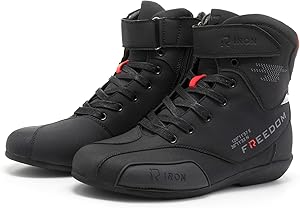
Sole material: Rubber
Safety standard: CE EN 13634:2017
Closure: Side metal zipper + Velcro
Protection: Reinforced heel, ankle support, toe switching pad
These boots are a proper safety revelation for street riders who refuse to look like stormtroopers. The CE certification is no joke – you feel the robust heel cap and ankle support the second you tighten the zipper. Unlike flimsy fashion boots, the RIDEIRON pair inspires confidence during hard braking thanks to the advanced anti-slip profile that grips wet pavement like a gecko. The reflective elements are a lifesaver for dusk commutes, making you visible without looking like a Christmas tree.
Breathability is surprisingly good; your feet won’t simmer in traffic. The side zippers are industrial-grade metal, not the cheap plastic junk that fails after a season. However, the toe area can feel a bit cramped for wide feet, and the “high-top” cut may require tall socks to avoid chafing. Overall, a brilliant balance of everyday wearability and genuine protection.
Pros: CE certified protection, excellent wet grip, high-vis reflective inserts, durable metal zippers.
Cons: Toe box runs narrow, needs breaking in for ankle flexibility.
See the RIDEIRON Motorcycle Shoes
2. Timberland PRO Direct Attach

Insulation: 200g Thermolite
Outsole: TPU with MaxTRAX slip-resistant tread
Certification: ASTM F2892-24 EH
Construction: Direct attached, seam-sealed waterproof
If your motorcycle doubles as a snowplow or worksite mule, these Timberlands are your new best friend. The 200g of Thermolite insulation is surprisingly efficient without making your feet feel like baked potatoes – a fine line that cheaper boots often miss. The PRO 24/7 comfort system actually works for eight-hour shifts, reducing that familiar heel ache by a noticeable margin. Plus, the non-marking, oil-resistant outsole means you won’t slip on garage floors or embarrass yourself at the gas station.
They are heavy, no denying that, but that heft translates to confidence. The soft toe compliance (ASTM) keeps you legal on job sites without steel-toe freeze. The only real downside is the lack of ankle armor for hardcore off-roading – these are work boots first, moto boots second. Also, the break-in period is real; expect two weeks of stiff leather before they surrender to your feet.
Pros: Excellent insulation, slip-resistant TPU outsole, ASTM certified, proper waterproofing.
Cons: Heavy on the foot, long break-in period, minimal dedicated ankle protection.
See the Timberland PRO Direct Attach
3. Bofucn Motorcycle Leather Boots

Sole material: Rubber
Shaft height: Ankle
Shaft circumference: 10.5 Inches
Outer material: Leather
Sometimes less is more, and Bofucn plays the minimalist card well. These ankle-height leather boots skip the power-ranger aesthetics for a classic, almost casual look that won’t draw weird looks at the office. The rubber sole provides decent grip on standard pegs, and the leather outer feels surprisingly supple out of the box – no painful blister sessions required. The 10.5-inch circumference offers enough room for thicker socks, which is a blessing for autumn riders who hate frozen toes.
However, “protection” is relative here. You get abrasion resistance from the leather, but zero hard armor for shins or ankles. These are for city cruisers and retro bike enthusiasts who prioritize style over sliding down the asphalt at 60mph. The stitching quality is adequate for the price, though heavy use will show wear on the heel cap quickly. A solid choice for low-speed, short-hop riding where looking good matters more than MotoGP safety.
Pros: Classic casual style, comfortable out of the box, wide calf friendly, affordable.
Cons: No ankle armor, not waterproof, thin sole for long walks.
See the Bofucn Motorcycle Leather Boots
4. NORTIV 8 Boots

Height: 8-9 Inches
Midsole: Responsive EVA cushioning
Upper: Oxford cloth + seamless construction
Closure: Side zipper + lace-up
Don’t let the “military tactical” label fool you – these NORTIV 8 boots are secret commuters for riders who hate heavy clunkers. The Oxford cloth upper is freakishly lightweight (you’ll check if you’re wearing them), yet the tread pattern bites into footpegs with authority. The EVA midsole is the real star: it absorbs vibrations from rough pavement like a tiny mattress for each heel strike. After a four-hour ride, your ankles won’t file for divorce. The side zipper is a godsend for quick gas station exits.
Breathability is excellent thanks to the mesh lining – swamp-foot is history. But there’s a trade-off: these are not winter boots. Wind cuts right through the fabric, so keep them for summer rides. Also, the “unique heel design” works well for walking but offers less lateral support than full-leather combat boots. Still, for warm-weather riders covering miles, these are a fatigue-fighting revelation.
Pros: Extremely lightweight, excellent vibration damping, breathable mesh, easy on/off zipper.
Cons: Poor cold weather insulation, less ankle support than leather boots.
5. WIDEWAY Tactical Boots
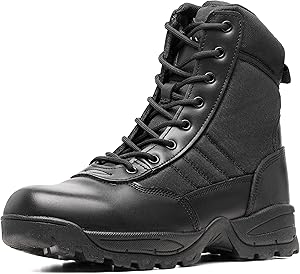
Leather thickness: 1.88mm full grain
Zipper: YKK side zipper
Insole: 7mm cushioned anti-fatigue
Outsole: Pure rubber with directional lugs
WIDEWAY clearly designed these for someone who expects a surprise apocalypse between breakfast and lunch. The 1.88mm full-grain leather is a tank – it resists abrasion that would shred synthetic boots in seconds. The YKK zipper feels like it belongs on a flak jacket, not footwear, and the speed lacing system actually works with gloves on (tested!). The 7mm insole is obscenely thick; standing on concrete for ten hours feels like cheating. Plus, the steel paper heel reinforcement prevents that ugly “collapsed boot” look after months of abuse.
Traction on loose gravel and mud is stellar thanks to those aggressive lugs. However, the boots are stiff – expect a Roman legionary march for the first week. The waterproofing is decent but not submersible; puddles are fine, streams are not. Overall, if your riding includes adventure touring or law enforcement patrols, these are borderline over-engineered in the best way.
Pros: Bombproof full-grain leather, YKK zipper reliability, outstanding anti-fatigue insole, excellent mud traction.
Cons: Very stiff break-in, heavy compared to fabric boots, waterproofing not for deep water.
See the WIDEWAY Tactical Boots
6. Vostey Boots for Men

Weight: 1.1 lbs per boot
Heel height: 1.2 inches
Shaft height: 6.8 inches
Closure: Lace-up + inside zipper
Vostey boots are the hipster’s choice that somehow works for casual riding. At just over a pound per boot, your legs won’t feel like they’re doing weighted squats at every stoplight. The cap toe and glossy leather give off serious “I own a leather-bound journal” vibes, but the rubber sole actually grips footpegs reasonably well. The inside zipper is a masterstroke – you lace them once for fit, then zip in and out like a superhero changing clothes. The padded collar is genuinely plush; no raw ankles here.
However, let’s be honest about protection: these are fashion-forward motorcycle-adjacent boots. The waterproof upper works for light rain, but there’s zero hard armor. The 1.2-inch heel adds a subtle lift (hello, inseam anxiety relief) but also changes shift lever feel. Great for cafe racers and urban puttering; terrible for track days or serious off-roading. They look fantastic, and that counts for something when you’re grabbing coffee after the ride.
Pros: Very lightweight, stylish cap toe design, convenient inside zipper, comfortable padded collar.
Cons: No real ankle or shin armor, heel can interfere with shifter feel, not for aggressive riding.
7. O’NEAL Dirt Bike Boot
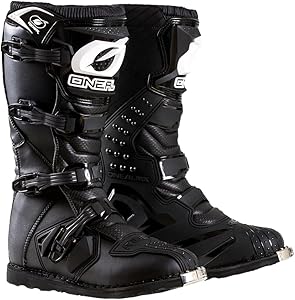
Closure: 4 buckle snap-lock system
Protection: Injection molded plastic plates
Lining: Air mesh interior
Special feature: Synthetic leather heat shield
These O’NEALs are what happens when a dirt bike racer gets drunk and designs armor for your feet. The injection-molded plastic plates don’t mess around – you could kick a angry badger and feel nothing. The four-buckle system looks intimidating but snaps closed with satisfying authority; no more Velcro wearing out after two mud seasons. The metal shank insert keeps the boot rigid when you’re standing on pegs over whoops, and the heat shield is a genius touch for those who accidentally rest their calf on the exhaust (we’ve all been there).
The air mesh interior is a sweaty-foot miracle – your feet actually breathe while you roost through puddles. The sizing warning is real: order a full size up unless you enjoy amputated toe sensations. Walking in these is like wearing ski boots; you’ll waddle like a penguin. But on the bike? They’re phenomenal. Absolute protection at the cost of looking like a Power Ranger and walking like one too.
Pros: Serious impact protection, excellent buckle system, breathable mesh lining, thoughtful heat shield.
Cons: Runs small (size up!), awkward for walking, very stiff feel off the bike.
8. BORLENI Motorcycle Riding Shoes

Protection: PP shell at ankle and heel
Toe: Extra thickened with shift protection
Closure: Side zipper + two lace sets
Outsole: Anti-skid rubber
BORLENI tries to solve the eternal dilemma: “I want safety but I don’t want to look like I’m invading a small country.” The street-styled upper mixes leather and breathable fabric, so your feet don’t ferment during summer rides. The hidden PP protective shell at the ankle and heel is unobtrusive but present – you won’t notice it until you accidentally drop the bike on your foot, then you’ll send a thank-you note. The thickened toe cap with microfiber shift protection is a thoughtful touch; no more scuffed-up toes after three weeks.
The reflective inserts are subtle but effective for night filtering. Two sets of laces let you customize the look, and the side zipper means you can skip the lace-tying ritual. However, the “breathable fabrics” trade durability for airflow – expect faster wear than full leather. The sole grip is good for pavement but sketchy on wet grass or mud. Overall, a solid urban commuter boot that prioritizes ventilation and casual style over hardcore adventure touring.
Pros: Hidden ankle protection, breathable for summer, reflective inserts for night safety, two lace options.
Cons: Fabric wears faster than leather, poor off-road traction, not fully waterproof.
See the BORLENI Motorcycle Riding Shoes
9. Zeozoom Motorcycle Riding Boots
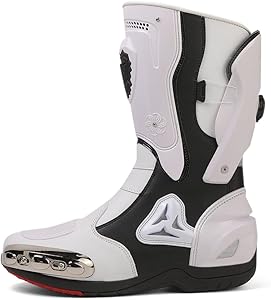
Sole material: Rubber
Shaft height: Calf High
Shaft circumference: 10.5 Inches
Outer material: Leather
Zeozoom boots are the straightforward no-nonsense option for riders who want protection without a PhD in boot technology. The calf-high shaft actually covers your lower leg, which is rare in this price bracket – most “motorcycle boots” stop at the ankle and call it a day. The anti-slip rubber sole bites into pegs confidently even in light rain, and the full leather outer promises decent abrasion resistance. The 10.5-inch circumference is generous; skinny calves won’t swim in them, and thicker legs won’t feel strangled.
That said, “protection” here is passive – no fancy plastic armor or CE ratings. These are essentially heavy leather work boots with a motorcycle marketing spin. The anti-slip works, but the sole pattern is basic. They’re comfortable for all-day wear, but don’t expect miracle cushioning. Best for new riders on a budget or as backup boots for passengers. They do the job, just don’t ask them to be Sidi or Alpinestars. A solid value pick that won’t embarrass you.
Pros: True calf-high coverage, generous calf circumference, decent anti-slip sole, affordable full leather.
Cons: No hard armor or CE rating, basic insole cushioning, runs large for some.
See the Zeozoom Motorcycle Riding Boots
10. Jousen Casual Motorcycle Boot
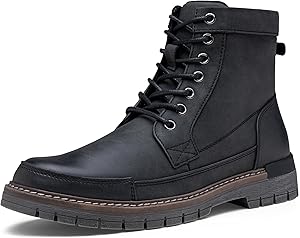
Lining: Soft, no break-in needed
Insole: Removable memory foam
Closure: Inner side zipper
Outsole: Rubber with non-slip tread
Jousen clearly heard every rider complain about bleeding heels and said “hold my beer.” The soft lining genuinely eliminates break-in – these feel like slippers that somehow have motorcycle pretensions. The removable memory foam insoles are a game-changer for arch support; swap them for orthotics if needed, or just enjoy the plushness. The inner zipper makes on/off so fast you’ll wonder why boots ever used laces alone. Plus, the thickened collar padding actually protects your ankles from the inevitable “oops, I dropped the bike on my leg” moment.
The size note is accurate: they run slightly roomy, which is perfect for thick winter socks. The slip-resistant tread pattern works well on pavement and light gravel, though deep mud will challenge them. Versatility is the real win here – wear them to the office, then ride home, then walk the dog. But don’t confuse casual for hardcore: there’s no shin plate or rigid heel cup. These are for relaxed cruising and commutes, not enduro racing. A brilliant comfort-first choice.
Pros: Zero break-in needed, removable memory foam insoles, easy side zipper, very versatile style.
Cons: No hard protection plates, runs slightly wide, not for aggressive riding.
See the Jousen Casual Motorcycle Boot
Elevating Your Ride: The Definitive Guide to Choosing Motorcycle Boots for Short Riders
For shorter motorcycle riders, managing a bike’s seat height can be one of the most challenging aspects of riding. Standing at a stoplight on your tiptoes or struggling to back a machine out of a parking space isn’t just uncomfortable—it can be a serious safety hazard. While adjusting a motorcycle’s suspension or buying a lower seat are common solutions, one of the easiest, most cost-effective, and non-invasive ways to gain confidence and ground reach is by selecting the right pair of motorcycle boots. A well-engineered boot can provide the crucial extra inch or two needed to transition from an unstable tiptoe stance to a confident, stable plant.
The Mechanics of Boot Height for Shorter Riders
When evaluating motorcycle boots, many riders focus strictly on the heel. However, a boot’s ability to help you reach the ground safely depends on a combination of engineering factors that work together. Understanding these mechanics ensures you select footwear that enhances your control without sacrificing your safety or comfort on the pegs.
Sole Thickness versus Heel Height
The total height advantage a boot offers is determined by two main measurements: the heel height and the forefoot sole thickness (often called the platform). A boot with a massive two-inch heel but a paper-thin front sole will force your foot into a steep angle. While this might help if you only touch the ground with your tiptoes, it can drastically reduce your stability when walking or trying to plant your foot more firmly.
For optimal stability, shorter riders should look for boots that offer a balanced platform. A thicker forefoot sole combined with a moderate heel ensures that whether you are leaning the bike slightly to one side to get a foot down, or trying to maximize contact on both sides, the boot fills the gap between your foot and the tarmac uniformly. Look for boots offering a 1-inch to 1.5-inch total lift distributed evenly across the bottom.
The Crucial Role of Outsole Grip
Height is meaningless without traction. When you are shorter, you often have less leverage to hold a heavy motorcycle upright. If your foot lands on loose gravel, oil, or a wet road marking at a stop, a slick sole will slip, likely resulting in a dropped bike.
Look for outsoles made from high-friction, oil-resistant rubber compounds. Deep tread patterns or lugged soles (frequently found in adventure or touring boots) provide mechanical grip on uneven terrain. Conversely, a smooth, stiff racing sole might glide effortlessly over pegs but fail miserably when trying to hold up a 500-pound cruiser on an inclined, wet intersection.
Key Features to Look for in Short-Rider Boots
Shopping for motorcycle boots requires balancing protection, style, and height enhancement. Here are the specific features shorter riders should prioritize during their search.
Internal Elevators and Hidden Wedges
Some manufacturers design boots specifically targeted at shorter riders by integrating hidden wedges or raised insoles inside the construction. These “elevator boots” look completely normal from the outside but feature an engineered slope on the inside that lifts the heel by an inch or more. The advantage of this design is that it maintains a traditional aesthetic while giving the rider a distinct height advantage. It also ensures that the external sole doesn’t become so thick that it interferes with the motorcycle’s controls.
Ankle Support and Lateral Rigidity
Because shorter riders often hold their bikes up at slight angles rather than perfectly vertical, the load placed on the ankles is significantly higher. If a boot lacks structural integrity around the ankle, the joint can roll or buckle under the weight of the machine. Look for boots featuring reinforced ankle cups, TPU bracing, or stiff leather wrapping that restricts lateral flexing while still allowing the forward and backward movement necessary for shifting and braking.
Sufficient Flexibility for Control Operation
A common pitfall when choosing thick-soled boots is losing the ability to feel and operate the foot controls. If a sole is too thick and completely rigid, you may struggle to slip your toe under the shift lever or judge how much pressure you are applying to the rear brake pedal. Seek out boots that utilize advanced dual-density midsoles—stiff in the arch for peg support and protection, but with a slight, calculated flex zone near the ball of the foot to retain control dexterity.
Categorizing Boots by Riding Style
Not all boots are created equal, and your choice should match the type of motorcycle you ride. Different styles offer unique approaches to handling height constraints.
Touring and Adventure Boots
Adventure (ADV) and touring boots are often excellent choices for shorter riders because they are inherently robust. ADV boots frequently feature thick, lugged Vibram-style soles designed for off-road traction, which naturally add substantial height. Additionally, their tall shaft construction provides immense ankle and shin protection, giving you the physical support needed when handling a top-heavy adventure bike.
Cruiser and Logger Style Boots
Cruiser riders have long gravitated toward traditional leather logger or engineer boots. These styles naturally feature heavy-duty rubber heels that often exceed 1.5 inches. Because many cruisers feature forward controls or floorboards, the thick heels can easily hook onto the pegs, providing a secure riding position while delivering maximum ground reach during stops. Just ensure the leather is high-quality and includes proper motorcycle-specific armor rather than being a basic fashion boot.
Urban and Casual Moto Sneakers
If you prefer a casual look, many modern riding sneakers feature integrated thick cup-soles. While they might not offer the extreme height of a logger boot, they provide a balanced, flat platform that makes walking highly comfortable. Many urban boots also feature slightly thicker removable insoles, which can be swapped out for aftermarket height-increasing insoles if needed.
Modifications and Aftermarket Solutions
If you find a pair of boots that fits your feet perfectly and offers top-tier safety features but falls short on height, you don’t have to abandon them. There are several ways to adapt boots to better suit your needs.
Aftermarket Insoles and Heel Inserts
The simplest modification is inserting a trim-to-fit heel lift or a raised orthopedic insole inside your existing boot. These can easily provide an extra 0.5 to 1 inch of lift. However, keep in mind that adding an insert reduces the available volume inside the boot. This modification works best in boots that have a tall toe box and a generous instep; otherwise, your foot may press uncomfortably against the top of the boot, causing numbness over long rides.
Professional Cobbler Cobbling and Resoling
For a more permanent and external solution, take your boots to a professional cobbler who specializes in motorcycle footwear or heavy-duty work boots. A skilled cobbler can add a high-density rubber midsole spacer between the original sole and the boot upper, effectively “building up” the entire bottom of the shoe by half an inch or more. Because this modification changes the outer dimensions, it is crucial to ensure that the added material doesn’t prevent you from fitting your foot under your bike’s shift peg.
Adjusting Your Motorcycle Technique
While the right boots provide physical assistance, pairing them with the correct physical techniques will yield the best results on the road. Managing bike height is as much about skill as it is about gear.
The “Left Foot Down” Stop Technique
Shorter riders should avoid trying to get both feet flat on the ground simultaneously, as this splits your reach and reduces your stability on both sides. Instead, practice the standard technique of keeping your right foot firmly planted on the rear brake pedal while sliding your pelvis slightly to the left side of the seat. This allows you to drop your left foot straight down, maximizing the extension of your leg and letting your thick-soled boot plant firmly and securely on the pavement.
Adjusting Bike Controls to Match Your Boots
Once you acquire a pair of boots with a thicker sole, you will likely need to adjust the ergonomics of your motorcycle. Thicker toes require more gap between the footpeg and the shifter. On most motorcycles, adjusting the height of the shift lever is a simple five-minute task involving loosening a locknut on the shift linkage and rotating the rod. Adjusting the lever upward ensures you can easily get your new, thicker boot underneath the shifter without straining your ankle.
Conclusion
Being a shorter rider should never limit your choice of motorcycles or compromise your enjoyment of the open road. By investing in a pair of motorcycle boots featuring a balanced, thick, high-traction sole, robust lateral ankle support, or integrated internal lifts, you effectively alter the geometry of your interface with the ground. When combined with smart stopping techniques and minor bike ergonomic adjustments, the right boots will transform your riding experience, replacing anxiety at stops with absolute confidence and control.