Best 360 Cameras for Motorcycle Riding of 2026
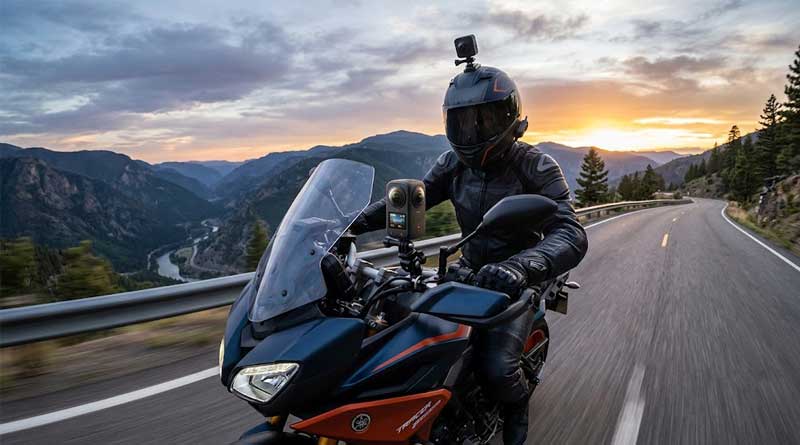
Motorcycle riding is all about the thrill of the open road, but capturing that experience on camera requires specialized gear. Standard action cameras only show what is directly in front of you, missing the sweeping landscapes and your own reactions. That is where 360-degree cameras change the game. By capturing everything around you simultaneously, these devices let you reframe your footage later to create dynamic, cinematic videos. This guide reviews the top options available to help elevate your riding footage.
1. Insta360 X5

- Video Resolution: 8K at 30fps panoramic video
- Sensor Size: Dual 1/1.28-inch image sensors
- Battery Life: Up to 208 minutes of runtime
- Waterproof Rating: Waterproof up to 49 feet (15 meters)
The Insta360 X5 stands out as a premium choice for riders who refuse to compromise on visual clarity. Equipped with massive dual sensors and a triple AI chip design, this camera excels at pulling crisp, vibrant details out of both bright daytime highways and dim night-time city streets. The advanced noise reduction ensures your twilight rides look clean and professional rather than grainy.
On the motorcycle, its FlowState stabilization and 360-degree Horizon Lock guarantee smooth footage regardless of body lean or bumpy pavement. It also features a specialized Wind Guard across its four-microphone array, meaning you can actually hear your voice or the engine roar instead of deafening wind rush. With an exceptional battery life over three hours and ultra-fast charging, it is built for long road trips.
Pros:
- Stunning 8K video resolution offers incredible reframing flexibility.
- Longest battery life in its class at 208 minutes.
- Advanced Wind Guard drastically improves high-speed audio quality.
Cons:
- Premium pricing makes it a significant financial investment.
- Invisible selfie stick must be purchased separately.
2. AKASO 360 Action Camera Combo

- Video Resolution: 5.7K panoramic video capture
- Photo Resolution: 72-megapixel 360-degree photos
- Sensor Configuration: Dual 1/2-inch 48MP sensors
- Photo Format: Supports DNG8 RAW photo mode
The AKASO 360 Action Camera Combo offers a fantastic balance of high-end photography features and immersive video capabilities. Utilizing dual 48-megapixel sensors, it captures massive 72-megapixel panoramic photos, making it ideal for riders who like to pause and document scenic viewpoints in absolute clarity. The inclusion of DNG8 RAW mode allows for extensive color grading and shadow recovery during editing.
When you are in motion, the in-app supersmooth stabilization algorithms effectively iron out high-frequency engine vibrations. The AI subject tracking is highly beneficial for motorcyclists, as it can automatically lock onto your bike or a riding partner and keep them centered in the frame. The dedicated AKASO 360 Studio desktop software provides simple yet powerful tools to shape your final edit quickly.
Pros:
- Massive 72MP photo resolution for ultra-sharp still images.
- DNG8 RAW mode provides excellent dynamic range in low light.
- Intelligent AI subject tracking simplifies the post-ride reframing process.
Cons:
- Lacks native high frame rate options at maximum 5.7K resolution.
- Stabilization is processed in-app rather than natively in real time.
3. Sixmou i3 4K Thumb Action Camera

- Weight: 1.25 ounces (35.7 grams)
- Video Resolution: 4K hands-free POV recording
- Battery Life: Up to 150 minutes in 1080P
- Waterproof Depth: 131 feet (40 meters) with case
The Sixmou i3 takes a completely different design approach by prioritizing an ultra-compact, lightweight footprint over a dual-lens build. Weighing just 1.25 ounces, this thumb-sized camera is designed to be mounted anywhere without causing helmet drag or weight imbalance. Its magnetic body and included 360-degree rotating spring clip allow you to snap it to your jacket collar, pocket, or handlebars instantly.
While it functions as a wide-angle perspective camera rather than a true dual-lens spherical 360 camera, its unique 360-degree rotating mount clip allows you to angle it in any direction. It delivers crisp 4K point-of-view footage, giving your viewers a true sense of speed. It also supports recording while charging, meaning you can easily wire it to your motorcycle USB port for all-day recording.
Pros:
- Incredibly lightweight and small, causing zero neck strain on helmets.
- Magnetic mounting system offers rapid, versatile placement options.
- Excellent waterproof depth up to 131 feet when using the housing.
Cons:
- Does not capture true spherical 360-degree dual-lens footage.
- The camera body itself requires a case to be waterproof.
4. Insta360 X3

- Video Resolution: 5.7K 360-degree Active HDR
- Single-Lens Mode: 4K wide-angle at 30fps
- Field of View: 170-degree MaxView at 2.7K
- Stabilization: FlowState with internal Horizon Lock
The Insta360 X3 remains a highly capable workhorse for motorcycle enthusiasts looking for proven reliability. By combining full 5.7K spherical capture with Active HDR, it excels at managing harsh, direct sunlight and sudden shadows when riding through forested roads or mountain passes. The Active HDR keeps the sky from blowing out while preserving details in the dark asphalt below.
A major benefit for riders is its dual-purpose nature. If you do not want to deal with reframing 360 footage later, you can switch it into Single-Lens Mode to turn it into a standard 4K wide-angle action camera. Backed by highly optimized FlowState stabilization, your videos will look perfectly level and vibration-free even when tearing down gravel trails or accelerating hard on the highway.
Pros:
- Active HDR keeps lighting balanced during rapid directional changes.
- Single-lens mode provides a high-quality 4K traditional alternative.
- Mature app ecosystem makes mobile reframing intuitive and quick.
Cons:
- Older model compared to newer 8K generation cameras.
- Low-light performance is noticeably grainier than large-sensor variants.
5. Insta360 X4 Air

- Weight: 165 grams lightweight chassis
- Video Resolution: 8K Active HDR at 30fps
- Sensor Size: Dual 1/1.8-inch image sensors
- Audio Tech: Multi-layer steel mesh Wind Guard
The Insta360 X4 Air is specifically designed for those who want maximum resolution without carrying a heavy, bulky device. Weighing only 165 grams, it stands as an incredibly light 8K-capable option. The integration of dual 1/1.8-inch sensors ensures that the massive 8K video output retains vivid, true-to-life colors, allowing you to crop deeply into the frame during editing without losing quality.
For motorcyclists, the physical architecture offers great advantages. It features removable, replaceable lens guards right out of the box, shielding your optics from flying road debris and gravel. Furthermore, the built-in multi-layer steel mesh Wind Guard works alongside updated audio algorithms to cut down ambient turbulence, keeping your exhaust notes crisp and clear without needing external lavalier microphones.
Pros:
- Extremely lightweight 8K camera, minimizing helmet mounting fatigue.
- Physical steel mesh wind guard effectively tackles high-speed rush.
- Tough, user-replaceable lens guards protect against road gravel.
Cons:
- Smaller sensor size than the X5 impacts absolute low-light performance.
- Lighter body can feel slightly less rugged in hand.
6. AKASO 360 Action Camera

- Video Resolution: 5.7K immersive 360 video
- Sensor Array: Dual 1/2-inch 48MP sensors
- Photo Quality: 72-megapixel spherical photos
- Software: Compatible with AKASO 360 Studio
This version of the AKASO 360 Action Camera brings the power of full spherical recording to a streamlined, standalone configuration. It packs the same formidable image hardware as its combo counterpart, utilizing dual 1/2-inch 48MP sensors to build highly detailed 5.7K video spheres. The primary benefit is the ability to record everything on the road immediately and worry about panning or zooming later.
Motorcycle riders will appreciate the Horizon Steady tech, which anchors the camera to a perfectly horizontal axis even when dragging pegs through tight canyon turns. The AI subject tracking can easily follow a trailing rider or keep your own bike in the sweet spot of the frame. However, note that this model omits built-in HDR processing, making it best suited for daytime cruising.
Pros:
- High-resolution 72MP stills are great for landscape captures.
- Reliable 360 Horizon Lock keeps footage level through aggressive leans.
- Cost-effective entry point into true dual-lens spherical video.
Cons:
- Lack of native HDR can lead to washed-out skies on bright days.
- Low-light performance drops off noticeably without supplemental lighting.
7. DJI Osmo 360 Camera

- Video Resolution: Native 8K at 50fps panoramic
- Sensor Array: Dual massive 1-inch sensors
- Dynamic Range: 13.5 stops with 10-bit D-Log M
- Fast Charging: Reaches 50% battery in 12 minutes
The DJI Osmo 360 Camera represents the absolute pinnacle of imaging technology for serious videographers on two wheels. Featuring dual 1-inch sensors, it captures native 8K footage at a fluid 50fps. This massive sensor footprint yields an astonishing 13.5 stops of dynamic range, mimicking cinematic cameras by handling complex lighting conditions like intense mountain sunrises or poorly lit highway tunnels flawlessly.
For motorcyclists, the design choices are excellent. The camera features advanced air gesture and voice control systems optimized to recognize inputs even when wearing heavy leather riding gloves, allowing you to trigger recording hands-free. The magnetic quick-release mounting setup enables you to swap the camera between your helmet, handlebars, or a tail mount in seconds, while the ultra-fast charging gets you back on the road instantly.
Pros:
- Dual 1-inch sensors deliver unmatched low-light and nighttime clarity.
- Glove-friendly gesture and voice controls ensure hassle-free riding operation.
- Incredibly fast charging curve provides 50% power in 12 minutes.
Cons:
- The heavy, robust construction adds more physical mass to mounts.
- Highest price bracket among all consumer options reviewed.
How to Choose 360° Camera for Motorcycle Riding
Selecting the ideal 360 camera for motorcycle riding requires understanding how technical features translate to a high-speed, vibrating, outdoor environment. Unlike standard electronics used in controlled settings, a motorcycle camera faces intense wind, mechanical vibration, flying road debris, and rapidly shifting sunlight. Finding a balance between video quality, durability, software usability, and secure mounting solutions ensures your investment enhances your riding experience rather than creating technical headaches on the side of the road.
Understanding Video Resolution and Reframing Needs
When looking at 360-degree cameras, resolution specifications can be deceptive compared to traditional flat action cameras. When a camera claims 5.7K or 8K resolution, that pixel count is stretched across an entire 360-degree sphere. Once you crop into a standard flat 16:9 widescreen frame during post-production, the actual resolution of your final video will be much lower.
5.7K vs. 8K Spherical Footage
Cameras recording in 5.7K generally yield a crisp 1080P Full HD clip once reframed. This is perfectly adequate for sharing on social media platforms or casual viewing. However, if you want your final cropped videos to look sharp on large 4K screens or televisions, stepping up to an 8K sensor system is highly recommended. The higher initial pixel density ensures that when you zoom into a distant detail along the road, the image remains clean and sharp without turning into a pixelated mess.
Sensor Size and Dynamic Range
The physical size of the camera sensors dictates how well the device manages light. Motorcyclists often ride through challenging lighting conditions, such as cruising down a highway directly into a low afternoon sun, or navigating a winding canyon road packed with alternating patches of bright light and deep tree shadows. Small sensors often struggle here, resulting in overexposed white skies or completely blacked-out road details.
Image Sensor Classes
- Consumer Standard (1/2-inch to 1/1.8-inch): Found in compact options like the Insta360 X4 Air and AKASO 360. They perform excellently during clear daylight hours but require software assistance like HDR to manage high-contrast scenes.
- Premium Enthusiast (1/1.28-inch): Striking a middle ground, these offer superior low-light handling without overly inflating the physical size of the camera.
- Pro Cinematic (Dual 1-inch): Featured on the DJI Osmo 360, these massive sensors offer up to 13.5 stops of dynamic range. They capture beautiful footage during night rides or twilight city cruises, showing minimal digital noise.
The Crucial Role of Stabilization and Horizon Locking
Motorcycles inherently vibrate due to engine harmonics and uneven road surfaces. Without robust stabilization, your video would be completely unwatchable. When shopping for a riding camera, look for specialized proprietary Electronic Image Stabilization (EIS) ecosystems alongside full 360-degree Horizon Locking algorithms.
Horizon locking ensures that even when you lean your motorcycle aggressively into a tight corner, the sky and horizon line stay completely level in the video. This creates an immersive, professional third-person tracking look, mimicking a drone following you along the curves. Ensure these stabilization features operate natively at your preferred shooting resolution so you do not have to sacrifice image clarity for smooth footage.
Audio Capture and Wind Mitigation
One of the most common failures in motorcycle videography is poor sound quality. At highway speeds, rushing air hits camera bodies with immense pressure, overpowering standard microphones with harsh distortive noise. Look closely at how each camera manages wind interference physically and algorithmically.
| Hardware Feature | Riding Benefit | Primary Consideration |
|---|---|---|
| Steel Mesh Wind Guards | Physically deflects high-speed airflow | Helps keep vocal audio clear at highway speeds |
| Multi-Mic Arrays (4 channels) | Enables spatial tracking of exhaust sounds | Adds immersive directionality to engine audio |
| Bluetooth Helmet Integration | Allows clear narration directly inside helmet | Requires compatible intercom hardware |
Form Factor, Weight, and Aero Drag
Where you intend to mount the camera on your motorcycle should heavily influence your choice of form factor. A heavy camera mounted to the side or top of a helmet creates leverage at high speeds, causing neck strain and pulling on your head. For helmet mounts, prioritize ultra-light options or ultra-compact designs like the thumb-sized Sixmou i3.
Conversely, if you mount the camera directly to your motorcycle handlebars, crash bars, or tail section using rigid metal clamps, weight becomes less of an issue. In these positions, a taller, chunkier body with large sensors can be easily accommodated. Ensure that whatever camera you select features a mounting thread or quick-release layout that is compatible with robust aluminum clamp systems, as cheap plastic sticky mounts frequently fail under heavy wind loads.
Software, AI Reframing, and Mobile Workflow
Shooting 360-degree footage is only half the battle; editing it is the other half. Because a 360 camera records every direction at once, you must choose where the camera points after your ride is over. This workflow relies heavily on the quality of the companion smartphone app or desktop editing studio.
AI Auto-Framing
Top-tier applications feature intelligent AI subject tracking algorithms. Instead of manually mapping keyframes to follow your bike through every turn, you can simply tap on yourself or your motorcycle and let the software keep the subject locked in the center of the frame automatically. Look for mature software platforms that let you quickly trim, frame, and export clips directly to your phone, allowing you to share your journey while taking a break at a gas station.
Lens Protection and Environmental Durability
By design, 360-degree cameras use bulbous, protruding fish-eye lenses that curve outward from the body. These lenses cannot be protected by standard flat filters and are highly vulnerable to flying rocks, gravel, and bugs kicked up by vehicles ahead of you.
When selecting a camera for motorcycling, check if the lenses are user-replaceable or if they feature rugged, quick-snap lens guards. Systems like the Insta360 X5 and X4 Air feature easily replaceable outer optics. This design choice means a stray piece of highway gravel will only ruin an affordable plastic guard rather than destroying the entire camera mechanism, keeping you on the road and filming without expensive repair delays.