Best Mountain Bike Tire Tubes of 2025
Finding the right mountain bike tire tube can make a big difference in your ride. A good tube keeps your tires strong. It also helps prevent flats and keeps you safe on rough trails. There are many types of tubes available today. Some are tough and long-lasting. Others are light and good for racing. Choosing the best one depends on your bike, trail, and budget. In this article, we review the best mountain bike tire tubes. We looked at features, durability, and value. Whether you ride for fun or adventure, there’s a tube here for you. Read on to find the perfect tube for your mountain bike.
1. Slime Bike Inner Tube with Slime Puncture Sealant
- Tube size: Compatible with various mountain bike tire sizes
- Valve type: Schrader
- Material: Butyl rubber with Slime sealant
- Sealant: Fibro-Seal technology, seals punctures up to 1/8 inch
Slime Bike Inner Tubes are designed with an integrated puncture sealant, making them an excellent choice for riders who frequent rugged trails. The standout feature is the Slime sealant inside the tube, which actively seals punctures as they happen, providing real-time protection against flats. This feature is particularly useful in thorn-prone or debris-heavy terrains where punctures are common.
Constructed from durable butyl rubber, these tubes provide solid resistance against abrasion and pinch flats. The Schrader valve design makes inflation quick and compatible with most bike pumps. For commuters and mountain bikers alike, these tubes reduce the downtime and frustration that typically come with tube failures, enhancing the overall riding experience.
Pros:
- Self-healing sealant technology
- Reduces frequency of flat tires
- Easy installation with Schrader valve
- Good for rugged trails
Cons:
- Slightly heavier than regular tubes
- Not ideal for high-performance racing
2. VeloTubes Mountain Bike Inner Tubes – 4 Pack
- Pack size: 4 tubes
- Available sizes: 26″, 27.5″, 29″
- Valve type: Presta
- Material: Butyl rubber
VeloTubes provides great value for riders needing a reliable set of spare tubes. This 4-pack includes high-quality butyl rubber tubes designed to fit a wide range of mountain bike sizes. Whether you ride a 26″, 27.5″, or 29″ tire, there’s a size option for your bike. The Presta valves are well-machined, ensuring they hold air well and make inflating quick and efficient.
Each tube in the pack maintains consistent wall thickness, reducing the risk of blowouts and maintaining a good balance between weight and durability. Ideal for everyday riders and long-distance commuters, these tubes are dependable backups that won’t let you down on the trail. The bulk packaging also means better cost-effectiveness for frequent bikers.
Pros:
- Economical 4-pack
- Reliable butyl rubber construction
- Suitable for multiple bike sizes
- Smooth Presta valve operation
Cons:
- No puncture protection sealant
- Slightly heavier than ultralight options
3. Corki 26 Inch Mountain Bike Tire Inner Tube – 2 Pack
- Size: 26 x 1.75-4.0 inch compatibility
- Valve types: Presta (48mm) and Schrader (32mm)
- Material: Heavy-duty butyl rubber
- Quantity: 2 tubes per pack
Corki’s 26 Inch Mountain Bike Tire Inner Tubes are known for their wide compatibility range and solid construction. With sizing that supports up to 4.0-inch tires, these tubes are ideal for standard mountain bikes and even fat tire bikes. The availability of both Schrader and Presta valves adds convenience for riders with different rim requirements.
Made from heavy-duty butyl rubber, these tubes offer superior puncture resistance and air retention. They’re easy to install and maintain, making them suitable for trail riders and commuters alike. The dual-valve options in a single pack give extra flexibility and value for money, especially for households with multiple bike types.
Pros:
- Wide tire size compatibility
- Heavy-duty, long-lasting material
- Dual valve type options
- Great value for a 2-pack
Cons:
- Bulkier due to heavy-duty design
- May be overbuilt for light trail use
4. BELL Standard 26-inch Bike Tube
- Size: 26 x 1.75-2.25 inches
- Valve type: Schrader
- Material: Mold-cured rubber
- Puncture-resistant layer included
BELL Standard 26-inch Bike Tubes are an excellent go-to for general mountain biking and casual rides. These tubes are mold-cured, a process that helps maintain a uniform wall thickness and minimizes the risk of blowouts. The Schrader valve is robust and compatible with most standard bike pumps.
What sets this tube apart is its puncture-resistant layer, which offers an extra measure of protection against thorns and sharp objects. This makes it suitable for moderately rough trails and city riding. Though it doesn’t have built-in sealant like some premium tubes, its construction provides a good balance between durability and weight.
Pros:
- Trusted brand
- Puncture-resistant design
- Easy to install
- Affordable and widely available
Cons:
- No self-sealing capabilities
- Not suitable for high-performance use
5. Hapleby 2PCS Premium Bike Tubes
- Size: 26 x 1.75/1.95/2.10/2.125 inches
- Valve type: Schrader
- Material: Thickened butyl rubber
- Accessories: Includes 2 tire levers
Hapleby’s Premium Bike Tubes offer a dependable solution for recreational and trail mountain biking. With thickened butyl rubber, these tubes provide excellent air retention and puncture resistance. The addition of two tire levers in the package is a thoughtful touch that simplifies installation, especially for beginners.
These tubes are compatible with a wide range of 26-inch mountain bike tires, making them a versatile choice. Their Schrader valves make for quick and easy inflation using standard pumps. Overall, this 2-pack offers solid quality and convenience for casual riders or daily commuters.
Pros:
- Thick and durable construction
- Easy to install with included levers
- Good air retention
- Great for beginner riders
Cons:
- Slightly heavier due to thickness
- Limited to Schrader valves
6. HSayoli RideNow TPU Inner Tubes
- Sizes: 700 x 18-32 / 27.5/29 inch x 1.9-2.5
- Valve length options: 45mm, 65mm, 85mm
- Material: Thermoplastic Polyurethane (TPU)
- Weight: Ultralight
The HSayoli RideNow TPU Inner Tubes redefine lightweight biking with their ultralight thermoplastic polyurethane design. Weighing significantly less than traditional butyl rubber tubes, these tubes are ideal for riders seeking to reduce rotational weight and boost speed. Available in various valve lengths, they cater to deep rim profiles and varied frame types.
Despite their minimal weight, they maintain decent puncture resistance and air retention. TPU construction also means they take up less storage space, making them perfect for long-distance and competitive riders. However, care must be taken during installation as TPU can be more delicate than rubber.
Pros:
- Extremely lightweight
- Space-saving design
- Various valve lengths available
- Ideal for racing and long-distance rides
Cons:
- Higher price point
- Requires careful installation
7. Ultraverse Bike Inner Tube – 2 Pack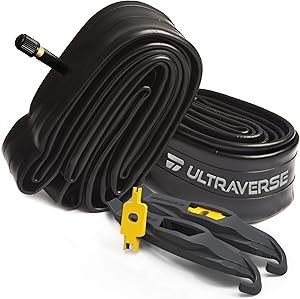
- Size: 26 x 1.75/1.95/2.10/2.125 inches
- Valve type: Schrader
- Material: Butyl rubber
- Quantity: 2 tubes per pack
Ultraverse Bike Inner Tubes offer dependable performance for a wide variety of mountain and trail bikes. The butyl rubber construction ensures excellent air retention and resistance to punctures, providing peace of mind during long or rugged rides. These tubes are designed to handle a range of terrain types, from gravel to enduro.
With a standard Schrader valve, they are easy to inflate using most common bike pumps. This 2-pack offers value and reliability for casual riders, commuters, and weekend adventurers. Though not as lightweight as TPU options, they offer robust, no-nonsense performance where durability matters most.
Pros:
- Good value in a 2-pack
- Durable and reliable
- Versatile for various terrain types
- Easy inflation
Cons:
- Not as light as premium alternatives
- Schrader only; no Presta option
How to Choose Mountain Bike Tire Tubes: A Complete Guide
Mountain biking is a thrilling sport that tests your endurance, balance, and bike’s durability across various terrains. One often overlooked but essential component of your mountain bike setup is the tire tube. Though small and inexpensive, choosing the right mountain bike tire tube can significantly impact your ride quality, puncture resistance, and overall performance.
Whether you’re a beginner or a seasoned trail rider, understanding how to pick the best tire tube will ensure fewer flats, better traction, and a safer ride. Here’s a comprehensive guide to help you choose the right mountain bike tire tubes.
1. Understanding the Role of a Tire Tube
Before diving into the technical details, let’s understand what a tire tube does. A mountain bike tire tube is an inflatable rubber or latex cylinder that fits inside your tire. When inflated, it supports the tire and provides the cushion between your bike and the trail. It holds the air pressure that allows your bike to roll efficiently and absorb shocks from rough terrain.
2. Know Your Tire Size
Why It Matters:
Tubes must match your tire’s size precisely. Using the wrong size can lead to pinching, excessive stretching, or poor sealing, resulting in frequent flats or blowouts.
How to Check:
Look on the sidewall of your mountain bike tire. You’ll see numbers like 27.5 x 2.2 or 29 x 2.4. This tells you:
-
The diameter of the wheel (in inches): Common mountain bike diameters are 26″, 27.5″, and 29″.
-
The width of the tire: Typically ranges from 1.9″ to 3.0″ or even wider for fat bikes.
Matching Tubes:
Tubes are often labeled with a size range, such as 27.5 x 1.9–2.3. Make sure the range includes your tire’s width and the tube is made for the correct diameter.
3. Choose the Right Valve Type
Tire tubes come with two main valve types. Choosing the wrong one may make it difficult to inflate your tires or fit them into your rims.
Schrader Valve:
-
Wider, same as car tire valves.
-
Easier to use at gas stations.
-
Found on lower-end bikes or older models.
Presta Valve:
-
Thinner, with a lock nut at the top.
-
Common on high-performance and modern mountain bikes.
-
Requires a compatible pump or adapter.
Pro Tip: Always match the valve type to your rim’s valve hole. Don’t force a Presta into a Schrader-sized hole (or vice versa) without an adapter or rim grommet.
4. Consider Tube Material
The two main materials used in mountain bike tubes are butyl rubber and latex.
Butyl Rubber Tubes:
-
Most common and affordable.
-
Durable and easy to patch.
-
Heavier, but excellent for everyday riders and rough terrain.
Latex Tubes:
-
Lightweight and provide lower rolling resistance.
-
More flexible, improving ride feel and comfort.
-
Tend to lose air faster and are more delicate (harder to patch).
-
Best for racers or performance-focused riders.
If you’re a casual or trail rider, stick with butyl tubes for reliability. If you’re racing or weight is critical, latex might be worth considering.
5. Weight vs. Durability
Every mountain biker faces the dilemma of balancing weight with durability. Lightweight tubes reduce rotating mass, helping you accelerate and climb faster. But thinner tubes are more prone to punctures and pinch flats.
Ultralight Tubes:
-
Weigh less than 150 grams.
-
Ideal for competitive riders.
-
Must be checked frequently for pressure and damage.
Heavy-Duty Tubes:
-
Thicker walls resist punctures.
-
Heavier, but safer for rugged trails or bikepacking.
-
Often marketed as “thorn-resistant” or “downhill tubes.”
Choose based on your riding style:
-
Cross-country (XC) riders: may prefer lighter tubes.
-
Trail and enduro riders: should opt for durability.
-
Downhill and bikepacking: go for reinforced, puncture-resistant tubes.
6. Puncture Protection and Sealants
Tubes with puncture-resistant layers or the ability to use sealant can drastically reduce the chance of flats on thorny trails.
Self-Sealing Tubes:
-
Pre-filled with slime or latex-based sealant.
-
Seal small punctures automatically.
-
Slightly heavier, but excellent for rugged or remote rides.
Aftermarket Sealant:
-
Can be injected into standard tubes.
-
Brands like Slime or Stan’s NoTubes offer reliable solutions.
-
Extends the life of your tubes and adds peace of mind.
7. Tubes vs. Tubeless: Do You Still Need Tubes?
With the growing popularity of tubeless mountain bike systems, many riders wonder if they still need tubes. Tubeless systems offer lower rolling resistance, better traction, and fewer flats. However, they require tubeless-ready rims, tires, and more maintenance.
When to Use Tubes:
-
You’re riding a budget or older bike.
-
You want a hassle-free, plug-and-play solution.
-
You need an emergency backup for tubeless failures.
Even if you ride tubeless, it’s wise to carry a spare tube for trailside repairs.
8. Top Tube Brands to Consider
Some of the most reliable mountain bike tube brands include:
-
Continental – known for high-quality, durable butyl tubes.
-
Schwalbe – offers both standard and lightweight tubes.
-
Slime – specializes in self-sealing tubes with built-in protection.
-
Kenda – affordable and widely available options.
-
Maxxis – known for tough tubes suited for aggressive trail riding.
Always read user reviews and consider trail conditions when choosing a brand.
9. Price vs. Performance
Mountain bike tubes are relatively inexpensive compared to other components. Still, prices can range from $5 to $25 depending on material, thickness, and features like self-sealing. Don’t always go for the cheapest option—investing a few extra dollars in quality can save you from multiple flats or long walks back home.
10. Maintenance Tips for Tube Longevity
To get the most out of your tubes:
-
Keep tires properly inflated to avoid pinch flats.
-
Inspect for debris inside the tire before installation.
-
Avoid over-inflating, especially with thin tubes.
-
Patch small holes rather than throwing the tube away.
-
Store spares in a cool, dry place away from sunlight.
Conclusion
Choosing the right mountain bike tire tube may seem simple, but the wrong decision can make your ride uncomfortable or unsafe. By considering your wheel size, valve type, material, riding style, and terrain, you’ll be better equipped to pick a tube that offers the ideal balance between durability, weight, and performance.
Whether you’re bombing down steep trails or exploring forest paths, the right tube will keep your wheels rolling smoothly—so choose wisely and ride confidently.