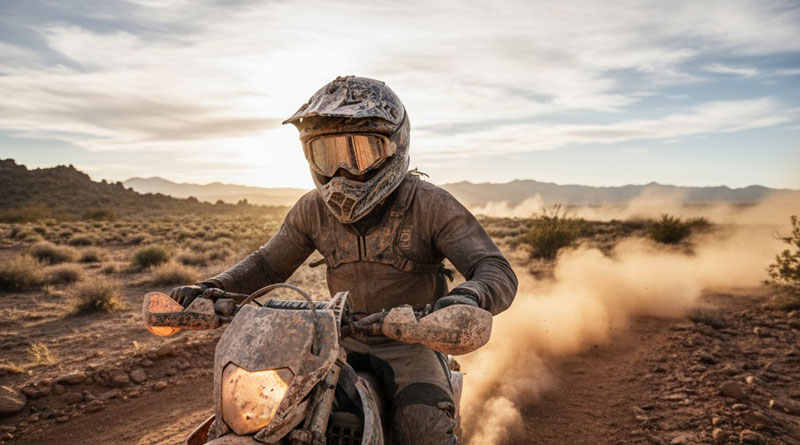
Best Dirt Bike Helmets of 2025
Finding the right dirt bike helmet is crucial. It keeps you safe during your off-road adventures. Helmets come in many styles and price points. You need comfort and top-tier protection. This guide helps you choose wisely. We look at safety ratings and essential features. We also review the best helmets available now. Get ready to ride knowing your head is protected.
1. CARTMAN Dirt Bike Helmet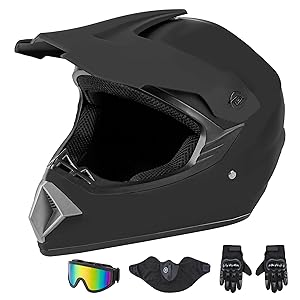
- DOT Certified Full Face protection
- ABS Shell construction for impact resistance
- Multi-Point ventilation system
- Quick Release retention strap
The CARTMAN Adult Dirt Bike Helmet offers an extremely accessible entry point into the world of off-road riding gear, appealing primarily to beginners and casual ATV riders looking for maximum value. Its aggressive, matte black and blue styling gives it a competitive, high-end look without the corresponding price tag. The helmet meets DOT safety standards, providing essential protection, and features a multi-point ventilation system that helps manage airflow and reduce heat buildup during extended rides. The interior comfort liner is decent for the price and is removable, which is essential for maintaining hygiene after dusty or muddy excursions.
While the CARTMAN helmet is a strong contender in the budget category, riders should temper their expectations regarding premium features. The fit is generally comfortable but may not have the customizable precision of higher-end models. The included quick-release buckle is a major convenience feature, allowing for fast and easy donning and removal. This helmet is best suited for light trail riding or as a spare, offering reliable, certified safety in a visually appealing package that won’t break the bank. It represents an excellent blend of basic safety compliance and stylish design for the everyday rider.
Pros:
- Excellent value proposition for a full-face DOT helmet.
- Aggressive and modern matte black/blue aesthetic.
- Convenient quick-release buckle system.
Cons:
- Ventilation, while present, can feel limited compared to premium helmets.
- Shell material is heavier than advanced composite options.
2. Oumurs Helmet (Full Kit)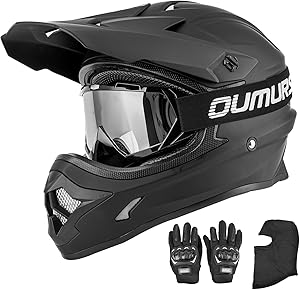
- Integrated Quick Release Buckle
- Package Includes Goggles, Gloves, and Face Mask
- Lightweight ABS composite shell
- Adjustable exterior sun visor
This Oumurs helmet is marketed as a complete, all-in-one protective package for the entry-level dirt bike or ATV enthusiast. The inclusion of essential accessories—goggles, gloves, and a mask—makes this a highly cost-effective solution for new riders who need to be trail-ready immediately without purchasing individual components. The helmet itself features a lightweight ABS shell and is DOT-approved, ensuring baseline safety compliance for off-road use, including motocross, downhill, and moped riding. The adjustable sun visor is a practical feature, effectively shielding the rider from sun glare and roost.
The design prioritizes versatility and ease of use, incorporating a quick-release buckle for hassle-free removal. The interior is generally well-padded, though riders sensitive to pressure points might find the padding less dense than higher-priced alternatives. The primary appeal lies in the sheer convenience and value of the bundle; it is ideally suited for casual family rides, recreational ATV use, or as a starting kit for younger or new adult riders. It provides the necessary equipment to safely enjoy the trail straight out of the box.
Pros:
- Exceptional value with all necessary protective accessories included.
- User-friendly quick-release buckle system.
- DOT-compliant and lightweight for general use.
Cons:
- Accessory quality (gloves/mask) is basic and not professional grade.
- Interior padding may compress faster than high-density foam.
3. GLX GX23 Dirt Bike/Motocross Helmet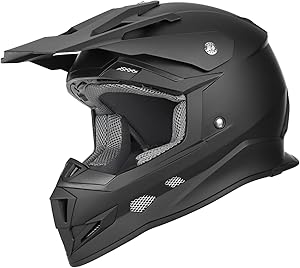
- DOT Safety Certification (FMVSS-218)
- Aerodynamic shell design reduces drag
- Removable and fully washable liner system
- High-Impact Thermoplastic Shell
The GLX GX23 is positioned as a reliable, intermediate-level helmet that balances performance features with an affordable price point. Its standout feature is the aerodynamic shell design, which is engineered to minimize wind resistance and lift, a crucial factor for riders who sustain higher speeds, whether in motocross or on open trails. The helmet is DOT-approved, confirming its structural integrity and impact absorption capabilities. Riders particularly appreciate the fit of the GX23, often noting that the sizing is accurate and the interior contouring provides a snug yet comfortable feel suitable for extended wear.
Maintenance is simplified thanks to the removable and fully washable inner liner and cheek pads, a necessity for keeping the helmet fresh after intense, sweaty, or muddy riding sessions. The ventilation system is effective, utilizing intake vents to draw air across the scalp and exhaust vents to push hot, stale air out, aiding in temperature regulation. Overall, the GLX GX23 is a solid choice for the active hobbyist or intermediate rider who demands greater stability and easier upkeep than entry-level models offer, all wrapped up in a sleek, matte black finish.
Pros:
- Sleek, aerodynamic profile minimizes fatigue at speed.
- Removable and washable liner allows for excellent hygiene.
- Consistent and reliable fit across sizes.
Cons:
- Lacks advanced safety features like MIPS technology.
- The visor adjustment can be stiff initially.
4. ILM Adult Dirt Bike Helmet (Model 128S)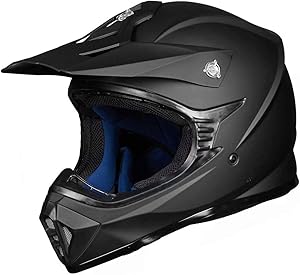
- Impact-Absorbing High-Density EPS liner
- Advanced composite outer shell material
- Large eye port for wide peripheral vision
- Detachable and washable comfort pads
The ILM Model 128S is a robust full-face offering designed for diverse off-road applications, from Motocross (MX) to ATV and BMX. The helmet’s strength lies in its construction, featuring an advanced composite shell paired with a high-density EPS (Expanded Polystyrene) liner. This multi-layered approach to protection is crucial for dissipating impact energy effectively, which is why it meets the necessary DOT safety standards. The streamlined matte black design gives it a serious, no-nonsense look favored by riders who prioritize durability and safety above all else.
A significant benefit for aggressive riders is the large eye port, which not only accommodates various goggle sizes easily but also ensures the rider has maximum peripheral and vertical vision, improving situational awareness on dynamic tracks and trails. The interior is designed for comfort during long rides, with moisture-wicking materials and fully detachable pads that are easy to remove for cleaning. The ILM 128S stands out as a reliable and strong choice for the dedicated enthusiast who needs a dependable, protective helmet capable of handling various harsh off-road environments.
Pros:
- Excellent balance of comfort and robust protection.
- Extra-large eye port ensures superior field of view.
- Durable construction suitable for aggressive riding styles.
Cons:
- Ventilation could be optimized for extremely hot weather.
- Tends to fit slightly snug, requiring careful sizing selection.
5. Oumurs Helmet (Ventilation Focused)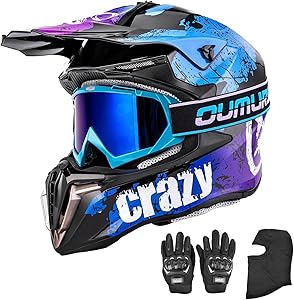
- Optimized Airflow Ventilation System
- Removable moisture-wicking liner
- High-Quality finish in off-road aesthetics
- Anti-Fog Goggles included in the package
Focusing on rider comfort and heat management, this specific Oumurs offering emphasizes its optimized airflow system, a critical component for riders engaging in high-exertion downhill and motocross disciplines. The multi-vent design is strategically placed to draw in cool air and efficiently exhaust the heat and moisture generated inside the helmet, helping to prevent rider fatigue. This attention to climate control, coupled with a moisture-wicking liner that is easily removable, ensures the helmet remains comfortable even after hours of intense activity.
As with other Oumurs bundles, the helmet comes as part of a complete kit including high-visibility goggles, which are often equipped with anti-fog properties, gloves, and a mask, adding significant value. The lightweight nature of the ABS shell material contributes to reduced neck strain, making it a viable option for younger or smaller adult riders. While it remains a budget-friendly option, the focus on better breathability makes it slightly more appealing than basic models for sustained trail use where overheating can be a concern.
Pros:
- Improved ventilation helps maintain a cooler internal environment.
- Complete accessory bundle provides exceptional value.
- Liner is fully removable for thorough cleaning.
Cons:
- Bulkier profile than high-end carbon fiber or composite helmets.
- The included accessories are standard quality and may need later upgrading.
6. Oumurs Motocross Dirt Bike Helmet (Certified Robustness)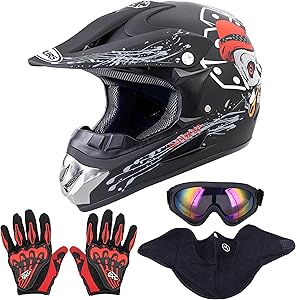
- DOT/FMVSS-218 Dual Safety Certification
- Reinforced chin bar and mouth guard
- Balanced weight distribution for stability
- Anti-UV clear coat on the shell
This Oumurs helmet variant stands out by explicitly referencing the DOT/FMVSS-218 certification, underscoring its commitment to meeting stringent US safety standards, a key confidence booster for riders. The design features a noticeably reinforced chin bar and mouth guard, offering extra protection to the facial area, which is highly vulnerable in off-road spills. The helmet’s overall construction emphasizes robustness, designed to withstand the more aggressive impacts associated with high-speed motocross and ATV maneuvers, while the clear coat finish is resistant to UV damage, helping to maintain the helmet’s aesthetic integrity over time.
Riders engaging in more demanding activities will appreciate the balanced weight distribution, which prevents the helmet from feeling top-heavy and helps reduce fatigue during long, turbulent rides. Like its bundled counterparts, it includes goggles, gloves, and a mask, but the focus here is clearly on the core helmet’s structural resilience. The wide eye port ensures compatibility with the included goggles and maintains excellent peripheral vision. This is a highly recommended model for budget-conscious riders who are ready to move past casual trail riding into more challenging, technical terrain.
Pros:
- Strong emphasis on structural safety with reinforced chin bar.
- Balanced design minimizes neck strain during rough riding.
- UV-resistant coating ensures long-term visual appeal.
Cons:
- Interior noise levels can be noticeable at higher speeds.
- Sizing can vary slightly, necessitating measurement checks.
7. Fox Racing V1 Core Motocross Helmet
- Injection-Molded Polycarbonate and ABS shell
- Equipped with advanced MIPS-like rotational protection
- Nine Intake and four Exhaust vents for airflow
- Magnetic Visor Release System (MVRS) for safety
The Fox Racing V1 Core helmet immediately signifies quality and performance, representing a more premium choice from a leading brand in the motocross industry. This model incorporates advanced safety technology, often featuring a proprietary rotational management system (similar to MIPS) designed to reduce the rotational forces transmitted to the brain upon impact, providing a crucial layer of protection beyond standard impact absorption. The dual polycarbonate/ABS shell construction strikes an optimal balance between low weight and high durability, making it comfortable enough for a full day of riding.
The V1 is built for high-level performance, evident in its aggressive ventilation system with numerous intake and exhaust vents that provide market-leading airflow, essential for riders pushing their limits. Furthermore, a unique safety feature is the Magnetic Visor Release System (MVRS), which allows the visor to detach instantly in the event of a crash, helping to manage external forces. This helmet is ideal for competitive, serious amateur, or experienced recreational riders who value superior safety technology, outstanding airflow, and the reliable, performance-driven fit that Fox Racing is known for.
Pros:
- Features advanced technology for managing rotational impact forces.
- Exceptional airflow and ventilation system.
- MVRS enhances safety by managing impact forces on the visor.
Cons:
- Significantly higher price point compared to budget models.
- The focused racing fit may be too snug for casual riders.
🏍️ The Essential Guide to Choosing Your Dirt Bike Helmet
Choosing the right dirt bike helmet isn’t just about aesthetics or brand loyalty; it’s the single most crucial piece of safety gear you will purchase. In the high-stakes world of motocross and trail riding, your helmet is the primary defense against serious injury. This guide will walk you through the essential factors, from safety ratings and fit to materials and features, ensuring you make an informed decision that could one day save your life.
Why a Specialized Dirt Bike Helmet is Non-Negotiable
While some might consider using a street or ATV helmet for dirt biking, the unique demands of off-road riding necessitate a specialized design. Dirt bike helmets, often called motocross or MX helmets, are engineered with specific features to address the environment and activity.
Distinctive Design Elements
- Visor/Peak: The extended peak is designed to block roost (dirt and rocks kicked up by other riders) and shield the eyes from the low sun or glare on the trails. It’s often adjustable.
- Chin Bar: The prominent, elongated chin bar provides extra protection for the face and jaw in the event of a crash. Crucially, it creates significant distance from the mouth for better airflow, a necessity when riding at high exertion levels.
- Goggle Port: Unlike a street helmet’s full-face shield, MX helmets have a large open port specifically shaped to accommodate a pair of dirt bike goggles, which are required for eye protection.
- Ventilation: Dirt biking is physically demanding. MX helmets feature extensive vents to channel cool air in and hot air out, helping to keep the rider cool and prevent fatigue.
The Paramount Importance of Safety Certifications
Before considering anything else, a helmet’s safety certification is the first and most critical factor. These standards ensure the helmet has passed rigorous testing for impact protection, penetration resistance, and strap strength. Never buy a helmet without a recognized safety rating.
Understanding Helmet Standards
- DOT (Department of Transportation): This is the minimum mandatory safety standard for helmets sold and used on public roads in the United States. It tests for impact attenuation and penetration resistance. While a minimum, it is a legal requirement.
- ECE (Economic Commission for Europe): Widely respected globally and common on many high-end helmets, the ECE standard often involves more stringent testing, particularly for shell rigidity and shock absorption, making it an excellent choice for motorsports.
- Snell: The Snell Memorial Foundation is a non-profit organization that offers a voluntary, extremely demanding safety standard. Snell testing (e.g., Snell M2020) is generally considered the most aggressive, using higher impact velocities and multiple impact points. Many competitive racers prefer Snell-certified helmets.
- FIM (Fédération Internationale de Motocyclisme): This is the mandatory standard for helmets used in professional competitive motorcycle racing. These are top-tier helmets that undergo the most extreme impact and oblique impact tests.
Achieving the Perfect Fit: Sizing and Retention
A helmet can only protect you if it fits correctly. A helmet that is too loose can shift during an impact, compromising protection, while one that is too tight can cause headaches and fatigue. Fit is non-negotiable for safety and comfort.
How to Measure Your Head
- Use a flexible tape measure.
- Wrap it around the largest part of your head, about a half-inch above your eyebrows and ears.
- Take the measurement in inches or centimeters.
- Consult the specific manufacturer’s size chart, as sizes can vary between brands.
Checking for Proper Fit
- Snugness: The helmet should feel snug all around your head, with pressure evenly distributed. The cheek pads should press against your cheeks—you should feel your face being “squished” slightly.
- Movement Test: With the chin strap secured, try to rotate the helmet from side to side and front to back. Your scalp and the skin on your head should move with the helmet. If the helmet slides freely across your skin, it is too large.
- Pressure Points: Wear the helmet for several minutes. There should be no painful pressure points or “hot spots” that indicate it’s too tight in one area.
Retention System (Chin Strap)
- Double D-Ring: This is the preferred and most reliable retention system for motocross helmets. It is simple, extremely secure, and is the only type allowed in most racing organizations.
- Quick-Release Buckle: While faster to use, these are generally not as secure under extreme impact as the D-ring and are less common or disallowed in serious off-road riding.
Material Matters: Shell Composition
The outer shell material is crucial for initial impact management, specifically the ability to spread the force over a wide area before the energy-absorbing liner takes over.
Common Shell Materials
- Polycarbonate/Thermoplastic: These are the most budget-friendly materials. They are durable and meet safety standards but tend to be heavier than composite materials.
- Fiberglass Composite: A step up from polycarbonate, offering a better strength-to-weight ratio. These helmets are lighter, which helps reduce neck strain and fatigue.
- Carbon Fiber/Kevlar Composite: The premium material choice. Carbon fiber is incredibly strong and light, offering superior impact protection and maximum weight savings. These helmets are typically the most expensive.
Focus on Comfort and Essential Features
A comfortable helmet is one you’ll be happy to wear for long periods. Features like ventilation and moisture-wicking materials significantly impact your riding experience.
Ventilation and Airflow
Look for helmets with multiple intake vents (chin, forehead) and exhaust ports (rear) to ensure excellent airflow. Good ventilation is key to performance and safety, as it prevents overheating and fatigue.
Liner Technology
The interior lining serves two main functions: comfort and impact management.
- Moisture-Wicking Fabric: A liner that pulls sweat away from your skin will keep you drier and more comfortable. Liners should be removable and washable.
- MIPS (Multi-directional Impact Protection System): This is an increasingly common feature. MIPS technology is a low-friction layer between the comfort liner and the EPS (Expanded Polystyrene) liner, designed to reduce rotational forces that can cause brain injury during certain angled impacts. Many experts consider MIPS or similar rotational energy-reducing technology a crucial feature.
🏁 Final Check and Next Steps
Choosing your dirt bike helmet should be a careful, measured process. Your goal is to find the perfect synergy of superior safety standards (Snell or ECE with MIPS), a perfect, snug fit, and durable, lightweight shell material (composite or carbon fiber). Remember that safety technology constantly evolves, so prioritize newer certifications and features like MIPS.
📝 The Pre-Ride Checklist
- Verify Safety Standard: Does it meet or exceed DOT and ECE/Snell standards? Does it include MIPS or similar technology?
- Test the Fit: Is it snug without painful pressure points? Does it pass the side-to-side and front-to-back movement test?
- Check Visibility: Does the eyeport accommodate your preferred goggles, and is your peripheral vision unobstructed?
- Confirm Comfort: Is the chin strap a secure Double D-ring? Are the pads removable/washable, and is the ventilation adequate?
A high-quality dirt bike helmet is an investment in your well-being, translating directly into greater confidence and focus on the track or trail. Never compromise safety for price or style. Take your time, try on several models, and choose the helmet that offers you the best protection available.