Best Downhill Mountain Bike Tires of 2026
Choosing the right downhill mountain bike tires is important for a safe and smooth ride. Downhill trails are rough and fast. You need tires that can handle sharp rocks and loose dirt. They should offer strong grip and good control. Good tires also help you stay stable during hard turns. They protect your rims from big hits. The right pair can boost your confidence on any trail. This guide will help you understand key features. It will also share top tire options for downhill riding.
1. MAXXIS Minion DHR II

- Usage: High-traction rear tire for downhill and enduro.
- Compound: Dual Compound for balance of grip and rolling speed.
- Protection: Available in various casings like DoubleDown.
- E-Bike Rating: E25 rated for light-duty e-MTBs.
The MAXXIS Minion DHR II is a benchmark rear tire in the gravity world. It builds on the success of the original DHR, incorporating widened side knobs from the iconic DHF for increased support. This design translates into phenomenal braking traction and predictable, reliable cornering, making it a top choice for riders who need confidence when charging steep, loose descents. Its reputation as a “braking monster” is well-earned, providing a consistent and locked-in feel.
While optimized for the rear, its versatility allows it to be run as a front in certain conditions. The Dual Compound offers a practical compromise, providing durable grip without excessive rolling resistance on climbs. The availability of tough casing options like DoubleDown makes it a robust choice for punishing downhill and enduro tracks, and its E25 rating adds suitability for e-bike use. It’s a no-nonsense, performance-driven tire that excels in its primary role.
- Pros: Exceptional braking and cornering traction; Proven, reliable design; Versatile casing/compound options; E-bike compatible.
- Cons: Dual Compound isn’t the stickiest option; Can feel slow rolling on less aggressive terrain.
2. Minion DHF Mountain Bike Tire

- Usage: Versatile front tire for trail, enduro, and downhill.
- Compound: 3C MaxxGrip for maximum traction and slow rebound.
- Protection: EXO+ sidewall protection with bead rim guard.
- Setup: Tubeless Ready for lower pressure and flat prevention.
The Minion DHF is arguably the most iconic mountain bike tire ever made, and for good reason. Its versatile tread pattern masters the art of balancing rolling speed, braking control, and, most notably, sublime cornering grip. The widely spaced, tall side knobs dig in predictably as you lean the bike, inspiring confidence on everything from loose dust to hardpack. This particular version with 3C MaxxGrip compound and EXO+ casing is a potent setup for aggressive trail and enduro riding.
The 3C MaxxGrip compound is the star here, offering the sticky, damping traction favored by world cup racers, albeit with a trade-off in rolling speed and wear life. The EXO+ protection adds crucial sidewall cut resistance and a bead guard, making it a robust option for rocky terrain. Sold as a bundle with a tire lever, it’s a great value entry into a legendary tire that continues to define performance standards across multiple disciplines.
- Pros: Legendary, predictable cornering grip; Excellent balance of capabilities; High-performance 3C MaxxGrip compound; Good EXO+ protection bundle.
- Cons: High-grip compound increases rolling resistance; Not the most durable compound for long-term wear.
3. Continental Race King Mountain Bike Tire
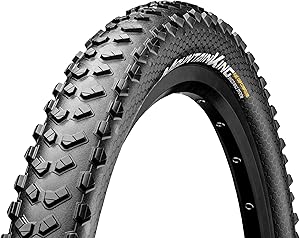
- Usage: Fast-rolling tire for cross-country and light trail.
- Compound: Pure Grip for good traction and high mileage.
- Protection: ShieldWall three-layer, Tubeless Ready casing.
- E-Bike Rating: Rated for e-bikes up to 25 km/h.
The Continental Race King stands in contrast to the aggressive downhill tires on this list, serving as a dedicated fast-rolling option for efficiency-focused riding. Its versatile, tightly spaced tread pattern is designed to adapt quickly to various surfaces, providing low rolling resistance for cross-country racing, fitness riding, and light trail duty. The ShieldWall casing offers impressive puncture protection without a significant weight penalty, making it a reliable “set and forget” tire.
Don’t mistake its speed for a lack of grip; the Pure Grip compound delivers confident traction in dry to moderate conditions, and the tire’s profile allows for predictable lean. The e-bike rating is a significant plus for riders on electric hardtails or fitness e-MTBs who prioritize range and speed. However, it is not intended for aggressive downhill braking or muddy conditions, where its closely knapped tread can clog.
- Pros: Very low rolling resistance for speed and efficiency; Excellent puncture protection with ShieldWall; Durable compound for high mileage; E-bike rated.
- Cons: Not designed for aggressive downhill or muddy conditions; Lacks the cornering knobs of dedicated trail/enduro tires.
4. MAXXIS Assegai 3C MaxxGrip MTB Tyre

- Usage: Maximum grip front tire for downhill and enduro.
- Compound: 3C MaxxGrip, the stickiest, slowest-rebounding Maxxis compound.
- Casing: DoubleDown for enduro/downhill-level support and protection.
- Design: Wide Trail (WT) optimized for modern, wider rims (~30mm internal).
The Maxxis Assegai, developed with downhill legend Greg Minnaar, is engineered for one purpose: providing tenacious, predictable grip at any lean angle. Its tightly packed, tall tread blocks create a massive contact patch that feels virtually glued to the ground in a wide variety of conditions, from wet roots to loose-over-hardpack. This tire is a confidence booster, offering a level of predictability and traction that allows riders to push their limits.
Paired with the supreme 3C MaxxGrip compound and the robust DoubleDown casing, this setup is a premium, gravity-ready package. The DoubleDown construction offers nearly downhill-tire levels of pinch flat and impact protection while remaining more compliant than a full DH casing. The Wide Trail design ensures an ideal tire profile on modern wide rims. The trade-off is significant rolling resistance and rapid wear, but for pure descending grip, the Assegai is hard to beat.
- Pros: Unmatched traction and predictability across the entire tread; Premium gravity-ready DoubleDown casing; Ideal for challenging, variable conditions; WT rim compatibility.
- Cons: Very high rolling resistance; Sticky compound wears quickly; Overkill for dry, hardpacked trails.
5. Continental Kryptotal-F Trail Folding Tyre

- Usage: Aggressive trail/enduro front tire.
- Casing: Trail casing for robust protection at a lower weight.
- Technology: Tubeless ready, compatible with Revo-Sealant.
- E-Bike Rating: Suitable for e-bikes, with e50 versions for S-Pedelecs.
The Continental Kryptotal-F represents the German brand’s modern, blocky-tread answer to the top-tier front tires in the enduro world. Its tread pattern is designed to deliver high, consistent grip from center to edge, excelling in both braking and cornering. The “F” designation indicates it’s optimized for front-wheel use, where steering precision and braking control are paramount. The Trail casing offers a great balance of impact and cut protection without the extreme weight of a full downhill casing.
Continental’s extensive experience with motorcycle tires informs its e-bike compatibility, making this a robust choice for heavier e-MTBs or powerful riders. The tire’s construction is designed to handle the additional forces and weight, offering predictable wear. While it rolls better than a full-on downhill tire, it is still an aggressive, traction-focused tire, so expect more resistance than a dedicated cross-country model. It’s a serious contender for riders seeking a high-grip, modern front tire.
- Pros: Excellent, consistent braking and cornering grip; Tough Trail casing is light yet protective; Designed with e-bike forces in mind; Modern tread design for varied conditions.
- Cons: Higher rolling resistance than less aggressive tires; “F” version is specialized for front use only.
6. MAXXIS Aggressor – Dual Compound

- Usage: Fast, aggressive rear tire for hard-packed trails.
- Compound: Dual Compound for durability and grip balance.
- Protection: EXO sidewall protection for light trail duty.
- E-Bike Rating: E25 rated for light-duty e-MTBs.
The Maxxis Aggressor has earned its place as one of the most popular rear tires for aggressive trail and enduro riding. Its design philosophy prioritizes low rolling resistance and controlled braking on hard-packed, rocky, and loose-over-hard terrain. The tightly packed center knobs provide efficient speed and solid braking traction, while the intermediate and side knobs offer predictable breakaway characteristics when cornering. It’s a tire that favors speed and precision over absolute, drift-control grip.
Often recommended as the perfect rear match for a Minion DHF or Assegai front, the Aggressor completes a high-performance pairing. The Dual Compound provides a long-lasting tread life that complements its speedy nature, while the EXO sidewall protection is adequate for most trail applications. The E25 rating adds versatility for e-bike riders. For riders seeking a rear tire that won’t hold them back on climbs or flat sections but still delivers confident braking, the Aggressor is a top-tier choice.
- Pros: Excellent rolling speed for an aggressive tire; Great braking traction on hardpack; Durable Dual Compound tread; Ideal pairing with grippier front tires.
- Cons: EXO casing may be light for extreme enduro/downhill; Not the best choice for deep mud or soft conditions.
7. Michelin Wild AM2 Competition Mountain Bike Tire

- Usage: Aggressive tire for enduro, trail, and e-MTB on mixed/soft terrain.
- Compound: Gum-X rubber for enhanced grip and damping.
- Casing: Gravity Shield casing with folding bead for durability and lightness.
- Construction: High 320 TPI for flexibility, traction, and low rolling resistance.
The Michelin Wild AM2 Competition is a serious contender from a brand with a rich racing heritage. Its aggressive, open tread pattern is designed to dig into mixed and soft terrains, providing strong braking and cornering control where other tires might skate. The Gum-X compound works in tandem with the tread to offer a supple, grippy feel that riders will appreciate in challenging conditions. The high 320 TPI casing is a standout feature, promising a compliant, conforming ride that maximizes traction.
Built with a robust Gravity Shield casing, this tire is ready for aggressive enduro and e-MTB abuse, offering excellent puncture and impact resistance. The lightweight folding bead keeps overall weight manageable. This combination of a high-traction tread, supple high-TPI casing, and strong protection creates a tire that is both capable and confidence-inspiring on demanding descents. It’s a premium option for riders looking for a versatile, high-performance tire that excels when the trail gets loose and rough.
- Pros: Excellent grip in soft and mixed conditions; High-quality, supple 320 TPI casing; Robust Gravity Shield puncture protection; Lightweight folding bead design.
- Cons: Aggressive tread may roll slower on hardpack; Premium features come at a higher price point.
How to Choose Downhill Mountain Bike Tires
Selecting the right downhill mountain bike (DH MTB) tires is crucial for both safety and performance. Downhill trails demand maximum traction, durability, and control over rough terrain. The wrong tires can lead to decreased performance or even accidents. This guide will help you understand the factors to consider when choosing the perfect downhill mountain bike tires.
Understanding Tire Types
Tubeless vs. Tubed Tires
Tubeless Tires
Tubeless tires have become the standard for downhill riders. They eliminate the inner tube, reducing the risk of punctures. They also allow lower tire pressure, improving traction and comfort on rough trails.
Tubed Tires
Traditional tubed tires are easier to install and repair, but they are more prone to punctures. They are generally heavier and can reduce the level of control compared to tubeless setups.
Tire Width and Diameter
Tire Width
The width of the tire affects traction, stability, and rolling resistance. Wider tires (2.5–2.8 inches) provide better grip and stability on loose terrain, while narrower tires are lighter and faster but less forgiving on technical trails. Choosing the right width depends on your riding style and trail conditions.
Tire Diameter
Downhill bikes typically come in 27.5-inch or 29-inch tires.
-
27.5-inch Tires: These offer more agility and easier maneuverability, making them suitable for tight, technical trails.
-
29-inch Tires: Provide better rollover capabilities, maintain momentum, and offer more stability at high speeds, ideal for longer descents.
Tread Patterns
Knob Design
The knobs on a tire significantly influence traction and control.
Center Knobs
Dense center knobs improve speed on hardpack trails but may reduce grip on loose or wet terrain.
Side Knobs
Aggressive side knobs help in cornering and maintaining control during sharp turns. Wider side knobs enhance stability on uneven surfaces.
Tread Spacing
Tight tread spacing increases rolling efficiency but can clog with mud. Tires with more spaced-out knobs perform better in wet and muddy conditions, as they shed debris more easily.
Rubber Compound
Soft vs. Hard Compounds
Soft Compounds
Offer excellent grip and control, especially on loose or rocky terrain. However, they wear out faster and can be prone to cuts.
Hard Compounds
More durable and resistant to cuts, but may sacrifice some traction, especially on technical descents. Many modern tires use a dual compound, with a softer center for grip and harder sides for durability.
Casing and Reinforcements
Casing Layers
The casing determines the tire’s strength, weight, and ride quality. DH tires often come with multiple layers to resist punctures and sidewall damage.
Sidewall Protection
Reinforced sidewalls prevent cuts and abrasions, especially important in rocky or root-filled trails. Some tires feature “double-ply” or “downhill-specific” sidewalls for extra protection.
Tire Pressure Considerations
Optimal PSI
Lower tire pressure increases traction and control by allowing more tire contact with the trail. Downhill riders often run 20–25 PSI depending on terrain and rider weight. However, too low pressure may increase the risk of rim strikes or tire burping on tubeless setups.
Adjusting for Conditions
Wet or loose trails benefit from slightly lower pressure for better grip, while hardpack or rocky trails may require higher pressure to prevent pinch flats and maintain speed.
Weight and Rolling Resistance
Balancing Weight and Performance
Downhill tires are generally heavier than cross-country tires due to reinforced casing and aggressive tread. While lighter tires roll faster, they may compromise durability. Choosing the right balance between weight and strength depends on your priorities—speed or durability.
Rolling Resistance
Aggressive tread patterns increase grip but slow down rolling efficiency. For downhill riders, traction is prioritized over rolling speed, as control and safety are more important than flat-section speed.
Terrain-Specific Tires
Rocky Trails
For rocky trails, choose tires with thick sidewalls, durable casing, and robust knobs to handle sharp edges and maintain control.
Muddy Conditions
Mud-specific tires have widely spaced knobs to prevent clogging and maintain traction. Soft rubber compounds improve grip in slippery conditions.
Loose and Sandy Trails
Tires with large, widely spaced knobs and soft compounds excel in loose terrain. They dig into the surface, improving control and preventing sliding.
Compatibility with Rims
Internal Rim Width
Tire width should match the internal rim width for optimal performance. A tire that is too wide or too narrow for the rim may affect handling, traction, and durability.
Tubeless-Ready Rims
If choosing tubeless tires, ensure your rims are tubeless-ready. This ensures proper sealing and reduces the risk of air leaks or tire burping.
Maintenance and Longevity
Regular Inspection
Check tires for cuts, punctures, or worn knobs regularly. Riding on damaged tires reduces control and increases the risk of accidents.
Cleaning and Storage
Cleaning tires after muddy rides prevents debris buildup that can degrade rubber. Store tires in a cool, dry place away from direct sunlight to prolong lifespan.
Rotation and Replacement
Although downhill tires are designed for durability, they will eventually wear out. Rotating front and rear tires can extend their lifespan. Replace tires when knobs are significantly worn or sidewalls show damage.
Conclusion
Choosing the right downhill mountain bike tires requires balancing multiple factors, including tire type, width, tread pattern, rubber compound, and terrain compatibility. Understanding how these elements affect traction, durability, and control is essential for safe and efficient downhill riding. Always consider your trail conditions, riding style, and bike setup before making a final choice. Investing in high-quality tires not only improves performance but also enhances safety and confidence on challenging descents. With the right tires, every downhill ride can be faster, smoother, and more enjoyable.