Best Motorcycle Engine Coolants of 2025
A motorcycle engine works hard and produces a lot of heat. If it overheats, it can cause serious damage. That’s why a good coolant is important. Coolant keeps your engine at the right temperature. It protects metal parts from rust and corrosion. It also prevents freezing in cold weather. Choosing the right coolant helps your bike run smoothly and last longer. There are many options available. Each type has different benefits. Some are ready to use, while others need mixing. In this article, we share the best motorcycle engine coolants. This guide will help you pick the one that suits your bike.
1. PEAK All Vehicles 50/50 Prediluted Antifreeze and Coolant
-
Pre-diluted 50/50 with deionized water for immediate use.
-
Long-lasting yellow coolant suitable for all engine cooling systems.
-
Protects against freezing up to -34°F and overheating up to +265°F.
-
Compatible with aluminum and other engine metals.
The PEAK All Vehicles 50/50 Prediluted Antifreeze and Coolant is designed for versatility, making it an ideal choice for riders who own multiple motorcycles or mixed vehicle types. Its ready-to-use formula saves time—no mixing required—and ensures the correct water-to-coolant ratio every time. The formulation provides consistent protection year-round, shielding the engine from both extreme cold and excessive heat.
Another advantage is its compatibility with various cooling systems, including those in older and newer motorcycles. The yellow formula contains corrosion inhibitors that protect vital engine parts such as the radiator and water pump. Riders who want a no-fuss, reliable coolant that works across different brands and models will find PEAK’s solution dependable for long-term use.
Pros
-
Universal compatibility.
-
Pre-diluted and easy to use.
-
Year-round protection from extreme temperatures.
-
Protects against corrosion and rust.
Cons
-
Not specialized for high-performance race engines.
-
Slightly higher price compared to some basic coolants.
2. Design Engineering Radiator Relief Coolant Additive
-
Reduces engine temperatures by up to 30°F.
-
16 oz bottle suitable for motorcycles, cars, trucks, and RVs.
-
Prevents corrosion and electrolysis in cooling systems.
-
Safe for aluminum, copper, and other metals.
The Design Engineering Radiator Relief Coolant Additive is an excellent choice for riders dealing with overheating issues, especially in hot climates or during demanding rides. This additive significantly improves heat transfer, allowing your motorcycle to run cooler even under load. Unlike traditional coolants, it works as a booster to enhance your existing antifreeze or water, making it a flexible option for varied setups.
It also offers excellent corrosion protection, extending the lifespan of your radiator and internal engine components. Because it’s safe for multiple metals, you won’t have to worry about compatibility with your bike’s cooling system. Riders looking for an affordable yet effective way to improve cooling efficiency without replacing their existing coolant will appreciate this additive.
Pros
-
Noticeable reduction in operating temperature.
-
Works with existing coolant or water.
-
Protects multiple metal types from corrosion.
-
Affordable upgrade for cooling performance.
Cons
-
Not a complete coolant—requires mixing with an existing solution.
-
Less effective in extremely cold weather protection.
3. Zerex G05 Phosphate Free 50/50 Antifreeze/Coolant
-
Pre-mixed 50/50 formula with deionized water.
-
Phosphate-free and low-silicate formulation.
-
Protects from -34°F to +265°F.
-
Contains nitrite for additional cylinder liner protection.
Zerex G05 50/50 Antifreeze/Coolant offers dependable protection for riders who prioritize engine longevity. Its phosphate-free formula is designed to prevent scale buildup, while the low-silicate composition minimizes wear on water pumps and seals. The inclusion of nitrite provides extra protection for heavy-duty applications, making it suitable for touring motorcycles or bikes frequently used for long rides.
The pre-diluted nature of this coolant ensures convenience and accuracy in mixing. Its ability to maintain stable temperatures in both cold and hot environments adds to its reliability. Riders who value consistent protection with minimal maintenance will find the Zerex G05 an excellent all-around choice.
Pros
-
Excellent corrosion and scale protection.
-
Ready-to-use for easy application.
-
Works well in a wide temperature range.
-
Added nitrite protection for engine durability.
Cons
-
Slightly more expensive than generic coolants.
-
Less specialized for high-performance racing conditions.
4. Engine Ice Off-Road High-Performance Motorcycle Coolant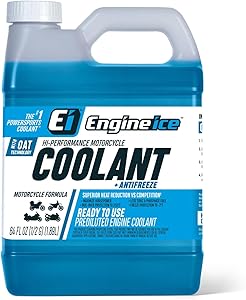
-
Biodegradable, non-toxic propylene glycol formula.
-
Reduces operating temperatures by up to 20°F.
-
Protects from -26°F to +256°F.
-
Pre-mixed and ready to use.
Engine Ice is a favorite among off-road and performance riders for its cooling efficiency and eco-friendly formulation. The biodegradable propylene glycol base makes it safer for the environment while still providing impressive heat reduction. Riders in competitive motocross or trail conditions will benefit from its ability to maintain optimal temperatures under extreme load.
It is also designed to prevent corrosion and scale buildup, extending the lifespan of your cooling system. The ready-to-use mix ensures hassle-free application, letting you focus more on your ride than on coolant prep. For riders who want high-performance cooling and environmental responsibility in one package, Engine Ice is hard to beat.
Pros
-
Strong cooling performance for high-load conditions.
-
Environmentally friendly and non-toxic.
-
Pre-mixed for easy use.
-
Corrosion and scale prevention.
Cons
-
Higher price point than standard coolants.
-
May be overkill for casual riders.
5. Maxima Coolanol 50/50 Blend Treatment
-
Pre-diluted 50/50 mix with deionized water.
-
Glycol-based formula with corrosion inhibitors.
-
Protects from -34°F to +265°F.
-
Suitable for aluminum and magnesium engine parts.
Maxima Coolanol is built for riders who want dependable cooling without complicated mixing. Its glycol-based formula offers year-round protection and compatibility with various engine metals, including aluminum and magnesium. It provides consistent performance in both cold and hot weather, making it a reliable all-season choice.
The built-in corrosion inhibitors help preserve your engine’s internal components, which is especially beneficial for older bikes. Riders who prefer a trusted, no-fuss coolant will appreciate Coolanol’s balance of performance, protection, and convenience.
Pros
-
Ready-to-use formula.
-
Works in extreme cold and heat.
-
Protects against corrosion.
-
Compatible with multiple metal types.
Cons
-
Not specifically formulated for extreme racing conditions.
-
Slightly higher cost than basic antifreeze.
6. Hy-Per Lube HPC100 High Performance Super Coolant
-
Reduces coolant temperatures by up to 20°F.
-
16 oz bottles, pack of 3.
-
Works with all antifreeze and water mixtures.
-
Contains anti-corrosion agents for all metals.
Hy-Per Lube HPC100 is designed for riders who want a cost-effective and simple way to boost cooling system efficiency. The pack of three bottles provides multiple treatments, making it economical for those who maintain multiple bikes. It works by improving heat transfer, helping the engine run cooler under stress.
This additive also offers corrosion protection, ensuring your radiator and internal parts last longer. Since it mixes easily with existing coolant or plain water, application is straightforward. For riders looking for a budget-friendly, multi-use cooling improvement solution, Hy-Per Lube is a solid pick.
Pros
-
Affordable multi-bottle pack.
-
Effective temperature reduction.
-
Works with any coolant mixture.
-
Adds corrosion protection.
Cons
-
Not a standalone coolant—needs to be mixed.
-
Limited freeze protection on its own.
7. VP Racing Fuels Stay Frosty Race-Ready Coolant
-
Race-formulated coolant for high-compression engines.
-
Reduces engine temps by up to 30°F.
-
64 oz bottle, ready to use.
-
Non-toxic, phosphate-free formula.
VP Racing Fuels Stay Frosty is built for competitive riders and high-performance motorcycles. Its formulation is tuned for high-compression, high-heat engines, delivering exceptional heat dissipation. The 30°F temperature reduction is a significant advantage in racing scenarios, where overheating can compromise performance.
Its non-toxic, phosphate-free nature ensures safety and longevity for your cooling system. This coolant is ready to use, allowing quick maintenance before race day. For riders pushing their bikes to the limit, Stay Frosty offers the performance edge needed to keep temperatures in check.
Pros
-
Exceptional cooling performance for race conditions.
-
Non-toxic and phosphate-free.
-
Ready-to-use formula.
-
Protects against corrosion.
Cons
-
More expensive than regular coolants.
-
Overkill for standard street riding.
How to Choose Motorcycle Engine Coolants
Motorcycle engines generate a significant amount of heat during operation. Without an effective cooling system, this heat can quickly damage critical components, reduce performance, and shorten the engine’s lifespan. This is where motorcycle engine coolants come into play. Choosing the right coolant is not just about picking any brightly colored liquid—it’s about matching your motorcycle’s needs with a product that provides optimal protection and performance.
Below, we’ll explore everything you need to know to make an informed choice, including coolant types, key factors to consider, and tips for proper maintenance.
1. Understanding the Role of Engine Coolants
An engine coolant (also known as antifreeze) is a liquid that circulates through the motorcycle’s cooling system, absorbing and dissipating heat from the engine. It serves several critical purposes:
-
Temperature Regulation: Prevents overheating in hot weather and freezing in cold conditions.
-
Corrosion Protection: Guards against rust and corrosion inside the cooling system.
-
Lubrication: Keeps water pump seals lubricated, reducing wear.
-
Deposits Prevention: Minimizes scale and deposits that can block cooling passages.
Without a proper coolant, your motorcycle engine could overheat, seize, or suffer costly internal damage.
2. Types of Motorcycle Engine Coolants
Coolants are not all the same. Understanding the types will help you narrow down your options.
a) Ethylene Glycol-Based Coolants
-
Most common type.
-
Offers excellent heat transfer and anti-freeze capabilities.
-
Toxic if ingested (keep away from pets and children).
-
Available in various formulations with corrosion inhibitors.
b) Propylene Glycol-Based Coolants
-
Less toxic alternative to ethylene glycol.
-
Often marketed as “environmentally friendly” coolants.
-
Slightly less effective at heat transfer but safer for the environment.
c) Hybrid Organic Acid Technology (HOAT)
-
Combines the benefits of conventional and organic acid coolants.
-
Offers long service life and good protection for aluminum and steel parts.
-
Common in modern motorcycles.
d) Organic Acid Technology (OAT)
-
Uses organic acids for corrosion protection.
-
Long-lasting (up to 5 years or more).
-
Typically free from silicates and phosphates, making them ideal for aluminum engines.
3. Key Factors to Consider When Choosing a Coolant
When selecting a coolant for your motorcycle, consider the following:
1. Manufacturer’s Recommendations
Your motorcycle’s owner’s manual is the most reliable source of information. It will specify:
-
Coolant type (OAT, HOAT, etc.).
-
Recommended mixing ratio (usually 50/50 coolant and distilled water unless pre-mixed).
-
Service interval for coolant changes.
Following the manufacturer’s guidelines ensures compatibility and prevents warranty issues.
2. Compatibility with Engine Materials
Motorcycles have parts made from different metals—aluminum, steel, magnesium, or brass. The wrong coolant could cause corrosion or deposits. Choose a coolant that states compatibility with your bike’s engine materials.
3. Climate and Riding Conditions
-
Hot climates: Prioritize heat transfer efficiency and boiling point.
-
Cold climates: Ensure the coolant offers adequate freeze protection.
-
Track/racing use: Some coolants are water-based (non-glycol) for maximum heat transfer but lack freeze protection.
4. Pre-Mixed vs. Concentrated
-
Pre-mixed: Ready to pour, usually in a 50/50 ratio.
-
Concentrated: Requires mixing with distilled water; offers flexibility for different climates.
5. Service Life
Coolants vary in lifespan—some need replacement every 2 years, others can last 5 years or more. Long-life coolants reduce maintenance frequency but may cost more upfront.
6. Environmental Safety
If you ride in eco-sensitive areas, a propylene glycol coolant might be a better option due to its reduced toxicity.
4. Common Mistakes to Avoid
Choosing the wrong coolant or using it incorrectly can harm your motorcycle. Avoid these pitfalls:
-
Mixing Different Coolants: Combining different formulations can cause chemical reactions that reduce performance and create sludge.
-
Using Tap Water for Dilution: Tap water contains minerals that can form deposits. Always use distilled or deionized water.
-
Ignoring Change Intervals: Even long-life coolants lose effectiveness over time. So changing coolant and engine oil timely is important.
-
Assuming Car Coolants Are Safe for Bikes: Some car coolants contain additives unsuitable for motorcycle engines.
5. How to Change Motorcycle Coolant (Quick Overview)
Even the best coolant won’t last forever. Here’s a quick outline for changing it:
-
Prepare: Park the bike on a stable surface, let the engine cool, and remove fairings if needed.
-
Drain Old Coolant: Locate the drain bolt, remove it, and let the coolant flow into a container.
-
Flush (Optional but Recommended): Use distilled water or a flushing solution to remove residue.
-
Refill: Add the recommended coolant (or mix) slowly to avoid air pockets.
-
Bleed Air: Run the engine briefly with the radiator cap off to release trapped air.
-
Check Level: Once the engine cools, top up if necessary.
6. Top Tips for Maximizing Coolant Performance
-
Inspect Regularly: Check levels before long rides.
-
Look for Signs of Trouble: Rusty color, debris, or oily film indicates contamination.
-
Store Properly: Keep coolant in sealed containers, away from heat and sunlight.
-
Follow Service Schedule: Regular changes maintain corrosion inhibitors and cooling efficiency.
7. Recommended Motorcycle Coolants (Popular Options)
While preferences vary, some well-regarded coolants include:
-
Engine Ice High Performance Coolant: Propylene glycol-based, biodegradable, ideal for performance bikes.
-
Maxima Coolanol: Pre-mixed 50/50 ethylene glycol coolant with corrosion inhibitors.
-
Motul Motocool Factory Line: OAT coolant for high-performance engines.
-
Honda HP Coolant: OEM product designed specifically for Honda motorcycles.
8. Final Thoughts
Choosing the right motorcycle engine coolant is about more than picking a brand—it’s about ensuring your bike’s cooling system operates efficiently, safely, and for the long haul. Always start with your motorcycle manufacturer’s recommendations, consider your riding environment, and avoid cutting corners on quality.
A well-chosen coolant not only prevents overheating and freezing but also keeps your engine clean, corrosion-free, and performing at its best. By understanding coolant types, compatibility, and maintenance needs, you’ll be equipped to make the right choice—and keep your rides smooth and trouble-free.