Best Motorcycle Engine Oils of 2026
Choosing the best motorcycle engine oil is important for keeping your bike running smoothly. Engine oil protects parts from wear. It also helps keep the engine cool and clean. The right oil can improve performance and extend your motorcycle’s life. Different bikes need different types of oil. Factors like oil type, viscosity, and brand matter. Using the wrong oil can harm your engine over time. This guide will help you pick the right one. We will explain each option clearly. You will learn what to look for before buying. With the right oil, your motorcycle will stay reliable and strong.
1. Castrol Power1 4T 10W-40
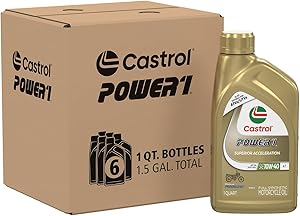
- Trizone Technology: Protects engine, clutch, and gearbox simultaneously.
- Acceleration Boost: Race-derived formula for maximum engine response.
- Viscosity Stability: High shear resistance prevents oil breakdown.
- Standards Compliance: Exceeds API SL and JASO MA-2 specifications.
Castrol Power1 4T 10W-40 is a premium choice for riders who prioritize quick throttle response and high-speed performance. By leveraging race-derived technology, this oil reduces internal friction, allowing the engine to rev more freely. It is particularly effective for those who ride aggressively, as it maintains a strong protective film even when the engine is pushed to its thermal limits.
Beyond speed, the Trizone technology ensures that the three most critical components of your bike remain lubricated. Whether you are navigating stop-and-go city traffic or hitting the open highway, the shear stability of this oil prevents it from thinning out. This provides a consistent feel in the clutch and smooth transitions through the gearbox throughout the entire drain interval.
Pros
- Excellent acceleration performance
- Superior heat management for air-cooled engines
- Affordable high-performance protection
Cons
- Lower API rating (SL) compared to some modern synthetic oils
- Specifically tailored for performance over longevity
2. Motul 7100 4T 10W-40
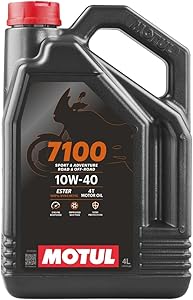
- Ester Technology: 100% synthetic formulation for maximum lubricity and cleaning.
- High Shear Resistance: Maintains film strength under extreme mechanical stress.
- Modern Compatibility: Safe for engines with catalytic converters and low emissions.
- Versatile Protection: Designed for integrated gearboxes and wet clutch systems.
Motul 7100 is widely regarded as one of the best synthetic oils on the market due to its Ester-based formulation. This technology provides a natural polarity that allows the oil to cling to metal surfaces, offering immediate protection during cold starts. It is engineered specifically for high-performance multicylinder engines that operate at high RPMs and generate significant heat during operation.
The oil also excels in gearbox protection, providing a crisp and tactile shifting experience that many riders notice immediately after an oil change. Because it meets the latest emission standards, it is a safe and reliable choice for modern sportbikes. The distinctive red color and pleasant scent are hallmarks of a product that focuses on extreme quality and high-end engine maintenance.
Pros
- Superior Ester-based synthetic protection
- Noticeable improvement in gear shift quality
- Excellent cleaning properties for engine internals
Cons
- Higher price point than semi-synthetic options
- May be overkill for low-displacement commuter bikes
3. Liqui Moly 4T 10w-40

- Synthetic Technology: High-performance base for all operating conditions.
- Engine Cleanliness: Formulated to prevent sludge and carbon buildup.
- Wear Protection: Minimal friction design for extended engine life.
- Broad Application: Suitable for both air and water-cooled 4-stroke engines.
Liqui Moly 4T 10W-40 is a German-engineered motor oil that emphasizes long-term engine health and reliability. It is developed using advanced synthetic technology to ensure that the engine remains clean and free of deposits, even when subjected to extreme operating conditions. This makes it an ideal choice for touring riders and daily commuters who demand consistency and durability over thousands of miles.
The lubricant provides a perfect balance between friction reduction and clutch engagement, ensuring that riders with wet clutch systems experience no slipping. Its versatility allows it to perform equally well in traditional air-cooled V-twins and modern liquid-cooled inline-fours. By maintaining a stable oil film, Liqui Moly helps reduce mechanical noise and vibration, leading to a much smoother and more refined riding experience.
Pros
- Outstanding engine cleanliness and sludge prevention
- Very stable performance in extreme weather
- Reduces engine noise and mechanical vibration
Cons
- Synthetic technology blend rather than 100% full synthetic
- Can be harder to find in local retail shops
4. Lucas Oil 20W-50
- Viscosity: SAE 20W-50
- Type: Full Synthetic
- Additives: High zinc for wear protection
- Use: Air- and water-cooled 4-stroke engines
Lucas Oil 20W-50 is built for riders needing maximum engine protection in extreme conditions. The high-zinc formula reduces wear on engine parts, ideal for older bikes and high-performance engines. Its synthetic blend ensures stable viscosity over a wide temperature range, keeping lubrication consistent in both hot and cooler climates.
It also resists oxidation and thermal breakdown, making it a good choice for longer drain intervals. Riders who go on long tours or ride aggressively will value its ability to prevent scuffing and overheating. While pricier than some, its longevity can offset frequent oil changes.
Pros
- Excellent high-temp stability
- Strong wear protection
- Great for performance and older bikes
- Stable viscosity in extreme heat
Cons
- Higher cost than mineral oils
- Not suited for lighter viscosity needs
5. Honda Pro GN4 10W-40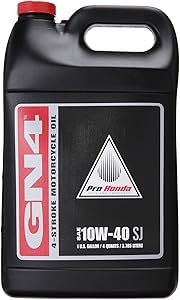
- Viscosity: SAE 10W-40
- Type: Mineral
- OEM Fit: Honda motorcycles
- Standards: API SG, JASO MA
Honda Pro GN4 10W-40 is the official factory oil for Honda bikes, designed to meet the brand’s exact needs. Being mineral-based, it offers dependable lubrication for everyday riding at an affordable price.
It reduces deposits and sludge while keeping viscosity stable in moderate temperatures. Though not as durable as synthetics, it’s perfect for riders who stick to regular oil change schedules and want a cost-effective, OEM-approved option.
Pros
- OEM-approved for Honda bikes
- Affordable and widely available
- Good for everyday use
- Keeps engine clean
Cons
- Shorter life than synthetics
- Limited extreme temp protection
6. Valvoline 4-Stroke 10W-40
- Viscosity: SAE 10W-40
- Type: Full Synthetic
- Standards: API SL, JASO MA2
- Additives: Advanced anti-wear agents
Valvoline’s 4-Stroke 10W-40 offers premium performance for both air- and liquid-cooled motorcycles. The full synthetic base prevents viscosity breakdown, extending oil life and enhancing protection.
Its JASO MA2 rating ensures minimal clutch slippage, making it a reliable choice for cruisers and sport bikes. Strong detergents keep internals clean, though it’s pricier than blends. The longevity and protection justify the cost for frequent riders.
Pros
- Stable under high temps
- Prevents clutch slip
- Cleans engine components
- Works for various bikes
Cons
- Higher price than blends
- Overkill for light seasonal use
7. Valvoline VR1 20W-50
- Viscosity: SAE 20W-50
- Type: Conventional Racing Oil
- Zinc Level: High
- Use: High-performance engines
Valvoline VR1 20W-50 is tailored for racing and high-performance bikes. Its high zinc content shields engine parts under extreme loads, making it great for older engines and hot climates.
Though conventional, it delivers strong film strength and wear resistance. It does need more frequent changes than synthetics, but for performance-focused riders, it’s a trusted option.
Pros
- Excellent wear protection
- Ideal for racing
- Stable in high heat
- Good value for performance level
Cons
- Frequent oil changes needed
- Thicker oil may cut fuel efficiency
8. Motul 300V 15W-50
- Viscosity: SAE 15W-50
- Type: Full Synthetic Ester Core
- Standards: JASO MA2, API SL
- Use: Racing and high-performance
Motul 300V 15W-50 is a top-tier oil for professional racing and serious riders. The Ester Core tech offers superior lubrication, keeping film strength at high RPMs and heat.
It resists shear breakdown for consistent viscosity even during aggressive riding. While expensive, its smoothness, performance, and protection make it worth it for high-demand applications.
Pros
- Exceptional high-RPM stability
- Superior lubrication
- Excellent shear resistance
- Racing-grade quality
Cons
- Expensive
- Overkill for casual riding
9. TRIAX XTerra 4T 10W-40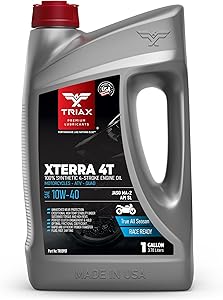
- Viscosity: SAE 10W-40
- Type: Full Synthetic
- Standards: API SL/SN, JASO MA2
- Use: Motorcycles, ATVs, snowmobiles, quads
TRIAX XTerra 4T is a versatile oil for multiple powersport vehicles. Its synthetic base ensures excellent wear protection and smooth clutch operation in wet-clutch systems.
Thermal stability keeps performance consistent in all weather, and its price is fair for a full synthetic. It’s not as specialized as racing oils but offers great value for general use.
Pros
- Works for multiple vehicles
- Great price for synthetic
- Smooth clutch feel
- All-weather performance
Cons
- Not specialized for racing
- Availability may vary
10. Castrol Actevo 4T 10W-40
- Viscosity: SAE 10W-40
- Type: Synthetic Blend
- Standards: API SL, JASO MA2
- Feature: Actibond molecules for protection
Castrol Actevo 4T uses Actibond molecules to stick to engine parts, reducing startup wear. This is important since most damage happens when the engine is cold.
Its synthetic blend offers a balance between cost and performance, with better heat stability than conventional oil. It’s ideal for daily riders and touring bikes but not as long-lasting as a full synthetic.
Pros
- Startup wear protection
- Affordable blend option
- Good thermal stability
- Reliable for everyday riding
Cons
- Shorter life than full synthetics
- May need more frequent changes in performance bikes
How to Choose Motorcycle Engine Oils
Choosing the right motorcycle engine oil is one of the most critical decisions for keeping your bike’s engine running smoothly, efficiently, and for as long as possible. Engine oil is not just a lubricant—it’s a multi-functional fluid that protects moving parts from wear, reduces heat buildup, cleans deposits, and improves performance. With so many brands, grades, and specifications on the market, it’s easy to get confused. This guide will break down the essentials so you can confidently pick the right oil for your motorcycle.
1. Understanding the Role of Engine Oil
Motorcycle engines work under intense conditions—high RPMs, heavy loads, and constant temperature changes. Engine oil serves several purposes:
-
Lubrication: Prevents metal-to-metal contact and reduces friction.
-
Cooling: Helps dissipate heat away from the combustion chamber and moving parts.
-
Cleaning: Carries away dirt, debris, and combustion byproducts, keeping the engine clean.
-
Protection: Prevents rust and corrosion by coating metal surfaces.
-
Sealing: Helps piston rings seal against cylinder walls to maintain compression.
Without the correct oil, the engine can overheat, wear prematurely, or even seize completely.
2. Check Your Owner’s Manual First
The most important starting point is your motorcycle’s owner’s manual. It contains the manufacturer’s recommendations for:
-
Oil viscosity grade (e.g., 10W-40, 20W-50)
-
Oil type (mineral, semi-synthetic, full synthetic)
-
Industry standards (e.g., JASO MA, MA2, API SL)
-
Change intervals based on mileage or time
Following the manual ensures compatibility with your engine’s design, lubrication system, and clutch type. Using oil outside of these recommendations can cause reduced performance or mechanical damage.
3. Understand Oil Viscosity Ratings
Viscosity is the oil’s resistance to flow, and it’s expressed in a code like 10W-40:
-
First number (10W): The “W” stands for winter. This number indicates how easily the oil flows at low temperatures. Lower numbers mean better cold-start performance.
-
Second number (40): Refers to oil thickness at high operating temperatures. Higher numbers provide better protection in hot conditions.
For example:
-
10W-40 is good for moderate climates.
-
20W-50 offers better high-temperature protection, ideal for hotter climates or heavy-duty engines.
-
5W-30 flows easily in colder weather but is less common in motorcycles.
Choosing the wrong viscosity can result in poor lubrication, overheating, or difficulty starting in cold conditions.
4. Know the Three Main Types of Motorcycle Engine Oils
Motorcycle oils fall into three broad categories:
a) Mineral Oil
-
Made from refined crude oil.
-
Best for older bikes, break-in periods, or riders on a budget.
-
Offers adequate protection but requires more frequent oil changes.
-
Example: Basic commuter motorcycles with moderate RPM use.
b) Semi-Synthetic Oil
-
A blend of mineral and synthetic oils.
-
Provides better temperature stability and wear protection than mineral oil.
-
A good choice for everyday riders who want performance and value.
-
Example: Mid-range sport or touring bikes.
c) Fully Synthetic Oil
-
Made from chemically engineered base oils.
-
Delivers superior performance, temperature resistance, and longevity.
-
Ideal for high-performance bikes, racing, or extreme conditions.
-
More expensive but often extends oil change intervals.
-
Example: High-RPM sportbikes, adventure touring motorcycles.
5. Motorcycle vs. Car Engine Oil – Know the Difference
Using car engine oil in a motorcycle may seem harmless, but it can cause problems:
-
Wet Clutch Compatibility: Most motorcycles have a wet clutch (clutch plates bathed in oil). Car oils often contain friction modifiers that cause clutch slippage.
-
Additive Balance: Motorcycle oils are designed to lubricate the engine, gearbox, and clutch simultaneously. Car oils focus only on engine lubrication.
-
Shear Stability: Motorcycle transmissions put more stress on oil, breaking it down faster. Motorcycle oils resist this better.
Always choose oil that meets JASO MA or MA2 specifications for wet-clutch compatibility.
6. Key Industry Standards to Look For
When buying engine oil, check the certification labels:
-
JASO MA / MA2: Japanese Automotive Standards Organization certification for motorcycles. MA2 offers higher friction for wet-clutch performance.
-
API (American Petroleum Institute): Indicates quality and performance level (e.g., API SL, SM, SN). Higher letters mean newer standards.
-
ACEA: European oil standards, less common in motorcycles but seen in premium oils.
If the oil doesn’t list JASO MA or MA2, it’s likely not intended for motorcycles.
7. Consider Your Riding Conditions
Your riding style and environment influence the best oil choice:
-
Daily commuting in traffic: Go for oil with good heat stability and cleaning properties.
-
Long-distance touring: Choose fully synthetic oil for long-lasting protection.
-
Racing or aggressive riding: High-performance synthetic oils handle extreme RPMs and temperatures.
-
Cold climates: Lower “W” viscosity oils ensure easy cold starts.
-
Hot climates: Higher second number viscosity prevents thinning under heat.
8. Frequency of Oil Changes
Even the best oil degrades over time due to heat, contamination, and mechanical stress. Change oil:
-
Every 3,000–5,000 km for mineral oils.
-
Every 5,000–8,000 km for semi-synthetic oils.
-
Every 8,000–12,000 km for fully synthetic oils.
-
Or as specified by the manufacturer.
Also, replace the oil filter at every oil change to avoid recirculating contaminants.
9. Popular and Trusted Motorcycle Oil Brands
While there are many quality oils, some brands are well-established in the motorcycle world:
-
Motul
-
Castrol Power1
-
Shell Advance
-
Liqui Moly
-
Repsol Moto
-
Amsoil
-
Mobil 1 Racing 4T
Always match the exact grade and certification from your manual, regardless of brand.
10. Common Mistakes to Avoid
-
Using car engine oil with friction modifiers in a wet-clutch motorcycle.
-
Ignoring viscosity recommendations from the manufacturer.
-
Skipping oil changes to save money—it’s more expensive to replace an engine.
-
Mixing different oil types without knowing compatibility.
-
Choosing oil based only on price rather than performance needs.
Final Thoughts
Selecting the right motorcycle engine oil is about more than just picking a famous brand—it’s about matching your oil to your bike’s design, your riding conditions, and your maintenance habits. Always refer to your owner’s manual for exact specifications, choose the correct viscosity, and stick to certified motorcycle-specific oils. Regular oil changes and quality lubrication will keep your engine running smoother, cooler, and longer, making every ride safer and more enjoyable.