Best Mountain Bike Floor Pumps 2025
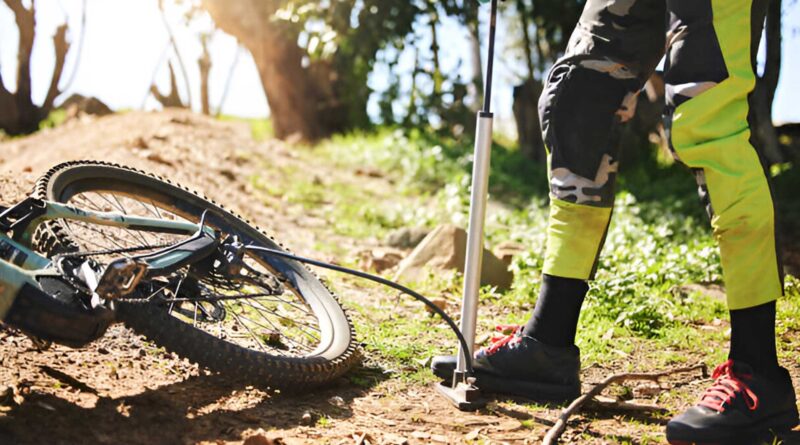
If you ride a mountain bike, a good floor pump is a must. It keeps your tires full and ready to go. Floor pumps are easy to use and work faster than hand pumps. They help you ride safer and smoother on rough trails. Some pumps even show pressure on a gauge. This makes it easy to get the right air pressure. A strong and steady floor pump saves time and effort. It also lasts longer than cheaper models. In this article, we will look at the best mountain bike floor pumps. These options are reliable, simple to use, and great for all riders. Let’s find the right one for you.
1. BV Bicycle Pump Durable Bike Floor Pump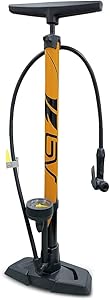
- Maximum Pressure: 160 PSI
- Valve Compatibility: Automatically reversible Presta and Schrader
- Pump Height: Available in 17-inch and 24-inch variants
- Handle: Ergonomic with a wide base for stability
The BV Bicycle Pump stands out for its durable build and smart features that make it ideal for mountain biking needs. With an impressive 160 PSI capacity, this pump efficiently inflates tires without demanding extra effort. The smart valve head automatically switches between Presta and Schrader valves, eliminating the hassle of manual adjustments. Its sturdy base and ergonomic handle ensure stable and comfortable pumping, even during extended use. The choice between 17 and 24-inch variants also makes it suitable for various storage preferences and user heights.
Performance-wise, the BV Bicycle Pump is reliable and consistent. The automatic valve head is highly responsive, creating a secure seal every time. This pump’s design is compact yet robust, making it perfect for both home use and portable carry. The only downside is the absence of an integrated pressure gauge, which might be a dealbreaker for riders needing precise inflation data. Nevertheless, its efficiency and ease of use compensate for this minor shortcoming.
Pros:
- Reversible smart valve head for ease
- Available in two height options
- High-pressure capacity
- Ergonomic design for comfort
Cons:
- Lacks a pressure gauge
- Not suitable for inflating very large tires quickly
2. Crankbrothers Bike Pump – High Pressure/High Volume
- Maximum Pressure: 160 PSI
- Valve Compatibility: Presta and Schrader
- Special Features: High Pressure/High Volume switch and hidden needle adapter
- Gauge Type: Analog pressure gauge
The Crankbrothers Bike Pump offers both high-pressure and high-volume modes, making it a versatile tool for different inflation needs. The ability to toggle between these modes ensures that both road bike and mountain bike tires can be handled with ease. A hidden needle adapter adds extra utility for inflating sports balls or other inflatables. The ergonomic handle and wide base design provide a solid grip and prevent wobbling during pumping.
This floor pump delivers a smooth and powerful performance. Its analog pressure gauge is accurate and easy to read, offering reliable inflation monitoring up to 160 PSI. One of the best features is the switchable mode which significantly reduces the time and effort needed for large-volume tire inflation. However, the hose length could be slightly longer for more convenient positioning. Overall, it’s a top-notch floor pump for serious riders who need multifunctional capability.
Pros:
- Dual-mode inflation: high-pressure and high-volume
- Built-in needle adapter
- Accurate analog gauge
- Durable and stable base
Cons:
- Hose is slightly short
- Slightly bulky for on-the-go use
3. Schwinn Basic and Air Center Floor Bike Pump
- Maximum Pressure: 120 PSI
- Valve Compatibility: Dual head for Schrader and Presta
- Portability: Lightweight and compact
- Material: Plastic with rubber handle
The Schwinn Basic and Air Center Floor Pump is designed for convenience and everyday use. Its dual head compatibility allows it to work with both Schrader and Presta valves without needing adapters. Although it has a lower maximum PSI of 120 compared to other pumps on this list, it handles standard mountain bike tire inflation well. The plastic construction keeps it lightweight, while the rubber handle enhances grip and usability.
This pump is ideal for casual cyclists who want a straightforward and portable solution. It’s easy to store, carry, and use, making it perfect for beginners and recreational riders. However, its plastic build might not be the most durable option for rugged or frequent use. Also, the lack of a high-pressure capability means it’s not suited for performance bikes or higher-end mountain bikes. Still, its simplicity and portability make it a worthy consideration for basic needs.
Pros:
- Lightweight and easy to carry
- Dual head for both valve types
- Ideal for casual use
- Affordable
Cons:
- Lower maximum pressure
- Not as durable for heavy use
4. Topeak JoeBlow Sport III Floor Pump
- Maximum Pressure: 160 PSI
- Valve Compatibility: TwinHead for Presta, Schrader, and Dunlop
- Gauge Type: 3-inch analog gauge
- Construction: Steel barrel and base
The Topeak JoeBlow Sport III is a high-performance pump suitable for serious riders. With a maximum pressure of 160 PSI and TwinHead compatibility, this pump can handle virtually any type of bike valve. The 3-inch analog gauge is large, precise, and easy to read, which makes tire inflation both accurate and convenient. The steel barrel and base construction offer exceptional durability and a premium feel.
Users will appreciate the pump’s efficiency and solid construction. The ergonomic padded handle ensures comfort during use, and the extra-long hose with a 360-degree pivot adds flexibility. The JoeBlow Sport III is a bit heavier than some competitors, but that weight comes with increased stability and ruggedness. It’s an excellent choice for mountain bikers who value precision and reliability.
Pros:
- TwinHead fits multiple valve types
- Large, easy-to-read gauge
- Sturdy steel build
- Smooth and fast inflation
Cons:
- Heavier than basic models
- Slightly bulky for limited space
5. Vibrelli Bike Floor Pump with Gauge
- Maximum Pressure: 160 PSI
- Valve Compatibility: Automatically switches between Presta and Schrader
- Accessories: Comes with glueless puncture repair kit
- Gauge Type: Integrated pressure gauge
Vibrelli’s Bike Floor Pump is a comprehensive tool designed with the everyday cyclist in mind. It offers a high 160 PSI inflation capacity and includes an integrated pressure gauge for accurate readings. One of its best features is the auto-switching valve head, which simplifies the process of switching between Presta and Schrader valves. The included glueless puncture repair kit adds a valuable emergency tool to your gear.
Functionally, this pump is both reliable and user-friendly. The pumping action is smooth, and the build quality is impressive for the price point. The pressure gauge is conveniently located and reasonably accurate, making it easy to hit your target PSI. While it might not offer the heavy-duty build of high-end pumps, its combination of features and price make it a great option for recreational and semi-serious riders.
Pros:
- Includes repair kit
- Auto-switching valve head
- High-pressure support
- Easy-to-read gauge
Cons:
- Not ideal for heavy-duty use
- Gauge can sometimes be off by a few PSI
6. Hycline Bike Floor Pump with Gauge
- Maximum Pressure: 160 PSI
- Valve Compatibility: Fits Presta and Schrader valves
- Gauge Type: Integrated pressure gauge
- Application: Suitable for bikes, balls, and inflatables
The Hycline Bike Floor Pump is a versatile and user-friendly inflator suitable for various applications beyond just mountain bike tires. It delivers a solid 160 PSI performance and includes an integrated gauge for real-time pressure monitoring. The valve head is compatible with both Presta and Schrader valves, and the included adapters make it easy to inflate sports equipment or inflatables.
This pump is designed with convenience and multi-functionality in mind. The base and handle are sturdy, providing a balanced and stable pumping experience. Inflation is quick and effortless, and the hose is long enough to accommodate different bike sizes and angles. While it may not be the most premium in terms of materials, its performance and utility make it a practical addition to any home cyclist’s kit.
Pros:
- Works with multiple inflatables
- Integrated pressure gauge
- Stable and easy to use
- High-pressure output
Cons:
- Build quality is mid-range
- Gauge can be hard to read in low light
7. Topeak JoeBlow Bike Pump – High-Pressure Floor Pump
- Maximum Pressure: 160 PSI
- Valve Compatibility: TwinHead design for Presta and Schrader
- Construction: Steel barrel with ergonomic padded handle
- Gauge Type: Side-mounted analog gauge
The Topeak JoeBlow High-Pressure Floor Pump is engineered for cyclists who need dependable performance with high PSI capabilities. The TwinHead nozzle offers reliable valve compatibility, while the ergonomic padded handle and extra-long hose make the inflation process smooth and comfortable. Its steel construction enhances both durability and performance.
This pump delivers consistent pressure output and is especially efficient for high-pressure tires, making it suitable for both mountain and road biking. The side-mounted analog gauge is intuitive, although its placement might be slightly inconvenient for some users. The solid build and long hose make this a highly reliable and functional pump for regular use. Overall, it’s a worthy investment for riders who demand durability and precision.
Pros:
- TwinHead valve system
- High-pressure capability
- Durable steel design
- Long, flexible hose
Cons:
- Gauge placement isn’t ideal
- Slightly bulky for travel
How to Choose Mountain Bike Floor Pumps: A Comprehensive Guide
Choosing the right mountain bike floor pump may not sound like a big deal—until you’re stuck on a trail with under-inflated tires or wasting time with a pump that barely works. A good floor pump is an essential tool for every mountain biker. It ensures your tires are at the right pressure, improves safety and performance, and helps avoid premature tire wear or flats. With countless options available, knowing what to look for can save you time, money, and frustration.
This article offers a comprehensive guide on how to choose the best mountain bike floor pump based on your riding needs, tire types, valve compatibility, and more.
1. Understand the Importance of a Floor Pump
Mountain bikes operate in rugged terrain and require tire pressure adjustments more frequently than road bikes. A floor pump (also known as a track pump) offers:
-
High volume output for quickly inflating wide MTB tires.
-
Accurate pressure gauges to fine-tune tire PSI.
-
Durability for long-term garage or workshop use.
-
Ease of use compared to mini-pumps or CO₂ inflators.
A good floor pump saves energy and improves tire performance on trails.
2. Know Your Valve Type
Before purchasing a pump, identify your bike’s valve type:
-
Presta valves: Common on most mountain bikes. They’re narrow and have a lock nut.
-
Schrader valves: Thicker, like car tire valves, used on some entry-level MTBs.
-
Dunlop valves (rare in MTBs): Mostly seen in Asia and Europe.
Look for pumps with a dual head, switchable head, or auto-adjusting head to accommodate both Presta and Schrader valves. Many high-quality pumps are compatible with both out of the box.
3. Check Maximum Pressure and Volume Output
Mountain bike tires usually require low pressure but high volume inflation (e.g., 25–40 PSI for trail bikes, 12–20 PSI for fat bikes). Therefore, select a pump optimized for high-volume, low-pressure tasks rather than one designed for narrow, high-pressure road bike tires.
-
Choose a pump with a maximum pressure of 100–160 PSI. Even though MTB tires need much less, the higher ceiling helps the pump work efficiently at lower pressures.
-
Look for larger-diameter barrels for faster inflation of wide tires.
For tubeless setups, you might also consider a pump with a pressurized air chamber to “seat” the tire bead during installation.
4. Gauge Accuracy and Placement
The pressure gauge is one of the most important features for MTB riders. Since tire pressure in MTB riding is a performance-critical factor, even small differences in PSI can affect handling.
-
Dial or analog gauges are most common and easier to read than digital for casual users.
-
Digital gauges offer precise measurements—great for riders who like to dial in their PSI.
-
The gauge position matters too. A top-mounted gauge is easier to read without bending down. Bottom-mounted gauges are usually more durable but harder to view.
Make sure the gauge can accurately measure lower PSI ranges, as most MTB tires operate in 15–40 PSI zones.
5. Pump Head Quality and Hose Length
A well-designed pump head ensures an airtight seal, preventing air loss during inflation. Features to consider:
-
Locking levers to secure the head onto the valve.
-
Smart heads or auto-selecting heads that adapt to Presta or Schrader without needing to swap internal parts.
-
Threaded chuck heads offer a more secure fit, especially for tubeless setups.
Also, consider the hose length. A longer hose provides more flexibility, especially if your bike is mounted on a stand or hanging. A rotating hose base is a bonus—it prevents kinks and makes positioning easier.
6. Construction and Durability
A floor pump is a long-term investment. Look for high-quality materials:
-
Steel or aluminum barrels are durable and resist wear.
-
Sturdy bases (usually made of steel or wide plastic) offer stability during pumping.
-
Comfortable handles, often with ergonomic grips, reduce strain when inflating multiple tires.
Avoid pumps with excessive plastic components unless you’re choosing a budget-friendly option for occasional use.
7. Size, Portability, and Storage
While floor pumps are typically stationary tools, some riders may want compact or foldable options for travel or small apartments.
-
If portability is important, choose a lighter model with foldable handles or a smaller footprint.
-
For home workshops, prioritize stability and performance over size.
Also consider how and where you’ll store the pump when not in use. Wall-mountable designs or those with integrated hooks can save space.
8. Tubeless Compatibility
Tubeless mountain biking is gaining popularity due to its ability to reduce flats and lower rolling resistance. However, seating tubeless tires requires a quick blast of air, which standard pumps may not provide.
-
Look for tubeless-compatible pumps with a secondary pressurized chamber (often called “charge chambers”).
-
These pumps allow you to charge up air and release it in a single burst to help seat tubeless tire beads.
If you frequently swap or service tubeless tires, this feature is a game changer.
9. Price vs. Performance
Mountain bike floor pumps vary in price from $20 to $150+ depending on features and build quality.
-
Budget pumps ($20–$40): Best for casual use or beginners. Expect basic functionality and mostly plastic builds.
-
Mid-range pumps ($40–$80): Offer better materials, accurate gauges, and more reliable heads.
-
High-end pumps ($80–$150): Designed for enthusiasts and pros. Features may include digital gauges, aluminum construction, and tubeless compatibility.
Avoid the temptation to buy the cheapest pump. A poor-quality pump can be frustrating, inaccurate, and break quickly. Spending slightly more for durability and precision will pay off in the long run.
10. Brand Reputation and Warranty
Stick to well-reviewed brands known for bike tools and accessories. Some reputable pump manufacturers include:
-
Topeak
-
Lezyne
-
Specialized
-
Bontrager
-
Blackburn
-
Park Tool
-
SKS Germany
Check if the pump comes with a warranty or replaceable parts like hoses, seals, or pump heads. This can significantly extend its usable life.
Final Thoughts
A mountain bike floor pump is one of the most essential tools in any rider’s kit. It may not be the flashiest piece of equipment, but it directly affects your ride quality, safety, and maintenance routine. Choosing the right pump involves balancing several factors: valve compatibility, gauge accuracy, build quality, and inflation needs—especially for tubeless setups.
Investing in a high-quality pump tailored to your biking habits ensures that you’re ready for every trail, whether you’re a weekend warrior or a daily shredder. Don’t just pump up your tires—pump up your performance.