Best MTB Grips for Hand Fatigue of 2025
Riding your mountain bike should be fun, not painful. Hand fatigue is one of the most common problems riders face, especially on long or rough trails. The right grips can make a big difference by reducing pressure, improving comfort, and giving you better control of your bike. In this guide, we look at the best MTB grips designed to fight hand fatigue. Whether you’re a casual rider or a trail enthusiast, these grips will help keep your hands fresh and pain-free.
1. GPMTER Bike Handlebar Grips

- Material: High-quality non-slip rubber with aluminum alloy lock-on
- Length: 131 mm (fits most 22.2 mm bars)
- Lock: Single-aluminum clamp for secure fit
- Compatibility: BMX, MTB, commuter, cruiser, scooters
These GPMTER grips are an easy, no-fuss upgrade if you want a softer, tackier contact point without spending a lot. The extra gel layer under the textured rubber brings real comfort on rough trails and long commutes — it soaks up buzz and reduces hand fatigue. The rubber compound provides confidence-inspiring grip in wet or dry conditions, so you don’t have to change gloves or riding style when the weather turns.
Installation is straightforward and the aluminum lock keeps the grips from rotating even under hard cornering. The single clamp design is lightweight but robust; on aggressive rides I had zero slippage. Length and internal diameter match standard bars, so these were a direct swap on several bikes. If you want a comfy, grippy, budget-friendly pair that lasts, these are worth a try.
Pros: Comfortable gel layer, strong grip in all weather, secure clamp, broad compatibility.
Cons: Single clamp (not double) for extreme abuse, limited color/options.
See the GPMTER Bike Handlebar Grips
2. FIFTY-FIFTY Mountain Bike Grips

- Compound: Soft, durable rubber for cushioning
- Clamp: Single lock-on clamp to reduce weight
- Fit: Fits standard 20–23 mm handlebars
- Weight: Approx. 109 g per pair
FIFTY-FIFTY’s grips are built around comfort-first rubber that gives your palms a plush, controlled feel. The texture pattern adds bite across the fingers and palm so your hold feels secure when you’re in the drops or grabbing the bars on technical sections. The extra grooves and raised zones especially shine in wet rides — you don’t feel the bar sliding under light rain or sweat.
The single lock-on clamp keeps things light and tidy, and installation was painless. Because they’re slim but cushioned, these grips are a great middle ground for riders who want more comfort without losing bar control. If you favor a soft feel and light setup for trail, commuter, or fitness bikes, these offer a nice balance of grip, comfort, and simplicity.
Pros: Very comfortable, good wet-weather bite, lightweight, easy install.
Cons: Single clamp may twist under extreme torque; limited hardcore-enduro durability.
See the FIFTY-FIFTY Mountain Bike Grips
3. CHUNZEXI Bike Handle Grips

- Pack: Two pairs included (4 grips)
- Material: TPR soft rubber, non-slip
- Size: 120 mm length, fits 22 mm bars
- Colors: Multiple bright color options
CHUNZEXI’s grip kit is a smart pick if you want bright colors and value without sacrificing basic performance. The TPR rubber feels soft but resilient, and the ergonomic profile provides predictable hand placement for kids’ bikes or casual adult riders. Because you get two pairs in the pack, it’s handy for family bikes or backups — and the durability is better than foam or cheap rubber alternatives.
Installation is easiest with a little soapy water as recommended; once seated the grips stayed put during mixed-surface rides. The textured pattern keeps traction even when hands are damp and the vibrant color choices make them fun for customizing a bike. For light trail use, kids’ bikes, or commuter setups these grips do the job well and they’re economical.
Pros: Great value (two pairs), comfortable TPR rubber, lots of colors, kid-friendly fit.
Cons: Not aimed at heavy-duty enduro use; slightly shorter than some adult grips.
See the CHUNZEXI Bike Handle Grips
4. FIFTY-FIFTY Double Lock-On

- Material: Soft, durable rubber for shock absorption
- Lock: Dual lock-on clamps for extra security
- Weight: ~98 g per pair
- Fit: Designed for 22.2 mm handlebars
The double lock-on FIFTY-FIFTY grips are a practical step up if you ride aggressively or use heavy braking and shifting forces. Those twin clamps eliminate rotation entirely and make them suitable for technical trail riding or aggressive commuting. The rubber compound balances cushioning and feedback so you feel terrain without suffering numbness on longer rides.
At about 98 g per pair they’re light enough to keep the cockpit nimble, yet the dual clamps give the confidence of a mechanically fixed grip. Texture and raised zones perform well in wet conditions and on bumpy descents; overall these grips are a dependable, inexpensive option for riders who want a secure, comfortable contact point without fuss.
Pros: Very secure dual clamps, comfortable feel, light, excellent wet grip.
Cons: Limited colorways; clamp bolts need occasional torque checks.
See the FIFTY-FIFTY Double Lock-On
5. Wittkop Bike Grips
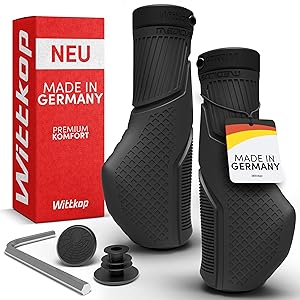
- Design: Ergonomic 3-zone pattern for wrist support
- Origin: Made in Germany with precision manufacturing
- Resistance: UV and weather-resistant materials
- Install: Comes with hex key for easy fitment
Wittkop grips bring a considered ergonomic shape to everyday riding. The three-zone layout separates non-slip texture, a cushioned comfort zone, and an EFC (ergonomic) area to support the wrist — which helps reduce strain on longer rides. The material resists UV and weathering, so the grips keep their feel and appearance season after season.
They’re slightly pricier than no-name grips, but the manufacturing quality shows in the fit and finish. Installation is clean with the included hex key and the grips held firm through a mix of urban and trail use. If you want a refined ergonomic grip from a trusted German brand, Wittkop is a solid choice for riders prioritizing comfort and longevity.
Pros: Thoughtful ergonomic zones, durable build, weather resistant, easy install.
Cons: Higher price point; fewer flashy color options.
6. ROCKBROS Bike Handlebar Grips

- Pack: Two pairs included; five color choices
- Material: Premium soft rubber for comfort
- Locking: Bilateral locking rings and end plugs
- Size: Standard 22 mm internal diameter
ROCKBROS offers a roomy value package with two pairs and multiple colorways, making these grips ideal for swapping between bikes or keeping a spare. The rubber is pleasantly soft without feeling spongy, and the bilateral locking rings plus end plugs increase stability — the grips stay put under hard use and heavy braking.
I rode these on mixed singletrack and paved commutes; they smoothed out chatter and maintained traction in damp conditions. Customer support and the 30-day return/one-year replacement policy also add confidence. For riders who want an affordable, dependable grip set with options and backup, ROCKBROS delivers.
Pros: Good value (two pairs), stable locking system, comfortable rubber, warranty/returns.
Cons: Slightly heavier than minimal race grips; colors may fade over long UV exposure.
See the ROCKBROS Bike Handlebar Grips
7. SAPLIZE Bike Handlebar Grips
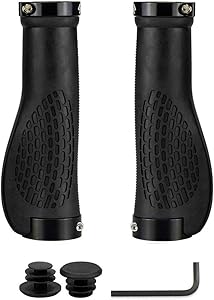
- Core: Hard plastic core with medium-soft TPE wrap
- Lock: Double aluminum alloy rings on both ends
- Dimensions: Inner Ø 0.87″, length 5.1″ (130 mm)
- Weight: Approx. 2.7 oz per grip
SAPLIZE blends a rigid internal core with a cushioned TPE outer for a controlled, comfortable feel. The double-aluminum rings lock the grips solidly in place and prevent any rotation, which is especially useful if you run high leverage on brakes or ride technical terrain. The ergonomic profile helps with wrist comfort on extended rides.
Be mindful that these grips are a bit long for bars with twist shifters or bulky controls — measure before ordering. Installation requires care to avoid over-tightening the clamps. With a 12-month quality assurance promise, they’re a practical choice for riders who want a locked-in feel plus moderate cushioning without excessive bulk.
Pros: Very secure dual clamps, ergonomic shape, durable core/wrap combo, quality assurance.
Cons: Long length may interfere with twist shifters; clamp screws can strip if over-tightened.
See the SAPLIZE Bike Handlebar Grips
8. corki Mountain Bike Grips

- Material: TPR rubber with aluminium alloy rings
- Length: 130 mm (5.12 inches)
- Weight: ~110 g per pair
- Fit: For handlebars 20–22 mm outer diameter
Corki grips offer a classic rubber feel with double locking rings for a fuss-free, secure fit on most standard mountain bikes. They’re straightforward in design — no gimmicks — and provide a reliable, slightly cushioned contact that suits trail, commuter, and casual riders. The pair felt balanced: enough padding to soften chatter but not so much that you lose bar feedback.
At their price point they represent a sensible, dependable upgrade from worn factory grips. Installation is quick and once clamped they stayed put through heavy cornering and wet descents. If you want a neutral, widely compatible grip that does everything competently, corki is a safe choice.
Pros: Solid double-lock security, comfortable rubber feel, compatible with most bars, good value.
Cons: Limited advanced ergonomic shaping; basic styling.
See the corki Mountain Bike Grips
How to Choose MTB Grips for Hand Fatigue
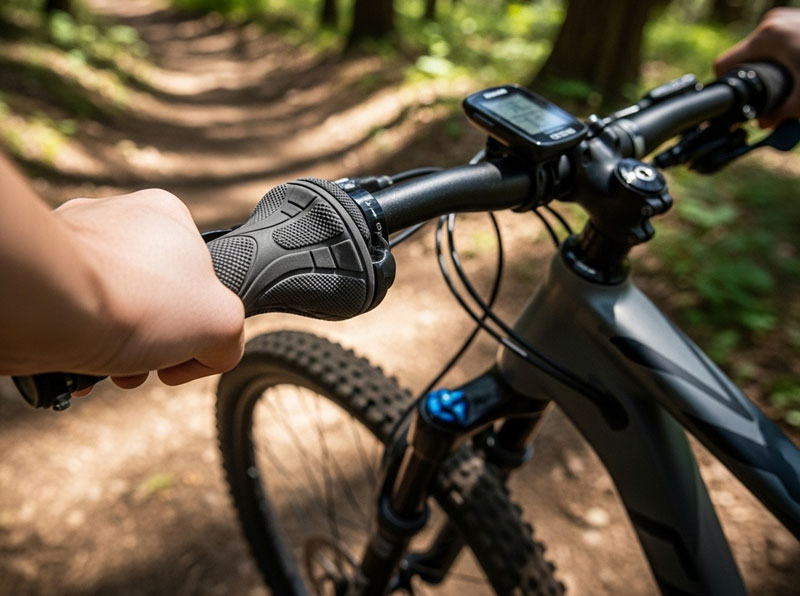
Mountain biking is thrilling, but hand fatigue can quickly ruin the ride. Long descents, rough trails, and constant vibrations put pressure on your hands, leading to discomfort and even numbness. Choosing the right mountain bike grips is one of the simplest yet most effective ways to reduce hand fatigue. This guide explains what to look for when selecting grips, the different types available, and tips for matching them to your riding style. By the end, you will know exactly how to pick MTB grips that keep your hands comfortable, secure, and fatigue-free.
Why Hand Fatigue Happens While Mountain Biking
Hand fatigue occurs when your muscles and nerves are overworked by continuous pressure, vibrations, and poor hand positioning. On rocky or root-filled trails, vibrations from the bike transfer directly to your hands. If your grips are too thin, too hard, or lack proper shape, your hands must work harder to maintain control. Over time, this causes soreness, numbness, or tingling. Fatigue not only reduces comfort but also affects bike handling, which can increase the risk of accidents.
Key Factors to Consider When Choosing MTB Grips
Grip Diameter
The thickness of your grips plays a major role in comfort. Riders with smaller hands often prefer thinner grips, while those with larger hands benefit from thicker ones. A diameter that is too small forces you to squeeze harder, causing strain. Conversely, grips that are too thick make it difficult to wrap your fingers securely, leading to reduced control. Choosing the right size ensures a natural hand position and lowers muscle fatigue.
Grip Material
Materials affect shock absorption and overall feel. Soft rubber grips absorb vibrations well and reduce hand strain, while harder compounds last longer but may pass more feedback from the trail. Silicone grips strike a balance by providing both cushioning and durability. Foam grips are lightweight and comfortable but may wear faster. The material you choose depends on whether you prioritize comfort, longevity, or control.
Grip Shape and Ergonomics
Ergonomically shaped grips distribute pressure more evenly across your palms, reducing hot spots that cause pain. Some grips include a wing-like platform that supports the heel of your hand, ideal for long rides. Others are round and simple, providing freedom for technical handling. Riders who experience numbness in the hands may find ergonomic grips particularly helpful, while aggressive trail riders may prefer traditional round grips for better maneuverability.
Lock-On vs. Slip-On Grips
Lock-on grips use metal or plastic collars to secure them firmly to the handlebar. They are easy to install, do not twist during rough riding, and offer reliability. Slip-on grips, on the other hand, slide directly onto the bar and rely on friction or adhesives. While lighter and often softer, they can shift over time. For riders who prioritize durability and security, lock-on grips are the better option. Slip-ons may appeal to weight-conscious riders who value simplicity.
Length and End Caps
Grips come in different lengths to fit various handlebars. Shorter grips are ideal for bikes with grip shifters, while longer ones provide more hand placement options. End caps protect the ends of your handlebars and keep grips from tearing when your bike tips over. A secure end cap also helps prevent injury by covering exposed metal edges.
Special Features That Help Reduce Hand Fatigue
Shock Absorption Technology
Some grips are designed with built-in shock absorption features, such as dual-density layers or vibration-dampening inserts. These technologies minimize trail chatter and protect your hands from constant impacts. If you often ride rocky terrain, grips with extra cushioning can make a significant difference in reducing fatigue.
Texture and Surface Pattern
The surface texture of a grip affects both comfort and control. Raised patterns, ridges, or knurling improve traction and prevent your hands from slipping. Smooth grips may feel comfortable initially, but they can become slippery when sweaty or muddy. A well-designed texture balances traction with softness, ensuring your hands remain secure without irritation.
Weight Considerations
While grips are a small part of your bike, weight can matter to competitive riders. Foam and silicone grips are typically lighter, making them popular among cross-country racers. However, slightly heavier rubber or lock-on grips may provide better vibration damping and durability. Choosing lighter grips makes sense for racing, but trail and enduro riders may prefer comfort over minimal weight.
Matching Grips to Riding Style
Cross-Country Riding
XC riders often spend long hours in the saddle, making comfort a top priority. Lightweight silicone or foam grips with ergonomic shaping can help reduce pressure points. Thin grips work well for riders who value efficiency and quick handling.
Trail Riding
Trail riders need a balance of comfort and control. Medium-thickness grips with textured surfaces and vibration-damping features are ideal. Lock-on grips are especially popular in this category because they remain secure on rough trails.
Enduro and Downhill Riding
Aggressive riders need maximum control and durability. Thicker grips with firm rubber compounds provide the necessary support for high-speed descents. Extra cushioning helps absorb heavy impacts, and secure lock-on designs prevent any movement during intense rides.
Casual and Recreational Riding
Comfort and ease of use are most important for casual riders. Soft rubber or ergonomic grips with palm support can keep rides enjoyable without causing soreness. Since rides are usually shorter, weight and advanced features are less critical.
Tips for Reducing Hand Fatigue Beyond Grips
Proper Bike Fit
Hand fatigue can also be caused by poor bike setup. If your handlebars are too low, too wide, or at the wrong angle, more pressure is placed on your hands. Adjusting stem length, handlebar rise, and grip angle can relieve strain.
Gloves and Padding
Padded gloves complement your grips by adding another layer of cushioning. They help absorb vibrations and prevent blisters. Some riders prefer thin gloves for better control, while others choose thicker padding for maximum comfort.
Riding Technique
Hand fatigue isn’t always about equipment. Using proper riding technique, such as keeping a relaxed grip, bending your elbows, and letting your bike float over obstacles, reduces strain on your hands. Avoid gripping the bars too tightly, as this accelerates fatigue.
Conclusion
Choosing the right MTB grips is one of the easiest and most affordable ways to combat hand fatigue. The perfect grip depends on your hand size, riding style, and personal comfort preferences. By paying attention to diameter, material, ergonomics, and security, you can find grips that minimize strain and improve control. Remember, reducing fatigue is not just about comfort—it enhances safety and overall enjoyment on the trail. With the right grips, your hands will stay fresh and strong, allowing you to focus on the ride rather than the discomfort.