Best Road Bike Brakes of 2025
When you ride a road bike, speed feels exciting, but safety matters even more. Brakes are the tool that turn speed into control. A strong, reliable brake can mean the difference between a smooth stop and a risky moment. Road bike brakes come in many types, from lightweight designs to powerful systems for steep descents. Each has its own benefits, and the best choice depends on how and where you ride. In this article, we explore the top road bike brakes available today. Whether you want speed, comfort, or confidence, the right brakes can transform your cycling experience.
1. Stylemafia Complete V Bike Brake Set
-
Material: Aluminum alloy calipers with steel levers
-
Includes: Front & rear calipers, brake levers, cables, multi-tool wrenches
-
Compatibility: Suitable for MTB, road, and hybrid bikes
-
Color: Silver finish
The Stylemafia Complete V Brake Set is a versatile kit that provides everything a rider needs to replace or upgrade their braking system. With both front and rear calipers included, along with levers, cables, and even a multi-tool wrench, this kit offers great value. The aluminum alloy construction keeps it lightweight, while the sturdy calipers ensure durability and strong stopping power on different terrains. Its polished silver finish also adds a sleek, classic look to your bike.
In terms of performance, the braking response is sharp and reliable, making it ideal for both road cyclists and MTB enthusiasts who need precise control. Installation is straightforward, thanks to the inclusion of all necessary components and tools. However, since it’s a universal kit, fine-tuning may be required depending on the bike frame and wheel size. Riders looking for a complete, affordable solution will find this set highly convenient.
Pros
-
Complete kit with all parts included
-
Strong braking power and responsiveness
-
Durable aluminum alloy build
-
Easy to install with included multi-tool
Cons
-
May require adjustments for perfect fit
-
Slightly heavier compared to higher-end brake kits
2. CYSKY Bike Brakes Set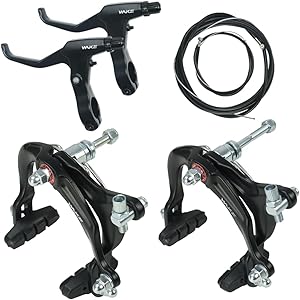
-
Material: Aluminum alloy calipers and steel levers
-
Type: C-type caliper brakes (front & rear)
-
Includes: Levers, inner & outer cables, calipers
-
Compatibility: Road and MTB bikes
The CYSKY Bike Brakes Set is designed for riders who want reliable C-type calipers without spending too much. This kit includes everything from calipers to brake levers and cables, which makes it convenient for a full replacement or upgrade. The aluminum alloy material offers a good balance between strength and lightweight construction, ensuring consistent braking power.
Performance-wise, the set provides good stopping efficiency on paved surfaces, making it well-suited for road biking. It may not be as effective for aggressive mountain biking or heavy-duty riding, but it holds up well under moderate conditions. Installation is relatively simple, but some riders may need to adjust cable tension to achieve optimal performance. Overall, it’s a solid choice for casual riders who want affordability and functionality.
Pros
-
Affordable complete brake kit
-
Lightweight aluminum alloy calipers
-
Suitable for both road and MTB bikes
-
Easy installation with included cables
Cons
-
Braking power less suited for extreme MTB use
-
May need frequent adjustments for best performance
3. Mimoke Bike Brake Set
-
Material: Aluminum alloy calipers, steel cables
-
Brake Type: C caliper (front & rear)
-
Kit Includes: Levers, calipers, cables
-
Compatibility: Road and mountain bikes
The Mimoke Bike Brake Set offers a practical solution for riders seeking reliable caliper brakes. Constructed with aluminum alloy, it provides a lightweight yet sturdy structure, ensuring consistent braking force without adding unnecessary weight to your bike. With both front and rear calipers included, it’s a good all-in-one package for replacements.
This set shines in terms of smooth braking performance and easy installation. Riders report that it works particularly well on road bikes, giving responsive and controlled stopping. For MTB use, it performs adequately under moderate terrain but may not be the best option for steep descents. Its affordability and complete kit design make it attractive for riders who need a simple, effective upgrade.
Pros
-
Complete kit with all essential components
-
Lightweight aluminum alloy build
-
Responsive braking on road bikes
-
Affordable price point
Cons
-
Not ideal for heavy off-road riding
-
Cable adjustments may be required often
4. Hmseng 2 Pairs Bike Brakes
-
Material: Aluminum alloy V-brake arms
-
Includes: 2 pairs of V brakes (front & rear), cables, ferrules, end caps
-
Compatibility: Universal fit for road and MTB bikes
-
Color: Black finish
The Hmseng 2 Pairs Bike Brakes set is built for riders who prefer V-brake systems and need a full replacement kit. With two pairs included, it offers a complete upgrade for both front and rear wheels. The aluminum alloy arms provide excellent durability and braking stability, while the black finish gives it a sleek look.
Performance is where this set excels—V brakes are known for their strong stopping power, and this kit delivers just that. Riders can expect efficient braking on both road and moderate off-road surfaces. Installation is simple with all the necessary accessories provided, although beginners may take a little time to get the cable tension just right. Overall, it’s a solid option for riders looking for effective and durable V brakes.
Pros
-
Complete kit with cables and end caps
-
Strong braking performance from V brakes
-
Durable construction with sleek design
-
Works well on road and MTB bikes
Cons
-
Requires proper setup for best results
-
Not as lightweight as caliper brakes
5. Hmfmdy Bike Brakes Calipers Set
-
Brake Type: C-shape calipers (front & rear)
-
Material: Aluminum alloy calipers with steel levers
-
Includes: Brake pads, calipers, levers, inner & outer cables
-
Compatibility: Road bikes and children’s bikes
The Hmfmdy Bike Brakes Calipers Set is designed for both adult road bikes and children’s bikes, offering versatility and ease of use. Made with aluminum alloy and fitted with strong brake pads, the set ensures smooth stopping performance. The kit includes everything needed, including levers and cables, making it a practical replacement solution.
Its braking performance is solid for road cycling and casual rides, offering predictable stopping power without being overly aggressive. The lightweight design also makes it suitable for kids’ bikes, where ease of control is essential. However, for riders tackling steep hills or aggressive MTB trails, it may not provide the required strength. Still, for everyday cycling, it’s an affordable and reliable option.
Pros
-
Suitable for both adult and kids’ bikes
-
Lightweight and easy to control
-
Complete kit with cables and levers
-
Affordable price
Cons
-
Not ideal for extreme MTB conditions
-
Pads may wear out faster with heavy use
6. Lomodo 6 Pieces Bicycle Brake Accessories
-
Includes: 2 pairs V brakes, 2 aluminum alloy brake levers, 2 brake wires
-
Material: Aluminum alloy and durable steel cables
-
Compatibility: Road, MTB, and hybrid bikes
-
Lever Clamp Diameter: 2.2 cm
The Lomodo 6 Pieces Bicycle Brake Accessories kit is a comprehensive package designed for riders who need a full set of reliable braking components. It includes two pairs of V brakes, two sturdy aluminum alloy levers, and two brake wires, making it ideal for both replacements and upgrades. The universal 2.2 cm clamp diameter ensures compatibility with most handlebars.
Performance-wise, this set delivers strong braking power and dependable control. V brakes provide superior stopping strength compared to traditional calipers, making it suitable for riders who frequently cycle on mixed terrains. The aluminum alloy levers feel sturdy and responsive, and the included wires simplify installation. Riders may need to fine-tune cable adjustments for perfect performance, but once set, it works reliably.
Pros
-
Complete kit for full replacement
-
Strong V brake performance
-
Sturdy and responsive brake levers
-
Compatible with most bike types
Cons
-
Requires careful installation for best results
-
Slightly heavier than some alternatives
7. FOMTOR Bike Brake C Brake Caliper Set
-
Material: Aluminum alloy calipers
-
Type: Side pull C caliper brakes (front & rear)
-
Compatibility: MTB, road bikes, hybrid bikes
-
Includes: 1 pair of calipers (front & rear)
The FOMTOR Bike Brake Caliper Set is a simple yet effective solution for riders who prefer traditional side pull C calipers. Built with aluminum alloy, the calipers are lightweight and corrosion-resistant, making them a reliable long-term choice. They’re compatible with both road and MTB bikes, offering versatility for different riding styles.
In terms of performance, the braking power is sufficient for road cycling and casual riding. They may not be the most powerful option for aggressive MTB trails, but they provide consistent and predictable stopping on paved surfaces. Installation is easy for those familiar with caliper brakes, though riders may need to purchase additional cables and levers separately if required. For budget-conscious cyclists, this set is a great no-frills option.
Pros
-
Lightweight aluminum alloy construction
-
Reliable performance on road bikes
-
Affordable and simple to install
-
Corrosion-resistant build
Cons
-
Limited braking power for aggressive MTB
-
Kit only includes calipers, not cables or levers
How to Choose Road Bike Brakes
Brakes are one of the most critical components of a road bike. They ensure safety, control, and confidence while riding, especially when navigating high speeds, steep descents, or unpredictable weather. With the variety of braking systems available today—ranging from traditional rim brakes to modern hydraulic disc brakes—choosing the right option can feel overwhelming. This guide will walk you through the different types of road bike brakes, their pros and cons, and the factors you should consider before making your decision.
Why Brakes Matter in Road Cycling
Brakes do more than just slow you down; they influence your entire riding experience. Good brakes provide:
-
Safety: The ability to stop quickly can prevent accidents.
-
Confidence: Strong, reliable braking helps you ride faster and tackle challenging terrain without hesitation.
-
Control: Smooth modulation ensures you can adjust your speed precisely, especially during cornering or group rides.
-
Performance: Efficient braking allows you to conserve energy and reduce wear on other bike parts.
Choosing the wrong brakes could compromise your safety and limit your riding potential, so it’s essential to understand your options.
Types of Road Bike Brakes
1. Rim Brakes
Rim brakes have been the standard on road bikes for decades. They work by pressing brake pads against the wheel’s rim to slow it down.
Pros:
-
Lightweight compared to disc brakes.
-
Generally less expensive.
-
Easier to maintain and repair.
-
Widely available replacement parts.
Cons:
-
Reduced performance in wet or muddy conditions.
-
Increased rim wear over time.
-
Less stopping power on steep descents.
Rim brakes are still popular among traditional road cyclists and those who prioritize a lightweight setup, but they are gradually being phased out in favor of disc brakes.
2. Mechanical Disc Brakes
Mechanical disc brakes use a cable system to pull calipers and clamp brake pads onto a rotor mounted on the wheel hub.
Pros:
-
Better stopping power than rim brakes, especially in wet conditions.
-
Affordable compared to hydraulic disc brakes.
-
Easier to install than hydraulic systems.
Cons:
-
Less efficient modulation compared to hydraulic brakes.
-
Require frequent adjustments for consistent performance.
-
Heavier than rim brakes.
These are a good middle-ground choice for cyclists who want improved braking power but are on a budget.
3. Hydraulic Disc Brakes
Hydraulic disc brakes are the gold standard in modern road cycling. Instead of cables, they use hydraulic fluid to push pistons that squeeze the brake pads against the rotor.
Pros:
-
Superior stopping power in all weather conditions.
-
Excellent modulation, allowing precise control.
-
Require less hand force, reducing fatigue.
-
Low maintenance once properly set up.
Cons:
-
More expensive.
-
Slightly heavier than rim brakes.
-
Complex to install and service, requiring professional tools.
If you are serious about performance and ride in varying conditions, hydraulic disc brakes are the best option.
4. Direct-Mount Brakes
Direct-mount brakes are a newer type of rim brake mounted directly to the frame or fork with two bolts, providing a stiffer, more aerodynamic setup.
Pros:
-
Better power and modulation than standard rim brakes.
-
Sleeker, aerodynamic design.
-
Lighter than disc brakes.
Cons:
-
Limited compatibility with bike frames.
-
Still weaker than disc brakes in wet conditions.
They’re a good option for riders who want to stick with rim brakes but demand higher performance.
Key Factors to Consider When Choosing Road Bike Brakes
1. Riding Style
Your style of riding plays a major role in brake selection.
-
Racers: Often prefer lightweight setups, making rim brakes or direct-mount brakes appealing.
-
Commuters and Endurance Riders: Benefit from the reliability of disc brakes in varied conditions.
-
Mountainous Terrain Riders: Hydraulic disc brakes are best for steep descents and consistent stopping power.
2. Weather Conditions
If you often ride in rain, snow, or muddy environments, disc brakes—especially hydraulic—are a much safer option. Rim brakes tend to slip and lose stopping efficiency when wet.
3. Maintenance Requirements
-
Rim Brakes: Easy to maintain; pad replacement and cable adjustments are simple.
-
Mechanical Disc Brakes: Moderate maintenance; cables can stretch and require tuning.
-
Hydraulic Disc Brakes: Low day-to-day maintenance, but bleeding the system requires skill.
Think about whether you want a “set it and forget it” system or are comfortable with regular tinkering.
4. Bike Frame Compatibility
Not all frames are designed to accommodate every brake system.
-
Older frames typically support only rim brakes.
-
Modern performance bikes increasingly come disc-brake specific.
-
Switching from rim to disc often requires a completely new frame, wheels, and fork.
Always check your bike’s specifications before upgrading.
5. Weight Considerations
Weight is a critical factor for competitive cyclists. Rim brakes are lighter, while disc brakes add a few hundred grams due to rotors, calipers, and reinforced frames. For everyday riders, the extra weight is negligible compared to the performance benefits.
6. Budget
-
Entry-Level: Rim brakes and mechanical discs are more affordable.
-
Mid-Range to High-End: Hydraulic disc brakes dominate, though they come at a higher price point.
Balance your budget with your performance needs—sometimes a slightly more expensive brake system can prevent costly accidents.
7. Aesthetics and Aerodynamics
Direct-mount rim brakes are favored by some cyclists for their sleek, aerodynamic design, while disc brakes, though bulkier, are now integrated smoothly into many modern frames. If appearance and aerodynamics matter to you, this factor is worth considering.
Brake Pads: An Overlooked Component
Choosing brakes isn’t just about the system—it’s also about the pads. Brake pads can dramatically change performance:
-
Rim Brake Pads: Choose pads compatible with your rim material (alloy vs carbon).
-
Disc Brake Pads: Available in resin (quiet and smooth, but wear quickly) and metallic (durable and strong in wet conditions, but noisier).
Regular pad inspection and replacement is essential for safe riding.
The Evolution of Road Bike Brakes
The cycling industry has shifted strongly toward disc brakes, with many professional teams now using them exclusively. Rim brakes are still relevant for budget-friendly builds and riders who prefer tradition, but the future is clearly disc-focused.
Hydraulic discs, in particular, have become the benchmark for performance bikes, offering unmatched stopping power and control. However, it’s important to remember that “best” depends on your individual needs, not just industry trends.
Final Thoughts
Choosing road bike brakes is about finding the right balance between performance, weight, cost, and maintenance. If you’re a casual rider sticking to dry, flat conditions, rim brakes may serve you well. If you’re chasing performance across varied terrain and weather, hydraulic disc brakes are the clear winner. Mechanical discs and direct-mount brakes provide middle-ground solutions for those with specific preferences.
Ultimately, the right brakes are the ones that make you feel safe, confident, and in control every time you ride. Invest wisely, and your braking system will not only protect you but also enhance your cycling experience.