Best Sportbike Tires for Street of 2025
Choosing the right tires for your sportbike is very important. Good tires give better grip, control, and safety on the street. Whether you ride daily or just on weekends, having the best tires makes a big difference. They help you handle sharp turns and sudden stops more easily. Sportbike tires made for the street offer better performance and comfort. They also last longer and improve your riding experience. In this article, we list the best sportbike tires for street use. Each option is chosen for its quality, value, and rider reviews. Read on to find the perfect tires for your sportbike and enjoy every ride with confidence.
1. Pirelli Angel ST Tires (120/70ZR17 & 180/55ZR17)
- Front tire size: 120/70ZR17 (58W), Rear tire size: 180/55ZR17 (73W)
- Radial construction with dual-compound tread for better mileage and grip
- Designed for sport touring motorcycles
- Enhanced silica compound for wet and dry performance
The Pirelli Angel ST tires are designed with sport touring riders in mind. These tires offer a brilliant blend of comfort, grip, and longevity, making them ideal for those who clock serious miles on both highways and twisty roads. The dual-compound rubber ensures stability at high speeds, while the silica-rich formulation improves performance in wet conditions.
With excellent tread life and a profile optimized for even wear, the Angel STs provide confidence through corners and stability on long rides. Riders will appreciate their strong grip during aggressive riding as well as their smooth response under heavy braking. The tires also have a visually modern design with a tread pattern that changes over time to reflect the tire’s wear.
Pros:
- Excellent grip in dry and wet conditions
- Long-lasting tread life
- Smooth and stable at high speeds
- Ideal for touring and sport applications
Cons:
- Slightly more expensive than basic sport tires
- Takes a few miles to warm up fully
2. Michelin Pilot Street 2 (70/90-14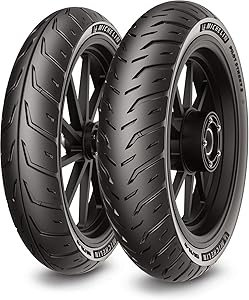
- Tire size: 70/90-14
- Designed for scooters and smaller sportbikes
- Tread pattern derived from Michelin Sport Touring series
- Improved rubber compounds for better longevity and performance
The Michelin Pilot Street 2 is a top choice for scooter riders who seek performance and dependability in urban environments. It features a modern tread pattern borrowed from high-performance motorcycle tires, giving riders enhanced grip in both dry and wet conditions. The tire’s design supports quick maneuvering and agile control, which is crucial for city commuting.
The rubber compound used in the Pilot Street 2 has been fine-tuned to deliver longer life without compromising safety. It performs well on both paved and slightly rough surfaces, making it a great everyday tire. If you’re after reliability, comfort, and responsiveness in traffic, this scooter tire won’t disappoint.
Pros:
- Excellent handling for urban riding
- Long-lasting compound
- Strong wet grip performance
- Great value for budget-conscious riders
Cons:
- Not suitable for high-speed or sport use
- Limited to smaller scooters and lightweight bikes
3. Michelin Road 5 (180/55ZR-17)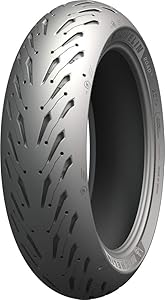
- Tire size: 180/55ZR-17 73W
- Radial construction with Michelin’s XST Evo siping
- Dual-compound rubber with 2CT and 2CT+ technology
- Excellent water evacuation for superior wet grip
The Michelin Road 5 is a premium sport-touring tire designed to deliver class-leading wet and dry performance. Leveraging Michelin’s advanced dual-compound technology, it provides reliable traction, particularly in challenging conditions. The XST Evo siping creates extra grip on wet roads by channeling water away from the contact patch.
Over time, the Road 5 continues to offer performance that rivals new tires, thanks to its innovative tread design that evolves with wear. For daily riders who travel through varying weather, this tire offers safety, longevity, and superb control. It’s particularly favored by riders who want sportbike performance with touring comfort.
Pros:
- Excellent wet grip and cornering
- Long-lasting tread performance
- Comfortable for long rides
- Stable under aggressive braking
Cons:
- Premium price point
- May feel stiff during the break-in period
4. Michelin City Grip 2 (130/70-12)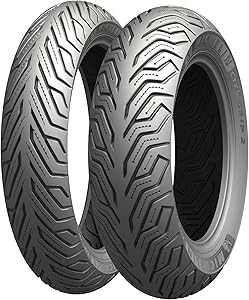
- Tire size: 130/70-12 (63S)
- Silica-based compound for enhanced wet grip
- Directional tread pattern for stability
- All-season compound suitable for year-round use
The Michelin City Grip 2 is engineered for riders who depend on scooters for daily travel across varied weather conditions. This tire offers excellent wet grip, thanks to its advanced silica-rich compound and a directional tread pattern that actively disperses water. It’s a solid choice for both commuting and short-distance touring.
City Grip 2 is reliable in all weather conditions and maintains good traction on slippery surfaces like cobblestones and painted lines. Its versatility and robust construction make it a favorite among urban scooter riders looking for a mix of performance, comfort, and durability.
Pros:
- Excellent grip in all weather
- Smooth ride quality
- Good tread longevity
- Minimal road noise
Cons:
- Limited to scooter usage
- Slightly higher price compared to other scooter tires
5. Kenda KM1 Sport Touring Tires (120/70ZR17 & 180/55ZR17)
- Sizes: 120/70ZR17 (front), 180/55ZR17 (rear)
- Radial construction for high-speed performance
- Designed for sport touring motorcycles
- Features optimized tread pattern for wet traction
The Kenda KM1 is a reliable and budget-friendly alternative for riders seeking dependable sport touring tires. These tires offer high-speed stability and confidence on both dry and wet surfaces. Their aggressive tread pattern enhances traction in wet weather while also delivering consistent grip on dry roads.
While not as premium as some top-tier brands, the KM1 performs admirably for daily riding and light touring. It is ideal for riders who want respectable performance without breaking the bank. The included keychain is a bonus for brand enthusiasts.
Pros:
- Great value for money
- Good wet weather performance
- Stable at highway speeds
- Durable construction
Cons:
- Slightly less grip than premium tires
- Limited performance under aggressive cornering
6. Kenda Kruz K673 (150/80H16)
- Tire size: 150/80H16
- Designed for cruiser motorcycles
- Bias-ply construction
- Deep tread design for improved mileage
The Kenda Kruz K673 is crafted for cruiser and heavy street motorcycles, offering long-lasting durability and a comfortable ride. Its bias-ply construction and deep tread grooves provide exceptional traction and stability for long-distance touring. This tire is tailored for riders who prioritize mileage and dependability.
The K673 also performs admirably in wet conditions due to its water-dispersing tread. It’s a favorite among cruiser riders looking for an affordable yet high-performing tire that can handle the demands of daily riding and long road trips.
Pros:
- Excellent mileage
- Strong performance in wet and dry conditions
- Comfortable ride quality
- Good value for cruisers
Cons:
- Not designed for sportbike performance
- Heavier due to bias-ply construction
7. Kenda Cruiser K671 (110/80H-17)
- Tire size: 110/80H-17F
- Bias-ply construction
- Speed rated H for up to 130 mph
- Directional tread design for water dispersal
The Kenda Cruiser K671 offers dependable performance for smaller street and sport-cruiser motorcycles. With its aggressive directional tread and H-speed rating, this tire provides reliable performance on highways and urban streets. The K671 stands out for its balance between cost, durability, and ride comfort.
Its bias-ply construction offers solid structural integrity, making it suitable for riders who need a trustworthy, no-fuss tire. Though not made for high-performance cornering, it handles well for general-purpose street use and light touring.
Pros:
- Affordable pricing
- Good stability at moderate to high speeds
- Effective water dispersal
- Durable tread life
Cons:
- Limited sport performance
- Slightly rougher ride than radial options
How to Choose Sportbike Tires for Street Riding
Sportbike tires are not just rubber circles that keep your bike moving—they are crucial components that directly influence your motorcycle’s performance, handling, safety, and comfort. Choosing the right sportbike tires for street use can be the difference between an exhilarating ride and a dangerous one. This comprehensive guide breaks down everything you need to consider when selecting street-specific sportbike tires, from riding style to tire construction.
1. Understand Your Riding Style
The first step in choosing the right tires is understanding your riding habits. Street riders typically fall into one of the following categories:
-
Commuter: If you use your sportbike daily for commuting, you’ll need long-lasting, all-weather tires with consistent grip and comfort.
-
Sport Touring: For riders who enjoy long-distance road trips, you’ll want tires that balance grip with durability and can handle changing road conditions.
-
Aggressive Street Riding: If you ride hard on twisty roads and like pushing limits, performance-focused tires that offer maximum grip, especially in corners, are essential.
Different tires are designed to meet specific rider needs. Make sure your choice aligns with how you actually use your bike.
2. Know the Types of Sportbike Tires for Street Use
Sportbike tires vary widely, and each category offers unique advantages:
-
Sport Touring Tires: These are designed for riders who do a mix of daily commuting and long-distance trips. They last longer than aggressive sport tires and work well in a variety of conditions, including rain.
-
Hypersport Tires: Built for high-performance street riding, these offer better grip and handling, especially in dry conditions. However, they wear out faster.
-
Track-Day/Street Legal Tires: These tires provide almost track-level grip but are DOT-approved for street use. They’re ideal for aggressive riders who occasionally ride on closed circuits. However, they may not last long and often require warm-up to deliver optimal grip.
-
All-Weather Tires: Specifically made to provide reliable traction in both dry and wet conditions, these are ideal for riders who face unpredictable climates.
3. Tire Compound and Construction
The rubber compound in your tire determines grip, wear rate, and warm-up time.
-
Soft Compounds offer exceptional grip and performance but wear quickly. Ideal for riders who prioritize handling over longevity.
-
Hard Compounds are more durable and offer better mileage but might compromise on grip, especially in aggressive cornering.
Some premium tires come with multi-compound technology—a harder center for straight-line durability and softer sides for improved corner grip. This is a great choice for most street riders.
In terms of construction, radial tires are the standard for modern sportbikes. They offer better heat dissipation, lighter weight, and improved cornering characteristics compared to bias-ply tires.
4. Tire Size and Profile
Always match the tire size recommended by your bike’s manufacturer. Installing the wrong size can affect stability, speedometer accuracy, and safety.
The tire profile (its curvature from side to side) impacts how your bike handles:
-
More Rounded Profiles give a smoother transition into corners—good for gradual, controlled street riding.
-
Sharper Profiles offer quicker turn-in and aggressive handling, suited for performance riders who favor cornering.
Check your owner’s manual or the sidewall of your current tires for the correct tire specifications (e.g., 120/70ZR17 for front, 180/55ZR17 for rear).
5. Weather and Road Conditions
Not all street riding happens in perfect weather. If you often ride in the rain or cold, make sure your tires are rated for wet traction. Look for siping patterns (small cuts on the tire surface) and rain grooves, which help channel water away from the contact patch.
Tire temperature range is another key factor. Track-focused tires may not perform well until they’re fully warmed up, making them unsafe for casual street use where tires rarely reach optimal heat.
For street riding in varying weather, look for sport tires that include silica-enhanced compounds, which offer better grip in wet and cold conditions.
6. Tread Pattern and Design
Tread patterns are not just for looks—they’re functional.
-
Aggressive Tread Patterns with deep grooves and channels are great for wet traction and debris shedding.
-
Minimal Tread (Slick-like) designs are more common in performance or track-day tires and may not be ideal for wet conditions.
For most street riders, a moderate tread pattern that balances dry grip with wet traction is the best choice.
7. Tire Longevity and Mileage
The life expectancy of a tire depends on its compound, riding conditions, and how aggressively you ride. Here’s a rough estimate:
-
Sport Touring Tires: 8,000–12,000 miles
-
Hypersport Tires: 3,000–6,000 miles
-
Track-Day Street Tires: 1,500–3,000 miles
Manufacturers often provide wear ratings or feedback about expected mileage, which can be useful when planning your maintenance budget.
8. Top Brands to Consider
Here are some reputable sportbike tire brands for street use:
-
Michelin: Known for the Road 5 and Pilot Power series—excellent for grip and wet performance.
-
Pirelli: Angel GT and Diablo Rosso lines are popular for street riders.
-
Bridgestone: Battlax series offers great all-around performance.
-
Continental: Offers strong wet grip and longevity.
-
Dunlop: Their Sportmax Q series delivers high performance for street and light track use.
Always choose well-reviewed models from reputable brands rather than budget options that may compromise safety.
9. Tire Maintenance Tips
Once you’ve selected your ideal sportbike tires, maintenance is key to maximizing performance and lifespan:
-
Check Tire Pressure Weekly: Use a reliable pressure gauge. Under-inflated tires wear faster and affect handling.
-
Inspect for Damage or Uneven Wear: Look for cracks, punctures, or flat spots.
-
Balance and Align Properly: This ensures smoother rides and even tire wear.
-
Break-In Period: New tires have a release compound that must be scrubbed off by riding gently for the first 100–200 miles.
10. Final Thoughts
Choosing sportbike tires for street use is not a one-size-fits-all decision. It depends on your bike, riding style, weather conditions, and performance needs. While it’s tempting to go for the highest-performance tires available, they may not be practical—or even safe—for daily street use. For most riders, a good-quality sport touring or hypersport tire strikes the perfect balance between grip, durability, and versatility.
Do your research, consider your real-world riding needs, and invest in quality rubber—it’s the only thing connecting you to the road.