Best Downhill Mountain Bike Pedals of 2026
Downhill mountain biking needs strong and reliable pedals. The right pedals improve control and keep you safe on rough trails. They also give better grip and power for fast descents. Choosing the best pedals can be confusing with so many options. This guide explains top downhill mountain bike pedals. It focuses on performance, durability, and comfort. Whether you are a beginner or expert, these pedals help you ride confidently. Read on to find pedals that make your downhill rides smoother, faster, and more fun.
1. ROCKBROS Mountain Bike Pedals

- Platform Size: 101mm wide.
- Weight: 0.66 lbs (302g) per pair.
- Spindle/Bearings: Chrome-molybdenum steel spindle with sealed bearings and carbon fiber bushing.
- Pins: Stainless steel anti-skid spikes on each side.
ROCKBROS delivers a compelling package for riders seeking reliable, all-terrain flat pedals. The wide 101mm platform provides excellent foot support, distributing pressure evenly and enhancing comfort during long or aggressive rides. The integration of a chrome-molybdenum steel spindle and sealed bearing system promises durability and a smooth, quiet spin, with the added protection against dust and water being a significant advantage for riders who face varied conditions.
These pedals strike a notable balance between weight, grip, and construction quality. The CNC-machined aluminum alloy body feels solid underfoot, and the numerous stainless steel pins offer confident traction, keeping feet planted on rough descents. The inclusion of a lifetime warranty underscores the brand’s confidence in its product, making this a low-risk, high-value proposition for commuters, trail riders, and downhill enthusiasts alike who prioritize a secure foothold and dependable performance.
Pros: Excellent grip with stainless steel pins; Durable, smooth-running sealed bearing system.
Cons: Platform may feel narrow for riders with very large feet (over US 12); Some competitors offer even lighter options.
2. CXWXC MTB Bike Pedals

- Platform Size: 4.13″ L x 4.09″ W (approx. 105mm x 104mm).
- Weight: 0.4 lbs (approx. 181g) per pedal.
- Construction: CNC aluminum body with a hardened Cr-Mo axle.
- Pins: 8 pins per pedal side on a concave surface.
The CXWXC pedals stand out immediately for their impressively low weight, making them a strong contender for riders looking to minimize rotational mass. The wide, slightly concave platform works in tandem with the eight pins per side to create a secure and comfortable footbed. The hardened chromoly axle and sealed cartridge bearings are built to withstand tough conditions, suggesting these pedals are more than just lightweight—they’re designed for serious use.
Installation is straightforward with clear left/right labeling and a universal 9/16″ spindle. The combination of a durable aluminum chassis and a robust axle provides a reassuringly stiff platform that efficiently transfers power. While they excel in grip and weight savings, the bearing system, though sealed, may not be as serviceable as some higher-end models, but for the price, they offer exceptional performance for cross-country and general trail riding.
Pros: Extremely lightweight; Secure grip with concave shape and pins.
Cons: Bearing system may not be user-serviceable; Pin height/replaceability not specified.
3. Crankbrothers Stamp Flat MTB Pedals

- Platform Size: Small: 100mm x 100mm; Large: 111mm x 114mm.
- Weight: Small: 305g, Large: 331g per pair.
- Body/Spindle: Composite body with chromoly steel spindle.
- Pins & Bearings: 12 molded traction pins per side; Serviceable IGUS bearings.
Crankbrothers brings its renowned design philosophy to the entry-level with the Stamp 0. The thin, low-profile composite body significantly reduces pedal strikes, a boon for technical trail and downhill riding. The pronounced concave shape effectively cradles your foot, working with the 12 molded pins per side to deliver exceptional grip and stability, which builds rider confidence when tackling rough terrain.
Versatility is a key strength, as these pedals perform well across mountain biking, BMX, and commuting. The fully serviceable IGUS bearing and seal system is a premium feature at this price point, ensuring long-term smooth performance and easy maintenance. The option of two platform sizes allows riders to perfectly match their foot size, optimizing control and comfort. The 5-year warranty provides peace of mind for long-term investment.
Pros: Excellent size-specific fit; Low-profile design reduces strikes; Serviceable bearing system; Strong 5-year warranty.
Cons: Composite body may not be as durable as aluminum in extreme impacts; Molded pins are not replaceable if damaged.
4. GEWAGE Mountain Bike Pedals

- Platform Size: 100mm x 104mm with a 14mm profile.
- Weight: 332 grams per pair.
- Pins: 16 replaceable pins total (8 per side).
- Bearings: 3 sealed bearings per pedal.
GEWAGE pedals are engineered for aggressive riding, featuring a thoughtfully designed platform with sloped edges to help deflect off trail obstacles. The 100x104mm size offers a solid foundation, and the 16 replaceable pins provide exceptional, customizable grip, ensuring your feet stay locked in place during high-speed descents and technical climbs. The ability to replace worn or damaged pins is a significant advantage for long-term use.
Construction is robust, utilizing a CNC aluminum alloy body and a chrome-molybdenum steel spindle for reliable strength and power transfer. The triple sealed bearing system is a highlight, promising superb protection against contaminants and a smooth, quiet rotation. These pedals deliver a confidence-inspiring, secure feel that will appeal to downhill and enduro riders who need dependable traction and durability without an exorbitant price tag.
Pros: Excellent, replaceable pin grip for security; Robust triple sealed bearing system.
Cons: Slightly heavier than some competitors; Platform may be on the smaller side for larger feet.
5. MZYRH Mountain Bike Pedals

- Platform Size: 105mm x 91mm x 26mm (L x W x H).
- Weight: 0.45 lbs (approx. 204g) per pedal.
- Bearings: 3 lubricated sealed bearings.
- Material: High-strength aluminum alloy body.
The MZYRH pedals offer a classic, no-frills flat pedal design focused on essential functionality. Their rectangular platform provides a good surface area, and the inclusion of three sealed bearings per pedal ensures a impressively smooth and quiet spin. The aluminum anti-skid nails provide decent grip for general trail riding and commuting, though the pin count is lower than some dedicated downhill models.
These pedals shine in their simplicity and ease of use. The build from high-strength aluminum alloy promises good durability for the price, and the universal 9/16″ spindle with clear L/R markings makes installation a quick task. They are a solid budget-friendly upgrade from stock plastic pedals, suitable for riders who need reliable, smooth-rolling pedals for less aggressive mountain biking, hybrid use, or around-town riding without needing extreme grip.
Pros: Very smooth 3-bearing system; Lightweight and durable aluminum build; Easy installation; Good value for money.
Cons: Narrower width and fewer pins limit grip for aggressive riding; Pin design may not be as effective or replaceable as others.
6. FIFTY-FIFTY Mountain Bike Pedals

- Platform Size: 4.2″ x 4.2″ (approx. 107mm x 107mm).
- Weight: 425g (15 ounces) per pair.
- Thickness: Ultra-thin 0.6″ profile.
- Pins & Spindle: 10 replaceable steel pins per side; High-strength Cr-Mo spindle.
FIFTY-FIFTY pedals are built for the rider who values ground clearance and a large platform. The ultra-thin 0.6″ profile is a standout feature, dramatically reducing the chance of painful pedal strikes on rocks and roots, which is crucial for downhill and technical trail riding. The large 107mm square platform offers ample support and allows for subtle foot adjustments during long rides.
Durability is front and center with a CNC 6061-T6 aluminum body and a chromoly spindle. The ten replaceable steel pins per side provide outstanding, mud-shedding grip, and the sealed bearings keep the spin smooth while fighting off dirt and moisture. This combination of a thin build, large platform, and replaceable pins makes these pedals a serious contender for aggressive all-mountain and enduro use where clearance and grip are paramount.
Pros: Excellent ground clearance with ultra-thin design; Large, supportive platform.
Cons: Heavier than many competitors; Large platform size may be excessive for riders with smaller feet.
7. JETCAT Mountain Bike Pedals
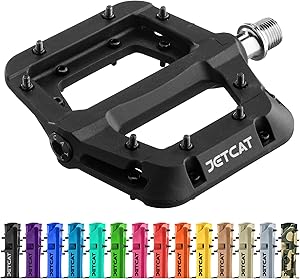
- Material: High-quality nylon composite body.
- Bearings: 3 sealed bearings per pedal.
- Pins: 8 anti-skid nails per side.
- Spindle: Standard 9/16″ with clear L/R marking.
The JETCAT pedals take a different approach by utilizing a nylon composite body, resulting in a very affordable and corrosion-resistant option. The three sealed bearings provide a surprisingly smooth and efficient pedaling feel, rivaling more expensive aluminum models. The eight anti-skid nails per side offer adequate grip for casual trail riding, commuting, and fitness cycling.
These are an ideal choice for beginners, commuters, or riders on a tight budget looking for a reliable upgrade from basic pedals. The inclusion of a hex key for installation is a thoughtful touch. While the nylon body may not withstand the same level of direct rock impact as aluminum, its resilience and the protected bearing system make it a durable option for less extreme conditions. They offer great value for smooth performance and basic grip.
Pros: Very affordable; Smooth 3-bearing system; Corrosion-resistant nylon body; Includes installation hex key.
Cons: Nylon body less durable against direct impacts than metal; Grip level is basic compared to pinned aluminum pedals.
How to Choose Downhill Mountain Bike Pedals
Choosing the right downhill mountain bike pedals is crucial for both safety and performance. Your pedals are the connection between you and your bike, affecting control, stability, and power transfer. Downhill riding involves rough terrain, high speeds, and extreme drops, making pedal choice more important than in other types of biking. This guide will help you understand different types of pedals, materials, grip options, and other factors to make an informed decision.
Types of Downhill Mountain Bike Pedals
Downhill pedals come in two main types: flat pedals and clipless pedals. Each type has its advantages and disadvantages, depending on your riding style.
Flat Pedals
Flat pedals, also known as platform pedals, are wide and offer a large surface area for your feet. They provide freedom of movement, which is helpful when performing tricks or adjusting foot position on technical terrain.
-
Advantages of Flat Pedals
-
Easier to bail out in emergencies.
-
Better for beginners learning downhill control.
-
Suitable for riders who prefer to shift foot position frequently.
-
-
Disadvantages of Flat Pedals
-
Less efficient power transfer compared to clipless pedals.
-
Foot can slip off in wet or muddy conditions.
-
Clipless Pedals
Clipless pedals attach directly to your shoes via cleats, providing a secure connection. They allow for both upward and downward pedaling force, which can improve efficiency and control.
-
Advantages of Clipless Pedals
-
Maximum power transfer to the pedals.
-
Feet stay firmly attached on rough terrain.
-
More precise control during jumps and technical descents.
-
-
Disadvantages of Clipless Pedals
-
Steeper learning curve for beginners.
-
Harder to quickly remove feet in emergencies.
-
Requires special shoes compatible with cleats.
-
Pedal Material and Durability
The material of your pedals affects weight, strength, and longevity. Common materials include aluminum, composite, and steel.
Aluminum Pedals
Aluminum pedals are lightweight and strong, making them popular among serious downhill riders. They are resistant to bending and provide excellent durability.
-
Pros
-
Strong and long-lasting.
-
Lightweight for better handling.
-
Good grip with pins and rough surfaces.
-
-
Cons
-
Can be more expensive than other materials.
-
May wear shoes faster due to rigidity.
-
Composite Pedals
Composite or plastic pedals are lighter and often less expensive. They are suitable for casual riders or beginners who want a more affordable option.
-
Pros
-
Lightweight and affordable.
-
Can absorb minor impacts better than aluminum.
-
-
Cons
-
Less durable on rough terrain.
-
Pins may wear down faster.
-
Steel Pedals
Steel pedals are very strong but heavier than aluminum or composite options. They are typically used in extreme downhill conditions where durability is prioritized over weight.
-
Pros
-
Extremely durable and impact-resistant.
-
Affordable in some models.
-
-
Cons
-
Heavy, which can affect speed and agility.
-
Prone to rust if not properly maintained.
-
Pedal Grip Options
Grip is crucial for downhill riding to prevent foot slippage and maintain control. Pedals can have pins, textured surfaces, or a combination of both.
Pins
Pins are small metal spikes on the pedal surface that dig into your shoe sole, offering excellent grip.
-
Adjustable Pins
Some pedals allow you to adjust pin height for a custom grip level. -
Fixed Pins
These are permanent and require no maintenance but offer less flexibility.
Textured Surface
Pedals with a textured surface rely on friction between the shoe sole and pedal body. They are usually lighter than pinned pedals but may provide less grip in wet conditions.
-
Advantages
-
Comfortable and smooth for casual riding.
-
Less damage to shoes.
-
-
Disadvantages
-
Less secure in mud or rain.
-
Pedal Size and Platform Shape
The size and shape of the pedal platform influence comfort, control, and stability.
Platform Width
Wider pedals provide a larger surface for your foot, improving stability on rough trails. Narrower pedals are lighter and better for technical maneuvers but may feel less secure.
Platform Thickness
Thicker pedals provide more durability and room for pins. Thinner pedals reduce weight and keep your foot closer to the ground for better bike control.
Bearing Type and Maintenance
Pedals rotate on bearings, which affect smoothness and long-term performance. The common types include sealed cartridge bearings and loose ball bearings.
Sealed Cartridge Bearings
Sealed bearings are protected from dirt and moisture, requiring less maintenance. They offer smooth rotation over time.
-
Advantages
-
Long-lasting and low maintenance.
-
Performs well in wet or muddy conditions.
-
-
Disadvantages
-
Slightly more expensive to replace.
-
Loose Ball Bearings
Loose ball bearings are cheaper and easier to service but require regular maintenance to prevent dirt build-up and wear.
-
Advantages
-
Cost-effective and repairable.
-
Can be adjusted for smooth rotation.
-
-
Disadvantages
-
More frequent maintenance needed.
-
Dirt and water can damage bearings faster.
-
Weight Considerations
Downhill mountain biking often involves jumps, drops, and technical descents. Lightweight pedals reduce overall bike weight and improve maneuverability. However, extremely light pedals may compromise durability. Balance weight with strength depending on your riding style.
Budget and Brand
Pedal prices vary based on material, design, and brand reputation. While expensive pedals often offer better grip, durability, and features, budget-friendly options are available for beginners and casual riders. Popular brands include Shimano, Crankbrothers, Race Face, and DMR, each offering quality downhill-specific pedals.
Personal Riding Style
Consider your riding style before choosing pedals:
-
Aggressive Downhill Riders
Might prefer clipless pedals for control and power transfer. -
Freestyle or Technical Riders
Flat pedals with adjustable pins provide freedom of foot movement. -
Beginner Riders
Flat pedals with good grip are safer and easier to use.
Safety Tips
-
Always ensure your pedals are securely attached before riding.
-
Regularly inspect pins and bearings for wear and tear.
-
Wear appropriate downhill shoes compatible with your pedal type.
-
Test new pedals in a safe environment before challenging trails.
Conclusion
Choosing the right downhill mountain bike pedals depends on your riding style, skill level, and terrain. Flat pedals offer freedom and safety, while clipless pedals provide power and control. Material, grip, platform size, bearings, and weight are also important factors to consider. Prioritize durability, comfort, and personal preference to enhance your downhill riding experience. Proper pedal choice not only improves performance but also ensures safety on challenging trails, making every ride more enjoyable and confident.