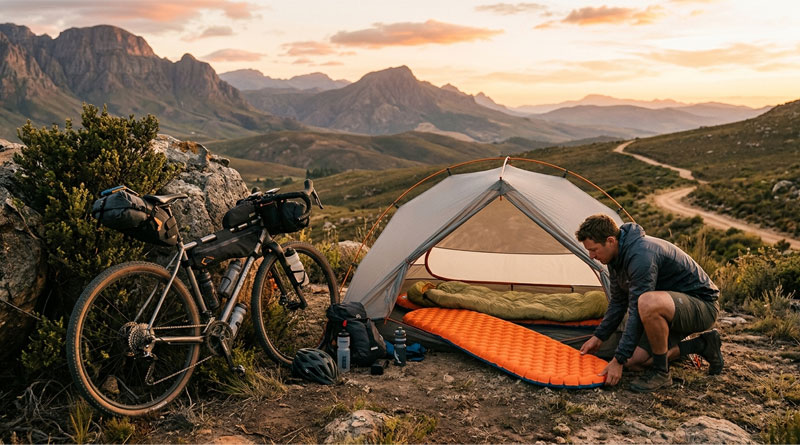
Best Sleeping Pads for Bikepacking of 2026
For bikepackers, a good night’s sleep starts with the right sleeping pad. Unlike car camping, every ounce and inch of space matters when you’re pedaling miles of dirt roads and singletrack. The best bikepacking pads pack down small, weigh next to nothing, and still keep you comfortable off the ground. From inflatable ultralight models to compact foam options, here’s our top gear to help you wake up rested and ready to ride.
1. Therm-a-Rest NeoAir XLite NXT

- Type: Air, Mummy shape — optimized for backpacking
- R-Value: 4.5 — suitable for year-round use
- Thickness: 3 inches for cushioned, comfortable sleep
- Weight: From 11.5 oz. (Short) to 1 lb. 1 oz. (Large)
The Therm-a-Rest NeoAir XLite NXT is a flagship ultralight sleeping pad built for serious backpackers. Its 3-inch thickness delivers impressive comfort without the bulk, and the 4.5 R-value makes it a reliable choice across all four seasons. Available in multiple sizes, it accommodates a wide range of sleepers, and both a stuff sack and repair kit are included.
Its mummy shape reduces unnecessary material, keeping weight and packed size impressively low — just 4.1 x 9 inches for the Short and Regular sizes. Whether you’re weekend hiking or tackling a multi-week trail, this pad strikes an exceptional balance between warmth, weight, and packability that few competitors can match.
Pros:
- Outstanding warmth-to-weight ratio
- Compact packed size ideal for ultralight setups
- Multiple size options for different body types
Cons:
- Premium price point
- Air pads can be puncture-prone in rugged terrain
See the Therm-a-Rest NeoAir XLite NXT
2. KLYMIT Insulated Static V Lite

- Type: Air pad with V-Chamber body-mapping design
- R-Value: 4.4 — rated for 4-season use
- Inflated Size: 72 x 23 x 2.5 inches
- Weight: 20 oz. | Packed Size: 8 x 3 inches
The KLYMIT Insulated Static V Lite brings smart engineering to the sleeping pad category. Its signature V-Chamber design limits air movement inside the pad, reducing the cold spots that plague traditional air mattresses. Filled with Klymalite synthetic insulation, it performs impressively in cold conditions while keeping the packed size small enough to fit easily in any backpack.
Inflation takes just 10–15 breaths, and deflation is instant with the open-valve system — a major plus at camp after a long day on trail. Dynamic side rails gently cradle your body, making this a strong choice for side, back, and stomach sleepers alike. At 20 oz., it’s heavier than ultralight options but offers excellent value for its comfort and warmth.
Pros:
- V-Chamber design suits all sleep positions
- 4-season insulation at a competitive price
- Quick and easy inflation/deflation
Cons:
- Heavier than top ultralight competitors
- 2.5-inch thickness less cushioned than 3-inch pads
See the KLYMIT Insulated Static V Lite
3. Exped Ultra 3R

- Type: Insulated air pad, Rectangular shape
- R-Value: 3.2 — rated for 3-season use
- Thickness: 3 inches with synthetic insulation
- Weight: From 1 lb. 0.5 oz. (Medium) to 1 lb. 4 oz. (Long Wide)
The Exped Ultra 3R is engineered for human-powered adventures where speed and weight matter. Its rectangular shape offers more sleeping space than mummy-style pads, making it a popular pick for restless sleepers who shift positions through the night. The 3-inch thickness provides solid cushioning, and synthetic insulation keeps the R-value at a respectable 3.2 for three-season performance.
Available in Medium, Medium Wide, and Long Wide options, the Ultra 3R accommodates various body sizes without a major weight penalty. Packed size is impressively small for a rectangular pad, and both a repair kit and stuff sack are included. It’s a well-rounded option for backpackers who want comfort and insulation without sacrificing too much packability.
Pros:
- Rectangular shape offers generous sleeping space
- 3-inch thickness for excellent ground cushioning
- Repair kit and stuff sack included
Cons:
- R-value of 3.2 limits cold-weather versatility
- Slightly heavier than mummy-shaped alternatives
4. Therm-a-Rest NeoAir XTherm NXT

- Type: Air, Mummy shape — built for extreme cold
- R-Value: 7.3 — exceptional four-season warmth
- Thickness: 3 inches for premium comfort
- Weight: From 15.5 oz. (Regular) to 1 lb. 4 oz. (Large)
The Therm-a-Rest NeoAir XTherm NXT sits at the top of the ultralight winter sleeping pad category, delivering an industry-leading 7.3 R-value without a dramatic weight penalty. This makes it a go-to choice for alpinists, winter campers, and anyone pushing into seriously cold backcountry environments. Its mummy shape and reflective internal technology work together to trap and retain body heat even in extreme conditions.
Despite its exceptional warmth rating, the XTherm NXT packs down to a surprisingly compact size — just 4.5 x 9 inches for the Regular. It’s available in three sizes to suit different body frames, and every version ships with a repair kit and stuff sack. For cold-weather expeditions where insulation is non-negotiable, this pad is in a class of its own.
Pros:
- Best-in-class 7.3 R-value for extreme cold
- Ultralight despite superior insulation performance
- Compact packed size for a winter pad
Cons:
- High price tag reflects premium specs
- Mummy shape restrictive for active sleepers
See the Therm-a-Rest NeoAir XTherm NXT
5. Gear Doctors ApolloAir
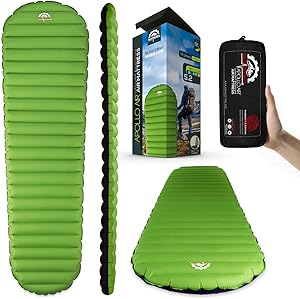
- Material: Durable Nylon construction for rugged outdoor use
- Dimensions: 72.08 x 22 x 3.25 inches inflated
- Weight: 1.06 pounds — impressively lightweight
- Includes: Carry bag, pump sack, and repair patch
The Gear Doctors ApolloAir is a budget-friendly air sleeping pad that doesn’t cut corners on the essentials. Weighing just 1.06 pounds, it’s a lightweight pick for campers and backpackers looking to save money without sacrificing too much on comfort. The nylon construction is designed to handle outdoor wear, and the included pump sack eliminates the need to blow it up by mouth.
At 3.25 inches thick and 22 inches wide, the ApolloAir provides a comfortable sleep surface with decent padding above uneven ground. The included carry bag keeps things organized, and the repair patch adds peace of mind for extended trips. While it lacks a published R-value, it’s a solid entry-level option for three-season camping in mild to moderate conditions.
Pros:
- Very affordable price point
- Lightweight at just over 1 pound
- Pump sack included for easy inflation
Cons:
- No published R-value — cold-weather use uncertain
- Less proven brand compared to established competitors
See the Gear Doctors ApolloAir
6. Therm-a-Rest Z Lite Sol

- Type: Closed-cell foam, accordion fold design
- R-Value: 2.0 — best for mild 3-season conditions
- Thickness: 0.75 inches with ThermaCapture reflective coating
- Weight: 10 oz. (Small) / 14 oz. (Regular)
The Therm-a-Rest Z Lite Sol is the gold-standard closed-cell foam pad for ultralight backpackers. Its accordion-style folding design sets it apart from roll-style foam pads — it straps neatly to the outside of a pack and deploys instantly at camp. Heat-trapping dimples and a reflective ThermaCapture coating help maximize warmth despite the pad’s thin 0.75-inch profile.
With an R-value of 2.0, the Z Lite Sol is best suited for spring through fall camping in moderate temperatures. It’s virtually indestructible — no air means no puncture risk — making it a reliable backup pad or a standalone option for gram-conscious minimalists. At just 10 ounces in the Small size, it’s one of the lightest sleeping pads available at any price.
Pros:
- Puncture-proof closed-cell foam construction
- Ultralight and instantly deployable
- Reflective coating adds warmth without weight
Cons:
- Low R-value limits cold-weather use
- Less comfortable than thicker air pad alternatives
See the Therm-a-Rest Z Lite Sol
7. Sea to Summit Ultralight XR

- Type: Insulated air pad with 151 Air Sprung Cells
- R-Value: 3.6 — suitable for 3-season backpacking
- Thickness: 2.6 inches, Mummy shape
- Weight: From 13.8 oz. (Short) to 1 lb. 2.7 oz. (Large)
The Sea to Summit Ultralight XR Insulated sleeping pad merges low weight with thoughtful engineering. Its 151 Air Sprung Cells work like individual springs to distribute pressure evenly, reducing hot spots and providing a more supportive sleep surface than standard baffled air pads. ThermalCore insulation reflects body heat back to the sleeper, boosting warmth to a solid 3.6 R-value for three-season adventures.
Packed down to as small as 3.9 x 7.5 inches, this pad is among the most compact in its insulated category. The mummy shape keeps weight low across all three size options, and both a repair kit and stuff sack are included. It’s an excellent choice for backpackers who want insulation and comfort without carrying the weight of a winter-rated pad.
Pros:
- Air Sprung Cells reduce pressure points effectively
- Impressively small packed size for an insulated pad
- ThermalCore insulation reflects body heat
Cons:
- R-value of 3.6 not suited for winter camping
- 2.6-inch thickness slightly less cushioned than 3-inch pads
See the Sea to Summit Ultralight XR
8. Sea to Summit Ultralight Air

- Type: Non-insulated air pad, Mummy shape
- R-Value: 1.1 — designed for warm-weather use
- Thickness: 2 inches with integrated pump for easy inflation
- Weight: From 12.2 oz. (Short) to 1 lb. 1.4 oz. (Long)
The Sea to Summit Ultralight Air Mat is purpose-built for warm-weather backpacking where insulation takes a back seat to weight savings and packability. Its integrated pump makes inflation effortless — no lung power required — and it deflates just as quickly when it’s time to pack up. The mummy silhouette minimizes material while the 2-inch thickness provides adequate cushioning for sleeping on softer terrain.
With a packed size as small as 3.5 x 7 inches, the Ultralight Air is one of the most packable sleeping pads available, easily slipping inside a stuff pocket or compression sleeve. Its 1.1 R-value makes it ideal for summer camping and mild shoulder-season nights. A repair kit and stuff sack round out the package, making it a polished choice for ultralight summer adventurers.
Pros:
- Extremely compact — as small as 3.5 x 7 inches packed
- Integrated pump for fast, effortless inflation
- Lightweight across all three size options
Cons:
- R-value of 1.1 unsuitable for cold conditions
- 2-inch thickness less cushioned for side sleepers
See the Sea to Summit Ultralight Air
9. NEMO Switchback

- Type: Closed-cell foam with heat-reflecting film
- R-Value: 2.0 — suited for 3-season camping
- Thickness: 0.9 inches, Rectangular shape
- Weight: 10.5 oz. (Short) / 14.5 oz. (Regular)
The NEMO Switchback is a well-crafted closed-cell foam pad that elevates a traditional design with modern touches. Its 0.9-inch foam is slightly thicker than many competitors in this category, adding a noticeable comfort improvement underfoot. A heat-reflecting film on the underside helps prevent cold from seeping up through the ground, boosting real-world warmth beyond what the 2.0 R-value alone might suggest.
Like all closed-cell pads, the Switchback is indestructible — no seams, no valves, no puncture risk. It folds flat and straps to any pack, deploying instantly at camp without any inflation. Weighing just 10.5 ounces in the Short size, it’s an ultralight solution for minimalist backpackers or a reliable backup pad to pair with a lighter air mattress in cold conditions.
Pros:
- Puncture-proof with zero maintenance required
- Heat-reflecting film improves cold-ground insulation
- Slightly thicker than most foam pads for added comfort
Cons:
- R-value of 2.0 not sufficient for winter camping
- Bulkier to carry than an air pad of the same length
10. FUN PAC Camping Sleeping Pad
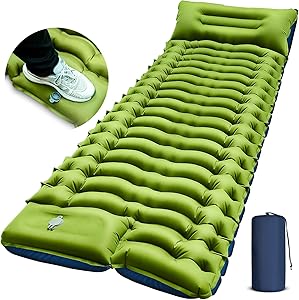
- Material: 40D Nylon and TPU for durability and flexibility
- Dimensions: 78 x 27 x 8 inches inflated — extra wide and thick
- Inflation: Built-in pump inflates fully in 30–60 seconds
- Special Feature: Side buttons to connect two pads into a twin bed
The FUN PAC Camping Sleeping Pad targets campers who prioritize comfort and convenience over ultralight performance. Its 8-inch inflated thickness and extra-wide 27-inch profile make it feel closer to a home mattress than a trail pad, and the egg-shaped air cells are specifically designed to relieve pressure on the back and neck. The integrated built-in pillow is a practical bonus that saves space and weight in your pack.
What sets the FUN PAC apart is its built-in electric pump, which fully inflates the pad in just 30 to 60 seconds — a significant time saver compared to breath-inflation or manual pump alternatives. The side-button connection system lets you join two pads together for a wider sleeping surface, perfect for car camping with a partner. Made from 40D nylon and TPU, it’s durable and easy to clean after muddy trips.
Pros:
- 8-inch thickness delivers exceptional ground cushioning
- Built-in pump inflates in under a minute
- Connectable design for couple or family camping
Cons:
- Too bulky for ultralight or multi-day backpacking
- No published R-value — cold-weather performance unclear
See the FUN PAC Camping Sleeping Pad
The Ultimate Guide to Choosing and Using Sleeping Pads for Bikepacking
Bikepacking is an exercise in the delicate balance of minimalism and self-sufficiency. Unlike traditional touring, where panniers offer ample volume, bikepacking relies on frame bags, seat packs, and handlebar rolls that demand a compact kit. Among the “Big Three” of camping gear—shelter, sleeping bag, and sleeping pad—the pad is often the most underestimated. However, a sleeping pad is not just about comfort; it is a critical piece of safety equipment that provides thermal insulation from the cold ground. This article explores the nuances of selecting the perfect sleeping pad for your next two-wheeled adventure.
Understanding the Role of the Sleeping Pad
In the context of bikepacking, a sleeping pad serves two primary functions: cushioning and insulation. While cushioning protects your pressure points (hips and shoulders) from the hard earth, insulation is what keeps you alive and comfortable during a cold night. When you lie in a sleeping bag, your body weight compresses the loft of the down or synthetic fill underneath you. This “dead air space” is what provides warmth; once compressed, it loses its ability to trap heat. The sleeping pad acts as the primary barrier, preventing your body heat from being sucked into the ground through conduction.
Types of Sleeping Pads
There are three main categories of sleeping pads available to the modern bikepacker. Each has distinct advantages and disadvantages regarding weight, packability, and durability.
Air Pads
Air pads are the gold standard for bikepacking due to their incredible packability. When deflated, many air pads can shrink down to the size of a soda can, making them ideal for the limited space of a seat pack or handlebar roll. They are typically the lightest option and provide the most “plush” feel, often reaching 3 to 4 inches in thickness. The downside is their vulnerability to punctures from thorns or sharp rocks, and the “crinkly” noise some ultralight models make when you move.
Self-Inflating Pads
These pads feature a core of open-cell foam sandwiched between airtight fabric. When the valve is opened, the foam expands, sucking air into the pad. They offer a more stable, “bed-like” feel compared to air pads and provide excellent insulation. However, they are generally heavier and much bulkier. For a bikepacker, a self-inflating pad can be difficult to fit inside a standard frame bag, often requiring it to be strapped to the outside of the harness, which can affect the bike’s handling.
Closed-Cell Foam (CCF) Pads
CCF pads are the simplest and most durable option. They are made of dense foam filled with tiny air bubbles. They cannot leak or pop, making them the choice for riders heading into remote areas with thorny vegetation (like the Arizona Trail). The drawback is their bulk; they do not compress. Bikepackers usually strap them to the top of a handlebar roll or on the rear rack. They also offer the least amount of cushioning for side sleepers.
Critical Specifications to Consider
When shopping for a pad, you will encounter several technical specifications. Understanding these is key to making an informed purchase.
R-Value: The Measure of Warmth
The R-value measures a pad’s resistance to heat loss. The higher the R-value, the warmer the pad. For summer bikepacking, an R-value of 1.0 to 2.5 is sufficient. For three-season use, aim for 3.0 to 4.5. If you plan on winter bikepacking or sleeping on snow, you will need a pad with an R-value of 5.0 or higher. Some riders layer a CCF pad under an air pad to boost the total R-value for winter trips.
Weight and Packed Size
Every gram counts when you are climbing a 10% grade on a loaded mountain bike. Most ultralight bikepacking pads weigh between 10 and 16 ounces. Just as important as weight is the “packed size.” Look for pads that fold into a narrow shape rather than just a short, fat roll, as this fits better inside the cylindrical dry bags used in bikepacking.
Shape and Length
Pads come in rectangular and mummy (tapered) shapes. Mummy shapes save weight and bulk by cutting off the corners. Furthermore, some ultralight enthusiasts use “short” or “torso-length” pads. These pads only cover from your head to your hips. You then use your empty backpack or extra clothing to pad your legs. This is a pro-level weight-saving tactic that significantly reduces your pack volume.
Bikepacking-Specific Challenges
Bikepacking introduces unique stresses on gear that traditional backpacking does not always encounter.
Abrasion and Vibration
When a pad is packed inside a bag on a vibrating bike, it can rub against other hard items (like a multi-tool or a stove). Over hundreds of miles, this can cause “pinhole” leaks in air pads. Always store your sleeping pad in its stuff sack, and ensure it isn’t vibrating against anything sharp inside your bags.
The Repair Kit
If you choose an air pad or a self-inflating pad, a repair kit is non-negotiable. Most pads come with a small patch kit. Ensure you have high-quality adhesive (like Gear Aid Seam Grip) and several patches. Before a big trip, practice finding a leak using the “soapy water” method at home so you are prepared for a field repair.
Practical Tips for a Better Night’s Sleep
Once you’ve selected your pad, how you use it determines your recovery for the next day’s ride.
Inflation Pressure
Do not over-inflate your air pad. A rock-hard pad is often uncomfortable and puts more stress on the seams. Inflate it fully, lie down on your side, and slowly crack the valve to let air out until your hip is just barely hovering above the ground. This “tuning” allows the pad to contour to your body.
Using a Pump Sack
Blowing into a pad introduces moisture from your breath into the interior. Over time, this can lead to mold growth and can even degrade the internal insulation. Many modern pads come with a “pump sack”—a lightweight bag that captures air and squeezes it into the pad. This is faster, keeps moisture out, and prevents you from getting dizzy after a long day of riding at high altitudes.
Site Selection
Bikepackers often camp in “stealth” locations that haven’t been cleared of debris. Before laying down your pad (and your tent footprint), spend two minutes clearing away every sharp stick, pinecone, and jagged rock. This “site hygiene” is the best way to prevent a midnight deflation event.
Conclusion
Choosing a sleeping pad for bikepacking is a personal decision that depends on your sleep style, the climate of your route, and your bike’s carrying capacity. While it is tempting to go for the lightest possible option, remember that your performance on the bike is directly linked to the quality of your recovery. A slightly heavier pad that guarantees a deep, warm sleep is often worth the extra effort on the climbs. By focusing on R-value, packability, and durability, you can ensure that your nights under the stars are just as rewarding as your days on the trail.