Best Road Bikes for Tall Guys 2026
For tall guys, finding a road bike that fits right can be a real headache. Most standard bikes feel too small, leaving you cramped and uncomfortable on long rides. This article cuts through the confusion. We picked the best road bikes made for taller frames—bikes with longer top tubes and higher seat posts. Get ready to ride smoother, faster, and pain-free with a bike that actually matches your height.
1. Cannondale Synapse 2

- Frame: SmartForm C2 Alloy
- Drivetrain: Shimano CUES 2×10
- Brakes: Hydraulic Disc
- Tires: 700c x 30mm Vittoria Zaffiro Pro V
The Cannondale Synapse 2 is an endurance-focused road bike built for riders who value comfort and speed. Its lightweight SmartForm C2 alloy frame delivers a responsive ride while the carbon fork helps reduce road vibrations. The bike feels stable on long rides and remains efficient when accelerating or climbing.
Shimano’s CUES 20-speed drivetrain offers smooth gear transitions and dependable performance. Hydraulic disc brakes provide strong stopping power in all weather conditions. Tubeless-ready DT Swiss wheels and 30mm tires improve comfort and grip, making this bike a great option for commuting, fitness rides, and long-distance adventures.
Pros:
- Comfortable endurance geometry
- Excellent hydraulic braking
- Quality wheelset and components
Cons:
- Pedals not included
- Higher price than entry-level models
2. Pipleo Road Bike

- Drivetrain: Shimano 21-Speed
- Brakes: Dual Disc Brakes
- Tires: 700x28C
- Frame: Internal Cable Routing Design
The Pipleo Road Bike is designed for riders looking for an affordable performance-oriented road bike. Its Shimano 21-speed drivetrain offers a wide gear range for tackling hills and maintaining speed on flat roads. Internal cable routing gives the bike a clean appearance while also reducing drag.
Dual disc brakes inspire confidence during wet or dry rides, while the 700x28C tires balance speed and comfort. The bike arrives mostly assembled, making setup straightforward for beginners. It works well for commuting, recreational rides, and fitness cycling without requiring a large investment.
Pros:
- Smooth 21-speed gearing
- Reliable disc brakes
- Easy assembly process
Cons:
- Entry-level components
- Limited brand recognition
3. Tommaso Imola

- Drivetrain: Shimano Claris 3×8
- Speeds: 24-Speed
- Shifters: Shimano Claris
- Use: Road Cycling
The Tommaso Imola has earned a reputation as one of the best beginner-friendly road bikes. Its Shimano Claris drivetrain delivers dependable shifting and a broad gear range that makes climbing hills and maintaining speed easier. The bike feels efficient and responsive for daily training sessions.
Unlike many budget competitors, the Imola uses a complete Shimano groupset rather than mixed components. This improves reliability and consistency. The frame geometry promotes comfort during long rides, making it suitable for century rides, fitness goals, and riders looking to develop their road cycling skills.
Pros:
- Full Shimano drivetrain
- Excellent value for money
- Good climbing capability
Cons:
- Professional assembly recommended
- Not ideal for aggressive racing
4. VIRIBUS Hybrid Bike

- Frame: Aluminum Alloy
- Gears: 7-Speed
- Brakes: Dual Disc Brakes
- Capacity: 330 lbs
The VIRIBUS Hybrid Bike blends comfort, practicality, and affordability. Its lightweight aluminum frame keeps handling manageable while offering durability for daily use. The upright riding position and cushioned saddle help reduce fatigue during commuting or leisurely rides around town.
The 7-speed drivetrain is simple to operate and provides enough versatility for urban terrain. Disc brakes improve safety in changing weather conditions. With its included front light and easy assembly process, this bike is an attractive option for riders seeking a reliable everyday commuter.
Pros:
- Comfortable riding position
- Strong weight capacity
- Good braking performance
Cons:
- Limited gear range
- Heavier than road-specific bikes
5. WEIZE Beach Cruiser Bike

- Frame: High-Carbon Steel
- Design: Step-Through Frame
- Storage: Front Basket & Rear Rack
- Capacity: 275 lbs
The WEIZE Beach Cruiser Bike focuses on comfort and convenience rather than speed. Its upright geometry, soft saddle, and ergonomic grips make casual rides enjoyable. The low step-through frame allows easy mounting and dismounting, making it suitable for a wide range of riders.
Practical features such as the front basket, rear rack, and full fenders add everyday utility. The durable high-carbon steel frame provides stability, while the classic styling gives the bike timeless appeal. It is ideal for neighborhood rides, errands, and relaxed weekend outings.
Pros:
- Comfortable upright position
- Useful storage options
- Classic attractive design
Cons:
- Heavier steel construction
- Not designed for high-speed riding
See the WEIZE Beach Cruiser Bike
6. Brightpeak Aluminum Bike

- Frame: Aluminum Alloy
- Drivetrain: 21-Speed
- Wheels: 700C
- Brakes: Alloy V-Brakes
The Brightpeak Aluminum Bike is a versatile road bike that combines lightweight construction with user-friendly features. The aluminum frame offers a solid balance between durability and efficiency, while the adjustable cockpit allows riders to fine-tune their fit for comfort.
A 21-speed drivetrain provides flexibility across varying terrain, from city streets to fitness rides. The 700C wheels roll efficiently and maintain speed well. Riders looking for an affordable road bike with simple maintenance and everyday practicality will find plenty to appreciate here.
Pros:
- Lightweight aluminum frame
- Wide gear range
- Adjustable riding position
Cons:
- V-brakes lack disc brake power
- Limited premium components
See the Brightpeak Aluminum Bike
7. VEVOR Road Bike
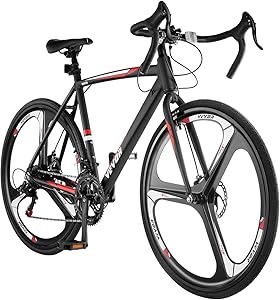
- Frame: Aluminum Alloy
- Drivetrain: Shimano 14-Speed
- Brakes: Disc Brakes
- Tires: 700x28C KENDA
The VEVOR Road Bike offers a sporty riding experience at a budget-friendly price. Its aluminum frame keeps weight manageable while the 14-speed Shimano drivetrain delivers smooth gear changes. The drop handlebar encourages a more aerodynamic position for riders seeking better efficiency.
Disc brakes provide dependable stopping power in wet and dry conditions. Internal cable routing improves the bike’s appearance and protects cables from wear. With 85% pre-assembly completed, setup is simple, making this bike a practical choice for commuting and recreational road cycling.
Pros:
- Shimano drivetrain
- Disc brakes included
- Clean internal cable routing
Cons:
- Carbon steel fork adds weight
- Limited upgrade components
8. Schwinn Phocus 1.6

- Frame: Lightweight Aluminum
- Drivetrain: microSHIFT 14-Speed
- Brakes: Caliper Brakes
- Tires: 700x28C Road Tires
The Schwinn Phocus 1.6 is a fast and efficient road bike designed for fitness riders and enthusiasts. Its lightweight aluminum frame and rigid fork create responsive handling, while the drop handlebars encourage an aerodynamic riding posture for maintaining speed.
The microSHIFT 14-speed drivetrain delivers reliable shifting and sufficient gearing for varied terrain. High-profile alloy wheels add durability and visual appeal. Backed by Schwinn’s long cycling heritage, this model offers dependable performance for commuting, training rides, and recreational road cycling.
Pros:
- Lightweight frame design
- Responsive road handling
- Trusted Schwinn brand
Cons:
- Caliper brakes less powerful
- Limited tire clearance
How to Choose Road Bikes for Tall Guys
Finding the perfect road bike is an exhilarating milestone for any cyclist, but for riders who stand well over six feet tall, the journey often comes with unique hurdles. Standard bike manufacturing tends to cater to the average height spectrum, typically between 5’7″ and 6’0″. When you are a taller cyclist, simply walking into a local bike shop and rolling out with a stock floor model rarely works. Riding a bike that is too small leads to discomfort, poor power transfer, and a significantly higher risk of chronic overuse injuries in the lower back, knees, and neck.
Choosing the best road bike for a tall frame requires a deep understanding of bicycle geometry, structural engineering, and component scaling. It is not just about finding a larger number on the seat tube; it is about ensuring the entire cockpit and wheelbase align with your longer limbs and higher center of gravity. This comprehensive guide breaks down exactly what tall cyclists need to look for to find a high-performing, comfortable, and safe road machine.
Understanding Bike Framing and Sizing Nomenclature
The first step in your search is understanding how manufacturers label their largest bikes. Generally, road bike sizing is measured in centimeters, corresponding roughly to the length of the seat tube. For tall riders, the search begins at 58cm and frequently extends to 62cm, 64cm, or even custom territories beyond that.
Sizing by Height Tiers
While every individual has unique body proportions, general height brackets serve as an excellent starting point for road bike frame sizes:
- 6’0″ to 6’2″ (183cm – 188cm): Typically fits a 58cm to 60cm frame.
- 6’3″ to 6’5″ (190cm – 196cm): Typically fits a 60cm to 62cm frame.
- 6’6″ and above (198cm+): Typically requires a 64cm frame or a specialized manufacturer that builds XXL/XXXL geometries.
The Crucial Geometry Metrics: Stack and Reach
For decades, cyclists relied on top tube length to guess if a bike would fit. In modern bike design, two metrics reign supreme for determining true fit: Stack and Reach. These measurements provide an absolute reference point regardless of tube angles or frame shapes.
What is Stack?
Stack is the vertical distance from the center of the bottom bracket to the top of the head tube. For tall riders, a higher stack is generally preferable. A frame with a low stack forces a tall rider into an extreme, aggressive aerodynamic drop. Unless you possess elite core strength and flexibility, a low stack will put immense pressure on your wrists and lower back, making long endurance rides miserable.
What is Reach?
Reach is the horizontal distance from the center of the bottom bracket to the top center of the head tube. It dictates how far forward you must stretch to grab the handlebars. Tall riders naturally need a longer reach because of their long torsos and arms. However, if the reach is too long, you will overextend, causing neck pain. If it is too short, your knees may strike the handlebars when climbing out of the saddle.
Frame Geometry and Weight Distribution
When a manufacturer creates an extra-large version of a standard frame design, they often face engineering trade-offs. A taller frame means longer tubes, which can inherently introduce more flex into the chassis. For a tall rider, who is typically heavier than an average-sized cyclist, frame stiffness is vital for stable handling and efficient power delivery.
The Importance of Wheelbase and Chainstay Length
A major flaw in poorly designed extra-large bikes is that the manufacturer elongates the front triangle but leaves the rear chainstays short to keep the bike feeling “snappy.” For a tall rider, this shifts the center of gravity drastically over the rear wheel, resulting in a twitchy, unstable front end—especially during high-speed descents. Look for brands that scale their chainstay lengths proportionally with frame size to maintain a balanced wheelbase and predictable handling.
Head Tube Angle and Length
A taller head tube naturally raises the handlebars, reducing the need for an unsightly and potentially unsafe stack of headset spacers beneath your stem. Additionally, a slightly slacker head tube angle can provide tracking stability, mitigating the top-heavy sensation that exceptionally tall riders sometimes experience when cornering.
Component Scaling for Extended Limb Lengths
A large frame is only half the battle. To make the bike truly functional for a tall person, the contact points and mechanical levers must be scaled appropriately. Often, stock bikes come with components optimized for average riders, requiring immediate aftermarket upgrades.
Crank Arm Length
Most stock bikes come with 172.5mm or 175mm crank arms. For a rider with long legs, these standard cranks can feel like riding a child’s tricycle, limiting the leverage your long femurs can generate. Upgrading to 177.5mm or 180mm crank arms allows for a more natural, powerful pedaling stroke and prevents excessive knee flexion at the top of the pedal rotation.
Handlebar Width and Drop
Tall individuals generally have broader shoulders. Riding with handlebars that are too narrow restricts chest expansion, making breathing less efficient. Look for handlebars that match the width of your acromion joints (the bony tips of your shoulders), which usually means 44cm or 46cm bars for taller riders. Additionally, ensure the handlebar drop depth allows your hands to rest comfortably without your knees knocking your elbows.
Seatpost Length and Setback
With long legs comes a massive saddle height requirement. Ensure the frame accommodates a seatpost long enough to reach your required saddle height without exceeding the “minimum insertion” safety line. A setback seatpost (where the clamp is offset rearward) is also frequently necessary to help tall riders achieve the correct knee-over-pedal-spindle alignment.
Wheel and Tire Considerations for Bigger Riders
Tall riders usually carry more mass, which puts extra stress on the wheels. Standard lightweight racing wheels with low spoke counts (such as 20 or 24 spokes) might flex excessively under a heavy load or go out of true quickly when hitting potholes.
Spoke Count and Wheel Durability
Look for wheelsets that feature higher spoke counts (28 to 32 spokes) and robust hub designs. A stiffer wheelset not only handles weight better but also translates your pedaling energy directly into forward momentum without wasting watts on lateral wheel flex.
Tire Volume Benefits
Modern road bikes have embraced wider tires, which is a massive win for tall cyclists. Move away from traditional 23mm or 25mm tires and opt for frames that can clear 28mm, 30mm, or even 32mm tires. Higher volume tires allow you to run lower air pressures, drastically improving ride comfort, cornering grip, and vibration dampening without sacrificing rolling resistance.
Proactive Buying Tips for the Tall Cyclist
Before handing over your hard-earned money, keep these practical tips in mind to avoid buyer’s remorse.
Prioritize Endurance Geometry Over Full Race Geometries
Unless you are actively racing criteriums, look closely at “Endurance” or “All-Road” categories. These bikes are specifically engineered with taller head tubes, higher stack metrics, and slightly longer wheelbases, offering a much more compliant and comfortable ride out of the box for long-limbed athletes.
Invest in a Professional Bike Fit First
The smartest investment a tall cyclist can make is a “pre-purchase bike fit” with a reputable, independent fitter. Using an adjustable fit bike, they can determine your exact optimal coordinates. With those numbers in hand, you can compare stack and reach data across various brands to find the exact frame that matches your body, rather than trying to force your body to fit a bike.