Best Road Bikes for Big Guys of 2026
Riding a road bike as a big guy can be tough if the bike isn’t built for you. Many standard models feel shaky or break under extra weight. But don’t worry—the right bike makes all the difference. This article picks the best road bikes for larger riders, focusing on strong frames, wide tires, and reliable wheels. You’ll find comfortable, safe options that let you enjoy every ride without fear of damage.
1. Cannondale Synapse 2

- Frame/Fork: SmartForm C2 Alloy frame, Synapse Carbon fork
- Drivetrain: Shimano CUES U6000 series, 20-speed (46/32T crankset, 11-39T cassette)
- Brakes: Shimano CUES hydraulic disc, 160mm rotors
- Tires: Vittoria Zaffiro Pro V with reflective strip, 700x30c
The Cannondale Synapse 2 is an endurance road bike built for confidence and comfort on long rides. Its lightweight SmartForm C2 alloy frame pairs with a Synapse Carbon fork to absorb road chatter while keeping the bike responsive. The internal cable routing and hidden rack/fender mounts make this a versatile option for both fitness riding and light touring. The geometry strikes a perfect balance between performance and all-day comfort, putting you in a position that’s sporty yet easy on the back and shoulders.
Shimano’s CUES U6000 groupset is the real star here, offering reliable 10-speed shifting and hydraulic disc braking that works great in all weather conditions. The wide 46/32T crankset combined with an 11-39T cassette gives you a massive gear range for tackling steep hills or spinning out on descents. Tubeless-ready DT Swiss rims come wrapped with 30mm Vittoria tires that add extra cushioning and grip. Whether you’re a beginner looking for a first serious road bike or an experienced rider wanting a comfortable mile-eater, the Synapse 2 delivers fantastic value.
Pros:
- Smooth, compliant ride quality thanks to carbon fork and 30mm tires
- Full Shimano CUES groupset with hydraulic disc brakes
- Hidden fender and rack mounts add versatility
- SmartSense compatible for integrated lights and radar
Cons:
- Pedals not included
- Heavier than carbon-framed alternatives at this price point
2. Pipleo Road Bike

- Drivetrain: Shimano 21-speed with HyperGlide+ technology
- Tires: 700x28c armored tires with double-wall rims
- Brakes: Dual disc brakes (40% shorter stopping distance than V-brakes)
- Frame: Full internal cable routing for reduced drag
The Pipleo Road Bike positions itself as an affordable all-terrain machine for commuters and fitness riders alike. The 21-speed Shimano drivetrain shifts quickly and precisely, with HyperGlide+ technology ensuring smooth gear changes even under load. The company claims 67% lower maintenance than competing systems, which is appealing for daily riders who don’t want to spend every weekend at the bike shop. Full internal cable routing not only looks clean but also reduces wind resistance for a slight aerodynamic advantage on your morning commute.
Dual disc brakes provide reliable stopping power in both dry and wet conditions, with the company touting a 40% shorter braking distance compared to traditional V-brakes. The 700x28c armored tires and double-wall rims are designed to handle everything from smooth pavement to gravel roads and city streets. The throne-like seat features tool-free adjustment, letting you dial in your perfect height mid-ride with one hand. Two frame sizes fit riders from 5’4″ to 6’1″, and the bike arrives 95% pre-assembled for a quick 15-minute setup. This is a practical choice for budget-conscious commuters who want versatility without breaking the bank.
Pros:
- Excellent value for money with Shimano 21-speed groupset
- Quick 15-minute assembly (95% pre-built)
- Armored tires handle mixed terrain well
- Tool-free adjustable seat for on-the-go comfort
Cons:
- Generic disc brakes may lack modulation of name-brand systems
- Only two frame sizes available for broad height range
3. Tommaso Imola

- Drivetrain: 100% Shimano Claris 3×8-speed (50/39/30T crankset, 12-28T cassette)
- Frame: Lightweight aluminum with endurance geometry
- Shifters: Shimano Claris integrated brake/shift levers
- Warranty: Lifetime warranty replacement promise
Tommaso has been crafting quality cycling products since 1985, and the Imola represents their commitment to affordable performance rather than entry-level compromises. Unlike many budget bikes that mix and match components, the Imola features a 100% Shimano Claris drivetrain—shifters, front derailleur, rear derailleur, and crankset all work together as Shimano intended. The 3×8 setup with a 50/39/30T crankset and 12-28T cassette provides an impressive gear range that makes climbing hills manageable while still offering top-end speed for flat sections and descents.
The Imola is specifically recommended for new riders who are serious about their cycling goals and don’t want a bike they’ll quickly outgrow. Endurance-oriented aluminum frame geometry keeps you comfortable during long days in the saddle, whether you’re tackling your first century ride or exploring hilly routes. The company’s customer service team is based in Denver, and the lifetime warranty replacement promise gives you peace of mind. Please note that professional assembly is required to validate the warranty, as bikes on Amazon come untuned. For the price, you’re getting genuine Shimano components throughout—something many competitors skip in favor of cheaper alternatives.
Pros:
- Complete Shimano Claris groupset (no off-brand shortcuts)
- Lifetime warranty from established brand (since 1985)
- Excellent 3×8 gear range for climbing and flats
- Denver-based customer service team
Cons:
- Professional assembly required to validate warranty
- 3x drivetrains are less common in modern road biking
4. VIRIBUS Hybrid Bike

- Frame: Lightweight corrosion-resistant aluminum alloy (330 lbs capacity)
- Drivetrain: 7-speed derailleur with easy thumb shifter
- Brakes: Dual disc brakes with aluminum alloy pads
- Extras: Cushioned seat, IPX4-rated front light included
The VIRIBUS Hybrid Bike is designed for urban commuters and recreational riders who want comfort, style, and practicality in one package. The lightweight aluminum alloy frame resists corrosion while supporting up to 330 pounds, making it accessible to a wide range of riders. The 7-speed drivetrain with a thumb shifter provides smooth, intuitive gear changes for navigating city streets, bike paths, and gentle hills. The cushioned seat and upright riding position keep you comfortable during commutes, leisure rides, or weekend touring adventures.
Dual disc brakes with aluminum alloy pads deliver reliable stopping power even in wet weather or when you’re carrying momentum at higher speeds. An included IPX4-rated front light enhances visibility and safety during dawn, dusk, or nighttime rides. The bike ships over 85% pre-assembled, so you can be on the road quickly with minimal tools and effort. VIRIBUS includes a safety reminder to check your physical condition before riding and stay aware of road conditions like wet surfaces, gravel, or uneven paths. This hybrid bike strikes an excellent balance between comfort, durability, and ease of use for everyday riders who want a dependable transportation alternative.
Pros:
- 330 lb weight capacity accommodates diverse riders
- IPX4 front light included for night riding safety
- Corrosion-resistant aluminum frame lasts for years
- Easy thumb shifter is beginner-friendly
Cons:
- Only 7 speeds may limit hill-climbing ability
- Heavier than pure road bikes due to hybrid design
5. WEIZE Beach Cruiser Bike

- Frame: High-carbon steel with three-spray, four-bake process
- Riding Position: Upright ergonomic design with forward-pedaling geometry
- Storage: Front basket and reinforced rear rack with fenders
- Fit: Low step-through frame fits riders 5’1″ to 6’1″ (275 lbs capacity)
The WEIZE Beach Cruiser Bike embraces classic styling with modern durability, featuring a high-carbon steel frame finished with a three-spray, four-bake process for exceptional longevity. The low step-through frame makes mounting and dismounting easy, especially for riders wearing skirts, dresses, or those with limited mobility. The upright riding position keeps your back and shoulders comfortable, while the forward-pedaling design lets you maintain proper leg extension while keeping your feet close to the ground at stops. A soft foam saddle and comfortable handlebar grips complete the ergonomic package.
Practicality is a major focus here, with a stylish front basket for carrying small items like groceries or a purse, plus a reinforced rear rack for larger loads. Both front and rear fenders keep you clean when riding through puddles or wet streets. The bike is expertly crafted to support riders weighing up to 275 pounds and ranging in height from 5’1″ to 6’1″. This isn’t a performance machine—it’s a lifestyle bike for leisurely rides along the beach, through the neighborhood, or to the local coffee shop. If you value comfort, style, and utility over speed, the WEIZE Cruiser delivers charming vintage vibes with reliable modern construction.
Pros:
- Classic cruiser styling with durable high-carbon steel frame
- Front basket and rear rack provide ample storage
- Low step-through frame for easy mounting
- Upright riding position reduces back strain
Cons:
- Heavy compared to aluminum-framed bikes
- No gears (single-speed cruiser)
See the WEIZE Beach Cruiser Bike
6. Brightpeak Aluminum Bike

- Frame: Strong aluminum alloy with optimal rigid/weight ratio
- Drivetrain: 21-speed grip shifter system
- Wheels: 700c wheels with 1.2″ width tires
- Brakes: Alloy V-brakes for responsive stopping power
The Brightpeak Aluminum Bike is built for riders who want versatility across commuting, fitness, and adventure riding. The aluminum alloy frame offers an optimal rigid-to-weight ratio, providing stability on tough road conditions while keeping the bike manageable for everyday use. The bike’s geometry puts you in a relaxed riding position, and both the handlebar and seat post are adjustable for a personalized fit. This makes the Brightpeak suitable for a wide range of riders from 5’3″ to 6’2″ tall, with a maximum load capacity of 330 pounds.
The 21-speed grip shifter system allows quick fingertip gear changes as you adapt to changing terrain—downshift for steep climbs, then click back up for descents and flats. Alloy V-brakes deliver exceptional stopping power and a responsive feel that meets the demands of high-speed descents and sharp corners. The 700c wheels (1.2-inch width, 27.5-inch diameter) with robust tires offer speed and agility across diverse riding conditions. Assembly is straightforward with included tools, making maintenance effortless for beginners. Whether you’re a commuter, fitness enthusiast, or weekend adventurer, the Brightpeak delivers solid performance without intimidating complexity.
Pros:
- 330 lb weight capacity with adjustable fit for 5’3″ to 6’2″ riders
- 21-speed grip shifter is easy to use and maintain
- Relaxed, adjustable geometry for comfort
- Easy assembly with included tools
Cons:
- V-brakes less effective than disc brakes in wet conditions
- Grip shifters less precise than trigger shifters for some riders
See the Brightpeak Aluminum Bike
7. VEVOR Road Bike
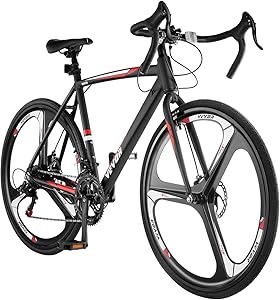
- Frame: Lightweight aluminum alloy with carbon steel fork
- Drivetrain: Shimano 14-speed (2×7) with front and rear derailleurs
- Brakes: Reliable disc braking system for wet-weather confidence
- Cable Routing: Internal frame routing for security and aerodynamics
The VEVOR Road Bike combines a lightweight aluminum alloy frame with a carbon steel fork to enhance comfort and stability during high-speed rides. The internal cable routing tucks everything neatly inside the frame, improving both aesthetics and aerodynamics while protecting cables from the elements. Equipped with 700x28C wheels and Kenda-branded tires, this bike is designed for exceptional road cycling experiences, whether you’re urban commuting or pushing for speed on open roads. The drop-bar design puts you in an aerodynamic position that reduces wind drag for more efficient pedaling.
The Shimano 14-speed (2×7) drivetrain works seamlessly with front and rear derailleurs to provide smooth gear shifting, energy efficiency, and responsive acceleration. Whether you’re climbing steep hills or cruising downhill, switching gears is effortless. The disc braking system delivers quick response and precise control, giving you confidence even on wet descents or during sudden stops. The bike arrives 85% pre-assembled with essential tools included—you’ll need to install the front wheel, saddle, pedals, front brake, and reflectors. A critical note: before assembling the handlebar and front wheel, rotate the front fork 180 degrees. This is a solid budget road bike for beginners or commuters who want Shimano reliability without spending a fortune.
Pros:
- Shimano 14-speed drivetrain at an affordable price point
- Disc brakes provide reliable stopping power in all weather
- Internal cable routing for clean looks and protection
- 85% pre-assembled with tools included
Cons:
- Carbon steel fork adds weight compared to alloy or carbon
- Assembly requires careful attention to fork rotation instruction
8. Schwinn Phocus 1.6

- Frame: Lightweight aluminum with rigid alloy fork
- Drivetrain: microSHIFT 14-speed integrated shifter/brake levers
- Brakes: Front and rear caliper brakes
- Wheels: High-profile alloy wheels with 700x28c road tires
Schwinn has been building bicycles for over 130 years, and the Phocus 1.6 carries on that tradition with a lightweight aluminum frame designed for high-efficiency performance. The bike fits riders from 5’6″ to 6’0″ tall and features a rigid alloy fork paired with an ergonomic aluminum drop handlebar for an aerodynamic riding position. This is a road bike built for pushing your limits, whether you’re training, commuting, or just enjoying a fast weekend ride. The high-profile alloy wheels combine lightweight strength with visual appeal, while 700x28c road tires deliver a swift, smooth riding experience.
The microSHIFT 14-speed integrated shifter and brake lever combo ensures smooth, precise gear changes without taking your hands off the bars. Front and rear caliper brakes provide reliable stopping power and speed control, though they’re less effective in wet conditions than disc brakes. Schwinn designs each product in Madison, Wisconsin, maintaining their reputation as the original American bike brand. The Phocus 1.6 is an excellent choice for entry-level road cyclists who want a trusted name, a proper drop-bar riding position, and the efficiency of a lightweight aluminum frame. It won’t win any weight weenie competitions, but it delivers dependable performance at a very accessible price point.
Pros:
- Trusted American brand with 130+ years of history
- Lightweight aluminum frame with proper road geometry
- microSHIFT integrated shifters for reliable gear changes
- Designed in Madison, Wisconsin
Cons:
- Caliper brakes less effective than disc brakes in rain
- Limited to riders between 5’6″ and 6’0″
How to Choose the Best Road Bikes for Big Guys: A Comprehensive Engineering and Fitting Guide
Cycling is an exceptional, low-impact form of cardiovascular exercise, offering immense benefits for fitness, mental clarity, and stress relief. However, the standard cycling industry is largely optimized for riders who weigh between 130 and 180 pounds. For larger, taller, or heavier individuals—often affectionately referred to in the cycling community as “clydesdale” riders—finding a road bike that handles safely, performs reliably, and remains comfortable over long distances can be a frustrating challenge. Choosing a road bike as a big guy requires shifting your focus from purely aerodynamic efficiency and featherweight carbon components toward structural integrity, precise frame geometry, and component durability. This guide provides a detailed breakdown of what heavy and tall riders must look for when choosing the perfect road machine.
1. Understanding Frame Materials and Weight Capacities
The foundation of any bicycle is its frame. For heavier riders, the primary concern is structural fatigue and lateral flex under load. When a frame flexes excessively under a heavy rider’s power output, it wastes energy and compromises steering precision, which can be dangerous during high-speed descents.
Chromoly Steel: The Gold Standard for Durability
Chromoly (chrome-molybdenum) steel remains an outstanding choice for heavier cyclists. Modern, high-quality steel tubing offers an incredible strength-to-weight ratio and a natural compliance that dampens road vibrations. Unlike other materials that can fail catastrophically under extreme stress, steel tends to bend before it breaks, giving riders an added layer of safety. Frame builders targeting larger riders often use thicker-walled, oversized steel tubing to eliminate unwanted lateral flex.
Aluminum: Stiff, Affordable, and Efficient
Modern aluminum frames are far more advanced than their harsh-riding predecessors. Aluminum is inherently stiff, which translates to excellent power transfer when a heavier rider stands up on the pedals. Look for frames made from hydroformed 6061 or 7005 aluminum with smooth, reinforced welds. While aluminum does not absorb road shock as well as steel, pairing an aluminum frame with wider tires easily mitigates this issue.
Carbon Fiber and Titanium: Premium Considerations
Carbon fiber is highly tunable, meaning manufacturers can engineer frames to be incredibly strong in specific directions while remaining compliant in others. However, budget carbon frames often have strict weight limits (frequently capping out around 220 to 240 pounds). High-end, heavy-duty carbon frames do exist, but they represent a massive financial investment. Titanium offers the strength of steel at a fraction of the weight and never corrodes, making it an ultimate, albeit expensive, lifetime option for a big rider.
2. The Critical Role of Wheels and Spokes
When a road bike suffers a mechanical failure under a heavy rider, it is rarely the frame that snaps; instead, it is almost always the rear wheel. Wheels bear the brunt of the rider’s weight, alongside the dynamic forces generated by potholes, bumps, and hard cornering.
High Spoke Counts are Mandatory
Standard racing road bikes often feature low spoke counts (20 to 24 spokes per wheel) to reduce weight and wind resistance. For riders weighing over 200 pounds, this is a recipe for broken spokes and wobbly wheels. Heavy riders should look for wheels with a minimum of 28 spokes on the front wheel and 32, or ideally 36, spokes on the rear wheel. A higher spoke count distributes the load more evenly across the rim.
Spoke Gauge and Lacing Patterns
Opt for wheels built with heavy-duty, double-butted or straight-gauge stainless steel spokes (such as Sapim Strong or DT Swiss Alpine). The lacing pattern matters too: a 3-cross (3x) lacing pattern, where each spoke crosses three others, provides much greater torsional strength and longevity than radial lacing.
Deeper, Wider Aluminum Rims
Double-walled aluminum rims with a slightly deeper profile (30mm to 40mm) inherently resist bending and tacoing better than shallow, ultra-lightweight climbing rims. Additionally, wider internal rim widths (19mm to 23mm) better support wider tires, preventing tire squirm under heavy loads.
3. Braking Systems: Stopping Power and Heat Management
Kinetic energy increases linearly with mass, meaning a 260-pound rider requires significantly more braking power to come to a stop from 25 mph than a 150-pound rider. This makes your choice of braking system a paramount safety factor.
The Indisputable Necessity of Disc Brakes
Traditional rim brakes clamp onto the wheel’s outer edge. Under heavy loads or in wet weather, they struggle to provide adequate stopping power. Disc brakes, particularly hydraulic disc brakes, are non-negotiable for big guys. They offer immense stopping power, exceptional modulation (the ability to control braking force smoothly), and consistent performance regardless of weather conditions.
Rotor Size and Heat Dissipation
Heavier riders generate immense heat during prolonged braking, which can cause “brake fade”—a terrifying situation where the brakes temporarily lose stopping power. To combat this, ensure your road bike uses larger disc rotors. Avoid standard 140mm rotors. Instead, demand at least a 160mm rotor on the rear and a 160mm or 180mm rotor on the front. Larger rotors dissipate heat much faster, preserving your braking performance on long downhills.
4. Geometry, Fit, and Comfort Touchpoints
A bike that hurts to ride will sit in the garage collecting dust. Large riders need a geometry that accommodates their body proportions without causing excessive strain on the lower back, neck, and wrists.
Endurance Geometry vs. Race Geometry
Steer clear of aggressive, slammed “race” geometries. These bikes feature short head tubes and long top tubes, forcing the rider into a low, aerodynamic tuck. For big guys, this position compresses the diaphragm, restricts breathing, and places immense pressure on the wrists and hands. Instead, opt for an “endurance” or “all-road” geometry. These frames feature a taller stack height (bringing the handlebars higher) and a shorter reach, allowing for a more upright, comfortable, and sustainable riding posture.
Crank Length and Bottom Bracket Height
Taller riders with long legs often benefit from longer crank arms (175mm or even 177.5mm) to match their natural biomechanical leverage. Furthermore, ensure the bike has a robust, threaded bottom bracket system. Press-fit bottom brackets are notoriously prone to developing annoying creaks under the high torque generated by heavier cyclists.
Saddle and Cockpit Selection
Do not assume that a bigger rider needs a massive, gel-filled cruiser saddle; these actually cause painful chafing on long road rides. Instead, visit a local bike shop to measure your sit-bone width and select a supportive, medium-width saddle with durable chromoly or titanium rails (avoid carbon rails). Pair this with extra-wide handlebars (44cm to 46cm) to match broad shoulders, opening up your chest for optimal breathing.
5. Drivetrain and Tires: Smooth Power Delivery
The final pieces of the puzzle involve managing the contact points between your bike, your legs, and the road.
Gearing for Heavy Loads
Gravity hurts when you are a big guy. To climb hills comfortably without destroying your knees, look for compact or sub-compact chainsets (50/34T or 48/32T) paired with a wide-range rear cassette (such as an 11-32T or 11-34T). This provides low, forgiving gear ratios that allow you to spin up hills at a healthy cadence rather than grinding away at a snail’s pace.
Embrace Wide, High-Volume Tires
The era of skinny 23mm tires pumped up to 120 PSI is dead. For big guys, wide tires are a revelation. Look for a frame that clears at least 28mm, 30mm, or 32mm road tires. Running wider tires at lower pressures (around 70 to 85 PSI depending on your specific weight and tire width) provides a vastly smoother ride, vastly superior cornering grip, and drastically reduces the risk of pinch flats (snakebites). Setting your tires up “tubeless” eliminates pinch flats entirely and seals small punctures on the fly.
Conclusion
Choosing the best road bike for a big guy is not about finding a special, niche product; it is about making informed, strategic selections regarding component strength and geometry. By prioritizing a sturdy aluminum or steel endurance frame, investing in a high-spoke-count wheelset, demanding hydraulic disc brakes with large rotors, and wrapping those wheels in wide, high-volume tires, you create a road bike capable of supporting your weight safely while delivering an incredibly fun, fast, and liberating cycling experience.