Best Dirt Bike Knee Braces 2026
When you’re tearing through rough trails on a dirt bike, your knees take a serious beating. They are constantly bending, absorbing shock, and bracing for impact, which makes them one of the most vulnerable parts of your body. A sudden fall or awkward landing can lead to a painful injury that sidelines you for months. That’s why choosing the right knee brace is just as important as picking the right helmet. In this article, we break down the best options to help you find the support and protection you need to ride with confidence.
1. O’NEAL Pump Gun MX

- Hinged pivot design: Moves fluidly with natural knee bends.
- Pre-formed inner foam: Molded accurately to the joint shape.
- Lightweight construction: Prevents leg fatigue during long rides.
- Advanced ventilation: Promotes consistent cooling airflow.
The O’NEAL Pump Gun MX strikes an excellent balance between mobility and comfort. Its standout feature is the innovative hinged knee pivot mechanism, which ensures the guard moves naturally with your leg rather than binding or restricting your movement while riding. The lightweight materials make it easy to wear for hours without feeling weighed down.
Comfort is further elevated by a pre-formed foam inner liner that conforms nicely to the knee shape. This specialized molding ensures the protective elements stay correctly positioned during impacts. It is a highly breathable and well-ventilated choice for off-road riders looking for agile defense.
Pros: Excellent joint mobility, well-ventilated, lightweight feel.
Cons: Foam padding may wear down over time, basic strap system.
2. Leatt Motorcycle Pivoting Knee Guard

- Dual-axis pivoting: Anatomically correct design for left and right sides.
- Hardshell chassis: High-deflection outer barrier for impact shielding.
- 3DF AirFit foam: Soft, impact-absorbing ventilation padding layer.
- Slim shin plate: Engineered to fit comfortably inside riding boots.
The Leatt Dual Axis guard delivers exceptional premium protection by utilizing a true dual-axis pivoting chassis. This specific left and right engineering mirrors natural biomechanics, allowing for completely unrestricted leg movement on the bike. The combination of a tough hard shell and internal impact-absorbing foam provides confidence against heavy blows.
Airflow is a major strong point here, thanks to the integrated vented plates that channel air directly to the leg. The slim profile of the shin plate is also a massive benefit, allowing the guard to slide smoothly inside motocross boots without creating uncomfortable pressure points or restricting circulation.
Pros: Anatomical dual-pivot movement, highly breathable, slim boot fit.
Cons: Premium pricing, strapping takes time to dial in.
See the Leatt Motorcycle Pivoting Knee Guard
3. Alpinestars Bionic Pro

- Plasma knee protector: Adaptive design that hardens upon severe impact.
- Lightweight polymer: Durable construction mixed with highly ventilated panels.
- CE-certified defense: Officially tested and certified for motocross applications.
- Ergonomic pre-shaped fit: Natural asymmetry sold as a balanced pair.
The Alpinestars Bionic Pro utilizes an adaptive Plasma design that remains highly flexible during regular movement but hardens instantly to dissipate forces during an impact. Built specifically for the rigors of track and trail riding, this pair offers elite flexibility without compromising on structural integrity or rider safety.
An ergonomic pre-shaped fit combined with soft internal padding means these guards wrap securely around the joint. The lightweight polymer frame features extensive ventilation, ensuring you stay cool when track conditions heat up. They move so naturally you will easily forget you are wearing them.
Pros: Adaptive impact material, certified protection, very lightweight frame.
Cons: Fabric padding sections hold sweat, fit can feel tight on large calves.
See the Alpinestars Bionic Pro
4. Scoyco Motorcycle Knee Pads

- CE Level 1 certification: Verified protection under EN 1621-1 2012 standards.
- 3mm TPU shell: Thickened shield paired with shock-absorbing dual-density foam.
- Three-stage bending: Articulates freely from 45 to 180 degrees.
- Extended calf coverage: Widened design increases lower leg protection by 25 percent.
The Scoyco Motorcycle Knee Pads provide certified peace of mind with their officially tested impact protection. Featuring a rugged 3mm TPU outer shell and a dual-density core, this setup claims to absorb the vast majority of heavy shock forces. The unique three-stage articulation bends smoothly from 45 to 180 degrees to mirror your body.
This package is highly versatile because it includes both knee and elbow pads. The extended lower shield covers significantly more of the calf area than standard guards, while the secure three-strap system prevents the armor from sliding down during aggressive off-road riding or long dual-sport days.
Pros: Includes matching elbow pads, wider calf coverage, certified impact ratings.
Cons: Bulkier under tight pants, plastic buckles can feel stiff.
See the Scoyco Motorcycle Knee Pads
5. DUHAN Motorcycle Knee Pads

- Lightweight TPU shell: Large, impact-resistant shield optimized for cold weather.
- Double EVA padding: High-density shock absorption lined with soft velvet.
- 600D Oxford fabric: Highly durable, tear-resistant outer textile construction.
- Night reflective panels: Built-in panels to improve rider visibility after dark.
The DUHAN Motorcycle Knee Pads prioritize cold-weather durability and multi-sport versatility. Utilizing high-density lightweight TPU, the shell retains its toughness and impact resistance even when temperatures drop. Beneath the hard shell, two thick layers of EVA foam cushion the leg, while a soft velvet lining ensures comfort directly against the skin.
Putting them on is quick and painless thanks to the upgraded plug-in strap design and quick-adjust Velcro. The exterior is wrapped in rugged 600D Oxford cloth to resist abrasions, and the built-in reflective elements are a smart addition for safety during night dual-sport commutes or dark trail rides.
Pros: Retains flexibility in cold weather, quick plug-in straps, comfortable velvet lining.
Cons: Not fully articulated with a mechanical hinge, fabric can get warm in summer.
See the DUHAN Motorcycle Knee Pads
6. Scoyco Motorcycle Knee and Shin Guards

- CE Level 1 compliance: Impact tested to meet official EN 1621-1 standards.
- Thickened PE buffer: Works in tandem with TPU to disperse forces.
- Three-part structure: Engineered to track naturally with leg ergonomics.
- Extended shin guard: Shields the knee and two-thirds of the tibia bone.
The Scoyco Knee and Shin Guards offer certified impact defense with an emphasis on protecting your lower legs. The hard TPU shell disperses immediate force, while a thick inner PE foam layer absorbs the remaining energy. An innovative three-piece construction allows the guards to track fluidly alongside your leg as you transition from sitting to standing.
With an elongated design that safely shields two-thirds of the tibia, these guards protect against rogue rocks and footpeg strikes. The three-strap closure features quick-release buckles that keep the armor firmly locked in position, making them comfortable to wear underneath regular riding jeans or motocross pants.
Pros: Deep tibia shin protection, quick-release buckling system, fits well under jeans.
Cons: Slightly heavy construction, strap elastic can stretch over time.
See the Scoyco Motorcycle Knee and Shin Guards
7. DUHAN Motorcycle Shin Guards

- CE Level 2 armor: Elite certified impact protection for all seasons.
- Aluminum alloy sliders: Integrated metal plates for enhanced slide resistance.
- Silicone-backed straps: Non-slip elastic bands printed with gripping strips.
- Four-piece combo set: Includes matching dual-joint knee and elbow protection.
The DUHAN Motorcycle Shin Guards stand out by offering maximum CE Level 2 certification, providing a higher threshold of energy absorption. What makes this set unique is the addition of integrated aluminum alloy sliders over the main impact zones, which drastically improves abrasion resistance and lets you slide safely during a spill.
This comprehensive four-piece kit covers both your knees and elbows with a fluid three-section bending structure. To prevent the annoyance of armor shifting while you ride, the elastic straps are lined with non-slip silicone strips that grip your pants or skin securely to keep the armor perfectly placed.
Pros: Premium CE Level 2 safety, heavy-duty metal sliders, non-slip silicone backing.
Cons: Rigid outer feel, metal parts can scratch bike plastics if exposed.
See the DUHAN Motorcycle Shin Guards
8. EVS SPORTS Knee Guard
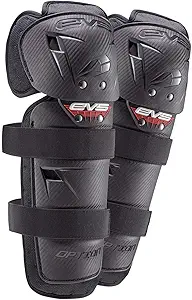
- Molded polypropylene shell: Highly robust plastic compound built for hard deflection.
- Perforated Bio-Foam: Enhanced internal liner engineered for maximum breathability.
- Reinforced TPR hinge: Durable and flexible mechanical joint connection system.
- Asymmetric anatomical fit: Tailored specifically for distinct left and right leg shapes.
The EVS SPORTS Knee Guard is engineered for riders who demand rugged structural durability on the trail. Utilizing a hard-molded polypropylene outer shell, it offers a tough exterior barrier against direct roost, flying rocks, and hard impacts. The reinforced TPR hinge system bridges the gap between total structural protection and flexible movement.
Fit is precise because these guards are shaped asymmetrically, meaning the left and right legs receive custom-tailored ergonomics. Inside, the perforated Bio-Foam liner does an excellent job of keeping temperatures down, channeling heat away from your skin so you stay cool and comfortable during intense moto sessions.
Pros: Asymmetric leg-specific tailoring, highly durable TPR hinge, excellent ventilation channels.
Cons: Plastic shell is prone to scuffing, bulkier profile inside tight boots.
How to Choose Dirt Bike Knee Braces
Dirt bike riding is one of the most exhilarating sports in the world, combining speed, technique, and adrenaline. However, the very factors that make off-road riding exciting also make it inherently risky. Among the various injuries a rider can sustain, knee injuries are some of the most common, painful, and career-threatening. The knee joint absorbs tremendous impact, twists during cornering, and is vulnerable to direct collisions with rocks, trees, or other bikes. This is where knee braces come into play.
Unlike simple knee guards, which primarily protect against roost and minor impacts, proper dirt bike knee braces are engineered medical devices designed to prevent severe structural damage to your ligaments. Choosing the right pair can mean the difference between a great weekend ride and months of painful physical therapy following an ACL or MCL tear. This comprehensive guide will walk you through everything you need to know to choose the perfect dirt bike knee braces for your riding style, budget, and anatomy.
Understanding the Difference: Knee Guards vs. Knee Braces
Before diving into how to choose a brace, it is crucial to understand what a knee brace actually does compared to a standard knee guard. Many beginner riders confuse the two, leading to inadequate protection on the track or trail.
Knee guards are designed for impact protection. They typically consist of a plastic shell with foam backing that covers the kneecap (patella) and the upper shin. They are excellent at stopping rocks, handlebars, and the ground from bruising or fracturing your bones, but they offer virtually no lateral support. If your leg twists awkwardly in a rut, a knee guard will not stop your knee from hyperextending or tearing a ligament.
Knee braces, on the other hand, feature a rigid frame (usually made of aluminum, carbon fiber, or composite materials) and a mechanical hinge system. This structure mimics the natural movement of your knee while physically preventing abnormal lateral movement (torsion) and hyperextension. A quality knee brace protects your Anterior Cruciate Ligament (ACL), Medial Cruciate Ligament (MCL), and Lateral Cruciate Ligament (LCL) from twisting or bending beyond their physiological limits.
Key Factors to Consider When Choosing Knee Braces
Selecting the right knee brace requires evaluating several critical factors. Because everyone’s legs are shaped differently and riding styles vary, what works perfectly for one rider might cause discomfort or inadequate protection for another.
1. Frame Material and Weight
The frame is the backbone of the knee brace, and it is usually constructed from one of three materials:
- Carbon Fiber: This is the premium option. Carbon fiber offers the highest strength-to-weight ratio. It is incredibly rigid, meaning it will not flex under extreme twisting forces, yet it is light enough to reduce rider fatigue during long motos. However, carbon fiber braces are the most expensive.
- Aluminum: Aluminum frames are highly durable and offer excellent rigidity. They are slightly heavier than carbon fiber but are often more affordable while providing a similar level of structural protection. Some aluminum braces can also be slightly altered or bent by a professional to custom fit a rider’s leg shape.
- Plastic or Injection-Molded Composites: Found in entry-level or mid-range braces, these materials offer good impact protection and moderate structural support. While they are cost-effective and comfortable, they may exhibit more flex under extreme loads compared to carbon fiber or aluminum.
2. Hinge Design and Extension Stops
The hinge is the most complex part of a knee brace. It must allow your knee to bend naturally while locking out before the joint hyperextends. Look for braces that utilize a continuous, anatomical hinge design (often called a human-motion hinge) that tracks smoothly with your knee’s natural center of rotation.
Additionally, high-quality braces come with adjustable extension stops. These are small plastic inserts of varying degrees (such as 0, 10, 20, or 30 degrees) that you can install into the hinge. If you have a history of knee hyperextension, you can set the brace to stop straightening a few degrees early, keeping your joint safely within its comfortable operating range.
3. Fit, Sizing, and Comfort
A knee brace can only protect you if it fits correctly. A brace that is too loose will slide down your leg during a ride, rendering it useless during a crash. A brace that is too tight will pinch your skin, restrict blood flow, and cause painful hot spots that make riding unbearable.
When trying on braces, ensure that the hinge centers perfectly with your kneecap. The frame should contour closely to your thigh and calf without leaving massive gaps or digging aggressively into your muscle tissue. High-end braces often feature moisture-wicking, antimicrobial liners that can be removed and washed to prevent skin irritation and odor.
4. Strapping Systems and Security
The strapping system keeps the brace secured to your leg. Most dirt bike knee braces use a four-strap configuration. The order in which you tighten these straps is critical for achieving a secure fit. Typically, the strap right below the knee is tightened first to anchor the brace against the calf muscle, followed by the strap just above the knee, and then the outermost thigh and lower shin straps.
Look for straps with numbered indicators, as this helps you remember the correct fastening sequence every time you gear up. Thermoformed neoprene or padded straps are also preferred, as they distribute pressure evenly and prevent the straps from binding behind your knee when sitting on the bike.
Sizing Guide and How to Measure
To find the correct size, you will need a flexible measuring tape. Most manufacturers base their sizing on the circumference of your knee joint, taken directly across the center of the patella with your leg fully extended. Some brands also require thigh and calf measurements taken a specific distance above and below the knee.
Below is a generalized sizing table representing typical industry standards. Always consult the specific manufacturer’s sizing chart before purchasing, as dimensions vary between brands.
| Size | Thigh Circumference (8″ above knee) | Knee Center Circumference | Calf Circumference (8″ below knee) |
|---|---|---|---|
| Small (S) | 15.0″ – 17.0″ | 12.5″ – 13.5″ | 12.0″ – 13.5″ |
| Medium (M) | 17.5″ – 19.5″ | 13.75″ – 14.75″ | 13.75″ – 15.0″ |
| Large (L) | 20.0″ – 22.0″ | 15.0″ – 16.25″ | 15.25″ – 16.5″ |
| X-Large (XL) | 22.5″ – 24.5″ | 16.5″ – 17.75″ | 16.75″ – 18.0″ |
Top Features to Look For
When comparing different models in the store or online, keep an eye out for these crucial secondary features that greatly enhance usability and longevity:
- Full-Coverage Patella Guard: Ensure the brace has a telescoping or overlapping cup system that protects your kneecap from rocks and handlebars even when your knee is fully bent.
- Low-Profile Inner Frame: The side of the brace that touches the dirt bike should be as slim as possible. This allows you to grip the tank tightly with your legs without feeling bulky or scratching your bike’s graphics.
- Boot Compatibility: The lower cuff of the brace must fit comfortably inside your motocross boots without causing pressure points against your shin bone.
- Availability of Replacement Parts: Over time, hinges wear out, liners degrade, and straps stretch. Choosing a well-known brand ensures you can buy replacement parts instead of purchasing a completely new pair of braces.
Maintenance and Care
Dirt bike knee braces are a significant financial investment, and proper maintenance will ensure they protect you for many seasons. Sweat, dirt, and mud are highly abrasive and can quickly ruin mechanical hinges and fabrics.
After every ride, wipe down the hard frames with a damp cloth to remove dried mud. Remove the fabric liners and hand-wash them with a mild soap, then allow them to air dry completely—never put them in a mechanical dryer, as the heat can destroy the foam and Velcro. Regularly inspect the hinges for grit; rinse them with fresh water and apply a dry, non-sticky lubricant if recommended by the manufacturer to keep the movement fluid and squeak-free.
Conclusion
Choosing the right dirt bike knee braces involves finding the perfect balance between rigid structural protection, comfort, and price. While high-quality braces can be a substantial upfront cost, they are significantly less expensive than knee surgery and the associated downtime away from riding. By accurately measuring your legs, understanding your material preferences, and selecting a brace with a smooth, anatomically correct hinge, you can hit the track or trails with the confidence that your joints are fully protected against the unexpected.