Best Mountain Bikes for Beginners of 2026
Looking to hit the trails but don’t know where to start? A good mountain bike opens up a world of adventure, but finding the right one as a beginner can feel tricky. You need something durable, easy to handle, and affordable. This guide breaks down the best beginner mountain bikes, helping you choose a reliable ride that builds confidence without breaking the bank. Let’s find your perfect match.
1. Co-op Cycles DRT 1.1

- Frame: 6061 aluminum
- Fork: SR Suntour XCM32, 100mm travel
- Drivetrain: Shimano 2×8-speed (16 gears)
- Brakes: Tektro hydraulic disc
The Co-op Cycles DRT 1.1 is a capable entry-level trail bike built for riders who want dependable performance without overspending. Its lightweight 6061 aluminum frame feels responsive on climbs while remaining stable on descents. The SR Suntour fork with 100mm of travel helps smooth out roots and small rocks, making it suitable for light trail riding and gravel paths.
The Shimano 2×8 drivetrain delivers a wide gear range for hills and flat sections alike. Hydraulic disc brakes from Tektro provide consistent stopping power in wet or dry conditions. With size-specific wheel options and 2.1-inch Kenda tires, the bike maintains good grip and comfort. Overall, it is a solid recreational mountain bike for new riders exploring local trails.
Pros: Lightweight frame, reliable hydraulic brakes, wide gear range.
Cons: Entry-level fork, basic rear derailleur.
2. WEIZE Mountain Bike
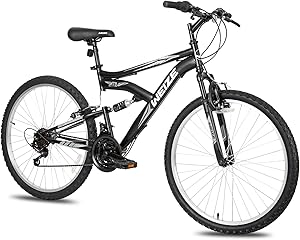
- Frame: Steel dual suspension
- Speeds: 18-speed twist shifters
- Brakes: Front and rear linear pull
- Wheel Size: 26 inches
The WEIZE Mountain Bike is designed for casual riders looking for comfort and affordability. Its steel dual suspension frame includes a front fork and rear coil shock to absorb bumps on uneven terrain. The 18-speed twist shifters allow riders to adjust cadence easily when navigating hills or flat roads.
Linear pull brakes provide dependable stopping power for neighborhood rides and light trails. The 26-inch all-terrain tires offer decent grip on dirt paths and pavement. With quick assembly and included tools, this bike is beginner-friendly and practical for teens and adults seeking an accessible mountain bike option.
Pros: Dual suspension comfort, affordable price, easy assembly.
Cons: Heavier steel frame, basic braking system.
3. Cannondale Trail 2

- Frame: SmartForm C3 alloy
- Fork: SR Suntour XCM, 80–100mm travel
- Drivetrain: Shimano CUES 1×9-speed
- Brakes: Tektro M275 hydraulic disc
The Cannondale Trail 2 is a modern hardtail built for riders who want confident trail handling with upgraded components. Its SmartForm C3 alloy frame feels stiff and efficient, while internal cable routing keeps the design clean. The SR Suntour XCM fork provides up to 100mm of travel, helping absorb trail chatter and small drops.
The Shimano CUES 1×9 drivetrain simplifies shifting and offers a wide 11-46T range for climbing and descending. Hydraulic disc brakes deliver consistent stopping power in changing conditions. With WTB Ranger 2.25-inch tires and size-specific wheel options, the Trail 2 offers grip and stability for progressing riders exploring real singletrack.
Pros: Reliable 1x drivetrain, strong hydraulic brakes, quality frame design.
Cons: Coil fork is entry-level, no dropper post included.
4. Huffy Stone Mountain Mountain Bike
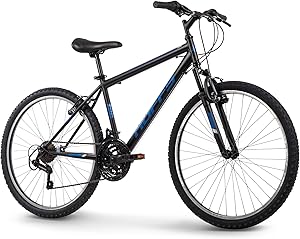
- Frame: Steel matte black frame
- Speeds: 21-speed Shimano twist shifting
- Fork: Front suspension fork
- Wheel Size: 26 inches
The Huffy Stone Mountain Mountain Bike is built for recreational riders who want a stylish and affordable option. Its matte black steel frame feels sturdy and durable for neighborhood rides and light off-road paths. The 21-speed Shimano twist shifters provide enough gearing to tackle small hills and varied terrain.
The front suspension fork absorbs bumps for a smoother ride over uneven ground. A padded comfort saddle adds support during longer outings. While it is not designed for aggressive trails, it performs well for casual use and everyday commuting. It is a practical choice for beginners looking to explore light trails.
Pros: Affordable price, wide gear range, comfortable saddle.
Cons: Heavy steel frame, basic components.
See the Huffy Stone Mountain Mountain Bike
5. Schwinn High Timber Mountain Bike
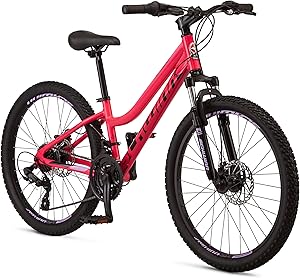
- Frame: 12-inch aluminum frame
- Speeds: Multiple speeds with twist shifters
- Wheels: 24-inch alloy wheels
- Tires: Wide knobby mountain tires
The Schwinn High Timber Mountain Bike is a lightweight and approachable option for younger riders and smaller adults. Its aluminum frame keeps the bike easier to handle while maintaining durability. Twist shifters and a rear derailleur allow smooth gear changes for neighborhood rides and mild trail use.
Alloy wheels and knobby tires provide traction and stability across different surfaces. The quick-release seat post makes height adjustments simple as riders grow. It arrives mostly assembled, which helps reduce setup time. Overall, it is a dependable entry-level mountain bike suited for casual riding and paved paths.
Pros: Lightweight frame, easy assembly, stable tires.
Cons: Not built for rough trails, basic drivetrain.
See the Schwinn High Timber Mountain Bike
6. Mongoose Grafton Mountain Bike

- Frame: Aluminum mountain frame
- Speeds: 21-speed trigger shifters
- Brakes: Mechanical disc brakes
- Tires: 24 x 2.3-inch knobby tires
The Mongoose Grafton Mountain Bike is designed for youth and smaller adult riders seeking adventure on pavement and trails. Its aluminum frame offers durability without excessive weight. The suspension fork helps absorb bumps and improves comfort on rough terrain.
The 21-speed drivetrain with trigger shifters allows smooth and quick gear changes. Mechanical disc brakes provide reliable stopping power in various weather conditions. Wide 2.3-inch tires enhance traction and stability, making the bike suitable for light singletrack and park trails. It is a versatile entry-level trail bike for growing riders.
Pros: Strong disc brakes, wide tires for grip, durable frame.
Cons: Heavier than premium models, entry-level suspension.
See the Mongoose Grafton Mountain Bike
7. Dynacraft Magna Echo Ridge

- Frame: Alloy steel
- Speeds: Single speed
- Suspension: Front and rear
- Brakes: Linear pull brakes
The Dynacraft Magna Echo Ridge is a basic mountain bike aimed at teens and casual riders. Its alloy steel frame offers durability for neighborhood rides and light dirt paths. The dual suspension design adds comfort over small bumps and uneven surfaces.
With a single-speed setup, the bike keeps maintenance simple and straightforward. Linear pull brakes provide dependable stopping for everyday use. The adjustable seat and included kickstand add practicality. It is best suited for relaxed riding rather than challenging trails.
Pros: Simple design, dual suspension comfort, easy maintenance.
Cons: Limited gearing, heavier steel frame.
See the Dynacraft Magna Echo Ridge
8. Ktaxon Mountain Bike

- Frame: High-carbon steel
- Speeds: 21-speed drivetrain
- Brakes: Mechanical dual disc
- Wheel Size: 27.5 inches
The Ktaxon Mountain Bike offers an affordable 27.5-inch platform for adult riders. Its high-carbon steel frame is strong and durable, built to handle gravel paths and light trails. The dual suspension system helps reduce impact from uneven terrain.
The 21-speed drivetrain allows riders to adapt to climbs and flat roads with ease. Mechanical disc brakes provide dependable braking response. With quick assembly and adjustable seat height, it suits beginners looking for a budget-friendly trail bike.
Pros: Strong frame, disc brakes, versatile gearing.
Cons: Heavier build, basic components.
9. MarKnig Mountain Bike

- Frame: Carbon steel
- Speeds: 7-speed drivetrain
- Brakes: V-brakes
- Wheel Size: 26 inches
The MarKnig Mountain Bike is a simple and budget-friendly option for casual riders. Its reinforced carbon steel frame offers durability for daily riding. The 7-speed gear system is easy to use and suitable for light terrain and city streets.
Front suspension improves comfort on uneven paths, while V-brakes provide straightforward and low-maintenance stopping power. The adjustable seat and quick-release design allow riders to customize fit easily. It is ideal for relaxed weekend rides and commuting.
Pros: Easy setup, durable frame, simple gearing.
Cons: Limited speed range, rim brakes only.
10. AVASTA Earth

- Frame: Aluminum alloy
- Speeds: 21-speed derailleur
- Brakes: Disc brakes
- Wheel Size: 27.5 inches
The AVASTA Earth is a lightweight aluminum mountain bike built for adults seeking versatility. Its aluminum alloy frame and rims keep the bike agile while maintaining durability. The switchable suspension fork allows riders to adjust comfort depending on terrain.
The 21-speed drivetrain provides flexibility for climbing and cruising. Disc brakes ensure reliable stopping in different weather conditions. Optional tire sizes and partial pre-assembly make it adaptable and convenient. It is a practical choice for riders wanting a balanced mix of comfort and performance.
Pros: Lightweight frame, disc brakes, adjustable suspension.
Cons: Assembly required, entry-level components.
How to Choose Your First Mountain Bike: A Comprehensive Beginner’s Guide
Stepping into the world of mountain biking is an exhilarating decision. It’s a sport that combines physical fitness, mental focus, and a deep connection with the outdoors. However, for a beginner, the technical jargon—dropper posts, slack geometry, air springs, and 1x drivetrains—can feel like a foreign language. Choosing the right bike is the difference between falling in love with the trails and leaving a dusty machine to rust in the garage.
This guide breaks down the essential factors you need to consider to find a mountain bike that fits your budget, your local terrain, and your riding goals.
Understand the Primary Categories of Mountain Bikes
Mountain bikes are not “one size fits all.” They are engineered for specific types of terrain. Identifying where you plan to ride most often is the first step in narrowing your search.
Cross-Country (XC) Bikes
XC bikes are designed for speed, efficiency, and climbing. They are typically lightweight and feature steeper geometry that makes them nimble on upward slopes. If you plan to ride long distances on relatively smooth dirt paths or fire roads, an XC bike is an excellent choice. However, their thinner tires and limited suspension travel can make them feel “twitchy” or unstable on very rocky or steep descents.
Trail Bikes
The trail bike is the “Swiss Army Knife” of mountain biking. This is the most popular category for beginners. They offer a balance between climbing efficiency and downhill stability. With a bit more suspension travel than XC bikes and a more relaxed frame angle, they provide confidence when the trail gets bumpy without being too heavy to pedal back up the hill.
Enduro and All-Mountain Bikes
These bikes are built for aggressive terrain. They feature significant suspension travel and “slack” geometry (where the front wheel sits further out in front of the rider). While they can be pedaled uphill, their primary focus is stability at high speeds on technical descents. For most beginners, an enduro bike may be more “machine” than necessary unless you live next to a lift-access bike park.
The Great Debate: Hardtail vs. Full Suspension
One of the biggest decisions you will face is whether to get a bike with suspension only in the front (Hardtail) or suspension in both the front and rear (Full Suspension).
Hardtail Mountain Bikes
A hardtail features a suspension fork in the front and a rigid frame in the back.
- Pros: Generally more affordable, lighter, and easier to maintain. They are excellent for teaching beginners “line choice” because the rider must be more mindful of obstacles.
- Cons: They can be less comfortable on rough terrain and offer less traction on bumpy climbs.
Full Suspension Mountain Bikes
These bikes feature a front fork and a rear shock.
- Pros: Increased comfort and significantly more “forgiving” on technical trails. The rear suspension helps keep the back wheel glued to the ground, providing better traction.
- Cons: More expensive, heavier, and require more maintenance due to the extra moving parts and pivot bearings.
Wheel Size: 27.5″ vs. 29″
Modern mountain bikes have largely moved away from the old 26-inch standard. Today, you will choose between two main sizes.
29-Inch Wheels (29ers)
These are the industry standard for most riders. The larger diameter allows the wheel to roll over obstacles (roots and rocks) more easily. They carry momentum well and provide a larger contact patch with the ground for better grip. They are ideal for beginners who want a stable, confidence-inspiring ride.
27.5-Inch Wheels (650b)
These wheels are smaller and lighter, making the bike feel more “playful” and easier to maneuver in tight corners. If you are a smaller rider or prefer a bike that feels easier to flick around, 27.5″ wheels are a great alternative.
Key Components to Look For
While you don’t need top-of-the-line racing components, certain features will drastically improve your experience as a beginner.
The Drivetrain (Gears)
Look for a “1x” (one-by) drivetrain. This means there is only one chainring in the front and a wide range of gears in the back. This simplifies shifting (only one shifter to worry about), reduces weight, and significantly lowers the chance of your chain falling off.
Brakes
Hydraulic disc brakes are highly recommended over mechanical disc brakes or rim brakes. They offer much better “modulation” (control) and stopping power with much less finger effort, which prevents hand fatigue on long descents.
The Dropper Post
If your budget allows, look for a bike with a dropper post. This is a seat post that can be lowered remotely via a lever on your handlebars. Dropping the seat allows you to move your body freely over the bike during descents, which is a massive safety and confidence booster for beginners.
Finding the Right Fit
A bike that doesn’t fit you will be uncomfortable and potentially dangerous. Bike sizing (Small, Medium, Large, etc.) varies between brands. Always check the manufacturer’s size chart, which is usually based on your height and inseam. If you are between sizes, it is generally safer for a beginner to “size down” for better maneuverability, though many modern riders prefer the stability of a larger frame.
Budgeting for the “Hidden” Costs
When choosing your bike, remember that the bike itself isn’t the only expense. To ride safely and enjoyably, you should set aside funds for:
- A Quality Helmet: Look for one with MIPS technology for better brain protection.
- Pedals: Many entry-level bikes come with cheap plastic pedals or no pedals at all. Invest in a pair of “flats” with metal pins for grip.
- Repair Kit: A multi-tool, tire levers, and a spare inner tube or tubeless plug kit.
- Padded Shorts: Your sit-bones will thank you after the first hour on the trail.
Conclusion
Choosing your first mountain bike is about finding the tool that helps you feel confident on the dirt. Don’t get too caught up in having the most expensive carbon fiber frame or the lightest components. Focus on a bike with a modern 1x drivetrain, reliable hydraulic brakes, and a frame style that matches your local trails.
The best bike is ultimately the one that makes you want to get out and ride. Visit a local bike shop, test ride a few different models, and don’t be afraid to ask questions. Welcome to the trail!