Best Gravel Bike Brakes of 2025
Gravel riding is full of surprises. One moment you’re rolling on smooth tarmac, the next you’re sliding across loose stones. In those moments, good brakes make all the difference. The right set doesn’t just stop your bike; it adds confidence, control, and peace of mind. Strong and reliable brakes let you push harder without worrying about tricky descents or sudden turns. They also keep your rides smoother by reducing strain on your hands. Since every rider tackles gravel differently, the best brakes are the ones that match your style. In this guide, we’ll explore the top gravel bike brakes worth considering.
1. Hmseng V-Type Bike Brake Set
-
Type: V-brake set with front and rear calipers
-
Material: Aluminum alloy arms for lightweight durability
-
Brake Pads: High-friction rubber pads for wet and dry performance
-
Compatibility: Suitable for mountain bikes, gravel bikes, and hybrids
The Hmseng V-Type Bike Brake Set is a classic choice for riders who prefer simplicity, easy maintenance, and affordability over the complexity of disc brakes. Designed with aluminum alloy arms, the set is lightweight yet strong enough to provide consistent stopping power for gravel riders. The rubber brake pads are optimized to grip effectively in both wet and dry conditions, making them versatile for mixed-weather rides.
What makes this brake set appealing is its straightforward installation and adjustment. Unlike hydraulic or mechanical disc brakes, V-brakes require minimal tools and no complex setup. This makes them ideal for casual riders, commuters, or gravel cyclists who want a reliable braking system without the hassle. While it may not offer the same modulation or sheer stopping force as hydraulic systems, it delivers dependable performance for moderate trails and gravel roads.
Pros:
-
Affordable and easy to install
-
Lightweight with simple maintenance
-
Effective braking for moderate terrains
-
Good all-weather rubber pads
Cons:
-
Not as powerful as disc brakes
-
Pads wear down faster with heavy use
2. TOBWOLF Hydraulic Disc Brake Set
-
Type: Hydraulic disc brake system (front & rear)
-
Rotor Size: 160mm stainless steel rotors included
-
Hose Length: Front 800mm, rear 1550mm
-
Material: Aluminum alloy calipers and levers
The TOBWOLF Hydraulic Disc Brake Set is designed for riders seeking a step up in power and precision. With hydraulic actuation, it delivers superior modulation and consistent braking performance compared to mechanical alternatives. Its stainless steel rotors provide excellent heat dissipation, reducing brake fade during long descents on gravel or mountain trails.
This kit includes everything you need—pre-bled calipers, rotors, and levers—making installation straightforward for most bike frames. The braking feels smooth and responsive, especially under load, which is crucial when riding on steep or uneven gravel paths. For riders transitioning from V-brakes or mechanical discs, the difference in stopping power is noticeable, offering greater control in both dry and wet conditions.
Pros:
-
Strong and consistent braking power
-
Pre-bled system for easy installation
-
Smooth lever feel with precise modulation
-
Good value for a complete hydraulic set
Cons:
-
Slightly heavier than V-brakes
-
May require occasional bleeding with extended use
3. BUCKLOS Disc Brake Kit
-
Type: Mechanical disc brake system (front & rear)
-
Rotor Size: Dual 160mm stainless steel rotors
-
Material: Aluminum alloy calipers
-
Compatibility: Fits MTB, gravel bikes, and fat bikes
The BUCKLOS Disc Brake Kit offers a practical balance of affordability and performance, making it an excellent option for budget-conscious riders. Unlike hydraulic brakes, this mechanical system uses cable actuation, which simplifies installation and reduces long-term maintenance needs. The included 160mm rotors are sturdy and provide sufficient braking power for gravel and trail riding.
Performance-wise, the braking is solid and reliable for moderate terrains. While it doesn’t match the finesse of hydraulic systems, the BUCKLOS kit delivers dependable stopping force that outperforms traditional V-brakes, especially in wet or muddy conditions. Its adjustability is another advantage, allowing riders to fine-tune braking power easily without specialized tools. For gravel riders who want disc brake performance without high costs, this kit is a smart choice.
Pros:
-
Affordable and beginner-friendly
-
Easy installation and maintenance
-
Better wet-weather performance than V-brakes
-
Solid stopping power for moderate trails
Cons:
-
Less modulation compared to hydraulic systems
-
Slightly heavier than premium options
4. Stylemafia Complete V Bike Brake Set
-
Type: V-brake set with full kit (levers, cables, calipers)
-
Material: Aluminum alloy calipers with durable steel cables
-
Included Accessories: Multi-tool wrenches for installation
-
Compatibility: MTB, gravel, and hybrid bikes
The Stylemafia Complete V Bike Brake Set is an all-in-one package for riders looking to replace their entire braking system at once. With calipers, levers, cables, and even installation tools included, it saves you the trouble of sourcing individual components. Made from aluminum alloy and steel, the parts are built to last and provide reliable performance.
This kit is particularly useful for gravel riders who want an easy upgrade from worn-out brakes. The braking performance is straightforward—powerful enough for flat to moderate terrain but not designed for extreme downhill riding. Installation is simplified with the included multi-tool, making it a great option for DIY bike mechanics. While it doesn’t have the advanced feel of hydraulic brakes, the Stylemafia set is practical and durable, especially for riders on a budget.
Pros:
-
Complete kit with all parts included
-
Durable build with easy installation
-
Budget-friendly upgrade option
-
Includes tools for setup
Cons:
-
Not as powerful as disc brakes
-
Requires regular pad and cable adjustments
5. WEEROCK Hydraulic Brake Set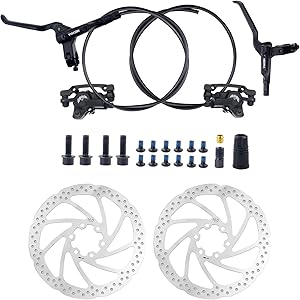
-
Type: Hydraulic disc brake system
-
Rotor Size: 160mm stainless steel rotors
-
Hose Length: Front 800mm, rear 1550mm
-
Material: Aluminum alloy calipers and levers
The WEEROCK Hydraulic Brake Set is designed for riders who demand reliable stopping power on challenging gravel or MTB trails. The set includes both front and rear hydraulic calipers, pre-bled for convenience, along with 160mm rotors that provide excellent heat resistance and consistent braking. The lightweight aluminum alloy construction ensures durability without compromising responsiveness.
Performance on gravel terrain is smooth, with excellent lever feel and modulation. Braking is progressive, meaning you can control speed with precision rather than abrupt stops, which is particularly useful for technical descents or loose gravel paths. Installation is relatively straightforward for a hydraulic system, and the included rotor size fits most standard gravel and MTB setups.
Pros:
-
Powerful braking with excellent modulation
-
Pre-bled, easy-to-install kit
-
Heat-resistant stainless steel rotors
-
Smooth lever action for precise control
Cons:
-
Slightly pricier than mechanical options
-
May require bleeding after extended use
6. Liuceny 2-Pistons Disc Brake Set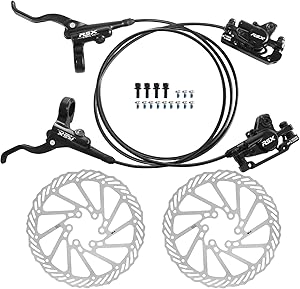
-
Type: Hydraulic disc brake kit with 2-piston calipers
-
Rotor Size: 160mm stainless steel rotors included
-
Hose Length: Front (right) & rear (left) pre-bled configuration
-
Compatibility: Fits MTB, gravel, fat bikes, and e-bikes
The Liuceny 2-Pistons Hydraulic Brake Set is a versatile option that works across different bike types, including e-bikes and fat bikes. Its dual-piston design offers improved clamping power compared to single-piston systems, making it highly effective for steep or rugged gravel terrain. The included 160mm rotors provide consistent stopping power, while the pre-bled system reduces setup hassle.
One standout feature is its adaptability across multiple bike categories, making it a cost-effective upgrade for riders who own different bikes. On gravel paths, the braking feels powerful yet smooth, with minimal fade during long rides. While heavier than simpler brake systems, the dual-piston calipers provide extra confidence, especially on descents or when carrying loads.
Pros:
-
Dual-piston calipers for extra stopping power
-
Compatible with various bike types, including e-bikes
-
Pre-bled system for convenience
-
Smooth and powerful braking
Cons:
-
Slightly heavier than single-piston setups
-
Higher maintenance compared to mechanical brakes
7. JKSPORTS OEM BR MT200 Hydraulic Disc Brake Set
-
Type: Hydraulic disc brake kit (Shimano MT200 OEM)
-
Hose Length: Front 800mm, rear 1450mm
-
Rotor Size: Compatible with 160mm/180mm rotors (not included)
-
Material: Aluminum alloy calipers and levers
The JKSPORTS OEM BR MT200 Hydraulic Disc Brake Set brings Shimano’s trusted technology to a budget-friendly kit. Featuring the reliable MT200 system, it delivers consistent braking power suitable for gravel, MTB, and commuter bikes. The lightweight aluminum alloy construction provides durability without adding unnecessary weight, while the pre-bled design simplifies installation.
Performance-wise, the brakes feel smooth and responsive, with excellent modulation that gives riders confidence on both gravel trails and paved roads. While the rotors are not included, the calipers are compatible with standard 160mm and 180mm discs, allowing flexibility in setup. For riders seeking Shimano’s reliability without investing in higher-end models, this set is a dependable and cost-effective choice.
Pros:
-
Trusted Shimano MT200 system
-
Smooth, reliable braking performance
-
Pre-bled and easy to install
-
Compatible with different rotor sizes
Cons:
-
Rotors not included
-
Requires occasional bleeding for best performance
How to Choose Gravel Bike Brakes
Gravel bikes have quickly become the go-to choice for cyclists who crave versatility. Whether you’re riding on rough gravel paths, smooth tarmac, muddy trails, or a mix of all three, your brakes are one of the most important components on your bike. They don’t just stop you—they give you confidence, stability, and control in unpredictable terrain. Choosing the right gravel bike brakes is therefore essential for both performance and safety.
This guide will walk you through the different types of gravel bike brakes, the key factors to consider before buying, and how to match brakes to your style of riding. By the end, you’ll have a clear idea of what works best for you.
1. Why Brakes Matter on a Gravel Bike
Unlike road bikes, gravel bikes are built for mixed-terrain adventure. That means you’ll often face loose surfaces, sudden descents, and variable weather conditions. Brakes that work perfectly on dry pavement might struggle in mud or rain.
Good gravel bike brakes provide:
-
Stopping power: Strong enough to stop you quickly even on steep or slippery surfaces.
-
Modulation: Smooth control over how much braking force you apply, rather than just “on/off” stopping.
-
Consistency: Reliable performance in all conditions—wet, dry, or dusty.
-
Durability: The ability to withstand dirt, grit, and repeated use without fading.
2. Types of Gravel Bike Brakes
There are several brake systems used on gravel bikes, each with its pros and cons. Understanding the differences will help narrow your options.
a) Mechanical Disc Brakes
These use a cable system, similar to rim brakes, but apply the force to a disc rotor at the wheel hub.
Pros:
-
Affordable compared to hydraulic systems.
-
Easier to maintain and repair, especially during bikepacking trips.
-
Compatible with many gravel bike frames.
Cons:
-
Less stopping power compared to hydraulics.
-
Require frequent adjustment as cables stretch.
-
Weaker performance in wet or muddy conditions.
Best for: Riders on a budget or those who want simple field repairs during long-distance rides.
b) Hydraulic Disc Brakes
These use hydraulic fluid instead of cables, offering the most modern and powerful braking system.
Pros:
-
Superior stopping power and modulation.
-
Self-adjusting pads for consistent braking.
-
Excellent in all weather conditions.
Cons:
-
More expensive.
-
Requires special tools and knowledge to service.
-
Repairs can be tricky during remote rides.
Best for: Riders who prioritize performance, especially for technical gravel trails and long descents.
c) Hybrid (Cable-Actuated Hydraulic) Disc Brakes
These combine the simplicity of mechanical actuation with the power of hydraulics. A cable pulls the lever, but hydraulic fluid activates the calipers.
Pros:
-
Better performance than mechanical systems.
-
Easier maintenance compared to full hydraulics.
-
Can be retrofitted to bikes designed for cable brakes.
Cons:
-
More expensive than mechanical options.
-
Slightly less powerful than full hydraulic systems.
Best for: Riders who want a balance of performance and maintenance ease.
d) Rim Brakes (Rare on Gravel Bikes)
Although uncommon on modern gravel bikes, some older or entry-level models may still use rim brakes.
Pros:
-
Lightweight.
-
Easy to service.
-
Low cost.
Cons:
-
Poor wet-weather performance.
-
Quickly wear down rims on gritty terrain.
-
Limited stopping power compared to disc brakes.
Best for: Budget or casual riders sticking to light gravel and mostly paved routes.
3. Rotor Size: Bigger Isn’t Always Better
When choosing disc brakes, rotor size plays a huge role in performance.
-
140mm rotors: Lightweight and common on road bikes. Suitable for lighter riders or less aggressive gravel riding.
-
160mm rotors: A good middle ground for most gravel cyclists. Offers strong braking without much added weight.
-
180mm rotors: Provide maximum stopping power, great for steep descents and heavier riders, but add weight.
Tip: If you’re unsure, 160mm is the safest choice for gravel riding.
4. Brake Pad Materials
Brake pads may seem small, but they drastically affect performance and maintenance needs.
-
Resin (Organic) Pads:
-
Quieter, with smooth braking feel.
-
Wear out faster, especially in wet or gritty conditions.
-
Best for dry, mixed terrain.
-
-
Metallic (Sintered) Pads:
-
More durable and long-lasting.
-
Louder and can feel harsher.
-
Perform better in wet, muddy, or heavy downhill conditions.
-
Tip: Many riders keep a spare set of pads for different riding seasons—resin for summer, metallic for winter or wet conditions.
5. Weight vs. Durability
Weight is often a big concern for cyclists, but gravel biking is more about control and endurance. Hydraulic disc brakes might add a little weight compared to mechanical ones, but they offer much more reliability and stopping power.
If you’re planning multi-day adventures or bikepacking, slightly heavier but more durable brakes are worth the trade-off.
6. Maintenance and Ease of Repair
One of the biggest factors to consider is how comfortable you are with maintenance.
-
Mechanical disc brakes are easier to adjust trailside with simple tools.
-
Hydraulic systems may need a professional mechanic if something goes wrong.
-
Hybrid brakes offer a middle ground.
If you’ll be riding far from bike shops, consider brakes that are user-friendly to service on your own.
7. Riding Style and Terrain Considerations
The “best” brakes depend heavily on how and where you ride:
-
Adventure & Bikepacking: Mechanical or hybrid disc brakes for easy repairs.
-
Gravel Racing: Hydraulic disc brakes for maximum performance.
-
Casual Weekend Riding: Mechanical disc or even rim brakes (if on a budget).
-
Technical Trails: Larger rotors and hydraulic systems for confidence on descents.
8. Budgeting for Gravel Bike Brakes
Price ranges vary widely:
-
Entry-level mechanical disc brakes: $50–$150.
-
Hybrid brakes: $150–$250.
-
Hydraulic disc brakes: $250–$500+.
Remember, brakes are a safety component. It’s better to spend a little extra on reliable brakes than to compromise your riding experience—or safety—on difficult terrain.
9. Key Brands to Look For
Some trusted brands in the gravel cycling world include:
-
Shimano (GRX series for gravel-specific hydraulics).
-
SRAM (Rival and Force series).
-
TRP (mechanical and hybrid disc options).
-
Avid (mechanical disc brakes).
-
Tektro (budget-friendly disc brakes).
10. Final Tips Before Buying
-
Test ride different brake setups if possible.
-
Match your brakes to your terrain and riding style.
-
Don’t forget to check compatibility with your frame, fork, and wheels.
-
Factor in future maintenance costs and availability of spare parts.
Conclusion
Choosing the right gravel bike brakes is about balancing performance, budget, and maintenance needs. For most riders, hydraulic disc brakes with 160mm rotors strike the best balance of power, control, and reliability. However, if you prioritize easy roadside repairs, mechanical or hybrid systems may serve you better.
Ultimately, the “best” brake is the one that makes you feel confident, safe, and in control—whether you’re racing through gravel roads, bikepacking across mountains, or simply enjoying a weekend ride. Investing in quality brakes ensures not only better performance but also peace of mind on every ride.