Best Mountain Bike Tires for Road and Trail of 2026
Choosing the best mountain bike tires can feel confusing. Many riders want one set for road and trail. Good tires give better control and comfort. The right pair helps you ride faster and safer. Some tires roll smoothly on paved roads. Others grip well on dirt and rocky paths. A few do both jobs well. This guide explains what to look for in each type. It also shares top tire options for every rider. Use it to find the perfect match. These tips will make your choice easier today overall.
1. Hycline Mountain Bike Tires 26×1.95

- Size & ETRTO: 26×1.95 inch (ETRTO: 54-559)
- TPI & PSI Range: 30 TPI, 30-80 PSI
- Tread Design: Open, aggressive knob pattern
- Package Includes: 2 tires, 2 tubes (26×1.75/2.125), 2 levers
The Hycline package is a complete kit aimed at riders seeking a true trail-ready experience. The tires stand out with their aggressive, open tread design that promises serious mud-clearing capability and soil penetration. This is not a subtle tire; it’s built for engaging with loose and challenging terrain where grip and control are paramount. The included thick-butyl tubes are a thoughtful addition, designed to dampen vibrations and withstand the rigors of off-road use.
For the price, this kit offers significant value, bundling everything needed for a wheel refresh. The 30 TPI casing suggests a focus on durability over lightweight suppleness, which aligns with its rugged construction. The note about the tires arriving folded and needing time to relax into shape is important for a smooth installation. While the tread will excel on dirt, its aggressive nature may result in increased rolling resistance and noise on paved sections, making it best for riders who prioritize trail performance over mixed-use efficiency.
- Pros: Complete kit with tubes and levers; Aggressive tread for excellent off-road grip
- Cons: Tread may be overkill and slow on pavement
2. Fincci Slick 26×1.95 Mountain Bike Tires
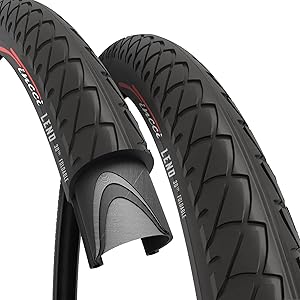
- Size & ETRTO: 26×1.95 inch (ETRTO: 50-559)
- TPI & Bead: 30 TPI, Foldable Kevlar bead
- Tread Design: Slick (smooth) tread
- Weight: Approximately 630g per tire
The Fincci tires take a completely different approach, prioritizing on-road efficiency for 26-inch wheeled bikes. The slick tread pattern is the defining feature, virtually eliminating knobs to drastically reduce rolling resistance. This makes for a smooth, fast, and quiet ride on asphalt, ideal for converting an old mountain bike into a capable city commuter or fitness bike. The Kevlar folding bead and relatively light weight further enhance their road-bike-like feel and ease of transport.
These tires are a specialist choice. They excel on pavement where their grip is consistent and their performance is predictable. However, the lack of any significant tread pattern means they offer almost zero traction on loose gravel, dirt, or wet surfaces. They are best suited for dedicated urban environments or use on a stationary trainer. For riders who stick strictly to pavement and want a low-cost, efficient upgrade from knobby tires, the Finccis are an excellent, purpose-built option.
- Pros: Very low rolling resistance on pavement; Lightweight with convenient Kevlar foldable bead
- Cons: No off-road traction; Slick tread can be slippery on wet roads or debris
3. Hapleby Mountain Bike Tires 26×1.95

- Size & ETRTO: 26×1.95 inch (ETRTO: 50-559)
- TPI & PSI: 60 TPI, 40-65 PSI
- Tread Pattern: Symmetrical directional tread
- Bead & Package: Steel bead, includes 2 tires & 2 levers
Hapleby positions itself as a durable, all-around performer for the rider who genuinely splits time between road and light trail. The 60 TPI casing is a notable step up from basic 30 TPI, promising a better balance of durability and ride quality. The symmetrical tread pattern with closely spaced knobs is designed to provide decent grip on packed dirt while minimizing the typical buzzing vibration and noise on pavement, aiming for a civilized yet capable ride.
The claimed 3000-mile lifespan underscores the focus on wear resistance, making this a potentially great value for high-mileage riders. The included levers are a small but welcome bonus. Like other folded tires, they require a resting period to regain their round shape before installation. These tires seem engineered for the “do everything” hardtail or hybrid bike, offering a sensible compromise without excelling in any extreme. They won’t claw through deep mud like an aggressive tire, nor will they roll as fast as a slick, but they promise reliable, stable performance across a variety of common surfaces.
- Pros: Higher 60 TPI for better ride quality; Versatile tread for road and light trail
- Cons: Steel bead (non-folding) is heavier; Requires 1-2 days to unfold
4. Pagpl Mountain Bike Tires 26×1.95
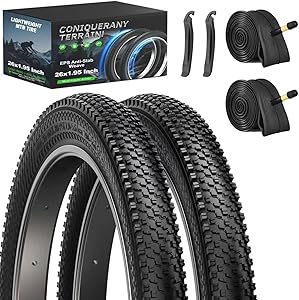
- Size & ETRTO: 26×1.95 inch (ETRTO: 54-559)
- TPI & PSI: 30 TPI, 30-80 PSI
- Bead Type: Foldable design
- Package Includes: 2 tires, 2 tubes (26×1.75″), 2 levers
The Pagpl offering appears very similar to the Hycline kit, providing a complete package for riders needing tires, tubes, and tools. The foldable bead is a key advantage for storage and portability, making these a potential choice for travelers or those with limited storage space. The wide 30-80 PSI range allows riders to tune pressure for comfort or efficiency, and the inclusion of tubes sized to 1.75 inches suggests a slightly narrower fit, which may affect installation on some wider rims.
The marketing emphasizes “exceptional grip and durability” using “advanced manufacturing techniques,” but the 30 TPI specification is standard for budget-friendly, durable tires. This suggests a focus on puncture resistance and longevity over a supple, high-performance feel. This kit is a practical, no-fuss solution for someone looking to refresh an older 26er for general duty, from pavement to moderate trails, without a large investment. The value is in the complete bundle rather than in groundbreaking tire technology.
- Pros: Complete ready-to-install kit; Foldable for easy storage/transport
- Cons: Generic tread design not detailed; Lower 30 TPI may feel stiff
5. Schwinn Replacement Hybrid Bike Tire 26×1.95

- Size & Fit: 26 x 1.95 inch, fits 19-29mm internal rim width
- Tread Design: Wider knob spacing
- PSI Range: 40-65 PSI
- Features: Puncture guard layer, steel bead construction
Coming from a legacy bike brand, the Schwinn tire is designed as a classic hybrid/all-terrain tire. The wider knob spacing provides defined traction blocks for confident cornering on loose surfaces while theoretically reducing rolling resistance on pavement compared to tightly packed knobs. The inclusion of a dedicated puncture guard layer under the tread is a significant feature for commuters and recreational riders, targeting the common frustration of flats from glass or thorns.
With a moderate PSI range and steel bead construction, this tire is built for durability and reliability rather than lightweight performance. It’s a straightforward replacement tire for the millions of Schwinn and similar hybrid bikes sold over the years, intended for exactly the kind of mixed-use the bikes were designed for: paved paths, light gravel, hard-packed dirt, and the occasional grassy field. It’s a sensible, trusted option for general riding rather than an exciting performance upgrade.
- Pros: Brand reputation and reliability; Puncture guard for added flat protection
- Cons: Heavier steel bead construction; Tread may be less efficient on-road than a slick
6. Continental Race King Mountain Bike Tire 26×2.2

- Size & Type: 26 x 2.2 inch, Folding MTB Tire
- Technology: ShieldWall puncture protection, Tubeless Ready
- Compound: Pure Grip Compound
- Rating: E-Bike rated up to 25 km/h
The Continental Race King stands apart as a premium, performance-oriented tire from a major manufacturer. The ShieldWall technology combines a three-layer casing with advanced puncture protection, while the Tubeless Ready design allows for lower pressures, better traction, and further flat resistance for serious riders. The versatile, fast-rolling profile and Pure Grip Compound are designed to deliver low rolling resistance without sacrificing cornering grip, making it a favorite for cross-country racing and fast trail riding.
This tire is in a different league and price category than the others on this list. Its E-Bike rating confirms its robustness for higher speeds and torque. The 2.2-inch width provides more volume and comfort than a 1.95-inch tire. It is engineered for riders who want a high-quality, reliable tire that performs exceptionally well on a mix of hardpack, gravel, and even pavement where speed is a priority. This is an investment for enthusiasts seeking proven technology and race-bred performance.
- Pros: Premium ShieldWall puncture protection; Tubeless Ready for performance
- Cons: Significantly higher price point; May be overkill for casual riders
7. MOHEGIA Mountain Bike Tires 20×2.125

- Size & ETRTO: 20 x 2.125 inch (ETRTO: 57-406 mm)
- TPI & PSI: 30 TPI, Inflate to 35 PSI
- Tread Pattern: Deep, widely spaced knobs
- Bead & Package: Foldable carbon steel bead, Includes 1 tire
The MOHEGIA tire is notable for its unique 20-inch size, catering to smaller wheeled bikes like certain BMX, juvenile, or compact mountain bikes. The deep, widely spaced knobs are designed for maximum grip in loose terrain, aiming to provide aggressive off-road capability for these smaller wheels. The foldable carbon steel bead is a practical feature, making it easier to store and transport as a spare or replacement.
It’s crucial for buyers to note the package includes only a single tire, unlike most other options listed. The recommended inflation of 35 PSI seems low and specific, so checking compatibility with one’s specific bike and intended use is essential. This tire is a specialized choice for riders of 20-inch wheeled bikes who want an aggressive, knobby tire for dirt, trails, or all-terrain use, rather than a smooth-rolling pavement option. It fills a specific niche in the market.
- Pros: Aggressive tread for 20-inch wheels; Foldable bead for convenience
- Cons: Package includes only ONE tire; Very specific 20-inch wheel size
How to Choose Mountain Bike Tires for Road and Trail
Choosing the right mountain bike tires for both road and trail riding is crucial for maximizing performance, safety, and comfort. Unlike single-purpose tires, versatile tires must handle a mix of smooth pavement and rugged trails without compromising control or speed. This guide will walk you through everything you need to consider, from tire type to tread patterns, ensuring you make an informed choice for your dual-terrain adventures.
Understanding Mountain Bike Tires
Types of Mountain Bike Tires
Mountain bike tires come in various designs, each tailored for specific terrain. When selecting a tire for both road and trail use, it’s essential to understand these types:
-
Cross-Country (XC) Tires: Lightweight and fast-rolling, ideal for mixed surfaces but may lack traction on technical trails.
-
Trail Tires: Balanced tread for climbing and descending, providing grip on loose soil while maintaining reasonable speed on roads.
-
All-Mountain/Enduro Tires: Aggressive tread for technical trails, heavier, and slower on pavement. Not ideal for frequent road riding.
Key Tire Metrics
Knowing these metrics helps in comparing tires effectively:
-
Width: Measured in inches or millimeters. Narrower tires (1.9–2.2 inches) roll faster on roads, while wider tires (2.3–2.5 inches) offer better trail traction.
-
Diameter: Most mountain bikes use 27.5″ or 29″ tires. Larger diameters roll over obstacles more easily but may feel slower to accelerate.
-
TPI (Threads Per Inch): Higher TPI means a lighter, more flexible tire. Lower TPI tires are more durable but heavier.
Tread Patterns and Their Importance
Tread for Mixed Terrain
Tread patterns affect how tires interact with different surfaces. For road and trail use:
-
Center Knobs: Smaller, tightly spaced knobs in the center reduce rolling resistance on pavement.
-
Side Knobs: Larger, more aggressive knobs on the edges provide cornering grip on trails.
-
Intermediate Patterns: Some tires feature moderately spaced knobs throughout, offering compromise performance.
Rubber Compound
The rubber compound determines grip and durability:
-
Soft Compounds: Excellent grip on loose trails but wear faster on roads.
-
Medium Compounds: Balanced grip and longevity, suitable for dual-surface use.
-
Hard Compounds: Long-lasting, fast on roads, but may feel slippery on wet trails.
Tire Pressure Considerations
Balancing Comfort and Performance
Tire pressure affects traction, rolling resistance, and comfort.
-
Lower Pressure: Increases grip and shock absorption on trails but can feel sluggish on roads.
-
Higher Pressure: Reduces rolling resistance on pavement but may compromise trail traction.
-
Optimal Range: Many dual-purpose riders choose mid-range pressures to achieve a balance between speed and control.
Tubeless vs. Tubed Tires
The type of tire setup can affect pressure choices and performance:
-
Tubeless Tires: Allow lower pressures without pinch flats, improving trail grip and comfort.
-
Tubed Tires: Simpler to maintain but more prone to flats at low pressures.
Width and Rim Compatibility
Selecting the Right Width
Tire width affects comfort, grip, and stability.
-
Narrow Tires (1.9–2.2 inches): Faster on paved surfaces but less forgiving on technical trails.
-
Medium Width (2.2–2.4 inches): Ideal compromise for road and trail riding.
-
Wide Tires (2.5+ inches): Maximum grip and stability on trails, slower on pavement.
Rim Considerations
Ensure your tire width is compatible with your rims. Modern rims often accommodate a range of widths, but exceeding the recommended range can affect performance and safety.
Durability and Puncture Resistance
Reinforcements
Look for tires with puncture-resistant layers or reinforced sidewalls for mixed-terrain riding.
-
Kevlar Beads: Provide durability and flexibility.
-
Thicker Sidewalls: Reduce the risk of cuts and tears on rough trails.
-
Puncture Protection Layers: Can prevent flats when riding on gravel, asphalt, or rocky terrain.
Maintenance Tips
Maintaining your tires extends lifespan:
-
Inspect tires regularly for cuts, punctures, or tread wear.
-
Rotate tires occasionally to ensure even wear.
-
Keep pressure consistent for optimal performance.
Choosing the Right Tire for Your Riding Style
Riding Frequency and Terrain
Consider how often you ride on roads versus trails:
-
Mostly Road, Some Trail: Opt for faster-rolling tires with moderate tread.
-
Equal Mix: Look for versatile tires with a balanced tread pattern.
-
Mostly Trail, Occasional Road: Choose durable, grippy tires that handle obstacles well, accepting slightly slower road performance.
Climate and Conditions
Weather affects tire performance:
-
Wet Conditions: Tires with deeper, widely spaced knobs prevent slipping.
-
Dry Conditions: Shallow or closely spaced tread maximizes speed and efficiency.
-
Mixed Weather: Medium tread patterns and dual-compound tires offer a practical solution.
Budget and Brand Considerations
Investing Wisely
Mountain bike tires vary widely in price. Consider:
-
Mid-range tires often offer the best balance between performance and durability.
-
High-end tires feature advanced rubber compounds, lighter weight, and tubeless-ready options.
-
Budget tires may wear faster or have limited performance on technical trails.
Brand Reputation
Brands with proven reliability and quality control are generally safer investments. Popular options for dual-purpose tires include Maxxis, Schwalbe, Continental, and Michelin.
Test Riding and Feedback
Trial and Error
Even with research, the best tire choice often comes from firsthand experience:
-
Test ride different tires on your typical roads and trails.
-
Take notes on grip, comfort, noise, and rolling resistance.
-
Adjust tire pressure and evaluate performance to fine-tune your setup.
Community Insights
Bike forums, local riding groups, and online reviews provide valuable feedback from riders with similar conditions and preferences.
Conclusion: Making the Right Choice
Choosing mountain bike tires for road and trail riding requires a thoughtful balance of speed, grip, durability, and comfort. By understanding tire types, tread patterns, width, pressure, and riding conditions, you can select a tire that performs well on diverse surfaces without compromising safety or enjoyment. Always consider your specific riding style, terrain, and climate, and be willing to experiment with different options. With the right tire, your bike becomes a true all-terrain machine, capable of delivering smooth road rides and confident trail adventures alike.