Best Bike Racks for Cars without Hitches of 2026
If you love biking but drive a car without a rear hitch, you might think carrying your bike is a problem. Good news: you still have great options. Trunk-mounted racks and spare-tire racks attach directly to your vehicle’s back, no hitch needed. They’re affordable, easy to install, and hold bikes securely. This guide covers the best bike racks for hitch-less cars, helping you hit the road with your gear safely and simply.
1. Yakima FullBack 3
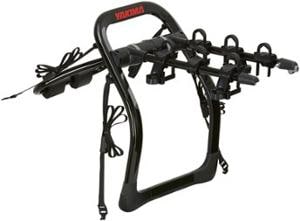
- Bike Capacity: 2 bikes
- Attachment System: 4-strap with interlocking HUB alignment
- Frame: Bomber external frame construction
- Cradle Technology: SuperCush ZipStrip padding system
The Yakima FullBack 3 is a premium trunk rack that strikes an impressive balance between style and performance. The SuperCush ZipStrip system cradles your bikes with confidence, protecting frames from scratches during even the roughest drives. Its bomber external frame feels solid and sturdy, and the overall build quality is noticeably above average for a strap-style rack.
Installation is refreshingly straightforward thanks to the 4-strap system and interlocking HUB that aligns all key adjustment points without tools. The rack comfortably accommodates two bikes and even includes a signature Yakima bottle opener — a small but welcome touch for post-ride celebrations. A well-rounded choice for riders who want reliability and flair.
Pros:
- Excellent frame protection with SuperCush ZipStrip
- Tool-free, intuitive installation
- Premium build quality and stylish appearance
Cons:
- Limited to 2 bikes only
- Higher price point than basic trunk racks
See the Yakima FullBack 3 See the Yakima FullBack 2
2. Allen Sports Deluxe 102DB

- Model: 102DB trunk-mounted rack
- Bike Capacity: 2 bikes
- Vehicle Compatibility: Sedans, hatchbacks, minivans, and SUVs
- Security: Patented tie-down system
The Allen Sports Deluxe 102DB is an entry-level trunk rack that delivers solid, dependable performance at an accessible price. Its broad vehicle compatibility makes it a practical option for households with multiple car types, and the patented tie-down system keeps bikes firmly in place without unnecessary movement during transit.
While it lacks the premium materials and bells and whistles of higher-end racks, it performs its core job reliably. Assembly is manageable for most users, and the rack sits securely on a wide range of vehicle types. Ideal for occasional cyclists who need a straightforward, no-nonsense solution for getting their bikes from point A to point B without breaking the bank.
Pros:
- Wide vehicle compatibility
- Affordable and dependable
- Patented secure tie-down system
Cons:
- Basic build quality compared to premium options
- Limited to 2 bikes
See the Allen Sports Deluxe 102DB
3. Thule ProRide XT

- Bike Capacity: 1 bike
- Max Weight: 44 lbs per bike
- Attachment Point: Frame mount
- Rack Weight: 11 lbs
The Thule ProRide XT is a rooftop bike rack built for cyclists who prioritize security and ease of use. Its upright mounting design makes loading and unloading noticeably fast, and the frame-clamp system holds bikes firmly without wobble. At 44 lbs of max capacity, it handles most adult bikes with ease, including those with fenders and kids’ bikes.
The rack’s 11 lb weight is manageable for roof mounting, and Thule’s engineering shows in the smooth, tool-free clamping mechanism. The upright carry position keeps your bike stable and aerodynamically positioned on the roof. While it’s limited to one bike per unit, the quality and reliability make it an excellent investment for solo riders or those who frequently transport a single bike.
Pros:
- Fast and easy upright loading
- Sturdy frame-clamp with no wobble
- Compatible with fenders and kids’ bikes
Cons:
- Carries only 1 bike per rack
- Requires roof crossbars
4. Yakima FrontLoader

- Bike Capacity: 1 bike
- Max Weight: 40 lbs per bike
- Attachment Point: Wheel mount (no frame contact)
- Rack Weight: 18 lbs
The Yakima FrontLoader stands out with its wheel-mount design that never touches your bike’s frame, keeping paint and finish pristine throughout your journey. This makes it an excellent choice for cyclists with expensive or custom bikes who can’t afford any risk of frame damage. It handles nearly any bike type, including kids’ bikes, making it versatile for families.
At 40 lbs of capacity, it accommodates most standard bikes comfortably. The 18 lb rack weight is on the heavier side for a rooftop unit, but that mass contributes to its rock-solid stability on the road. It’s a premium, paint-safe solution that earns its keep for protective-minded cyclists who value their bike’s condition above all else.
Pros:
- Zero frame contact protects paint and finish
- Works with nearly any bike type
- Rock-solid on-road stability
Cons:
- Heavier rack at 18 lbs
- Single bike capacity only
5. Saris Bones

- Bike Capacity: 2 bikes, up to 35 lbs each
- Rack Weight: 11 lbs
- Frame Material: Injection-molded, rust-free arms and legs
- Security: Ratcheting anti-sway straps with vinyl-coated hooks
The Saris Bones is a legendary trunk rack that has earned its reputation over decades of reliable service. Its arc-based design cleverly separates bikes on different levels to prevent contact and scratching, a smart solution that many competing racks overlook. The injection-molded frame is impressively strong, rust-free, and built to last through years of regular use.
Ratcheting anti-sway straps keep both bikes locked in position with minimal movement, and rubberized feet protect your car’s finish throughout. At just 11 lbs, it’s easy to mount and remove. Installation is quick and requires no tools, making it an excellent choice for riders who switch vehicles frequently or want a grab-and-go experience without compromising on build quality.
Pros:
- Arc design prevents bike-to-bike contact
- Lightweight at only 11 lbs
- Rust-free, injection-molded construction
Cons:
- 35 lb per bike limit may not suit heavier bikes
- Limited to 2 bikes
6. Bell Bike Trunk Rack

- Bike Capacity: 3 bikes, 35 lbs each (105 lbs total)
- Assembly: 100% fully assembled out of the box
- Design: Push-button foldable for compact storage
- Compatibility: Most sedans, hatchbacks, SUVs, and minivans
The Bell Bike Trunk Rack impresses right out of the box — it arrives fully assembled, so there’s zero setup required before your first use. The push-button folding mechanism makes storage effortless, and the 105 lb total weight capacity across three bikes is genuinely generous for a trunk-mounted option at this price level.
It mounts securely to most common vehicle types using hooks and straps, though users should note that attachment points must contact metal only, never glass or plastic. Spoilers, spare tires, and bumper skirts may also prevent safe installation. Despite these fitment caveats, it’s a solid budget-friendly rack for families needing to haul multiple bikes without spending on a hitch or roof system.
Pros:
- Arrives fully assembled
- Holds up to 3 bikes at 105 lbs total
- Foldable for easy storage
Cons:
- Not compatible with spoilers or plastic bumpers
- Hooks must attach to metal only
7. Allen Sports Ultra

- Material: Alloy steel construction
- Load Capacity: 35 lbs
- Folded Dimensions: 14.37 x 7.28 x 3.54 inches
- Mounting Type: Strap mount, foldable design
The Allen Sports Ultra earns high marks for its incredibly compact folded profile — smaller than a shoebox — making it the easiest trunk rack to store and travel with in its class. The alloy steel construction offers a reliable strength-to-weight balance, and the strap mounting system fits comfortably on most sedans, SUVs, hatchbacks, and minivans.
Weighing in at just 2.7 kg, it’s easy to handle and quick to mount, with no complicated tools or instructions required. The fold-down design is a genuine quality-of-life improvement for riders who don’t want a bulky rack taking up trunk space between rides. A practical, no-fuss option for cyclists who value portability and compact storage as much as functionality.
Pros:
- Folds smaller than a shoebox for easy storage
- Lightweight at 2.7 kg
- Fits most vehicle types
Cons:
- 35 lb load capacity is relatively low
- Alloy steel may be less durable long-term than premium materials
8. Soarify Sports Deluxe

- Bike Capacity: 2 bikes, 70 lbs total
- Mounting: Strap and hook system, no hitch required
- Compatibility: Most sedans, SUVs, and hatchbacks
- Design: Foldable and compact for storage
The Soarify Sports Deluxe is a budget-friendly trunk rack that punches above its weight with a solid 70 lb total carry capacity and universal fit across most sedans, SUVs, and hatchbacks. The strap-and-hook mounting system is simple and hitch-free, making it instantly accessible to anyone regardless of their vehicle’s towing setup.
Its foldable design collapses into a slim profile for easy storage between uses, a thoughtful feature for apartment dwellers or those with limited garage space. The weather-resistant materials suggest decent durability for the price. While it may not match the premium feel of Thule or Yakima options, it’s a capable and convenient choice for casual riders who need reliable transport for two bikes on a tighter budget.
Pros:
- No hitch required for installation
- Generous 70 lb total capacity
- Compact folding design for easy storage
Cons:
- Newer brand with limited long-term track record
- Build quality below premium competitors
9. Thule OutWay Hanging 3

- Bike Capacity: 3 bikes, up to 33 lbs each
- Rack Weight: 19 lbs 9.6 oz
- Security: Integrated lock included
- Trunk Access: Available when unloaded
The Thule OutWay Hanging 3 is a premium trunk rack that excels in versatility and security. Its ability to fit vehicles with spoilers is a standout feature that competing racks often can’t match, and the three-bike capacity makes it ideal for families or group rides. Frame-mounting holds each bike securely without relying on awkward wheel straps.
The integrated lock adds a meaningful layer of theft protection rarely found at this rack type, and compatibility with fenders and kids’ bikes broadens its appeal considerably. At nearly 20 lbs, it’s not the lightest option, but that weight reflects the premium build and engineering Thule is known for. If you need to haul three bikes securely on a variety of vehicles, this rack is hard to beat.
Pros:
- Fits spoiler-equipped vehicles
- Integrated lock for theft protection
- Carries 3 bikes reliably
Cons:
- Heavier at nearly 20 lbs
- Trunk access only available when bikes are unloaded
See the Thule OutWay Hanging 3
10. Saris Solo Bike Rack

- Rack Weight: 2 lbs (lightest in its class)
- Material: 100% recyclable injection-molded plastic
- Security: Anti-sway and ratcheting straps
- Origin: Made in the USA (Madison, WI)
The Saris Solo is a remarkably lightweight trunk rack at just 2 lbs, making it the easiest option to mount, carry, and store of any rack on this list. It’s designed with beginners in mind — no tools, no complicated setup, just a grab-and-go solution that gets your bike on the road fast. The injection-molded plastic construction is rust-free and built from recyclable materials, a nice nod to sustainability.
Despite its minimal weight, the anti-sway and ratcheting straps deliver genuine road stability that holds your bike steady mile after mile. It stores easily in even the smallest apartment closet or compact car trunk. One important caveat: users should consult the Saris Fit Guide before purchasing, as not all vehicles and bike frames are compatible out of the box. A brilliant ultralight option for solo commuters and casual riders.
Pros:
- Lightest trunk rack at only 2 lbs
- Tool-free, beginner-friendly setup
- Rust-free, USA-made recyclable materials
Cons:
- Single bike only
- Requires fit guide check before purchase
How to Choose Bike Racks for Cars Without Hitches
Cycling is an excellent way to stay fit, explore the outdoors, and enjoy recreational adventures. However, getting your bicycle from your home to a scenic trail or a distant cycling event can pose a significant logistical challenge, especially if your vehicle is not equipped with a receiver hitch. While hitch-mounted racks are incredibly popular, they are far from the only solution. Millions of sedans, hatchbacks, coupes, and compact SUVs hit the road every day without hitches, yet they routinely transport bicycles safely and efficiently.
Choosing the right bike rack without a hitch requires an understanding of your vehicle’s architecture, the types of bikes you own, and your personal lifestyle preferences. This comprehensive guide explores the alternative rack systems available, weighing their pros and cons, and outlining the critical factors you must consider to make an informed purchase.
Understanding the Alternatives to Hitch Racks
When a tow hitch is not an option, your choices primarily split into three distinct categories: trunk-mounted racks, roof-mounted racks, and specialty vacuum-mount (suction cup) systems. Each design approaches vehicle attachment differently, bringing unique advantages and operational trade-offs.
Trunk-Mounted Bike Racks
Trunk racks are the most common and budget-friendly alternative for cars without hitches. These systems rest against the vehicle’s rear trunk lid, hatch, or bumper and are secured using a network of adjustable nylon straps and coated metal hooks that grip the edges of the trunk or tailgate panels.
The primary appeal of trunk racks is their accessibility and versatility. They are highly portable, relatively lightweight, and can often be adjusted to fit multiple vehicles, making them excellent for households with more than one car. Because they hold bikes at the rear of the car, they do not significantly impact aerodynamic efficiency or fuel economy compared to roof racks. However, they do restrict access to your trunk or cargo area while installed, and improper installation or dirty contact pads can lead to paint scratches on your vehicle.
Roof-Mounted Bike Racks
Roof racks utilize your vehicle’s baseline roof architecture. If your car already has factory installed crossbars or side rails, adding a roof bike carrier is a straightforward process. Even if your roof is completely bare, many manufacturers offer vehicle-specific clip-on base rack systems to create a foundation for bike mounts.
Roof systems hold bicycles completely clear of the vehicle’s body work, ensuring zero risk of paint friction on the trunk and leaving rear cargo access completely unobstructed. They also allow you to carry other gear, such as cargo boxes or kayaks, alongside your bike. The major downsides include increased wind resistance (which lowers fuel economy), wind noise, and the physical effort required to lift bicycles overhead. Additionally, drivers must remain constantly vigilant about low-clearance obstacles like garages, drive-thrus, and low-hanging tree branches.
Vacuum-Mount (Suction Cup) Racks
A relatively modern and highly innovative solution is the vacuum-mount rack system. Pioneered by brands like SeaSucker, these racks use high-powered, industrial-grade vacuum cups to adhere directly to the metal roof, glass sunroof, or rear windshield of virtually any vehicle.
Vacuum-mount racks are incredibly versatile because they do not require hitches, trunk lines, or roof crossbars. They can be installed or removed in under a minute, making them the ultimate choice for sports cars, rental cars, or luxury vehicles where permanent hardware is undesirable. Despite initial skepticism from users regarding suction reliability, these vacuum pumps are engineered to withstand extreme speeds, weather, and lateral forces. Their primary limitation is cost, as they tend to be more expensive than standard trunk racks, and they require a clean surface for secure engagement.
Key Factors to Consider When Choosing
Selecting the ideal non-hitch rack involves matching the structural traits of your vehicle with the physical dimensions and weights of your bicycles.
Vehicle Compatibility and Structural Architecture
Before purchasing any rack, check the manufacturer’s fit guide. Trunk racks, for example, rely heavily on the structural integrity of your trunk lid or rear hatch. Vehicles with plastic spoilers or extended glass designs at the top of the hatch often cannot support the downward force or hook tension of a trunk rack. For roof racks, you must verify the weight capacity of your roof bars, which typically ranges between 100 to 165 pounds.
Bike Frame Compatibility and Weight Capacity
Traditional trunk racks support bicycles by cradling their top tubes. If you ride a standard road bike or a classic hardtail mountain bike with a straight top tube, this works perfectly. However, if you own a step-through frame, a full-suspension mountain bike, or a kid’s bike with non-traditional geometry, you will likely need to purchase an aftermarket frame adapter bar to create an artificial top tube. Furthermore, heavy electric bikes (e-bikes) are generally incompatible with trunk and roof racks due to weight limitations; e-bikes frequently exceed the 35-to-45-pound per-bike limit of these systems.
Frequency of Use and Installation Effort
Consider how often you plan to transport your bicycle. If you ride multiple times a week, a roof rack system is highly convenient because it can stay permanently mounted to your vehicle, allowing you to load your bike in seconds. Conversely, if you only ride occasionally or dislike the look of permanent hardware, a trunk rack or vacuum system can be kept in your garage or trunk and deployed only when needed.
Security and Theft Deterrence
Bicycles represent a significant financial investment, making security a vital consideration. Roof racks often feature built-in locking cylinders that lock the rack to the car and the bike to the rack. Trunk racks are inherently less secure because the nylon straps can be easily cut with a knife. If you choose a trunk rack, look for premium models that incorporate steel-reinforced straps, or plan on purchasing long cable locks that can be anchored inside your trunk or around a secure vehicle towing eyelet.
Tips for Safe Operation and Maintenance
Regardless of the system you select, proper usage dictates the safety of your bicycles, your vehicle, and other drivers on the road.
Preparation and Cleanliness
For trunk and vacuum-mount racks, cleanliness is critical. Always wipe down the vehicle’s contact points with a micro-fiber cloth and detail spray before installation. Microscopic road grit trapped beneath rubber feet or vacuum cups acts like sandpaper under the vibrations of transit, dulling your paint finish or causing deep scratches.
Regular Tension Checks
Nylon straps on trunk racks can stretch slightly when exposed to moisture or heavy loads. Always check the tension of your straps before loading your bikes, and perform a secondary check after the first few miles of driving. When using vacuum mounts, check the built-in indicator bands on the vacuum pumps periodically during long road trips to ensure optimal pressure is maintained.
Mind Your Clearances and Acoustics
When driving with a roof rack, it can be helpful to place a physical reminder—such as a small cone or a note—on your dashboard or garage door opener to prevent a catastrophic collision with your garage ceiling. For rear-mounted racks, ensure that your bicycle tires are not positioned directly in front of your car’s exhaust pipe, as the intense heat can easily melt tires, rims, and structural components of the bike.
Conclusion
The lack of a trailer hitch should never be an obstacle to your cycling lifestyle. Trunk-mounted racks offer an economical and highly portable entry point for casual riders. Roof racks supply a rugged, permanent solution that keeps your rear cargo area accessible and your vehicle’s paint completely safe. Meanwhile, vacuum-mount systems deliver cutting-edge versatility for drivers who value rapid installation across multiple vehicles without any mounting footprint. By carefully analyzing your vehicle’s design, your bicycle type, and your storage preferences, you can confidently choose a non-hitch rack that keeps your gear secure and the open road accessible.