Best Trunk-Mounted Bike Racks of 2026
Looking for a simple way to haul your bikes without a hitch or roof rack? Trunk-mounted bike racks are the answer. They’re affordable, easy to install, and fit most cars perfectly. In this article, we’ll explore the best options on the market, from secure straps to padded frames. Whether you’re a weekend rider or a daily commuter, find the right rack for your next adventure.
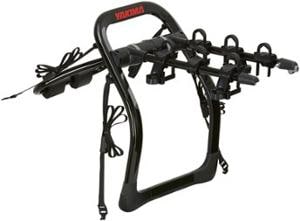
1. Yakima FullBack 3
- Bike Capacity: Up to 2 bikes
- Attachment System: 4-strap with interlocking HUB alignment
- Padding Technology: SuperCush ZipStrip cradles
- Installation: Tool-free setup
The Yakima FullBack 3 is a premium trunk-mounted bike rack that strikes an impressive balance between style and function. Its SuperCush ZipStrip technology gently cradles your bikes during transit, preventing scratches and frame damage while making loading and unloading remarkably effortless. The bomber external frame is built to handle tough conditions without compromising its sleek aesthetic.
Setup is straightforward thanks to the 4-strap system and interlocking HUB that aligns all key adjustment points without requiring any tools. A fun bonus is Yakima’s signature bottle opener, perfect for a post-ride reward. Whether heading out solo or with a companion, this rack delivers reliable performance and a polished look that stands out on the road.
Pros:
- SuperCush ZipStrip offers excellent bike protection
- Tool-free, intuitive installation
- Premium, stylish build quality
Cons:
- Only holds 2 bikes despite “3” in name
- Higher price point than competitors
See the Yakima FullBack 3 See the Yakima FullBack 2
2. Allen Sports Deluxe

- Model: 102DB
- Mount Type: Trunk mounted
- Bike Capacity: Up to 2 bikes
- Vehicle Compatibility: Sedans, hatchbacks, minivans, SUVs
The Allen Sports Deluxe 102DB is a reliable and budget-friendly trunk rack designed for a wide range of vehicles. Its patented tie-down system ensures your bicycles stay firmly secured throughout the journey, reducing movement and the risk of damage. The universal fit makes it a practical choice for drivers who switch between different vehicles.
Installation is simple and accessible even for first-time users, requiring no special tools or technical knowledge. The rack’s straightforward design prioritizes function over frills, making it an ideal pick for casual cyclists who need dependable transport without breaking the bank. It delivers solid everyday performance for short trips and weekend adventures alike.
Pros:
- Affordable and widely available
- Fits a broad range of vehicles
- Patented tie-down system for secure hold
Cons:
- Basic design with limited features
- No integrated anti-sway mechanism
3. Saris Bones

- Weight: 11 lbs
- Bike Capacity: 2 bikes, up to 35 lbs each
- Frame Construction: Injection-molded arms and legs
- Anti-Sway: Ratcheting anti-sway straps included
The Saris Bones has earned its iconic status over decades of consistent performance and thoughtful design. Its arc-based structure separates bikes on different levels, preventing contact and frame damage during transport. Rubberized feet protect your car’s finish while vinyl-coated hooks keep your bike safe, making it a rack that genuinely cares for both your vehicle and your ride.
Weighing just 11 lbs, it’s light enough to handle easily yet built with the strongest injection-molded frame on the market for rust-free durability. Installation requires no overhead lifting, making it accessible to all users. Ratcheting anti-sway straps provide a rock-solid hold even on longer journeys, cementing the Bones as a trusted go-to for cyclists of all experience levels.
Pros:
- Rust-free, injection-molded construction
- Arc design prevents bike-to-bike contact
- Fits vehicles with spoilers
Cons:
- Limited to 2 bikes
- Slightly higher cost than basic models
4. Bell Bike Trunk Rack

- Assembly: 100% fully assembled out of the box
- Weight Capacity: 105 lbs total (35 lbs per bike)
- Folding: Push-button foldable design
- Compatibility: Most sedans, hatchbacks, SUVs, and minivans
The Bell Bike Trunk Rack arrives completely assembled and ready to use straight out of the box, saving you valuable time and effort. Its push-button folding mechanism makes storage and transport incredibly convenient. With a total weight capacity of 105 lbs, it comfortably handles up to three bikes, making it well-suited for family outings and group cycling trips.
While versatile, it does come with important fitment notes — hooks and straps must always attach to metal surfaces, and certain vehicle features like spoilers or bumper skirts may limit compatibility. As long as your vehicle meets the requirements, this rack provides dependable, hassle-free performance. It’s a practical, no-nonsense solution for riders who value simplicity and readiness.
Pros:
- Comes fully assembled
- Convenient push-button fold for storage
- Generous 105 lb total weight capacity
Cons:
- Not compatible with spoilers or soft bumpers
- Hooks must attach to metal only
5. Allen Sports Ultra

- Material: Alloy steel construction
- Weight: 2.7 kg
- Load Capacity: 35 lbs
- Folded Dimensions: 14.37 x 7.28 x 3.54 inches
The Allen Sports Ultra stands out with its patented foldable design that compresses down to smaller than a shoebox, making storage and transportation remarkably easy when the rack isn’t in use. Built from alloy steel, it offers a sturdy yet lightweight profile that suits sedans, SUVs, hatchbacks, and minivans. The strap-based mounting system ensures broad vehicle compatibility.
Its compact folding capability is a standout feature for cyclists living in apartments or those with limited storage space. Setup is quick and straightforward, and the rack performs reliably for everyday use. While its load capacity is more modest compared to heavy-duty alternatives, it’s more than sufficient for single-bike transport and casual weekend rides.
Pros:
- Folds smaller than a shoebox for easy storage
- Lightweight alloy steel build
- Broad vehicle compatibility
Cons:
- Lower 35 lb load capacity
- Designed primarily for single bike use
6. Soarify Sports Deluxe

- Bike Capacity: 2 bikes with 70 lb total load capacity
- Mounting: Strap and hook system, no hitch required
- Compatibility: Sedans, SUVs, and hatchbacks
- Storage: Foldable into slim, compact profile
The Soarify Sports Deluxe is a versatile trunk rack that requires no trailer hitch, attaching securely via a straightforward system of straps, hooks, and protective padding. With a combined load capacity of 70 lbs, it handles two bikes comfortably, making it a smart companion for family trips and group rides. Its weather-resistant materials ensure long-lasting durability across various conditions.
When not in use, the rack folds down into a slim, space-saving profile that’s easy to stow in a trunk or closet. Its universal fit across sedans, SUVs, and hatchbacks adds to its appeal as an everyday solution. For riders seeking an accessible, fuss-free rack without the need for hitch installation, the Soarify Deluxe delivers reliable value.
Pros:
- No hitch installation required
- Folds compactly for easy storage
- Weather-resistant, durable materials
Cons:
- Newer brand with limited long-term track record
- Limited to 2 bikes
7. Thule OutWay

- Bike Capacity: 3 bikes, up to 33 lbs each
- Weight: 19 lbs 9.6 oz
- Integrated Lock: Yes
- Attachment Point: Frame-mounted with spoiler compatibility
The Thule OutWay Hanging is a premium 3-bike trunk rack engineered for versatility and security. Compatible with a wide range of vehicles including those with spoilers, it accommodates various bike types such as kids’ bikes and bikes with fenders. Its integrated locking system provides added peace of mind, keeping your bikes secured against theft when you step away from your vehicle.
At under 20 lbs, it’s manageable to install and remove, yet robust enough to hold three bikes totaling nearly 100 lbs. Trunk access remains available even when unloaded, adding everyday convenience. For cyclists who prioritize premium build quality, multi-bike capacity, and enhanced security features, the Thule OutWay is a top-tier choice that justifies its investment.
Pros:
- Holds 3 bikes with integrated lock
- Compatible with spoilers and fender bikes
- Trunk access available when unloaded
Cons:
- Premium price point
- Heavier than basic 2-bike alternatives
8. Saris Solo

- Weight: 2 lbs — lightest in the Saris trunk rack lineup
- Material: 100% recyclable injection-molded plastic
- Anti-Sway: Built-in anti-sway and ratcheting straps
- Origin: Made in Madison, WI, USA
The Saris Solo is purpose-built for solo riders who want the lightest, most compact trunk rack available. Weighing just 2 lbs, it’s effortless to mount, remove, and store — fitting easily in small car trunks or apartment closets. Despite its minimal footprint, it features ratcheting and anti-sway straps that deliver a stable, secure hold throughout the journey.
Constructed from 100% recyclable injection-molded plastic, it’s rust-free and built to endure years of regular use. Made proudly in the USA, it reflects Saris’s commitment to quality and sustainability. New users should consult the Saris Fit Guide before purchasing, as compatibility varies by vehicle and bike frame. For casual, everyday single-bike transport, the Solo is tough to beat.
Pros:
- Ultralight at just 2 lbs
- Rust-free, recyclable construction
- Made in the USA
Cons:
- Carries only one bike
- Compatibility check required before purchase
The Ultimate Guide to Choosing a Trunk-Mounted Bike Rack
For many cycling enthusiasts, the adventure truly begins where the pavement ends or where new trails beckon. However, getting your bicycle from your garage to those distant paths requires a reliable method of transportation. While roof racks and hitch-mounted racks are popular options, the trunk-mounted bike rack remains one of the most accessible, economical, and versatile solutions available. Driven by a system of straps, hooks, and padded support bars, these racks fasten directly onto the trunk, hatch, or bumper of your vehicle. Because they do not require a pre-installed trailer hitch or a roof rack system, they are the go-to choice for casual riders, road trippers, and families alike.
Choosing the right trunk-mounted bike rack is not a matter of grabbing the first model you see on the shelf. A poor choice can lead to damaged vehicle paint, structural strain on your car’s body panels, or worse, a catastrophic failure on the highway that compromises your precious bicycles and the safety of drivers behind you. To find the perfect balance between security, convenience, and value, you must evaluate several critical factors ranging from vehicle compatibility to frame geometries.
Understanding Vehicle Compatibility
The foremost consideration when shopping for a trunk rack is whether it will safely fit your specific vehicle. Unlike hitch racks, which rely on standardized receiver sizes, trunk racks physically rest against your vehicle’s sheet metal, plastic trim, and glass. Consequently, a rack that fits a mid-sized sedan perfectly might be entirely incompatible with a compact hatchback, a crossover, or a luxury vehicle with a prominent rear spoiler.
Checking the Manufacturer Fit Guides
Never guess when it comes to fitment. Reputable bike rack manufacturers maintain comprehensive, regularly updated online fit guides. Before making a purchase, you must enter your vehicle’s exact make, model, year, and trim level into these databases. The guide will explicitly state if a specific rack model is approved for your vehicle, or if it requires specific configuration adjustments. If a manufacturer’s fit guide explicitly excludes your car, do not attempt to force a fit, as doing so voids warranties and risks physical damage.
Navigating Spoilers and Plastic Trim
Modern vehicle designs pose unique challenges for trunk-mounted racks. Many contemporary cars feature plastic aerodynamic spoilers at the top of the rear trunk or hatch lid. The structural straps of a trunk rack are engineered to pull tightly against rigid metal edges. If a strap is routed over a plastic spoiler, the tension can easily crack or deform the plastic. Some premium trunk racks are engineered with arched frames or specialized strap placements designed to bypass spoilers entirely. If your vehicle features a delicate or oversized plastic spoiler, you may need a specialized rack or alternative rack type altogether.
Glass Hatches and Structural Strength
Certain vehicles, particularly some hatchbacks and station wagons, feature rear windows that extend all the way to the edge of the trunk frame, meaning the rack’s upper hooks or pads must rest directly on or near the glass. While many racks are approved for glass-heavy designs, they require precise placement to distribute weight across the structural frame rather than putting pressure solely on the glass. Ensure the rack you choose is certified for vehicles with large rear glass panels if your car fits this description.
Capacity and Weight Considerations
Trunk-mounted racks are generally designed to carry between one and three bicycles. Choosing the correct capacity involves understanding both the number of bikes you intend to transport and the structural weight limitations of your vehicle’s rear trunk or hatch lid.
Determining the Number of Bikes
While it might be tempting to buy a three-bike rack “just in case,” it is wiser to buy a rack that matches your everyday needs. A two-bike rack is lighter, easier to install, and creates less leverage and strain on your trunk hinges than a three-bike variant. However, if you regularly ride in groups or travel with family, a robust three-bike system is essential. Keep in mind that as you add more bikes, loading them becomes a tactical puzzle of alternating handlebar and saddle directions to prevent the bikes from damaging one another.
Weight Limits and Bicycle Types
Standard trunk-mounted racks typically have a weight limit of 30 to 35 pounds per bike, with an overall capacity ceiling around 90 to 100 pounds for a three-bike model. This weight limit is perfectly adequate for standard aluminum or carbon fiber road bikes and standard mountain bikes. However, if you own heavy steel cruisers, downhill mountain bikes, or electric bikes (e-bikes), standard trunk racks are generally unsuitable. E-bikes frequently weigh between 40 and 60 pounds each, which can easily warp a trunk lid or snap restraint straps. For heavy bikes, hitch-mounted platform racks are a mandatory alternative.
Key Design Features to Evaluate
Once you have narrowed down your options to racks that physically fit your vehicle and accommodate your weight requirements, you can focus on user experience, security, and build quality.
The Cradle and Tie-Down System
The cradles are the plastic or rubber components where your bike’s top tube rests. Look for deep, padded cradles that isolate the bike frame from road vibrations. The tie-down straps that secure the bike into the cradle should be robust and easy to tighten. Premium racks feature anti-sway cradles or anti-sway cages. These are secondary cradles that attach to the vertical tubes of your bicycle (such as the seat tube), preventing the bikes from swinging back and forth like a pendulum during acceleration and braking. Anti-sway technology is crucial for keeping your bikes from colliding with each other or banging against your car’s bumper.
Frame Adjustability and Geometric Versatility
Traditional trunk racks feature two horizontal support arms that slide through the triangle of a bicycle’s frame. This layout works flawlessly for traditional horizontal top tubes found on standard road bikes and older hybrid bikes. However, if you plan to transport full-suspension mountain bikes, step-through beach cruisers, or children’s bikes, the unconventional frame geometry can make loading difficult or impossible. Look for racks with independently adjustable arms that can accommodate different angles, or prepare to purchase an aftermarket bike frame adapter bar. This adapter connects between the seat post and the handlebars, creating an artificial top tube that rests securely in the rack’s cradles.
Padding and Vehicle Protection
Since the rack makes contact with your vehicle’s paint, the quality of the padding is paramount. High-density foam or soft rubber pads should be present at all contact points. Cheaper foam can degrade quickly under UV sunlight or compress completely, allowing the metal frame of the rack to scrape your paint. Furthermore, look for rubber-coated or vinyl-coated metal hooks where the straps attach to the trunk seams. Bare metal hooks will instantly scratch your clear coat and invite rust.
Security and Ease of Use
A rack that is frustrating to install or leaves your gear vulnerable to theft will ultimately collect dust in your garage. Balancing security features with everyday convenience is a hallmark of a smart purchase.
Installation and Storage Convenience
Trunk racks rely on proper strap tension to remain safe. Racks that feature intuitive adjustment mechanisms, such as quick-lock adjustment levers or labeled settings, make the mounting process significantly faster. Additionally, consider what happens to the rack when it is not in use. Many high-quality trunk racks fold completely flat, allowing you to easily store them in your trunk or hang them compactly on a garage wall.
Theft Prevention
Because trunk racks are fastened via fabric straps, an opportunistic thief with a pocketknife could theoretically cut the straps and walk away with both the rack and your bicycles. To mitigate this risk, some manufacturers embed steel cables inside the primary straps to prevent cutting. Other models include locking cylinders that lock the rack directly to the car frame or feature integrated cable locks to secure the bikes to the rack itself. If the rack you prefer lacks built-in locks, you will need to invest in a long heavy-duty cable lock wrapped through your car’s tow loops or trunk frame to deter theft during rest stops.
Final Practical Considerations Before Buying
Before making your final choice, visual and practical realities must be acknowledged. First, consider license plate and taillight visibility. Depending on your vehicle’s shape and the bikes you load, a trunk rack can heavily obscure your rear license plate and taillights, which can lead to traffic citations in certain jurisdictions. Some users opt to purchase auxiliary license plate holders or light bars for extended road trips.
Second, remember that once a trunk rack is installed and tensioned, you will lose the ability to open your trunk or rear hatch. Attempting to open the hatch with the rack installed can damage the lifting struts, bend the hinges, or cause the rack to shift violently. If frequent access to your trunk while traveling is a priority, this is a major limitation to keep in mind.
By carefully consulting fitment guides, assessing the weight and geometry of your bicycle fleet, and prioritizing protective features like anti-sway cradles and premium padding, you can confidently select a trunk-mounted bike rack that provides safe, reliable transport for countless miles ahead.