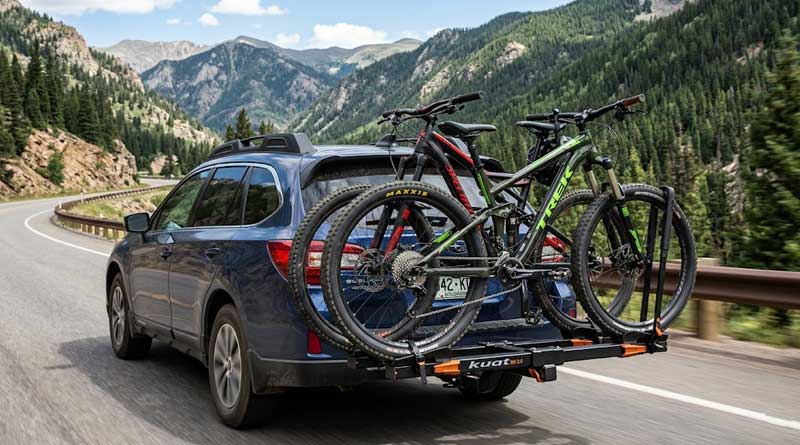
Best Hitch Bike Racks for 2 Bikes of 2026
Looking for the best way to haul two bikes on your next road trip or camping adventure? A hitch bike rack is your answer. Unlike trunk straps that can scratch your car or roof racks that require heavy lifting, hitch racks are sturdy, easy to load, and keep your bikes secure. In this guide, we’ve rounded up the top options for two bikes—simple to use, built to last, and kind to your wallet.
1. Thule T2 Pro XTR

- Max Weight Capacity: 60 lbs per bike
- Hitch Receiver Size: Fits 1.25 inches or 2 inches
- Bike Attachment Point: Wheel mount with no frame contact
- Trunk Access: Loaded tilt mechanism
The Thule T2 Pro XTR is a premium platform hitch rack engineered to carry up to two heavy bicycles safely. It accommodates a wide variety of cycles, including fat-tire variants, electric bikes, and kids’ bikes, making it incredibly versatile for cycling families. A standout benefit is its tool-free installation and integrated wheels, which allow users to roll the rack effortlessly to and from the garage during storage transitions.
This rack features an intelligent loaded tilt feature that grants hassle-free access to your trunk without unloading your gear. Because it fastens directly to the wheels, your bike frames remain completely safe from scratches and cosmetic damage. It is a highly stable, secure choice equipped with integrated locks, though its 52-pound frame is relatively heavy to lift during initial vehicle mounting.
Pros:
- Zero frame contact prevents scratches
- Integrated wheels make off-vehicle moving easy
- Tool-free installation process
Cons:
- Heavy unit weight at 52 pounds
- Extension compatible only with the 2-inch model
2. MaxxHaul Platform Bike Rack

- Max Weight Capacity: 38 lbs per bike (75 lbs total)
- Hitch Receiver Size: Fits standard 2 inches (Class I, II, III, IV)
- Wheelbase Capacity: Fits up to 63 inches
- Storage Design: Removable vertical post for compact spacing
The MaxxHaul Platform Bike Rack offers budget-conscious riders a dependable transport solution built with durable alloy steel construction. Tailored to fit standard 2-inch receivers across various hitch classes, this platform rack securely transports two bicycles simultaneously. It features adjustable tire cradles and padded frame hooks engineered to accommodate wheel diameters ranging from 20 to 26 inches.
To ensure a quieter drive, a built-in locking knob minimizes hitch wobble and side-to-side sway while navigating bumpy roads. When you arrive home, the vertical post can be completely removed to allow for compact garage storage. However, its tire width limits prevent it from carrying modern fat-tire models, and it cannot be used on recreational vehicles like campers or trailers.
Pros:
- Affordable and highly robust steel construction
- Removable post allows space-saving storage
- Anti-wobble locking knob enhances highway stability
Cons:
- Not compatible with RVs, campers, or trailers
- Limited to 2.25-inch maximum tire widths
See the MaxxHaul Platform Bike Rack
3. Kuat Sherpa 2.0

- Max Weight Capacity: 40 lbs per bike
- Rack Weight: Lightweight 32 pounds
- Trunk Access: Pivot lever with loaded tilt
- Hitch Receiver Size: Fits 1.25 inches or 2 inches
The Kuat Sherpa 2.0 blends stunning aesthetics with incredibly practical functionality, presenting a lightweight aluminum alternative for daily cyclists. Weighing a mere 32 pounds, it stands out as one of the easiest platform racks to mount or detach single-handedly. It implements high-clearance, folding tire cradles that make loading your gear swift, straightforward, and clear of vehicle obstacles.
An intuitive pivot lever can be operated easily to tilt the entire assembly downward, ensuring full trunk entry even when fully loaded. Security is tightly managed via an integrated locking system to deter opportunistic theft during quick pit stops. It is crucial to note that its 40-pound individual limit makes it unsuitable for heavy electric commuter options.
Pros:
- Extremely lightweight and effortless to handle
- User-friendly foot pivot lever for easy tilting
- Sleek, premium visual design and finish
Cons:
- Weight capacity is too low for most e-bikes
- Cannot be expanded with rack extensions
4. Thule EasyFold XT

- Max Weight Capacity: 65 lbs per bike
- Hitch Receiver Size: Fits 1.25 inches and 2 inches
- Storage Design: Fully foldable with carrying handles
- Bike Compatibility: Electric and Fat-Tire bikes
The Thule EasyFold XT represents a top-tier option specifically optimized to handle heavy electric bikes and rugged fat-tire setups. Boasting an impressive 65-pound individual weight rating, this platform carrier manages massive payloads with complete structural integrity. The most impressive innovation is its fully collapsible footprint, turning a full-sized rack into a neat package for quick storage.
Loading is managed via wheel attachments and adaptable frame clamps that adjust seamlessly to various geometries. The smart loaded tilt mechanism drops the rack low enough to clear large tailgates without disturbing your mounted cargo. While it offers premium convenience and robust security locks, it demands a higher financial investment compared to traditional options.
Pros:
- High weight limit accommodates heavy electric bikes
- Folds down compactly for hassle-free trunk storage
- Fits both standard hitch receiver dimensions natively
Cons:
- Premium price point may not fit all budgets
- Does not accept any add-on extensions
5. Retrospec Lenox

- Hitch Receiver Size: Fits 2 inches (Class III or IV only)
- Frame Style: Hanging type with foldable arms
- Anti-Rattle Feature: Included adapter to minimize wobble
- Bike Attachment Point: Individual frame cradles and straps
The Retrospec Lenox presents a traditional hanging-style carrier meant for adventurers searching for simplicity and rugged steel reliability. Designed to fit securely into Class III or IV 2-inch hitches, it safely carries multiple frame styles from mountain to road models. The individual rubber cradles isolate each bike frame nicely, ensuring your paint jobs arrive at trails damage-free.
Its clever folding mechanism lets the main carry arms drop down flat when empty, streamlining your vehicle’s profile for parking. An included anti-rattle adapter significantly dampens noisy road vibrations and excessive sway during highway travel. Unfortunately, hanging style mounts are not recommended for step-through frames or heavy e-bike models without purchasing extra adapters.
Pros:
- Foldable carry arms reduce overall vehicle length
- Anti-rattle adapter keeps highway drives quiet
- Accommodates a wide variety of standard frames
Cons:
- Not compatible with Retrospec e-bikes or trailers
- Hanging style requires horizontal top bars to mount
6. TANX Bike Rack
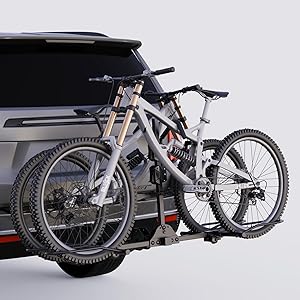
- Max Weight Capacity: 80 lbs per bike (160 lbs total)
- Max Tire Width: Up to 5 inches
- Trunk Access: Positive-latch smooth tilt backward
- Hitch Receiver Size: Universal 2 inches
The TANX Bike Rack is a heavy-duty platform titan engineered using reinforced alloy steel to carry demanding setups safely. With a massive 160-pound total load threshold, it easily carries heavy e-bikes, mountain bikes, and fat-tire models up to five inches wide. The sliding wheel trays adjust effortlessly, securing wheelbases up to 59 inches long via a dependable quick-lock strap configuration.
A specialized positive-latch tilt mechanism allows drivers to tilt the fully loaded platform away from tailgates smoothly to retrieve gear. Safety is enhanced through integrated anti-wobble tighteners and non-scratch padding wrapped around every single contact arm. It provides exceptional stability for long-distance overlanding, though its massive steel framing adds noticeable weight to your vehicle rear.
Pros:
- Massive weight capacity perfect for heavy e-bikes
- Extra-wide cradles fit fat tires up to 5 inches
- Excellent anti-wobble system guarantees quiet transport
Cons:
- Heavy steel framework makes installation physically demanding
- Only fits larger 2-inch receiver styles
7. MaxxHaul 50025

- Max Weight Capacity: 50 lbs per bike (100 lbs total)
- Hitch Receiver Size: Fits 1.25 inches and 2 inches
- Frame Style: Hanging mast style with rubber cradles
- Stability System: Built-in upright locking knob
The MaxxHaul 50025 is an entry-level hanging mast carrier that prioritizes wide vehicle compatibility and structural simplicity. Equipped with a versatile hitch adapter, it links seamlessly to both 1.25-inch and 2-inch receivers across Class I through IV setups. It safely supports a total weight capacity of 100 pounds, making it great for standard road and mountain configurations.
Bicycles are stabilized using upgraded rubber cradles coupled with tight buckle-type straps that damp movement while driving. An integrated locking knob fastens down the main upright mast, effectively minimizing annoying wobble over uneven pavement. However, because it relies on a traditional horizontal top bar layout, step-through frames will require an aftermarket crossbar adapter.
Pros:
- Dual hitch compatibility out of the box
- Budget-friendly choice for casual weekend cyclists
- Upgraded rubber cradles firmly protect frame paint
Cons:
- Requires horizontal top bars or separate adapters
- Lacks a loaded tilt feature for trunk access
8. Kuat NV 2.0

- Max Weight Capacity: 60 lbs per bike
- Bonus Feature: Integrated repair bike stand
- Bike Attachment Point: Adjustable front wheel cradles
- Hitch Receiver Size: Fits 1.25 inches or 2 inches
The Kuat NV 2.0 is a premium, feature-packed platform rack designed to cater directly to core trail enthusiasts and racers. Supporting 60 pounds per tray, it handles everything from kids’ models to hefty electric bikes and fat-tire setups easily. A truly unique feature is its built-in trailside work stand, allowing you to perform field repairs comfortably anywhere.
Adjustable wheel cradles combined with robust ratcheting straps lock your investment down firmly without contacting sensitive frame paint. The loaded tilt feature functions flawlessly via a simple pivot handle, allowing easy gear retrieval from your trunk. It is incredibly secure and built to last, though it requires a significant financial commitment up front.
Pros:
- Integrated work stand allows convenient field repairs
- High weight limit supports diverse bike types
- Can expand to four bikes with extensions
Cons:
- Sits at a premium price bracket
- Substantial 52-pound weight makes handling heavy
9. Kuat NV Base 2.0

- Max Weight Capacity: 60 lbs per bike
- Security System: Integrated cable and hitch locks
- Bike Mounting: Platform style with wheel attachment
- Hitch Receiver Size: Fits 1.25 inches or 2 inches
The Kuat NV Base 2.0 provides all the premium structural performance of the standard NV line but inside a sleek, matte-black aesthetic. It eliminates the integrated repair stand to offer a streamlined, stealthy appearance while maintaining an identical 60-pound per bike capacity. Heavy e-bikes and wide fat-tire variants fit perfectly within its highly adjustable platform trays.
Security is a massive focus, as the rack features robust integrated cable locks that disappear right into the frame arms when stored. The loaded pivot system drops downward seamlessly, letting you open your rear hatch without removing your valuable cargo. It offers exceptional highway stability, making it perfect for long drives, despite its premium price point.
Pros:
- Stealthy matte-black look matches modern vehicles
- Strong security suite via hidden cable locks
- Extremely stable platform with zero frame contact
Cons:
- Lacks the field repair stand found on NV 2.0
- Relatively heavy base frame to lift alone
10. Kuat Transfer v2

- Max Weight Capacity: 40 lbs (1.25″) / 60 lbs (2″) per bike
- Hitch Cam Technology: FlatLock anti-wobble (2″ model only)
- RV Compatibility: Certified for 2-inch hitch models
- Trunk Access: Unloaded tilt mechanism
The Kuat Transfer v2 features a unique, minimalist U-frame architecture designed to offer robust platform security without excessive structural weight. Upgraded to handle wider configurations than its predecessor, it fits electric models and kids’ frames easily using hook arm designs. The 2-inch variant benefits heavily from a specialized FlatLock hitch cam that aggressively removes mount vibration.
Notably, the 2-inch version is fully certified for RV use, making it ideal for cross-country camper expeditions. However, unlike its more expensive siblings, this rack is rated for unloaded tilt only, meaning trunk access requires removing bikes first. Its tiered weight rating means buyers must choose their receiver sizes carefully based on bike weights.
Pros:
- Unique U-frame design allows easy bike loading
- 2-inch version is safely approved for RV use
- Lighter overall weight compared to standard platforms
Cons:
- Cannot tilt away comfortably while bikes are loaded
- 1.25-inch model drops weight capacity down to 40 lbs
How to Choose Hitch Bike Racks for 2 Bikes
For cycling enthusiasts, a reliable bike rack is the ultimate bridge between daily routine and outdoor adventure. Whether you are transporting high-end carbon road bikes to a weekend race, hauling heavy electric bikes to a scenic trail, or taking a pair of rugged mountain bikes deep into the backcountry, how you transport your gear matters. Among the various styles available—including roof, trunk, and truck bed mounts—hitch-mounted bike racks have emerged as the gold standard for carrying two bicycles. They offer superior stability, minimal impact on vehicle aerodynamics, and eliminate the exhausting overhead lifting required by roof racks.
However, selecting the perfect two-bike hitch rack is not a one-size-fits-all equation. The market is saturated with diverse designs, weight capacities, and attachment mechanisms. To make an informed investment that protects both your vehicle and your bicycles, you must evaluate several critical factors ranging from your vehicle’s hardware to the specific anatomy of your bikes.
Understanding the Two Main Styles: Platform vs. Hanging Racks
The first and most pivotal decision you will face is choosing between a platform-style rack and a hanging-style rack. This choice fundamentally dictates how your bikes are loaded, how secure they remain during transit, and what types of bicycles you can transport.
Platform-Style Hitch Racks
Platform racks feature trays or cradles that support the bicycles by their wheels. Once the wheels are settled into the trays, the bike is secured either by a ratcheting arm over the front tire or a clamp on the frame. Platform racks are widely considered the premium choice for two bikes due to their exceptional stability. Because the bikes sit firmly on a platform, side-to-side swaying is virtually eliminated, preventing the bicycles from bumping into each other or the vehicle.
The primary advantage of a platform rack is its versatility. It accommodates almost every type of bicycle frame shape, including step-through models, full-suspension mountain bikes, and children’s bikes, without requiring special adapters. Furthermore, top-tier platform models secure the bike solely via the tires, ensuring zero frame contact—a mandatory feature for protecting delicate carbon fiber frames from abrasions.
Hanging-Style Hitch Racks
Hanging racks utilize a mast with support arms that extend outward, allowing the bicycle to hang by its top tube (the horizontal frame tube). The bikes are typically secured with rubber straps around the frame. These racks are generally lighter, more compact, and more affordable than their platform counterparts.
While hanging racks are highly effective for traditional road and hybrid bikes with standard triangular frames, they present challenges for modern bike designs. Full-suspension mountain bikes, women’s step-through frames, and kids’ bikes often lack a straight, horizontal top tube. To transport these on a hanging rack, you must purchase an aftermarket top-tube adapter bar that connects the seat post to the handlebars. Additionally, hanging racks allow for more natural bike movement, meaning you may need to utilize extra bungee cords or straps to prevent the front wheels and handlebars from spinning or swaying into adjacent bikes during transit.
Receiver Hitch Size and Class Compatibility
Before purchasing any hitch rack, you must look underneath your vehicle to identify the size and class of your receiver hitch. Hitch receivers typically come in two standard square opening sizes: 1.25 inches and 2 inches.
Matching the Shank to Your Receiver
Smaller passenger cars and compact crossovers are usually limited to 1.25-inch receivers (Class 1 or Class 2). Larger SUVs, trucks, and vans almost always feature a 2-inch receiver (Class 3 or higher). Many two-bike hitch racks are sold in dedicated 2-inch or 1.25-inch models, while some versatile options include an adapter sleeve that allows a 1.25-inch shank to fit securely inside a 2-inch receiver.
It is crucial to note that if you have a Class 1 hitch, it has a strict tongue weight limit. Even though a two-bike rack is relatively light, some heavy platform racks combined with two electric bikes can exceed a Class 1 rating. Always cross-reference the combined weight of your rack and bicycles with your vehicle’s specific hitch towing capacity.
Weight Capacity and the E-Bike Revolution
The rapid rise of electric bicycles (e-bikes) has transformed the bike rack industry. Standard adult road or mountain bikes generally weigh between 20 and 35 pounds. Most traditional two-bike hitch racks are engineered to handle roughly 35 to 45 pounds per bike, which is more than adequate for non-motorized fleets.
However, an e-bike outfitted with a battery and motor frequently weighs between 50 and 75 pounds. If you plan to transport electric bikes, you must purchase a heavy-duty platform rack explicitly rated for high weight capacities—often up to 60 or 65 pounds per tray. Loading heavy e-bikes can also be physically taxing, so look for heavy-duty racks that are compatible with add-on loading ramps, allowing you to roll the e-bikes onto the platform rather than lifting them.
Bike Anatomy: Geometry, Wheel Size, and Tire Width
Your choice of rack must align perfectly with the physical dimensions of the bicycles you own today, as well as those you might buy in the future.
Wheelbase and Tire Size
Progressive mountain bike geometries have led to longer wheelbases (the distance from the center of the front wheel to the center of the rear wheel). Ensure the platform rack trays are long enough to cradle long-wheelbase bikes securely. Similarly, tire width is a critical factor. Fat-tire bikes (with tires measuring 4 to 5 inches wide) will not fit into standard road or trail bike trays. Many manufacturers sell fat-bike adapter kits, which include wider plastic cradles and longer ratcheting straps, to accommodate these oversized tires.
Frame Contact Concerns
As mentioned previously, if you ride a bike with a painted or carbon fiber frame, avoiding frame contact is paramount. Racks that clamp down on the frame can rub through paint or structurally damage carbon tubing over long, bumpy drives. For these setups, look exclusively for “wheel-hook” or “dual-arm” platform designs that touch nothing but the rubber of your tires.
Accessibility and Vehicle Interference
A major downside of installing a hitch rack is that it blocks access to your vehicle’s rear cargo area, trunk, or tailgate. Fortunately, modern engineering has solved this issue through pivoting and tilting mechanisms.
Tilting and Swing-Away Features
Most high-quality two-bike platform racks feature a tilting mechanism. By pulling a lever or releasing a pin, the entire rack—even when fully loaded with two bicycles—can tilt downward away from the vehicle. This creates enough clearance for you to open your SUV’s hatchback or a car’s trunk to retrieve groceries, gear, or luggage. For truck owners with drop-down tailgates or van owners with swinging rear doors, a standard tilt rack might still cause minor interference. In these scenarios, premium “swing-away” adapters or dedicated swing racks allow the entire assembly to swing out a full 90 degrees to the side, completely clearing the rear perimeter of the vehicle.
Security and Peace of Mind
Your bicycles represent a significant financial investment, making security a non-negotiable feature for road trips where your vehicle might be left unattended at a hotel, restaurant, or trailhead parking lot. A robust security system on a hitch rack operates on two fronts.
Hitch Locks vs. Bike Locks
First, the rack must be locked to the vehicle. Look for racks that include a locking hitch pin or an integrated expanding wedge lock within the receiver shank. This prevents thieves from simply removing the hitch pin and walking away with your entire rack and bikes combined. Second, the bikes must be locked to the rack. Many premium racks feature integrated heavy-duty cable locks or ratcheting locking arms that lock with a key. While no lock is entirely theft-proof against a determined criminal with power tools, integrated locks serve as an excellent visual and physical deterrent for opportunistic theft.
Conclusion: Finding Your Perfect Match
Choosing the best two-bike hitch rack ultimately comes down to a balance of budget, bike type, and user preference. If you require a lightweight, budget-friendly option for traditional road or hybrid bikes, a hanging mast rack will serve you well. However, if you transport heavy e-bikes, delicate carbon frames, or varied bike geometries, investing in a robust platform-style rack is undoubtedly the wisest choice. By matching your vehicle’s hitch size, verifying weight ratings, ensuring zero frame contact if necessary, and prioritizing features like tilting mechanisms and integrated security, you can travel with absolute confidence, knowing your gear is safe and ready for the road ahead.