Best Photochromic Cycling Glasses of 2026
When the sun keeps ducking behind clouds, you need eyewear that keeps up. Photochromic cycling glasses are the smart solution, with lenses that automatically darken in bright sunlight and lighten when the sky turns grey. This means you get one pair of glasses that works for the whole ride, from shady forests to open roads. No more stopping to swap lenses. Just clear, protected vision and a smoother, safer journey, letting you focus on the road ahead and enjoy every mile.
1. KAPVOE Photochromic Glasses

- Lens Transmission: 85% (clear) to 15% (dark), UV400 protected
- Frame Material: Ultra-light memory TR90
- Special Feature: Built-in myopia frame included
- Protection: Blocks UVA & UVB rays; impact and sand resistant
The KAPVOE Photochromic Glasses are a solid choice for cyclists and motorcycle riders who need adaptive lenses without the hassle of switching eyewear. The photochromic lenses respond intelligently to UV intensity, transitioning from nearly clear at 85% transmission to a dark 15% in bright sunlight. The TR90 frame keeps things featherlight and comfortable even during extended wear.
What sets these glasses apart is the included built-in myopia frame, making them prescription-friendly right out of the box. Flexible temples accommodate a wide range of face shapes, and soft rubber nose pads add to the all-day comfort. They cover an impressive range of sports and outdoor activities, making them a versatile and practical investment.
Pros:
- Includes built-in myopia frame
- Wide lens transmission range (85%–15%)
- Lightweight TR90 frame
Cons:
- Darkness depends entirely on UV intensity, not visible light
- No mention of anti-fog ventilation
See the KAPVOE Photochromic Glasses
2. Nova Photochromic Glasses

- Lens Protection: UV400, blocks 100% UVA/UVB rays
- Lens Quality: Impact resistant and anti-scratch
- Frame Design: Half-rim front with rubberized matte black finish
- Accessory: Removable wind-resistant eye liner included
The Nova Photochromic Glasses deliver reliable UV400 protection with impact-resistant, anti-scratch lenses built for active use. The half-rim front frame gives them a sporty yet sleek aesthetic, while the rubberized matte black finish adds a premium, grip-friendly feel. The removable wind-resistant eye liner is a thoughtful addition for high-speed riding or windy conditions.
Nova backs these glasses with a lifetime guarantee against defects, which speaks volumes about the brand’s confidence in its product. The included WYND Blocker microfiber bag doubles as a lens cleaner, adding everyday utility. For riders who want dependable photochromic performance with a clean, minimal design, the Nova glasses are a compelling option at their price point.
Pros:
- Lifetime defect guarantee
- Removable wind-resistant liner for versatility
- Anti-scratch and impact-resistant lenses
Cons:
- Limited feature details compared to competitors
- No myopia frame included
See the Nova Photochromic Glasses
3. REV Z87+ Powersports Glasses

- Safety Rating: Z87+ certified for high-impact resistance
- Frame Material: Swiss-engineered TR90 NZZ ultra-lightweight polymer
- Lens Technology: UV400 photochromic PC lenses with anti-oil coating
- Comfort Features: Rubber nose pads, cushioned foam wind barrier, padded temple tips
The REV Z87+ Powersports Glasses are engineered for serious riders who demand certified protection. The Z87+ rating ensures lenses can withstand high-velocity debris impacts — a critical feature for highway riding or off-road terrain. UV400 photochromic lenses adapt seamlessly between light environments, while the advanced anti-oil coating keeps smudges and dirt from impairing visibility.
The Swiss TR90 NZZ frame material offers an exceptional balance of weight, strength, and flexibility, making long rides genuinely comfortable. Cushioned foam around the frame blocks wind effectively, and the ergonomic rubber nose and temple fittings keep things secure at speed. If safety-rated, all-conditions eyewear is your priority, the REV Z87+ is one of the strongest contenders on this list.
Pros:
- Z87+ certified impact protection
- Anti-oil coating for clear, low-maintenance lenses
- Cushioned wind-blocking foam design
Cons:
- Bulkier goggle-style design may not suit all riders
- No included myopia frame
See the REV Z87+ Powersports Glasses
4. Innerking Photochromic Biking Glasses

- Lens Technology: Intelligent transition photochromic, UV400 with 100% UVA/UVB block
- Frame Material: Lightweight, durable TR90
- Fit Features: Adjustable non-slip rubber nose pads, ergonomic design
- Versatility: Suitable for cycling, fishing, mountaineering, pickleball, and more
Innerking’s Photochromic Biking Glasses combine intelligent lens technology with a universally wearable design. The transition lenses adapt instantly to changing sunlight, functioning as clear glasses indoors and shaded eyewear outdoors — no frame switching required. The 100% UV400 shielding and debris resistance make them a reliable choice for high-speed outdoor environments.
Built from TR90 material, the frame is impressively lightweight without sacrificing durability. Adjustable non-slip rubber nose pads keep the glasses firmly in place during intense activity, whether you’re climbing, cycling, or playing on the court. These glasses work well for both men and women, and their versatile sport compatibility makes them a great everyday outdoor companion beyond just biking.
Pros:
- Instant lens adaptation to light changes
- Unisex ergonomic design with non-slip pads
- Broad multi-sport compatibility
Cons:
- No safety rating (e.g. Z87+) mentioned
- No included carrying case noted
See the Innerking Photochromic Biking Glasses
5. LECAGE Sports Sunglasses

- Lens Type: PC HD photochromic with 99.9% UV400 protection
- Frame Material: TR90 with cylindrical wraparound lens design
- Ventilation: Side air vents for anti-fog airflow during rides
- Package Includes: Clip-on hardshell case, microfiber cloth, storage pouch, manual
The LECAGE Sports Sunglasses impress with their thoughtful design and complete accessory package. The photochromic PC HD lenses transition automatically with light conditions, eliminating the need for multiple pairs. The cylindrical wraparound lens structure combined with the TR90 frame expands your field of view while reducing wind drag — both major advantages for cyclists and riders.
The addition of side air vents is a practical feature that actively prevents lens fogging during intense physical activity. LECAGE also bundles in a clip-on hardshell case, a cleaning cloth, and a storage pouch, offering excellent value right out of the box. With broad sport compatibility and solid UV protection, these glasses make for a compelling, well-rounded choice for outdoor enthusiasts.
Pros:
- Anti-fog side vents for active use
- Clip-on hardshell case for convenient storage
- Wide-field cylindrical lens design
Cons:
- No myopia frame included
- No impact safety rating mentioned
See the LECAGE Sports Sunglasses
6. ROCKBROS Sports Sunglasses

- Lens Transmission: 16%–83% adaptive photochromic, 99.99% UV400 protection
- Frame Design: Oversized wraparound providing 180° field of view
- Compatibility: Built-in myopia frame (up to 400° myopia, 200° astigmatism)
- Package Includes: Hard case, cloth, pouch, myopia frame, polarization test card, certificate
The ROCKBROS Sports Sunglasses stand out with their oversized wraparound lens delivering a full 180° field of view — a genuine advantage for cyclists who need to stay aware of their surroundings. The adaptive photochromic lenses shift between 83% transmission indoors and 16% in bright sunlight, ensuring your eyes are never caught off guard by changing conditions.
The built-in myopia frame makes these glasses prescription-friendly, accommodating up to 400° myopia and 200° astigmatism. ROCKBROS also provides one of the most comprehensive accessory packages on this list, including a polarization test card and certificate alongside the standard case and cloth. Durable, versatile, and feature-rich, these glasses offer outstanding value for the active rider.
Pros:
- 180° wide-field wraparound lens
- Most complete accessory package in the list
- Prescription-compatible myopia frame included
Cons:
- Prescription lenses not included, must be purchased separately
- Large frame may not suit smaller faces
See the ROCKBROS Sports Sunglasses
7. Lamicall Polarized Sunglasses
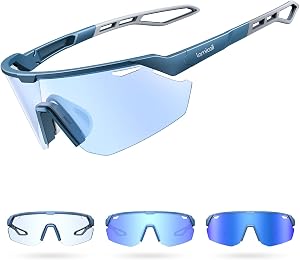
- Lens Type: PC HD photochromic with 99.9% UV400 protection
- Frame Weight: Ultra-light TR90 at just 27g
- Fit Adjustment: Three-level adjustable nose pads with silicone temples
- Ventilation: Side air holes for anti-fog airflow during activity
Lamicall’s Polarized Sunglasses bring a refined, feature-conscious approach to photochromic eyewear. Weighing in at just 27g, the TR90 frame is among the lightest on this list, significantly reducing pressure on your nose and temples during extended wear. The three-level adjustable nose pads and skin-friendly silicone temples allow a custom, secure fit across different facial shapes.
The polycarbonate lenses are impact-resistant and scratch-resistant, and the side air holes promote airflow to prevent fogging mid-ride — a common frustration with sealed eyewear designs. The included hardshell clip case, microfiber cloth, and pouch round out a practical package. Whether cycling, driving, or hiking, Lamicall offers a comfortable, adaptable, and well-equipped option for daily outdoor use.
Pros:
- Ultralight 27g frame for all-day comfort
- Three-level adjustable nose pads
- Anti-fog side ventilation design
Cons:
- No built-in myopia frame
- No safety impact rating (Z87+) mentioned
See the Lamicall Polarized Sunglasses
8. Global Vision Sunglasses

- Safety Rating: Z87.1 certified for high-impact resistance
- Lens Technology: Auto-darkening photochromic, clear to super dark
- Frame Design: Durable black frame built for comfort and stability
- Ideal Use: Motorcycle riding, cycling, and high-performance outdoor activities
The Global Vision Sunglasses keep things straightforward and purpose-built. The Z87.1 safety rating ensures these lenses meet high-impact resistance standards — making them a trustworthy choice for motorcycle riders and cyclists who operate in unpredictable conditions. The auto-darkening photochromic lenses transition from clear to super dark depending on ambient light, offering seamless visibility throughout the day.
The durable black frame is designed with long-ride comfort and stability in mind, staying secure even at high speeds. While Global Vision’s feature list is leaner than some competitors, the core essentials — certified safety, reliable photochromic performance, and a sturdy build — are all present. For riders who value no-nonsense, dependable protection over bells and whistles, these glasses deliver exactly what’s needed.
Pros:
- Z87.1 safety-rated impact resistance
- Clear to super-dark lens range for varied conditions
- Simple, stable, and durable build
Cons:
- Minimal accessory package
- No advanced comfort features like adjustable nose pads
See the Global Vision Sunglasses
Clear Vision on the Open Road: How to Choose Photochromic Cycling Glasses
For cyclists, vision is everything. Navigating changing terrain, spotting potholes at high speeds, and adjusting to fluctuating light conditions require eyewear that can adapt instantly. Traditionally, cyclists had to carry multiple interchangeable lenses or settle for a single tint that was either too dark in the woods or too light in the blinding sun. Photochromic cycling glasses have revolutionized the sport by offering lenses that automatically adjust their tint based on the intensity of ultraviolet (UV) light. Choosing the perfect pair, however, involves understanding lens technology, frame design, and fit. This guide breaks down everything you need to know to make an informed decision.
Understanding Photochromic Technology
Before diving into individual features, it is essential to understand how photochromic lenses work. These lenses contain embedded molecules—typically copper halides or silver chloride—that undergo a chemical reaction when exposed to UV radiation. This reaction causes the molecules to change shape and absorb more light, resulting in a darker lens. When you move away from UV light, such as entering a dense forest or a tunnel, the chemical reaction reverses, and the lens becomes clear or lightly tinted again.
The Visual Light Transmission Range
The most crucial specification to look for is Visual Light Transmission (VLT), which is measured as a percentage. A lower VLT percentage means less light passes through the lens (darker), while a higher percentage means more light passes through (lighter). Photochromic cycling glasses operate within a specific VLT range, such as 15% to 80%. When choosing a pair, look for a wide VLT range that matches your primary riding hours. For instance, if you regularly ride from pre-dawn into the bright afternoon, you need a lens that starts around 80% VLT (almost clear) and darkens to 12% to 15% VLT.
Activation and Deactivation Speed
Not all photochromic lenses react at the same speed. High-end models can transition from light to dark within 15 to 30 seconds, whereas budget options might take several minutes. For cyclists, the speed of “deactivation” (fading back to clear) is often more critical than how fast they darken. If you rapidly transition from a sunlit open road into a dark, tree-covered technical descent, you need lenses that lighten fast enough to prevent temporary blindness. Check manufacturer specifications and user reviews specifically for transition transition speeds.
Evaluating Lens Material and Optics
The lens is the heart of your cycling glasses. Beyond the light-adaptive properties, the material and optical quality directly impact your safety and comfort during long hours in the saddle.
Impact Resistance and Materials
Cycling exposes your eyes to flying debris, gravel, insects, and low-hanging branches. Standard glass or cheap plastics can shatter upon impact, causing severe eye injuries. Ensure the photochromic glasses you choose use polycarbonate or Trivex lenses. Polycarbonate is highly impact-resistant, lightweight, and inherently blocks 100% of harmful UV rays. Trivex is slightly lighter and offers even better optical clarity, though it typically comes at a premium price point.
Base Tints and Contrast Enhancement
While photochromic lenses change from light to dark, they often start with a baseline tint rather than being completely transparent. The base tint influences how you perceive contrast and depth on the road or trail:
- Clear/Grey Base: Provides the most natural color perception. Ideal for road cyclists who ride in varied conditions and want true-to-life vision.
- Brown/Amber Base: Enhances contrast and depth perception. This tint filters out blue light, making it easier to spot trail imperfections, roots, and shadows, making it a favorite for mountain bikers and gravel riders.
- Pink/Red Base: Offers excellent contrast in low-light, overcast, or foggy conditions, helping to highlight green and brown trail features.
Frame Design and Field of View
The frame holds the lenses in place, but it also dictates your peripheral vision, ventilation, and overall safety interface with your helmet.
Frameless vs. Half-Frame vs. Full-Frame
Frame design is not just an aesthetic choice; it dramatically alters your field of view.
- Frameless designs offer an completely unobstructed view, which is incredibly beneficial when you are tucked into an aerodynamic position and looking upward through the top of the lens.
- Half-frame designs feature a frame only along the top, offering excellent downward visibility, which is helpful for looking at your bike computer or checking your immediate path.
- Full-frame designs provide the maximum structural integrity and protection against impacts, but they can slightly clip your peripheral vision.
Ventilation and Anti-Fogging Features
When you work up a sweat climbing a steep hill, warm air gets trapped behind your glasses. If the ambient air is cool, your lenses will fog up instantly. Look for frames that incorporate ventilation ports or cutouts along the top or sides of the lenses. These channels promote airflow, clearing away moisture. Additionally, high-quality photochromic glasses feature an anti-fog hydrophobic coating on the interior of the lens to prevent condensation from sticking.
Fit, Comfort, and Helmet Compatibility
A pair of glasses can have the most advanced lenses in the world, but if they slip down your nose or cause headaches, you will not wear them.
Adjustability and Grip
Look for frames equipped with hydrophilic rubber on the nose piece and temple tips. Hydrophilic means “water-loving”—the material becomes grippier when it comes into contact with sweat, ensuring the glasses stay firmly on your face during rough descents. Adjustable nose pieces are also highly beneficial, as they allow you to alter how close the lenses sit to your face, managing both eyelash clearance and ventilation.
Helmet Integration
Always try on cycling glasses while wearing your preferred cycling helmet. The retention system or straps of the helmet can conflict with the straight temples (arms) of cycling glasses. Ideally, the temples should fit cleanly over or under the helmet straps without pressing into your skull. Pressures points above the ears may seem minor during a five-minute fitting, but after three hours on the bike, they can cause debilitating headaches.
Environmental Considerations and Durability
Photochromic performance can be influenced by external environmental factors, which should guide your final purchase decision.
The Effect of Temperature
An interesting characteristic of photochromic molecules is that they are temperature-dependent. They transition more effectively and darken to a deeper tint in cold weather than in hot weather. If you primarily ride in extreme summer heat, cheap photochromic lenses might fail to get dark enough. Look for premium brands that utilize advanced chemical formulations designed to maintain consistent darkening performance regardless of seasonal temperature spikes.
Scratch and Oleophobic Coatings
Because cycling glasses are exposed to grit, road spray, and greasy fingers, they require frequent cleaning. A durable anti-scratch coating extends the lifespan of your investment. Furthermore, an oleophobic coating repels skin oils and fingerprints, making it much easier to wipe the lenses clean mid-ride using a microfiber pouch without leaving smudges behind.
Conclusion: Investing in Your Vision
Choosing the right photochromic cycling glasses requires balancing optical range, safety features, frame architecture, and long-distance comfort. While premium adaptive eyewear represents a significant financial investment, the safety and convenience of never having to swap lenses or compromise your vision mid-ride makes it one of the most impactful upgrades any cyclist can make. Prioritize a wide VLT range, impact-resistant materials, a secure and fog-free fit, and you will enjoy the road ahead with absolute clarity.