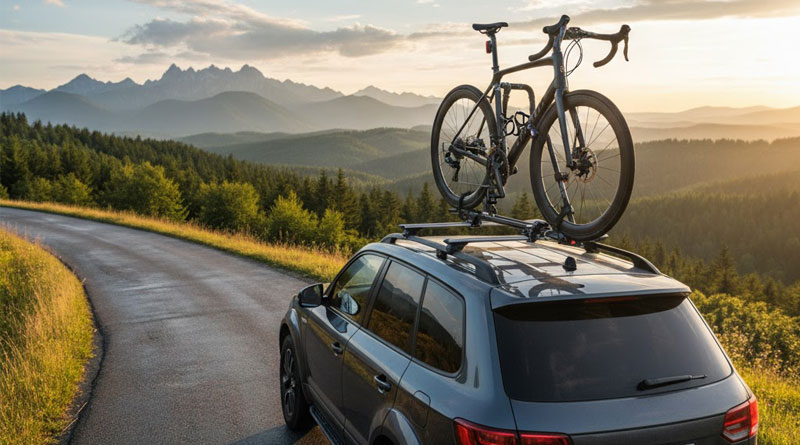
Best Roof Mounted Bike Racks of 2026
If you love biking but hate squeezing bikes into your car, a roof-mounted bike rack is the perfect solution. These racks free up trunk space and keep your car’s interior clean and clutter-free. In this guide, we’ll break down the best roof-mounted bike racks on the market—focusing on easy installation, security, and value. Whether you drive a sedan or an SUV, you’ll find a simple, reliable option to hit the road with your bikes safely secured overhead.
1. Thule ProRide XT

- Max Weight Capacity: 44 lbs
- Bike Attachment Point: Frame
- Rack Weight: 11 lbs
- Compatibility: Kids’ bikes and bikes with fenders
The Thule ProRide XT rooftop bike rack offers a highly convenient solution for cyclists who want to quickly transition from driving to riding. Its upright design ensures that you can load and unload your bicycle with minimal effort. Because it supports the bike securely while you manage the straps, it minimizes the awkward balancing acts often associated with roof-mounted systems.
Constructed with durability in mind, this tough rack holds up well under regular use and safely manages a variety of bike styles. The frame-mount claw is engineered to distribute pressure evenly, which reduces the risk of frame damage during transit. It remains a reliable option for riders looking for speed and security on the road.
- Pros: Fast upright loading; high weight capacity; works well with fenders.
- Cons: Direct frame contact may concern owners of high-end carbon frames.
2. Swagman Upright

- Max Weight Capacity: 35 lbs per bike
- Rack Weight: 5 lbs
- Max Wheelbase: 54 inches
- Max Tire Width: 3 inches
The Swagman Upright rooftop carrier is built for those who value efficiency and minimalist aesthetics. Requiring no front wheel removal, this rack saves you valuable time at the trailhead. The installation process is exceptionally straightforward, aligning quickly with square, round, and oval crossbars up to 3 inches wide without hassle.
Its lightweight construction, blending sturdy plastic and steel, ensures it adds negligible weight to your roof setup. This allows users to mount multiple units on a single vehicle if needed. Security features like wheel tie-down straps and an integrated locking system provide great peace of mind during long drives.
- Pros: Very lightweight design; budget-friendly; no front wheel removal required.
- Cons: Lower weight capacity; frame clamp might restrict some frame geometries.
3. Yakima FrontLoader

- Max Weight Capacity: 40 lbs
- Bike Attachment Point: Wheel
- Rack Weight: 18 pounds
- Compatibility: Kids’ bikes
The Yakima FrontLoader stands out by providing an upright mount that prioritizes the cosmetic condition of your bicycle. By securing the bike solely by its front wheel, the system completely avoids contacting the frame. This makes it an ideal choice for riders who worry about scuffing custom paint jobs or damaging unique tubing designs.
Operation is smooth and intuitive, keeping the bike stable as you finalize the rear wheel strap. While it is on the heavier side for a rooftop mount, the robust build quality justifies the weight. It accommodates a vast range of bike shapes without requiring awkward adjustments or adapter swapping.
- Pros: Zero bike frame contact; easy to load; accommodates multiple wheel sizes.
- Cons: Heavy rack weight; higher profile on the roof when empty.
4. Yakima Universal ForkLift

- Max Weight Capacity: 35 lbs
- Bike Attachment Point: Fork
- Rack Weight: 9 pounds
- Compatibility: Kids’ bikes and bikes with fenders
The Yakima Universal ForkLift is engineered for direct compatibility with round, square, and most factory crossbars right out of the box. Utilizing a fork-mount design, it provides an extremely stable and low-profile towing experience. This setup significantly reduces wind resistance and aerodynamic noise compared to taller upright models.
At just 9 pounds, it is incredibly easy to handle during installation and removal. It also easily accommodates bikes outfitted with traditional fenders, a configuration that often conflicts with other rack styles. It represents a solid, traditional choice for cyclists who prefer the stability of a solid fork connection.
- Pros: Lightweight and aerodynamic; native factory crossbar fit; compatible with fenders.
- Cons: Requires front wheel removal; lower weight limit of 35 lbs.
See the Yakima Universal ForkLift
5. GATHERSKY Roof Bike Rack

- Max Weight Capacity: 50 lbs per bike
- Max Tire Width: 3.1 inches
- Max Wheelbase: 48 inches
- Material Construction: Aluminum and powder-coated steel
The GATHERSKY Roof Bike Rack delivers a high level of security by employing two pivoting upright arms that grip the wheels firmly. This clever layout eliminates any direct contact with the bike frame, shielding your finish from scratches. It is a highly capable choice for heavier bikes, boasting a generous 50 lb capacity.
An integrated tightening knob allows for swift adjustments, while the single-handed ratchet release system streamlines the unloading process. The thoughtful folding design allows the arms to lay completely flat when empty. This reduces drag and ensures a quiet, unobtrusive presence on top of your car during daily commutes.
- Pros: High 50 lb weight capacity; zero frame contact; arms fold flat.
- Cons: Wheelbase limit restricted to 48 inches; heavier overall footprint.
See the GATHERSKY Roof Bike Rack
6. Thule UpRide
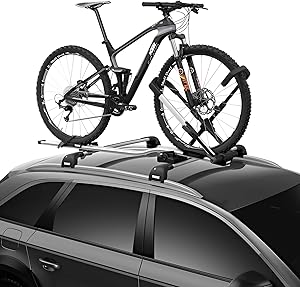
- Wheel Size Compatibility: 20 to 29 inches
- Max Tire Width: 3 inches (5 inches with adapter)
- Bike Attachment Point: Wheel
- Frame Compatibility: Carbon frames and rear suspension
The Thule UpRide is a premium universal roof rack engineered to provide total protection for delicate bike frames. By hooking securely over the front wheel and anchoring the rear, it keeps your frame completely untouched. This makes it ideal for carbon fiber frames, non-traditional frame geometries, and full-suspension mountain bikes.
Loading is fast and precise thanks to the combination of a ratcheting wheel strap and an adjustable hook. Users will also appreciate how simple it is to switch the carrier configuration from one side of the vehicle to the other. It handles diverse riding styles smoothly, adapting to everything from road bikes to fat bikes.
- Pros: Ideal for delicate carbon frames; fat-bike adaptable; simple left-to-right swapping.
- Cons: Premium pricing; fat bike adapter must be purchased separately.
7. Swagman Standard
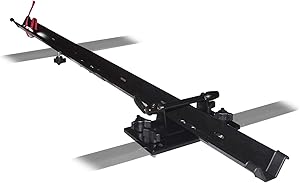
- Bike Attachment Point: Fork
- Crossbar Compatibility: Up to 3 inches wide
- Securing Mechanism: 9mm Quick Release skewer
- Tool Requirements: None for assembly
The Swagman Standard offers an approachable, tool-free assembly process that gets you ready for transit in mere minutes. This fork-mounted roof rack attaches securely onto square, round, and oval crossbars up to 3 inches wide. By holding the bike lower to the roofline, it enhances aerodynamics and reduces side-wind buffeting during highway travel.
Bicycles are anchored tightly using reliable 9mm quick-release skewers built into the mount blocks, preventing unwanted swaying. The solid, no-nonsense steel construction ensures long-lasting durability over many seasons of use. It is an excellent, versatile choice for anyone wanting an uncomplicated, budget-friendly transport solution for their vehicle.
- Pros: Fast tool-free assembly; low aerodynamic profile; highly affordable price point.
- Cons: Incompatible with thru-axles out of the box; front wheel must be stored inside.
8. Thule FastRide

- Standard Compatibility: 9mm quick-release bikes
- Thru-Axle Fitment: Accommodates multiple sizes via adapters
- Brake Compatibility: Disc brakes
- Mounting Mechanism: AcuTight torque limiter knob
The Thule FastRide is a highly sophisticated fork-mount carrier designed for serious cyclists who require exact mounting precision. It features an innovative AcuTight torque limiter knob that audibly clicks once optimal holding pressure is reached. This crucial safeguard prevents over-tightening, protecting your bicycle’s fork dropouts from structural damage.
It supports traditional quick-release setups natively and handles modern thru-axle standards easily via separate adapters. The rear wheel is locked down tight by an adjustable protective strap, and the carrier converts easily for left or right car mounting. It remains a top choice for disc-brake equipped road and gravel bikes.
- Pros: Torque limiter prevents over-tightening; sleek aerodynamics; excellent disc brake clearance.
- Cons: Thru-axle adapters sold separately; locks are not included in the package.
How to Choose Roof Mounted Bike Racks
Transporting your bike safely and efficiently requires choosing the right roof-mounted bike rack. With so many options on the market, selecting the perfect one can feel overwhelming. From weight capacity to bike compatibility, several factors influence which roof-mounted bike rack will work best for your needs. This guide breaks down everything you need to know to make an informed decision and enjoy stress-free cycling adventures.
Understand the Different Types of Roof Mounted Bike Racks
Roof-mounted bike racks are designed to lift your bicycle onto the roof of your car, freeing up space inside the vehicle. There are mainly three types:
Fork-Mount Roof Racks
Fork-mount racks require you to remove the front wheel of your bike and secure the fork to the rack using a quick-release skewer.
Advantages:
- Very stable for long trips.
- Less bike-to-bike contact, reducing scratches.
Disadvantages:
- Requires removal of the front wheel.
- Slightly more setup time.
Wheel-Mount Roof Racks
Wheel-mount racks secure your bike by clamping the tires into the rack.
Advantages:
- Quick and easy to load.
- No need to remove wheels.
Disadvantages:
- Slightly less stable than fork-mount racks.
- Bikes may touch each other if multiple bikes are mounted.
Frame-Mount Roof Racks
Frame-mount racks attach directly to the bike’s frame without touching wheels.
Advantages:
- Simple installation.
- Works with most bike frames.
Disadvantages:
- Not ideal for carbon frames (risk of damage).
- May require adapters for unconventional frames.
Consider Your Vehicle Type
Different vehicles have varying roof structures and weight limits, so it’s important to match the rack with your car.
Roof Rails vs. Bare Roof
- Roof Rails: Easy to attach most racks. Ideal for SUVs, wagons, and hatchbacks.
- Bare Roof: Requires crossbars, which may need to be purchased separately.
Vehicle Weight Limit
Check your vehicle’s manual for roof weight limits, including both the bike and the rack. Overloading the roof can compromise safety and handling.
Assess Bike Compatibility
Not all racks fit all bike types. Consider the following:
Mountain Bikes
Mountain bikes often have wider tires. Make sure the rack can accommodate tire widths of 2.5 inches or more.
Road Bikes
Road bikes usually have thinner tires. Ensure the rack has adjustable clamps to secure the tires without damage.
Electric Bikes
E-bikes are heavier than standard bikes. Confirm that the rack supports the additional weight, usually around 50–70 lbs per bike.
Examine Security Features
A quality roof-mounted bike rack should include secure locking mechanisms to protect your bikes.
Bike Locks
Some racks include integrated locks that secure the bike frame to the rack.
Rack Locks
Rack locks prevent thieves from removing the entire rack from the roof.
Anti-Theft Tips
- Use additional cable locks for extra security.
- Always lock bikes in visible, well-lit areas when parked.
Consider Ease of Installation and Use
A rack that is difficult to mount can lead to frustration.
Quick Installation
Look for racks with tool-free mounting or minimal assembly.
Loading Height
Tall vehicles may require a step stool or ramp to easily lift bikes onto the roof. Some racks come with tilting features to make loading easier.
Adjustable Features
Adjustable wheel trays, frame clamps, and arms ensure bikes of varying sizes fit securely.
Factor in Aerodynamics and Noise
Roof-mounted racks can increase wind resistance and create road noise.
Aerodynamic Design
Sleek, low-profile racks reduce drag and improve fuel efficiency.
Noise Reduction
Rubberized or padded contact points can minimize rattling and squeaking during travel.
Evaluate Durability and Material
Invest in a rack built to last for multiple cycling trips.
Aluminum vs. Steel
- Aluminum: Lightweight and resistant to rust. Ideal for easy handling and frequent use.
- Steel: Stronger, but heavier and may rust over time if not coated properly.
Powder-Coated Finish
A powder-coated finish enhances corrosion resistance and prolongs rack life.
Check for Warranty and Brand Reputation
Reliable brands offer better quality, safety, and customer support.
Warranty Coverage
Look for at least a 1–2 year warranty, covering manufacturing defects and durability issues.
Customer Reviews
Check online reviews and forums for user experiences, paying attention to installation, fit, and longevity.
Compare Price vs. Features
Price should reflect quality and essential features.
Budget-Friendly Options
Basic wheel-mount racks are generally less expensive but may lack advanced security and durability features.
Premium Options
High-end fork-mount racks often include advanced locks, lightweight materials, and aerodynamic designs for serious cyclists.
Balancing Cost and Needs
Choose a rack that meets your specific requirements without overpaying for features you may not use.
Additional Accessories
Some accessories enhance convenience and safety during transport.
Loading Ramps
Helpful for lifting heavy e-bikes or multiple bikes onto tall vehicles.
Car Cover Compatibility
Ensure your car cover fits over the rack if you plan to park outdoors.
Extra Padding
Pads and straps can prevent frame scratches during long trips.
Final Thoughts
Selecting the best roof-mounted bike rack requires balancing convenience, security, compatibility, and cost. Consider your vehicle type, bike weight, and the rack’s features before making a decision. Investing in a high-quality, durable rack ensures your bikes remain safe and protected during every journey. By evaluating types, materials, ease of use, and aerodynamics, you can find a roof-mounted bike rack that makes transporting your bicycles stress-free and enjoyable. A thoughtful choice today ensures countless smooth rides tomorrow.