Best Winter Cycling Jackets of 2026
Winter cycling demands more from your outerwear than any other season. A great winter cycling jacket blocks biting wind, seals out rain and road spray, and traps body heat without turning into a sweatbox once you start climbing. Below we review ten of the best winter cycling jackets on the market today, covering fit, warmth, breathability and value, followed by a detailed buying guide to help you pick the right one for your rides.
1. Baleaf Men’s Cycling Winter Jacket

- Layers: 3-layer windproof, breathable membrane and fleece construction
- Pockets: 4 utility pockets including 2 rear bellowed storage pockets
- Visibility: Reflective elements on chest, elbow, back and rear pocket
- Fit: Form-fit with stretch panels and drop-tail rear hem
The Baleaf jacket earns its place at the top thanks to a genuinely warm three-layer build that keeps chill out without trapping excessive heat during harder efforts. The high collar and drop-tail hem are thoughtful touches that shield your neck and lower back from wind and spray on wet commutes or trail rides.
Storage is generous for a jacket in this price range, with rear pockets large enough for gloves or a neck gaiter. Riders who prefer a snugger, athletic cut will appreciate the stretch fit, though those wanting extra room for base layers may need to size up.
Pros:
- Effective three-layer windproof and thermal protection
- Plenty of pocket space for cold-weather gear
- Reflective detailing improves low-light safety
Cons:
- Snug fit may feel tight over bulky base layers
- Left-side zipper only
2. ARSUXEO Thermal Cycling Jacket

- Waterproofing: 15k rated waterproof membrane with stain-resistant outer
- Warmth: Inner fleece lining paired with extended cuffs
- Fit: Drop tail and elastic hem for a secure, snug fit
- Mobility: Stretch inserts for improved air circulation and movement
ARSUXEO built this jacket around genuine weatherproofing, and the 15k waterproof rating shows in how well it handles drizzle and road spray compared to many softshell competitors. The fleece interior adds real warmth for cold morning rides, while extended cuffs stop icy air sneaking in at the wrists.
The stretch side panels aid mobility but are not wind or waterproof, so expect a little more chill through the sides on gusty days. Anthropic sizing was recently revised to match US standards more closely, so it is worth checking the current size chart before ordering.
Pros:
- Strong 15k waterproof rating for wet rides
- Warm fleece lining and secure hem
- Reflective accents for night visibility
Cons:
- Stretch side panels are not fully weatherproof
- Only two pockets, one of which is not zippered
3. Bikewa Men’s Winter Cycling Jacket

- Layers: 3-layer windproof, breathable film and fleece build
- Pockets: 8 utility pockets including 2 side, chest and inner storage
- Weather resistance: Durable water repellent finish on outer shell
- Ventilation: Underarm zip vents to release heat and sweat
If storage is your priority, the Bikewa jacket is hard to beat, packing eight separate pockets including room for a water bottle in the rear. The three-layer construction keeps out wind effectively while the DWR finish sheds light rain and road grime, keeping the jacket looking clean ride after ride.
Underarm vents make a genuine difference on climbs, letting excess heat escape without opening the whole front zip. The high collar and silicone waist grips round out a jacket that feels purpose-built for long, varied winter rides rather than short commutes.
Pros:
- Exceptional pocket capacity for gear and hydration
- Effective underarm venting reduces overheating
- Water-repellent outer shell resists grime
Cons:
- Bulkier feel due to added pockets
- Runs slightly heavier than minimalist softshells
4. INBIKE Men’s Cycling Jacket

- Fabric: Softshell outer with built-in high-permeability membrane
- Lining: Two-sided polar fleece for warmth and comfort
- Pockets: Mesh-lined pockets for breathability and sweat drying
- Collar: Stand-up collar with chin flap to prevent chafing
The INBIKE softshell stands out for comfort against the skin, thanks to a two-sided fleece lining that feels plush without adding bulk. The membrane underneath does a solid job of blocking wind and light moisture, making this a dependable choice for brisk but dry winter mornings.
Small details like the chin flap show real attention to rider comfort, preventing the zipper from rubbing against your neck on long rides. The 3D ergonomic cut moves well with the body, though riders wanting heavy-duty waterproofing for downpours should look elsewhere.
Pros:
- Soft, comfortable double-sided fleece lining
- Ergonomic 3D cut for natural movement
- Thoughtful chin flap detail
Cons:
- Not designed for heavy rain
- Fewer pockets than rival jackets
5. INBIKE Women’s Cycling Jacket

- Material: 100 percent polyester shell with polar fleece lining
- Fit: Elastic cuffs and lengthened hem for full coverage
- Visibility: Reflective logo and patterns for low-light safety
- Storage: Large capacity zipper pocket for essentials
Designed specifically for women, this INBIKE jacket combines a windproof, waterproof shell with a warm fleece lining that suits spring, fall and winter riding. The heightened stand-up collar and lengthened hem give extra coverage in exactly the spots where cold air tends to sneak in.
Sizing runs true to the included chart, though the brand recommends going up a size for a looser, more relaxed fit. The reflective logo adds a welcome safety margin on darker commutes without making the jacket look overly technical or bulky.
Pros:
- Purpose-built fit for women riders
- Warm fleece lining with windproof shell
- Reflective detailing for visibility
Cons:
- Hand-wash recommended, less convenient care
- Only one main storage pocket
6. Sparx Men’s Winter Softshell Jacket

- Outer layer: Wind-stopper microfiber fabric for harsh conditions
- Pockets: 4 rear pockets including one zipped storage pocket
- Lining: Warm fleece interior for cold-weather comfort
- Use case: Suited to cycling, hiking and general outdoor sport
Sparx keeps things simple and effective with a microfiber wind-stopper shell that holds up well against harsh winter breezes. The fleece lining underneath provides steady warmth, making this jacket a comfortable option for anyone who splits time between cycling, hiking and other outdoor activities.
The four rear pockets, including one zippered option, cover the basics for carrying a phone or keys, though riders wanting front chest storage will find the layout limiting. Overall it is a budget-friendly, no-frills jacket that performs well for its price point.
Pros:
- Durable wind-stopper outer fabric
- Comfortable, warm fleece lining
- Versatile for multiple outdoor sports
Cons:
- No front chest pockets
- Limited reflective detailing
7. BERGRISAR Men’s Cycling Jacket

- Layers: 3-layer softshell with wind-resistant outer and waterproof membrane
- Pockets: 4 pockets including zippered chest storage
- Ventilation: Four-way stretch panels on back and underarms
- Visibility: Reflective details on chest, pockets and hem
BERGRISAR balances warmth and breathability well, using a three-layer softshell for the core of the jacket paired with stretch ventilation panels on the back and underarms. This combination keeps you warm on descents while venting heat effectively during sustained climbs, a common weak point in cheaper jackets.
The high-cut collar and extended cuffs seal out cold air, and the elongated hem adds coverage while riding in an aggressive position. Just note that the stretch panels themselves are not windproof or waterproof, so exposure in heavy weather is a bit higher there.
Pros:
- Good balance of warmth and ventilation
- Reflective details in multiple locations
- Extended cuffs and hem for coverage
Cons:
- Stretch panels reduce weatherproofing in those areas
- Sizing can run snug for some riders
8. ROCKBROS Cycling Jackets
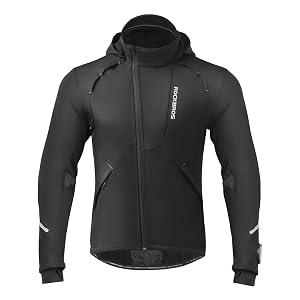
- Fabric: 93 percent polyester, 7 percent spandex with 320g fleece
- Ventilation: 6 venting holes on back and shoulders plus mesh sides
- Collar: High-necked design reducing friction and cold exposure
- Pockets: 2 hand pockets and 1 zippered rear pocket
ROCKBROS uses a thick 320g polar fleece lining that makes this one of the warmer jackets in this roundup, well suited to genuinely cold autumn and winter rides. The dedicated venting holes on the back and shoulders, combined with mesh side panels, help prevent the jacket from feeling sweltering during harder efforts.
The extended rear hem wraps around the waist to block wind when leaning forward, and the high collar is cut to reduce neck friction. Sizing tends to run tight, so ROCKBROS itself recommends going up a size or two for a looser fit.
Pros:
- Thick fleece lining offers excellent warmth
- Dedicated venting holes improve airflow
- Extended hem blocks wind while riding
Cons:
- True sizing runs noticeably tight
- Fewer pockets than higher-end competitors
9. Przewalski Men’s Winter Cycling Jacket

- Lining: Brushed soft fleece interior for heat retention
- Ventilation: Breathable fabric under arms and along the back
- Pockets: 1 chest pocket plus 2 rear pockets and hand pockets
- Best use: Ideal in 45 to 70 degree Fahrenheit conditions
Przewalski positions this jacket as a milder-weather option, best suited to temperatures between roughly 45 and 70 degrees Fahrenheit rather than deep winter cold. Within that range, the brushed fleece interior and full-length zipper with an internal draft flap do a great job of locking in warmth without overheating.
Reflective branding and a back stripe add a modest safety margin for evening rides, and elastic cuffs keep drafts out at the wrists. It handles light rain reasonably well, but a dedicated raincoat is recommended for anything heavier, and cyclists wearing thick base layers should size up.
Pros:
- Comfortable brushed fleece lining
- Effective venting and draft flap design
- Good for mild to cool temperatures
Cons:
- Not intended for extreme cold
- Limited rain protection in heavier downpours
10. INBIKE Hooded Bike Jacket

- Fabric: Lotus leaf hydrophobic, windproof and water-resistant polyester
- Lining: Thickened velvet fabric for close-to-skin warmth
- Pockets: YKK zippered pockets at chest and waist
- Design: Attached hood with high collar for full neck coverage
The standout feature here is the attached hood, which combines with a high collar to fully wrap the head and neck against cold wind, something none of the other jackets in this list offer. The hydrophobic outer fabric sheds rain effectively, keeping the thickened velvet lining dry and warm underneath.
Durable YKK zippers on the chest and waist pockets add a premium touch and hold up well to repeated use in wet conditions. The close-fitting, ergonomic cut reduces wind resistance, though the fixed, non-detachable hood may not suit riders who prefer wearing a helmet without extra bulk underneath.
Pros:
- Attached hood adds unique wind and cold protection
- Durable YKK zippers on all pockets
- Hydrophobic fabric resists rain effectively
Cons:
- Hood is not detachable
- May feel bulky when worn with a helmet
How To Choose The Best Winter Cycling Jacket
Picking the right winter cycling jacket is less about finding the single best-rated product and more about matching a jacket’s features to your climate, riding style and body type. Winter riding conditions vary enormously, from crisp dry mornings to sleet-soaked commutes, and a jacket that excels in one scenario can underperform in another. Understanding the core factors below will help you narrow down the ten options above, or evaluate any winter cycling jacket you come across.
Understand Your Riding Conditions First
Before looking at fabric layers or pocket counts, think honestly about the conditions you actually ride in. A commuter riding thirty minutes through light rain in a temperate city has very different needs than a mountain biker facing sub-freezing temperatures and heavy wind exposure on exposed ridgelines. Matching the jacket to your typical conditions, rather than the most extreme scenario you can imagine, usually leads to a more comfortable and versatile purchase.
Temperature Range
Most winter cycling jackets are optimized for a specific temperature band. Heavier fleece-lined jackets with high collars and sealed cuffs, such as those with 300g or higher fleece weight, perform best in genuinely cold conditions below 45 degrees Fahrenheit. Lighter thermal softshells are better suited to the 45 to 65 degree range, where a heavier jacket would cause overheating. Riding outside a jacket’s intended range is one of the most common reasons cyclists end up either too cold or drenched in sweat.
Precipitation Exposure
If your rides regularly involve rain, sleet or road spray, prioritize jackets with a rated waterproof membrane and a durable water repellent finish, rather than those simply described as water-resistant. Water-resistant fabrics can handle light drizzle but will eventually saturate in sustained rain, while a jacket with a genuine waterproof rating and taped seams keeps you considerably drier over a longer ride.
Layer Construction and Fabric Technology
Nearly all the jackets reviewed above use some version of a three-layer construction: a windproof or water-resistant outer shell, a breathable membrane in the middle, and a fleece or thermal lining against the skin. Understanding what each layer does helps you judge quality beyond marketing language.
- The outer layer should resist wind penetration and shed light moisture without feeling stiff or restrictive
- The middle membrane should be breathable enough to let sweat vapor escape, preventing that clammy feeling on climbs
- The inner lining, usually polar fleece, should feel soft against the skin and retain heat even when slightly damp
Jackets that skip the middle breathable membrane often feel warm while stationary but become uncomfortably humid inside once you start working hard, so this middle layer is worth paying attention to even though it is the least visible part of the jacket.
Fit and Cut
A winter cycling jacket needs a different fit than a casual winter coat. Because you lean forward on the bike, a jacket cut for cycling typically has a longer back hem, called a drop tail, to cover the lower back, along with a slightly shorter front to avoid bunching at the hips. Sleeves are often cut longer as well, to prevent gaps at the wrist when your arms are extended toward the handlebars.
Many riders find that cycling jackets run snug compared to casual outerwear, since a closer fit reduces wind resistance and flapping fabric. If you plan to layer a thermal base layer or jersey underneath, it is often worth ordering one size up from your usual size, and checking the manufacturer’s specific size chart rather than relying on generic sizing.
Pockets and Storage
Pocket count and placement vary significantly between the jackets reviewed, from minimalist two-pocket designs to jackets with eight separate storage compartments. Consider what you actually need to carry. Commuters may want a secure zippered chest pocket for a phone or wallet, while longer-distance riders may prefer large rear pockets that can hold gloves, snacks or a spare layer.
| Pocket Type | Best For |
|---|---|
| Zippered chest pocket | Securing phone, cards or keys while riding |
| Rear bellowed pockets | Carrying gloves, a gaiter or extra layers |
| Side hand pockets | Warming hands during stops or slower riding |
| Inner mesh pockets | Storing items while keeping them ventilated |
Visibility and Safety Features
Winter riding often means shorter daylight hours, making visibility features genuinely important rather than a nice-to-have. Look for reflective strips or logos placed on multiple areas of the jacket, including the chest, back, sleeves and hem, since visibility from different angles matters to drivers approaching from the side or behind. A bright or high-contrast base color can also help during dawn and dusk rides when reflective materials are less effective.
Breathability and Ventilation
Even in cold weather, a hard effort on a climb generates significant heat and sweat. Jackets with underarm zip vents, back venting holes or stretch mesh panels allow you to dump excess heat quickly without having to unzip the entire front of the jacket, which lets in unwanted cold air. If you tend to run warm while riding, prioritize a jacket with dedicated venting features over one that relies purely on a full front zipper for temperature control.
Additional Details Worth Checking
- Collar height, since a high collar significantly reduces wind chill at the neck
- Cuff design, with elastic or adjustable cuffs sealing out drafts better than plain hems
- Hood options, useful for extra warmth but potentially bulky under a helmet
- Fabric care instructions, as some fleece-lined jackets require hand washing to maintain shape
Matching a Jacket to Your Riding Style
Finally, consider how you actually use the jacket. Road cyclists prioritizing aerodynamics and a close fit will lean toward slim, low-pocket designs like the softshell options reviewed above. Mountain bikers and trail riders may prefer jackets with more storage and rougher terrain durability. Commuters benefit most from visibility features, weatherproofing and easy on-off wearability for mixed cycling and walking. There is no single best winter cycling jacket for everyone, but understanding these factors makes it far easier to match one of the ten options above to your specific needs and start riding comfortably through the colder months.