Best Mini Pumps for Road Bikes of 2026
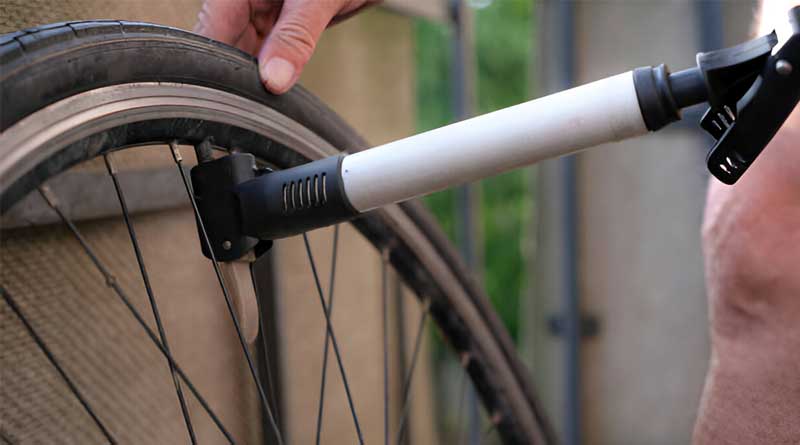
A flat tire can ruin a good ride, but a good mini pump gets you back on the road fast. These small pumps are easy to carry in your pocket or mount on your bike. They won’t weigh you down, but they can save your ride. The best mini pump for you should be easy to use, work with your bike’s valves, and reach the right pressure without wearing you out. Let’s look at the top options.
1. Topeak Peakini II

- Valve Type: Presta and Schrader
- Maximum Pressure: 90 psi
- Dimensions: 10.8 x 2 x 1.3 inches
- Weight: 4.6 ounces
The Topeak Peakini II is a lightweight mini pump tailored for cyclists who prioritize simplicity and comfort during roadside repairs. Its standout feature is the ergonomic T-handle, which folds out to provide a remarkably secure grip, making the manual pumping process much less strenuous on your hands.
Operation is highly efficient due to the single-stroke design, though it tops out at 90 psi, which might be slightly low for narrow road tires. It handles both common valve types easily, making it a reliable, no-nonsense backup tool for daily commuting and mid-distance training rides.
Pros: Comfortable T-handle grip, very lightweight construction.
Cons: Limited to 90 psi max pressure, lacks an inflation hose.
2. BV Mini Bike Pump

- Valve Type: Smart Valve for Presta and Schrader
- Maximum Pressure: 120 psi
- Mounting: Bracket included
- Extras: Sport ball needle and inflatable device
The BV Mini Bike Pump stands out for its high-pressure capability and versatile multi-sport utility. Utilizing an intelligent Smart Valve design, it automatically adapts to both Presta and Schrader connections without requiring users to fumble with internal component swaps or external adapters on the road.
Reaching up to 120 psi, it provides plenty of power for high-pressure road tires while remaining compact enough to stay out of the way. The included frame bracket ensures it remains securely attached during bumpy rides, and the bonus needles expand its use to sports gear.
Pros: Impressive 120 psi capacity, versatile multi-use inflation needles.
Cons: Plastic construction feels less premium, no pressure gauge.
3. Pro Bike Tool Mini Bike Pump

- Valve Type: Presta and Schrader compatible
- Maximum Pressure: 100 psi / 6.9 Bar
- Design: Compact and lightweight
- Mounting: Secure frame mount included
The Pro Bike Tool Mini Bike Pump is engineered for rapid inflation, boasting a design that moves air 30% faster than standard mini pumps. Built from premium, long-lasting materials, this hand pump is tough enough to handle demanding riding conditions across road, mountain, and BMX disciplines.
Its compact profile allows it to slide effortlessly into a cycling jersey pocket or saddle bag, though the included frame mount offers a great alternative for on-bike storage. It switches seamlessly between Presta and Schrader setups, delivering a highly dependable tool for emergency flats.
Pros: Fast inflation mechanism, highly durable and robust build.
Cons: Slightly higher resistance near maximum psi, lacks flexible hose.
See the Pro Bike Tool Mini Bike Pump
4. West Biking Bicycle Pump
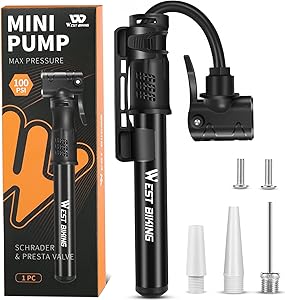
- Valve Type: Dual Presta and Schrader
- Maximum Pressure: 80-100 psi
- Dimensions: 22.5 x 4.3 cm
- Weight: 139 grams
The West Biking Bicycle Pump introduces a highly practical hidden TPU flexible hose that takes the stress off your tire valves during frantic roadside repairs. The hose length can be easily adjusted and locked into place, which ensures a much more ergonomic and effortless pumping experience.
Featuring a dual-valve head with a strong locking buckle, it clamps tightly onto Presta and Schrader valves without air leakage. It includes a frame bracket and ball needle, making this portable unit a versatile asset for daily commuting, trail riding, or inflating recreational pool toys.
Pros: Hidden flexible TPU hose, secure high-strength locking buckle.
Cons: Dual head makes the nozzle slightly bulky, plastic accents.
See the West Biking Bicycle Pump
5. Silca Tattico

- Valve Type: Presta and Schrader
- Maximum Pressure: 100 psi
- Dimensions: 9.5 x 1 inches
- Weight: 5.5 ounces
The Silca Tattico mini pump focuses heavily on engineering efficiency, utilizing an inverted design that maximizes air output while minimizing physical effort. Paired with exceptionally high-quality internal seals, this premium pump ensures that more air goes into the tire with fewer strokes during critical repairs.
Its slim, minimalist dimensions make it easy to pack away, while the 5.5-ounce weight feels solid without weighing down your kit. It connects easily to both major valve types, offering road cyclists and trail riders a highly optimized, professional-grade solution to handle unexpected flat tires.
Pros: Highly efficient inverted barrel, premium build and seals.
Cons: Priced higher than basic mini pumps, no built-in gauge.
6. Cannondale CO2

- Valve Type: Presta only
- Maximum Pressure: 100 psi
- Dimensions: 10 x 4 x 2 inches
- Weight: 15.8 ounces
The Cannondale CO2 Road mini pump offers a clever hybrid design that gives cyclists the best of both worlds. It combines the lightning-fast convenience of a CO2 inflator with the reliable safety net of a traditional manual hand pump, ensuring you are never stranded if cartridges run out.
Designed strictly for Presta valves, this unit is optimized for road setups and can reach up to 100 psi. However, the dual-system integration results in a bulkier frame and a weight of 15.8 ounces, making it better suited for frame mounting than jersey pockets.
Pros: Hybrid manual and CO2 operation, excellent emergency backup.
Cons: Significantly heavier than competition, Presta valve compatibility only.
7. GIYO Mini Bike Pump

- Valve Type: Presta only
- Material: CNC all metal with hammered finish
- Barrel Type: Telescopic design
- Origin: Made in Taiwan
The GIYO Mini Bike Pump is a beautifully crafted, road-specific tool built entirely from high-quality CNC metal. Its unique hammered finish gives it a stylish look, while the solid metal valve lock lever clamps tightly onto Presta valves to guarantee zero air leakage during heavy use.
Featuring an advanced telescopic barrel with high-pressure chambers, this pump maximizes efficiency specifically for narrow road bike tires. It is intentionally non-compatible with Schrader or mountain bike systems, prioritizing top-tier performance for dedicated road cyclists who need reliable high-pressure inflation.
Pros: Elegant all-metal CNC durability, efficient telescopic high-pressure barrel.
Cons: Not compatible with Schrader valves, lacks a flexible hose.
8. Fanttik X10 Ace

- Valve Type: Presta and Schrader
- Pressure Range: 0-120 psi (±1 PSI precision)
- Weight: 0.26 lbs
- Features: LED screen with preset and auto-stop
The Fanttik X10 Ace brings modern electronic innovation to cycling, weighing a mere 0.26 lbs while offering motorized inflation. It can pump a 700x23c road tire up to 100 psi in just 80 seconds, entirely eliminating the exhausting physical effort of traditional manual frame pumps.
Equipped with an intelligent LED screen, the device supports preset pressures, real-time tracking, and automated shut-off to prevent tire damage. An integrated gear-fan design manages heat dissipation well, and vibration-balancing technology keeps your hands perfectly comfortable and steady throughout the rapid inflation process.
Pros: Effortless electronic automatic inflation, high-precision digital LED display.
Cons: Requires battery charging maintenance, built-in valve cannot be disassembled.
9. Tiakia Mini Bike Pump

- Valve Type: Schrader, Presta, and Dunlop
- Maximum Pressure: 260 psi
- Dimensions & Weight: 7.8 inches long, 5.3 ounces
- Material: Anodized aluminum alloy with IPX4 waterproofing
The Tiakia Mini Bike Pump is a powerhouse that achieves an astounding 260 psi maximum pressure rating. It implements a unique separate hose design that balances air volume with high-pressure delivery, pushing out 44 ml of air per stroke to cut down inflation times by half.
Constructed from anodized aluminum alloy with IPX4 water resistance, this rugged pump handles rainy weather and rough travel with ease. Its double-head valve accommodates Presta, Schrader, and Dunlop fittings, making it a versatile inflation tool for bikes, motorcycles, and recreational equipment.
Pros: Incredible 260 psi threshold, flexible explosion-proof hose system.
Cons: High pressure requires significant physical effort at upper limits.
10. Vibrelli Mini Bike Pump

- Valve Type: Clever Valve for Presta and Schrader
- Maximum Pressure: 120 psi
- Barrel Type: Extendable telescopic design
- Included: Mounting bracket and glueless puncture kit
The Vibrelli Mini Bike Pump utilizes a smart Clever Valve system that automatically locks onto Presta and Schrader stems without requiring manual internal configuration changes. Its extendable telescopic barrel allows riders to switch between high-volume pumping and high-pressure mode quite easily.
With a maximum capacity of 120 psi, it serves road cyclists and mountain bikers equally well. The package adds excellent value by including a rattle-free mounting bracket with a security strap, along with an emergency glueless puncture kit to tackle sudden flats right on the spot.
Pros: Automated valve switching, includes an emergency puncture kit.
Cons: Lacks an integrated pressure gauge, not for bike suspension.
See the Vibrelli Mini Bike Pump
How to Choose Mini Pumps for Road Bikes
A flat tire on a ride is never fun — but with the right mini pump, it’s only a minor detour. Mini pumps are small, lightweight, and designed to be carried on the bike or in a saddle pack so you can get back on the road quickly. Choosing the best pump for your road bike isn’t just about picking the lightest or prettiest one; it’s about matching pump performance, compatibility, and usability to your riding style. Here’s a practical guide to help you choose.
1. Know the basics: what a mini pump must do
A mini pump’s job is simple: move air from you into the tube or tubeless tyre fast enough and to a high enough pressure to safely ride home or to a repair shop. For road bikes that typically use higher pressures (80–120 psi for many clinchers), a pump that can comfortably reach those pressures without wearing you out is essential. Also important are a good valve head (Presta compatibility is a must for most road bikes), a secure attachment option, durable construction, and reasonable inflation speed.
2. Valve compatibility: Presta or Schrader?
Most road bikes use Presta valves. Before buying, confirm your valves. Many mini pumps are Presta-only (preferred), some are dual-head (Presta + Schrader), and a few ship with an adapter. Dual-head pumps add convenience if you sometimes help friends with different valve types, but they can be slightly bulkier or more fiddly. If you only ride a road bike, a Presta-specific pump is typically lighter and simpler.
3. Maximum pressure and efficiency
Road tyres require much higher pressure than mountain tyres. Check the pump’s maximum psi/bar. A pump that lists a max of 120 psi (8.3 bar) or higher is ideal for most road setups. But max pressure isn’t everything — efficiency (how much air you move per stroke) and how many strokes it takes to reach target pressure matter more in a stressful roadside situation. Pumps with longer barrels or clever mechanisms (fold-out handles, dual-action strokes) generally move more air per stroke, so you’ll pump fewer times.
4. Size, weight, and packability
Mini pumps trade airflow for portability. Decide where you’ll carry it:
- On-bike mount (frame-mounted): Pumps that mount to the water-bottle bosses are convenient — they stay with the bike and are easy to reach. Look for secure mounting brackets and a pump profile that doesn’t slap your leg or pedal.
- Saddle pack or jersey pocket: Smaller, lighter pumps fit here well. If you prefer a tidy setup or race regularly, prioritize minimal weight and compactness.
Typical mini pump weights range from about 80 g (very light) to 300 g (sturdier, more efficient). Choose according to how much weight you’re willing to carry and how often you ride.
5. Construction and durability
Aluminum bodies are common and offer a good strength-to-weight ratio. Plastic pumps can be lighter and cheaper, but may flex, making inflation harder or shortening the pump’s life. Look for pumps with:
- Solid barrel construction (aluminum or reinforced composite).
- A robust head and valve interface (metal bits where it matters).
- Good seals and a well-fitted hose or shaft to avoid air loss.
A well-built mini pump might cost more but will last and perform better when you need it.
6. Pump head design and hose vs direct-head
Two main designs exist:
- Direct head (pump attaches directly to valve): Simpler and very compact. But you’ll be holding the pump against the valve while pumping, which can be awkward.
- Hose/head (small flexible hose between pump and valve): More comfortable and reduces stress on the valve stem while you pump. It can also make attaching easier in tight spaces.
If you value comfort and ease, choose a pump with a short hose or a fold-out head.
7. Pumping mechanisms and ergonomics
Look for features that reduce effort:
- Longer stroke: Moves more air per pump — fewer strokes.
- Fold-out T-handle or rotating handle: Improves leverage.
- Dual-action: Pumps air on both push and pull strokes (rare in tiny pumps, but very efficient).
Ergonomics matter when you’ve just fixed a puncture and need to re-inflate quickly in cold/windy conditions. Test or inspect whether the handle will be comfortable while wearing gloves.
8. Gauge or no gauge?
Some mini pumps include a built-in pressure gauge (analog or digital). A gauge lets you reach precise pressure on the roadside without guessing — especially useful if you run specific pressures for training or racing. A tiny integrated gauge can add size and cost, but many riders find it worth it for accuracy. If the pump lacks a gauge, consider carrying a separate compact gauge or using a floor pump at home for top-ups.
9. Tubeless compatibility
If you run tubeless tyres, you may sometimes need a burst of high-volume air to seat the bead. Most mini pumps can’t supply a big enough blast for stubborn beads. For tubeless riders:
- Consider a mini pump with higher volume per stroke, or
- Carry a CO₂ inflator as a companion for quick bead seating, plus a mini pump for topping up pressure later.
Some hybrid pumps combine small CO₂ compatibility with manual pumping — a handy two-in-one solution.
10. Ease of mounting and security
If you mount the pump to your frame, pay attention to:
- Mounting bracket quality: It should hold the pump snugly without rattling.
- Quick-release or secured with a strap/bolt: Better security reduces theft risk and drop-offs.
- Compatibility with bottle cage and frame geometry: Some wide pumps may collide with front derailleurs or interfere with your knee.
11. Price vs value
Mini pumps range from inexpensive basic models to high-end precision devices. Don’t buy only on price. Prioritize:
- Reachable pressure for your tyres.
- Durable materials.
- Comfortable pumping experience.
- Compatibility with your valve type and tubeless needs (if relevant).
12. Final checklist (quick)
- Valve type: Presta (road) or dual-head?
- Max pressure: ≥100–120 psi for most road use.
- Efficiency: reasonable strokes to reach pressure (longer stroke or dual action preferred).
- Size & weight: matches how you’ll carry it (frame vs saddle pack).
- Construction: aluminum or reinforced body, good seals.
- Head design: hose vs direct; comfortable to use.
- Gauge: built-in or carry a separate gauge?
- Tubeless: do you need CO₂ support?
- Mounting: secure bracket and compatibility.
- Budget: balance cost vs durability and performance.
Conclusion
The “best” mini pump is the one that suits your riding needs: a lightweight, compact pump if you race and want minimal weight; a slightly larger and more efficient pump if you frequently ride long routes where inflation speed matters; or a pump-plus-CO₂ setup if you run tubeless. Think practically: can you reach the pressure you ride with reasonable effort, will it fit on your bike or pack, and is it built to last? Choose with those priorities in mind and you’ll turn a roadside flat from a panic into a quick brake-and-go.
Happy riding — and may your next flat be the only time you ever see your mini pump in action. 🚴♀️