Best Armored Motorcycle Jackets of 2026
When you ride a motorcycle, staying safe means more than just a helmet. An armored jacket protects your shoulders, elbows, and back if you fall. But with so many options, how do you pick the right one? This guide breaks down the best armored motorcycle jackets for 2026—focusing on comfort, protection, and value. Whether you commute or tour, we’ve found the top choices to keep you riding with confidence.
1. BORLENI Motorcycle Jacket
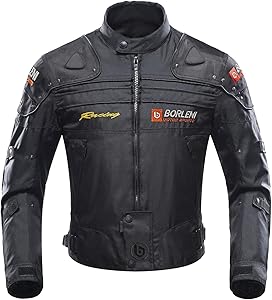
- Material: 600D Polyester Fabric
- Armor: CE Shoulder & Elbow Protectors
- Liner: Removable Cotton Thermal Liner
- Visibility: Reflective Rear Strip
The BORLENI Motorcycle Jacket is a versatile riding option designed for year-round use. Its durable 600D polyester shell offers dependable abrasion resistance and wind protection, while the breathable mesh lining helps maintain comfort during warmer rides. The included thermal liner adds warmth when temperatures drop, making the jacket suitable for changing weather conditions.
Safety is enhanced with removable CE armor at the shoulders and elbows, plus an EVA back protector. Adjustable cuffs, collar, and hem help riders achieve a secure fit, while zippered pockets keep essentials protected. Reflective detailing on the back improves nighttime visibility, making this jacket a practical choice for commuters and touring riders alike.
Pros
- Suitable for all seasons
- Includes removable CE armor
- Adjustable fit for comfort
- Reflective safety details
Cons
- EVA back protector is basic
- Only two external pockets
See the BORLENI Motorcycle Jacket
2. ILM Riding Jacket

- Material: Mesh & 600D Oxford Fabric
- Armor: CE Shoulder, Elbow & Back Protection
- Liner: Waterproof Thermal Liner
- Pockets: 4 Storage Pockets
The ILM Riding Jacket balances airflow and protection with a mesh-heavy design that promotes ventilation during warm-weather rides. Reinforced 600D Oxford fabric at key impact zones improves durability and abrasion resistance. The removable CE armor provides protection while remaining comfortable enough for daily commuting and recreational riding.
A removable waterproof thermal liner expands its usability into colder and wetter conditions. Reflective strips on the front, back, and shoulders increase visibility during low-light rides. Adjustable cuffs and hem allow a personalized fit, while multiple storage pockets offer space for everyday essentials. The result is a practical jacket that adapts well to different riding environments.
Pros
- Excellent airflow for hot weather
- Waterproof thermal liner included
- Comprehensive CE protection
- Multiple storage pockets
Cons
- Can feel bulky with liner installed
- Mesh design offers limited insulation alone
3. CUBER Breathable Mesh Jacket
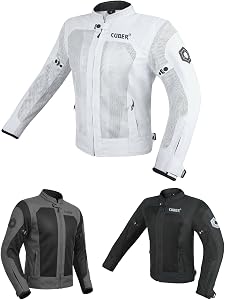
- Material: 600D Cordura Textile
- Ventilation: 3D Macro & Micro Mesh Panels
- Armor: CE Approved Removable Protectors
- Fit: Multi-Point Adjustability
The CUBER Breathable Mesh Jacket is built primarily for summer riding, featuring extensive mesh panels across the front, back, and sleeves. The airflow is excellent, helping riders stay cool during long rides in hot weather. Despite its ventilated design, the durable 600D Cordura construction provides reassuring strength and durability.
Removable CE-approved armor covers the shoulders, elbows, and back for impact protection. Multiple adjustment points at the cuffs, arms, collar, and waist allow riders to fine-tune the fit. Reflective logos improve visibility in low-light conditions. Lightweight and comfortable, this jacket works especially well for sportbike, touring, and adventure riders seeking maximum ventilation.
Pros
- Outstanding airflow performance
- Lightweight and comfortable
- CE-approved armor included
- Highly adjustable fit
Cons
- Requires extra layers in cold weather
- Less weather protection than solid-textile jackets
See the CUBER Breathable Mesh Jacket
4. IRON JIA’S Motorcycle Jacket

- Material: 600D Oxford Fabric
- Armor: CE Shoulder & Elbow Protectors
- Back Protection: EVA Back Pad
- Safety Feature: Reflective Shoulder Strips
The IRON JIA’S Motorcycle Jacket combines a sporty appearance with practical rider protection. Constructed from durable 600D Oxford fabric and breathable mesh panels, it delivers impressive airflow for summer riding. The lightweight feel helps reduce fatigue during longer journeys while maintaining a solid level of abrasion resistance.
CE-certified armor at the shoulders and elbows provides impact protection, while the removable EVA back protector adds extra coverage. Adjustable straps at the collar, cuffs, arms, and hem make it easy to customize the fit. Reflective strips improve visibility after dark, and zippered side pockets offer convenient storage. Riders looking for a breathable and stylish warm-weather jacket will appreciate its balanced design.
Pros
- Excellent ventilation
- CE-certified armor included
- Multiple adjustment points
- Modern and stylish design
Cons
- Slim fit may require sizing up
- EVA back protector is basic
See the IRON JIA’S Motorcycle Jacket
5. Zyxformis Biker Jacket

- Material: 600D Oxford Fabric
- Protection: 4 Protectors + EVA Back Pad
- Weatherproofing: Waterproof & Windproof
- Storage: 7 Pockets
The Zyxformis Biker Jacket is designed for riders who need reliable protection in all weather conditions. Built with durable 600D Oxford fabric and a waterproof membrane, it keeps riders dry even during heavy rain. The breathable mesh lining and removable thermal liner allow the jacket to adapt easily between summer and winter riding conditions.
Safety features include removable armor at the shoulders and elbows, an EVA back protector, and reflective strips across the front, back, and sleeves. Adjustable cuffs, collar, and hem improve comfort, while seven pockets provide plenty of storage. Its ergonomic construction promotes natural movement, making it a comfortable choice for commuting and touring.
Pros
- Excellent waterproof performance
- Generous storage capacity
- Suitable for all seasons
- Good visibility at night
Cons
- Can feel bulky with liner installed
- Heavier than mesh jackets
See the Zyxformis Biker Jacket
6. Milwaukee Streetguard Hoodie

- Material: Cotton Denim & Aramid Blend
- Armor: CE Shoulder & Elbow Armor
- Liner: Mesh Interior Lining
- Storage: Multiple Interior & Exterior Pockets
The Milwaukee Streetguard Hoodie combines casual streetwear styling with motorcycle-ready protection. Reinforced with aramid fibers in key impact zones, it offers greater abrasion resistance than a standard hoodie while maintaining a lightweight and comfortable feel. The removable CE armor at the shoulders and elbows adds practical protection without restricting movement.
A soft mesh liner improves airflow, making the hoodie comfortable for everyday riding. Riders can also add an optional back protector for increased coverage. Multiple storage pockets, an adjustable hood, and a relaxed fit enhance convenience. This hoodie is ideal for urban riders who want protection without the bulk of a traditional motorcycle jacket.
Pros
- Casual everyday style
- Comfortable and lightweight
- Aramid-reinforced construction
- CE armor included
Cons
- Back protector sold separately
- Less weather protection than textile jackets
See the Milwaukee Streetguard Hoodie
7. RIDEIRON Motorcycle Jacket

- Material: Breathable Mesh Textile
- Armor: CE Shoulder & Elbow Protection
- Back Protection: EVA Back Protector
- Storage: 3 Utility Pockets
The RIDEIRON Motorcycle Jacket focuses on ventilation and rider comfort. Its abrasion-resistant outer shell combines with mesh paneling to maximize airflow, helping riders stay cool during warm-weather rides. The moisture-wicking mesh lining further improves comfort by reducing heat buildup during long journeys.
CE-certified armor at the shoulders and elbows provides impact protection, while the EVA back protector adds additional coverage. Adjustable straps and hook-and-loop closures help create a personalized fit. MOLLE webbing allows riders to attach accessories, and the modern color-blocking design gives the jacket a stylish appearance. It is a practical option for commuting, touring, and recreational riding.
Pros
- Excellent airflow and comfort
- Stylish modern design
- MOLLE customization system
- CE-certified armor included
Cons
- Slim fit may require sizing up
- EVA back pad is basic
See the RIDEIRON Motorcycle Jacket
8. WICKED STOCK Motorcycle Jacket

- Material: 600D Mesh & Textile
- Armor: CE Level 1 Shoulder, Elbow & Back
- Visibility: Reflective Piping
- Fit: Adjustable Arms & Waist
The WICKED STOCK Motorcycle Jacket is built for riders seeking dependable protection and strong airflow. Large mesh panels on the front and back promote ventilation, helping keep temperatures under control during hot summer rides. The 600D textile construction provides durability and abrasion resistance for everyday use.
Preinstalled CE Level 1 armor in the shoulders, elbows, and back offers ready-to-use protection right out of the box. Adjustable arms and waist help riders achieve a secure fit, while reflective piping enhances visibility after dark. A pants connection zipper adds convenience for touring riders. The combination of comfort, protection, and value makes this jacket a strong all-around performer.
Pros
- Preinstalled CE armor
- Excellent ventilation
- Reflective safety features
- Adjustable fit system
Cons
- Limited cold-weather insulation
- CE Level 1 armor only
See the WICKED STOCK Motorcycle Jacket
9. DUHAN Motorcycle Armored Shirt

- Armor: CE2 7-Piece Protection System
- Material: Lycra Stretch Mesh
- Fit: 4-Way Stretch Design
- Storage: Two Zippered Pockets
The DUHAN Motorcycle Armored Shirt offers a lightweight alternative to bulky riding jackets. Built with breathable Lycra mesh fabric, it delivers exceptional airflow and comfort during hot-weather rides. The flexible 4-way stretch construction moves naturally with the rider, making it ideal for commuting and active riding styles.
Protection comes from a comprehensive CE2-certified armor package that covers the chest, back, shoulders, and elbows. Reinforced abrasion-resistant materials improve durability, while the anti-slip hem helps keep the shirt securely in place. It can be worn alone during summer or layered under a jacket in cooler conditions, providing excellent versatility throughout the year.
Pros
- Extremely breathable design
- Comprehensive CE2 armor package
- Excellent flexibility
- Works well as a base layer
Cons
- Fits smaller than expected
- Limited weather protection
See the DUHAN Motorcycle Armored Shirt
10. BYKR Adventure Touring Jacket

- Material: Cordura Fabric
- Armor: CE Shoulder, Elbow & Back Inserts
- Weather Use: Four-Season Design
- Visibility: Reflective Accents
The BYKR Adventure Touring Jacket is built for riders who spend long hours on the road. Its durable Cordura construction and reinforced stitching provide impressive durability, while integrated ventilation systems help regulate airflow across varying weather conditions. Water-resistant materials further enhance comfort during unpredictable rides.
CE armor in the shoulders, elbows, and back offers dependable impact protection for touring and adventure riding. Adjustable cuffs, forearms, biceps, waist, and neck allow riders to create a personalized fit for long-distance comfort. Reflective logos improve visibility during nighttime travel. Combining protection, comfort, and versatility, this jacket is an excellent choice for riders seeking a true four-season touring solution.
Pros
- Designed for long-distance touring
- Comprehensive CE armor package
- Highly adjustable fit
- Good ventilation and weather protection
Cons
- Heavier than summer-focused jackets
- Premium features increase bulk
See the BYKR Adventure Touring Jacket
How to Choose Armored Motorcycle Jackets
An armored motorcycle jacket isn’t just a piece of riding gear — it’s a critical layer of protection that can mean the difference between walking away from a slide or spending months in recovery. With hundreds of options on the market, from lightweight mesh jackets for summer touring to heavy-duty leather race suits with full CE armor, choosing the right one can feel overwhelming. This guide strips away the marketing hype and walks you through every essential factor: armor quality, materials, fit, climate compatibility, and real-world safety ratings. By the end, you’ll know exactly what to look for — and what to avoid — when investing in your next armored jacket.
1. Understanding Armor: The Core of Protection
The “armored” part of an armored motorcycle jacket is non-negotiable. But not all armor is created equal. Modern jackets use soft, flexible pads that harden on impact (viscoelastic materials like D3O, SAS-TEC, or Forcefield) or traditional hard-shell protectors made from polypropylene or carbon fiber. To make an informed choice, focus on three things: coverage, certification, and comfort.
CE Level 1 vs. CE Level 2: What’s the Difference?
All legitimate armor carries a CE rating under the EN 1621-1 standard (for limb protectors). CE Level 1 armor provides basic impact protection, with a maximum transmitted force of 35 kN. It’s lighter and more flexible — ideal for urban commuting or low-speed riding. CE Level 2 armor reduces transmitted force to 20 kN, offering significantly better energy absorption. Choose Level 2 for high-speed touring, sport riding, or any situation where slide and impact risks are elevated. Many jackets come with Level 1 as stock, but you can often upgrade the pads to Level 2 — a worthwhile investment.
Key Armor Locations
A proper armored jacket must include protectors in at least the shoulders and elbows. Premium jackets also include a back protector (removable or integrated). Some advanced models offer chest protectors (sternum/rib coverage) and even coccyx padding, though those are rarer. For street riding, insist on shoulders + elbows + back. The back protector should be CE certified (EN 1621-2 for back). Avoid jackets that only offer “foam padding” without any certification — those are decorative, not protective.
Articulation and Fit
Armor must stay in place during a crash. That means the jacket should have pockets that hold the pads snugly against your joints (elbows, shoulders) without shifting. Try the jacket on: bend your arms, twist your torso, mimic a tuck position. If the elbow protector slides off to the side, it’s a poor design. Look for adjustable armor pockets (Velcro or strap systems) that let you fine-tune the vertical position of elbow protectors.
2. Jacket Materials: Leather, Textile, Mesh & Hybrids
The outer shell determines abrasion resistance, weather protection, and breathability. Each material suits different riding styles and environments.
Leather Armored Jackets
Full-grain or top-grain cowhide leather offers the highest abrasion resistance — typically 4x to 6x tougher than standard textile. Leather is the go-to for track days, aggressive sport riding, and classic cruiser styles. However, it’s heavy, hot in summer, and requires maintenance (conditioning to prevent cracking). Modern perforated leather jackets add airflow, but still run warmer than mesh. Leather also soaks up rain and becomes heavy. Choose leather if maximum slide protection is your priority and you ride mostly in dry, mild-to-cool conditions.
Textile Armored Jackets (Cordura, Kevlar, Polyester blends)
High-denier Cordura (500D to 1000D) is the standard for abrasion-resistant textiles. Nylon and ballistic polyester can also perform well. Textile jackets are lighter, more versatile, and often waterproof or breathable via membranes like Gore-Tex or D-Dry. They’re the top choice for adventure touring, commuting, and year-round riding. Look for jackets with a density of at least 600D in high-impact areas (shoulders, elbows, back). 1000D Cordura is excellent but stiff — 600D/700D provides a good balance of durability and comfort.
Mesh & Summer Jackets
Mesh jackets exchange a solid shell for open-weave fabric, maximizing airflow. They’re essential for hot climates or slow-speed city riding. The trade-off: lower abrasion resistance, even with high-density mesh (like 1000D mesh panels). Always check that the mesh jacket includes robust fabric overlays at impact zones. Many mesh jackets now combine a solid textile chassis with mesh inserts. Pro tip: For summer highway riding, look for “hybrid” mesh jackets that keep CE Level 2 armor but add abrasion panels at the elbows and shoulders.
Hybrid and Layered Systems
Some premium jackets come as 3-in-1 or 4-season systems: a removable waterproof liner, a thermal liner, and an outer shell with vents. These give you year-round utility. The downside — they tend to be bulky, and zippers/liners add complexity. For riders who want one jacket for everything, a hybrid textile with large vent zippers and a removable thermal liner is a solid choice.
3. Fit, Sizing, and Real-World Ergonomic Checks
A loose armored jacket is almost as dangerous as wearing no jacket — armor will shift on impact. A too-tight jacket restricts movement and blood flow, leading to fatigue.
The Perfect Fit Protocol
When trying on an armored jacket (over your typical base layers), follow these steps: (1) Zip it fully. (2) Raise both arms sideways to shoulder height — the jacket should not lift up so much that your lower back is exposed. (3) Hug yourself tightly — the shoulder armor should stay on your shoulders, not slide toward your neck. (4) Check sleeve length: with arms extended to the handlebar position, the cuff should reach just past your wrist bone. Armor should sit directly over your elbow when your arm is bent at 90°. (5) The back protector should extend from your shoulder blades down to your tailbone without pressing uncomfortably when seated on a bike.
Gender-Specific Fit
Women’s armored jackets are not just “shrunken men’s jackets.” They account for a narrower shoulder width, longer torso-to-hip ratio, and more room in the bust and hips. Many brands (Rev’It, Dainese, Alpinestars) offer women-specific cuts with repositioned armor and contoured waists. Unisex jackets often fit poorly; if you’re female, prioritize a women’s model for both safety and comfort.
4. Climate & Ventilation Strategies
Your local weather dictates which jacket features become must-haves. Overheating is a major cause of rider distraction; a jacket that doesn’t breathe will stay in the closet.
Hot/Humid Conditions
Prioritize full-mesh jackets or highly perforated textile with massive intake vents (chest, biceps, back exhaust). Light colors (white, hi-vis, light grey) reflect sunlight. Many summer jackets have removable rain liners, but they often compromise airflow — look for a separate lightweight rain shell instead.
Cold & Wet Weather
For sub-10°C (50°F) riding, you need either a lined leather/textile jacket with a thermal layer plus a waterproof membrane, or a classic adventure jacket with a removable quilted liner. Ventilation that can be fully sealed is crucial (zippered vents with storm flaps). Consider jackets that accept a heated liner (with wiring ports for battery-powered or bike-powered heating).
Variable Seasons
Jackets with large, gusseted vents (e.g., 2 front intake, 2 rear exhaust, 2 bicep vents) allow you to adapt. Also look for “direct ventilation” — mesh panels behind zippers that don’t require removing a liner.
5. Essential Safety Certifications & Construction Details
Beyond armor, the jacket itself should meet recognized safety standards. The most relevant is the European EN 17092 standard, which classifies jackets for different riding speeds (Class AAA = highest protection for highway/motorsport, Class AA = touring/commuting, Class A = urban, Class B = lower-speed). Always check the label: “CE certified to EN 17092” means the whole jacket passed abrasion, seam strength, and impact tests.
Seams, Stitching & Impact Zones
Double or triple stitched seams (preferably with bonded nylon thread) resist bursting in a slide. Look for reinforced panels at elbows, shoulders, and sides — often made from extra layers of leather or high-denier Cordura. YKK zippers are industry standard for reliability; avoid no-name plastic zippers on main closures.
Reflective Elements & Visibility
Nighttime or low-visibility riding requires reflective piping, logos, or panels (3M Scotchlite is common). Jackets with large reflective areas on the back and sleeves greatly increase your presence to other drivers. If your favorite jacket has minimal reflectivity, consider adding a reflective vest or adhesive strips.
6. Additional Practical Features Worth Paying For
Connection Zippers (Pants Integration)
A short rear zipper that attaches to matching riding pants prevents jacket ride-up and keeps your lower back protected. Many brands offer 360-degree zippers for full closure with touring pants. This is a high-value safety feature, especially for sport and adventure riding.
Pockets & Storage
Waterproof pockets for electronics, internal Napoleon pockets for wallet/phone, and deep hand-warmer pockets are practical. But avoid too many external pockets on a race-oriented jacket — they can catch on pavement during a slide. For touring, multiple pockets with secure zippers are a boon.
Adjustability & Retention
Waist straps, bicep straps, and forearm adjusters let you customize the fit to your body shape and prevent the jacket from flapping at speed. Also check that the collar doesn’t choke when you’re in a tucked position — many jackets have a soft neoprene edge for comfort.
7. Budget vs. Investment: Where to Spend and Where to Save
You can find an entry-level CE-certified armored jacket for $120–200, but it will likely have basic Level 1 armor, lower denier textile (300D–450D), and fewer comfort features. A mid-range jacket ($250–500) typically includes Level 2 armor (or upgradeable pockets), 600D+ main fabric, better vents, and a trimmer fit. Premium jackets ($500+) bring top-grain leather, Gore-Tex, custom ergonomic armor, race-proven abrasion resistance, and multi-season flexibility.
Spend on: certified Level 2 protectors (especially back), high abrasion resistance (1000D Cordura or 1.2mm+ leather), and a precise fit. Save on: brand-exclusive gimmicks (e.g., integrated airbags not yet standard) or unnecessary liners if you ride only in one season. Never compromise on armor certification or abrasion resistance to save $50.
8. The Final Checklist Before You Buy
Use this quick checklist when comparing any armored motorcycle jacket:
- Armor: Shoulder, elbow, back (CE Level 2 recommended for back; Level 1/2 for elbows/shoulders).
- Shell: Full-grain leather OR ≥600D textile (1000D in slide zones). Mesh accepted for summer but check abrasion overlays.
- Certification: CE EN 17092 (Class A or higher) + EN 1621-1 armor labeling.
- Fit test: No armor shifting, sleeve ends at wrist bone, back coverage when crouched.
- Climate match: Vents/liner system appropriate for your typical riding temperatures.
- Visibility: Sufficient reflective areas or ability to add a reflective vest.
- Extras: Pant zipper compatibility, waterproof pocket, wrist/waist adjusters.
Take your time trying on jackets — ideally while sitting on your actual motorcycle (or a similar bike at the dealer). Your body position on the bike changes how the jacket fits more than you’d expect. A $700 jacket that doesn’t fit is a waste; a $200 jacket that fits perfectly and has CE Level 2 armor can be a lifesaver.
Conclusion: Armored Jackets Are Personal Safety Systems
Choosing an armored motorcycle jacket isn’t about finding the most expensive or the most popular. It’s about matching your specific riding environment, body shape, and risk tolerance with the right combination of armor, materials, and fit. Start with the safety non-negotiables — CE-certified armor in all key zones and a shell that withstands asphalt at your typical speeds. Then layer in climate features and ergonomic adjustments. Every ride, no matter how short, demands a jacket that will stay on you and protect you. Invest the time to try multiple models, and you’ll find an armored jacket that feels like a second skin — and that you’ll actually want to wear every single time you throw a leg over your bike.