Best Downhill Mountain Bike Helmets of 2026
Riding downhill on a mountain bike is thrilling but risky. A good helmet can protect your head from injuries. Choosing the right helmet is very important for safety and comfort. Helmets come in many shapes, sizes, and designs. Some are lightweight, while others offer extra protection. Features like ventilation and fit make a big difference. This article reviews the best downhill mountain bike helmets. It helps you find helmets that keep you safe and comfortable. Whether you are a beginner or an expert, the right helmet matters.
1. OutdoorMaster Mountain Bike Helmet
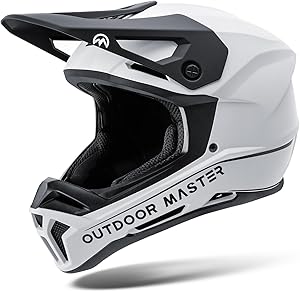
- Protection: High-density EPS foam with a tough ABS shell.
- Fit System: Adjustable chin straps and removable padding.
- Ventilation: Multiple air vents with moisture-wicking padding.
- Features: Goggle-strap channel and pivoting visor.
The OutdoorMaster Mountain Bike Helmet positions itself as a versatile and budget-friendly option for riders engaged in various action sports. Its construction promises solid impact resistance through its EPS foam and ABS shell combination, aiming to protect during BMX, mountain biking, and skateboarding sessions. The focus on a customizable fit and breathability suggests it is designed for comfort during extended use, making it an appealing entry-level or multi-sport choice.
While it covers the essentials, it’s important to note that this helmet lacks specific downhill certifications like ASTM F1952, which are crucial for dedicated, high-speed mountain biking. The goggle compatibility and adjustable visor are practical touches that add value for trail riding. It serves well as a general-purpose helmet for riders who need one piece of gear for several activities, but serious downhill enthusiasts may require a more specialized, certified option.
- Pros: Very affordable; Good multi-sport versatility; Comfortable with decent ventilation.
- Cons: Not specifically certified for downhill riding; Construction may not meet the needs of aggressive.
2. LAZER Helmet Chase Kineticore Mountain Bike Helmet
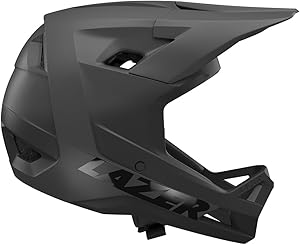
- Certification: ASTM DH certified and neck brace-compatible.
- Safety Feature: Breakaway visor designed to detach on impact.
- Comfort: Plush, sweat-wicking liner.
- Closure: Secure double D Ring buckle system.
The LAZER Chase Kineticore is a serious piece of protective gear built explicitly for enduro and downhill riding. The ASTM DH certification is its core credential, indicating it has passed rigorous testing for high-impact crashes. The neck brace compatibility is another crucial feature for DH racers, while the innovative breakaway visor is a thoughtful safety engineering detail aimed at reducing rotational forces on the head and neck during a crash.
Beyond its protective prowess, the helmet doesn’t skimp on comfort. The moisture-wicking liner and secure D-ring closure promise a stable, sweat-free fit on long, rough descents. The wide full-size range ensures a good fit for most riders. This helmet makes no compromises for its intended use; it is a dedicated downhill machine that prioritizes certified safety and rider security above all else.
- Pros: Officially ASTM DH certified; Neck brace compatible; Breakaway visor enhances safety; Secure D-ring closure.
- Cons: Likely heavier and less ventilated than trail helmets; Premium safety comes at a higher price point.
3. BATFOX Mountain Bike Helmet

- Certification: Meets ASTM F1952, CPSC, and EN1078 standards.
- Impact Absorption: Features an EPP collarbone impact buffer system.
- Fit: Available in M (54-57CM) and L (58-61CM) sizes.
- Visor: Fully adjustable sun visor for glare protection.
The BATFOX helmet stands out with its impressive array of safety certifications, including the crucial ASTM F1952 downhill standard. This makes it a legitimate contender for aggressive mountain biking. A unique and commendable feature is the EPP collarbone impact buffer, which extends protection beyond the head—a thoughtful addition for crash scenarios where shoulder impacts are common.
Comfort is addressed with a plush chin bar pad and the promise of full goggle compatibility. The adjustable visor is a simple but effective tool for managing changing light on the trail. While it offers excellent protection on paper, the sizing range is limited to just two sizes, which may make achieving a perfect fit challenging for some riders. It represents strong value for a certified downhill helmet with extra protective touches.
- Pros: Full downhill certification (ASTM F1952); Innovative collarbone buffer system.
- Cons: Limited size range (only M and L); Heavier construction than open-face helmets.
4. Fly Racing Rayce Mountain Bike Helmet
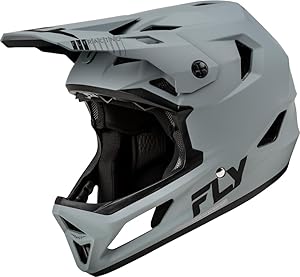
- Shell: Durable polycarbonate-alloy shell.
- Liner: Multi-Density EPS foam for progressive impact absorption.
- Ventilation: TFV (True Functional Ventilation) system.
- Certification: CPSC, CE, and ASTM F1955 (Downhill rated).
The Fly Racing Rayce is a youth-focused full-face helmet that brings legitimate downhill-rated protection to younger riders. Its ASTM F1955 certification confirms it’s built for the demands of BMX racing and downhill mountain biking. The multi-density EPS liner is a key feature, designed to manage different levels of impact energy progressively, which is a sign of thoughtful safety engineering.
Comfort and hygiene are considered with removable, washable liners and cheek pads. The TFV ventilation and water-drainage vents are practical features for hot days or even water sports use, highlighting its versatility. The secure D-ring closure ensures it stays on during high-action rides. This helmet successfully fills an important niche, providing certified, serious protection for young shredders without overlooking comfort.
- Pros: Downhill rated (ASTM F1955) for youth; Multi-density EPS for advanced protection.
- Cons: Youth-focused sizing only; Aesthetics may not appeal to all riders.
5. Demon United Podium X MIPS Mountain Bike Helmet
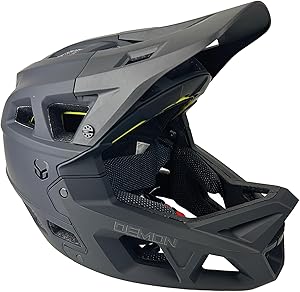
- Safety System: Equipped with MIPS for reduced rotational motion.
- Weight: Lightweight 710-gram construction.
- Ventilation: Over 20 strategically placed vents.
- Fit: Multiple removable padding options for customization.
The Demon United Podium X MIPS helmet combines advanced safety technology with a focus on lightweight comfort. The inclusion of the MIPS system is its headline feature, designed to provide an additional layer of protection against the rotational forces commonly involved in angled impacts. Weighing in at only 710 grams, it aims to reduce neck fatigue on long enduro stages or bike park days, which is a significant advantage.
With over 20 vents, Demon has clearly prioritized airflow to keep riders cool during intense efforts. The fit is highly customizable thanks to multiple pad sets, allowing for a precise and secure feel. The removable visor and washable padding add to its practical, user-friendly design. This helmet is a compelling package for the performance-oriented rider who wants modern rotational impact protection without a heavy, bulky build.
- Pros: MIPS for rotational impact protection; Exceptionally lightweight; Excellent ventilation.
- Cons: Premium features come at a higher cost; May be less robust than heavier DH-specific helmets.
6. Aomiun Mountain Bike Helmet
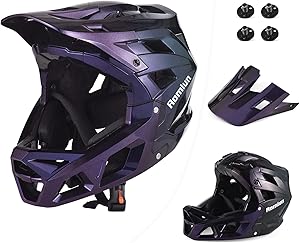
- Construction: PC shell with Expanded Polystyrene (EPS) liner.
- Design: Seamless one-piece construction.
- Ventilation: 23 large vents for airflow.
- Fit System: Adjustable dial system and straps.
The Aomiun helmet emphasizes a sleek, integrated design with its one-piece construction, aiming for an aerodynamic and secure profile. The use of standard PC and EPS materials promises reliable shock absorption for the price. A strong focus on cooling is evident through the 23 large vents, which should help with breathability during strenuous climbs or in warm weather.
Comfort and fit are addressed with a removable liner and an adjustable dial system, allowing riders to fine-tune the feel. However, the product description lacks mention of any specific safety certifications like CPSC or ASTM, which is a critical consideration for any buyer. It appears best suited for recreational mountain biking or downhill where maximum certified protection is not the primary concern, offering basic features in a clean package.
- Pros: Sleek, one-piece design; Good ventilation with 23 vents; Comfortable with a removable liner.
- Cons: Lacks stated safety certifications (e.g., CPSC); Unknown protection level for aggressive riding.
7. Bell Sanction 2

- Certification: Complies with CPSC, ASTM Downhill, and BMX standards.
- Padding: Ventilated DH Air padding with removable cheek pads.
- Ventilation: 14 vents designed for airflow.
- Visor: Flying Bridge visor design for flexibility and improved airflow.
The Bell Sanction 2 is a purpose-built, value-oriented full-face helmet that doesn’t cut corners on safety certifications. With both ASTM Downhill and BMX certifications, it’s legitimately geared for park days, downhill runs, and jumping. Bell’s Flying Bridge visor is an interesting design choice, freeing up space and potentially improving ventilation while maintaining a secure fit for goggles.
Focusing on the core tenets of fit, breathability, and value, the Sanction 2 uses ventilated padding and 14 vents to manage moisture and heat. The wide range of five sizes, including a true XX-Small, is a major advantage for achieving a proper fit for both youth and adult riders. It represents a trusted brand’s no-frills approach to delivering certified downhill protection at an accessible price point, making it a popular “go-to” for casual and frequent park riders alike.
- Pros: Trusted brand with proper downhill certification; Excellent size range including youth.
- Cons: Ventilation is moderate compared to premium models; Heavier than high-end composite helmets.
How to Choose Downhill Mountain Bike Helmets
Downhill mountain biking is an adrenaline-fueled sport that demands both skill and protection. Among all safety gear, the helmet is the most critical. Choosing the right helmet can prevent serious injuries and make your rides safer and more comfortable. With numerous brands, styles, and technologies available, finding the perfect helmet might feel overwhelming. This guide will help you understand the key features, types, and considerations to make an informed decision.
Understanding Downhill Mountain Bike Helmets
Purpose of a Downhill Helmet
A downhill helmet is specifically designed for high-speed and aggressive riding on rough terrains. Unlike standard bike helmets, it offers full-face coverage and superior impact protection. The goal is to protect your head, face, and jaw during falls, collisions, or hitting obstacles on the trail.
Difference Between Enduro and Downhill Helmets
While enduro helmets offer a balance of ventilation and protection for longer rides, downhill helmets prioritize maximum safety. They are generally heavier, with reinforced chin guards, and are designed to withstand high-impact crashes.
Key Features to Consider
Helmet Construction
Shell Material
Most downhill helmets are made of polycarbonate or carbon fiber. Polycarbonate is affordable and durable, while carbon fiber is lighter and stronger but more expensive. Choose a material that balances your budget with performance needs.
Inner Liner
The inner liner absorbs shock during an impact. EPS (expanded polystyrene) foam is common, but some helmets use multi-density foam for better energy absorption. A high-quality liner improves safety during crashes.
Fit and Size
Measuring Your Head
Measure your head circumference accurately using a tape measure. Helmets come in various sizes, so knowing your exact measurement ensures a snug fit.
Adjustable Fit Systems
Look for helmets with adjustable straps and dials. These allow you to fine-tune the fit and ensure the helmet stays in place even on rough trails.
Safety Certifications
CE and ASTM
Check for CE EN 1078 (Europe) or ASTM F1952 (USA) certifications. These indicate that the helmet meets safety standards for downhill riding.
MIPS Technology
Some helmets include MIPS (Multi-directional Impact Protection System). MIPS reduces rotational forces during crashes, offering extra protection to the brain.
Ventilation and Comfort
Airflow Design
Downhill helmets have vents to allow air circulation. Proper airflow keeps your head cool during intense rides. Too few vents can lead to overheating, while too many may compromise protection.
Padding and Liners
Comfortable padding is essential for long rides. Many helmets feature removable and washable pads. Look for moisture-wicking material to manage sweat effectively.
Weight Considerations
While heavier helmets often provide more protection, they can cause neck fatigue on long rides. Lightweight helmets with strong construction are ideal for balancing safety and comfort.
Visors and Face Protection
Adjustable Visors
Visors shield your eyes from sun, mud, and branches. Adjustable visors allow customization based on terrain and riding style.
Full-Face vs. Open-Face Helmets
Full-face helmets provide maximum jaw and facial protection. Open-face helmets are lighter and more ventilated but offer less protection in extreme crashes. For downhill biking, full-face is generally recommended.
Additional Features
Camera and Goggles Compatibility
Check if the helmet is compatible with action cameras or goggles. A helmet with a goggle lock or camera mount ensures stability while riding.
Emergency Release Systems
Some advanced helmets have emergency release cheek pads. These make it easier for first responders to remove the helmet safely in case of an accident.
Color and Visibility
Bright colors and reflective details enhance visibility on trails. This is crucial for group rides or low-light conditions.
Trying and Testing Helmets
In-Store Fitting
Whenever possible, try helmets in-store. Ensure it sits evenly on your head without pressure points. Shake your head to check stability.
Online Reviews
If buying online, read reviews carefully. Pay attention to feedback on comfort, fit, ventilation, and durability.
Testing While Riding
Once you have a helmet, take a short ride to test comfort, vision, and weight distribution. Small adjustments can make a significant difference.
Helmet Maintenance and Care
Cleaning the Helmet
Regularly clean your helmet with mild soap and water. Avoid harsh chemicals, which can weaken the shell and foam.
Replacing After Impact
A helmet must be replaced after a major crash, even if it looks undamaged. The foam liner may be compromised, reducing protection.
Storage Tips
Store your helmet in a cool, dry place. Avoid leaving it in direct sunlight or hot cars, which can degrade the materials.
Budget and Brand Considerations
Popular Brands
Brands like Bell, Fox, Troy Lee Designs, and Giro offer reliable downhill helmets. Look for a combination of safety, comfort, and features rather than just brand reputation.
Price vs. Performance
A higher price usually reflects better materials, technology, and comfort. However, some mid-range helmets provide excellent protection at a lower cost. Set a budget but prioritize safety.
Warranty and Support
Check the warranty and customer support policies. A good warranty ensures you can address defects or damage without extra cost.
Conclusion: Making the Right Choice
Choosing the right downhill mountain bike helmet is essential for safety and performance. Focus on fit, construction, ventilation, face protection, and extra features like MIPS or emergency release systems. Always prioritize safety certifications over aesthetics. Testing the helmet for comfort and compatibility with goggles or cameras is crucial. Remember, a helmet is not just gear—it is your lifeline on the trail. Invest wisely, maintain it properly, and replace it after impact. A well-chosen helmet ensures every ride is thrilling, safe, and confident.